
Search by Blog
Read by Category

Your healing journey continues beyond this blog

Find the right products for better recovery at online store
Cart Image
All you need to know about Organ Donation

Organ Donation is the process of removing healthy organs and tissues from a living or deceased person (the DONOR) and transplanting into another person (the RECIPIENT).

Organ Donation is required when the recipient’s organ has stopped working or is severely damaged by any disease or injury.

Which Organs can be Donated?
* Internal organs: Kidneys, Heart, Liver, Pancreas, Intestines, Lungs
* Skin
* Bone and bone marrow
* Cornea
* Apart from these, cartilage, tendons, heart valves, middle ear and veins can  also be donated
* In 2014, hands and faces were also added to the list

Types of Organ Donations

1. LIVING ORGAN DONATION:
When the donor is a healthy living person and the recipient might be suffering from end-stage organ failure. This is most commonly done in the cases involving Liver and Kidneys.
Fact: An individual can live with one kidney and the liver is the only organ which can regenerate again to its original size.

2. DECEASED ORGAN DONATION:
Deceased organ donation involves getting the organ from a person considered as Brain Stem Dead. Donation after cardiac death is more common in the West. Only the viable organs of the deceased can be donated.

Define:A person is said to be brain stem dead when there is an irreversible loss of consciousness, the absence of brain stem reflexes and irreversible loss of the capacity to breathe.

Who can be a Donor?
* People of any age can donate their organs. There are no age limitations. Even newborns and senior citizens can be donors.
* Whether someone is suitable for organ donation after death depends upon the condition of the organ and the medical history at the time of death.
* In some cases where death happens by any accident, injury or murder, the medical examiner has the legal right to decide on organ retrieval.
* There are a few conditions which prevent an individual from being an organ donor:
* HIV infection
* Systemic infection
* Active cancer
* Hepatitis C
* Creutzfeldt-Jakob Disease (CJD)
* Ebola virus disease

Do You Know?

The need for Organ Donation > The number of people who actually donate


The Process of Organ Donation:
* In the case of Living Organ Donation, a donor needs to undergo some clinical evaluations and tests to determine the medical compatibility with the recipient. Some factors including the blood type, body size, severity of the recipient’s medical condition, recipient’s waiting time, are also matched between the donor and the recipient.

After the medical compatibility is confirmed from the doctor, the organs are surgically retrieved from the donor and stored in some special chemicals until the transplantation is done. However, the donor has to remain under medical care until the person is fit to go home.

* The Deceased Organ Donor is generally the person declared brain stem dead by the medical experts or the doctors. After consent is obtained from the donor’s family, suitable recipients are identified from the waiting list. Meanwhile, the donor is kept on the life support system. After retrieval of the specific organs, the body is handed over to the family.
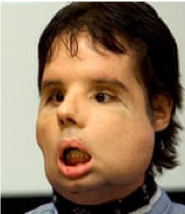
OSCAR: The World’s 1st Full Face Transplant Patient


Oscar was the Spain farmer who accidentally shot himself in the face and was the world’s 1st full face transplant patient. He was operated by a 30-strong medical team and was expected to regain 90% of his facial functions.

The situation in India:
The total no. of brain stem deaths due to accidents is nearly 1.5 lakhs annually. However, there were only 905 deceased donors in the year 2017.

Approximately 5 lakhs organs are needed annually and only 2-3% demand is met.

All those who register as a donor receive an ORGAN DONOR CARD. It can be kept in your purse or a wallet. It’s a great way to show your commitment to saving someone else’s life.

Why should we all Donate?
As per The Organ Receiving & Giving Awareness Network (ORGAN) India, at least 15 patients die every day waiting for organs and every 10 minutes a new name is added to this waiting list. The demand is much more than availability. There are a lot of adults who support this cause but only a few actually sign up as donors.

We @ Datt Mediproducts support and spread the awareness on this noble cause of organ donation. We believe that Life is a Gift, so we should Pass it On. Let us all pledge to save a life. As each one of us has the potential to save up to 8 lives by donating 8 vital organs namely, Heart, 2 Lungs, Liver, Pancreas, 2 Kidneys, Intestines.

Recycle your life, Be an Organ Donor!
Visit www.dattmedi.com for more infomation.
Share:
Recent Blogs

Allergies are a common health issue that affect a significant portion of the population worldwide. Allergies are a hypersensitive reaction of the immune system to an otherwise harmless substance, which is known as an allergen. The allergen can be any substance that triggers an allergic reaction in the body, such as pollen, dust, food, or animal dander.

Allergies are caused due to the abnormal response of the immune system, which mistakes a harmless substance for a harmful invader and initiates a defence mechanism, called antibodies, to protect the body from it. This results in various allergic reactions, such as skin rashes, itching, sneezing, watery eyes, and in severe cases, anaphylaxis.

There are various reasons behind the occurrence of allergies. Genetics plays a significant role in determining an individual’s likelihood of developing allergies. Environmental factors such as exposure to pollution, chemicals, and toxins can also trigger allergies.

There are several different types of allergies, each with their unique symptoms and triggers.

Some of the most common types of allergies include:

1. Respiratory allergies:

These allergies are triggered by airborne allergens such as pollen, dust mites, and animal dander. The symptoms of respiratory allergies include sneezing, coughing, and wheezing.

2. Food allergies:

These allergies occur when the immune system reacts to certain foods, such as nuts, shellfish, and eggs. Symptoms of food allergies can range from mild itching, tingling in the mouth, hives, swelling of the lips, tongue, face or throat to more severe life-threatening anaphylaxis.

3. Skin allergies:

These allergies occur when the skin comes into contact with an allergen, such as certain fabrics, metals, or cosmetics. The symptoms of skin allergies include rashes, itching, and swelling.

4. Insect allergies:

These allergies occur when an individual is bitten or stung by an insect, such as bees or mosquitoes. The symptoms of insect allergies can range from mild itching to severe anaphylaxis.

5. Medicine allergies:

Medicine allergies are hypersensitive reactions of the immune system to certain medications. They can cause symptoms like skin rashes, itching, swelling, and in severe cases, difficulty breathing or anaphylaxis. It is important to communicate medicine allergies to healthcare providers to ensure safe and effective treatment.

Precautionary methods can be taken to manage allergies. Firstly, it is crucial to identify the allergen that triggers the allergic reaction. This can be done through various tests such as skin tests or blood tests. Once the allergen is identified, it is essential to avoid exposure to it. For example, individuals with food allergies must avoid eating the allergen-containing food.

Similarly, those with respiratory allergies must avoid exposure to airborne allergens, such as pollen or animal dander. If a person has a known severe allergy then they can also wear a medical alert bracelet, which lets others know that you have a serious allergy incase they are unable to communicate it.

Medications such as antihistamines, decongestants, and corticosteroids can be used to manage allergy symptoms. In severe cases, epinephrine injections may be required to manage anaphylaxis.

In addition to medication, several lifestyle changes can also help manage allergies. One of the most important being to try to reduce stress levels. While stress can’t trigger an allergic reaction it can make it worse if you are having one. When in stress your body releases hormones including histamine, which is a powerful chemical that leads to allergy symptoms thus making the reaction worse.

Allergies can significantly impact the lives of those who suffer from them. However, with proper management, it is possible to reduce the severity of allergy symptoms. If you suspect that you have an allergy, it is important to seek medical advice and get a proper diagnosis.

We advice to follow precautionary methods and working with a healthcare professional, that can help you manage allergies and improve your quality of life. Follow us for more such information.

Yoga is an ancient practice ,around for centuries, and can help with overall health. It has been said that “Our breathing process – the way we inhale, hold our breath, and exhale – can change our mind and our body in a positive way,” It is a great practice through which you can improve your physical and mental wellness.

(more…)

Logo

Datt Mediproducts Private Limited

Loading