
Discover Informative Blogs
on Healthcare Solutions

Discover Informative Blogs
on Healthcare Solutions

Category: Film & Post-Operative Dressings

Search by Blog
Read by Category

Your healing journey continues beyond this blog

Find the right products for better recovery at online store
Cart Image
Reopened wounds due to tension and improper care

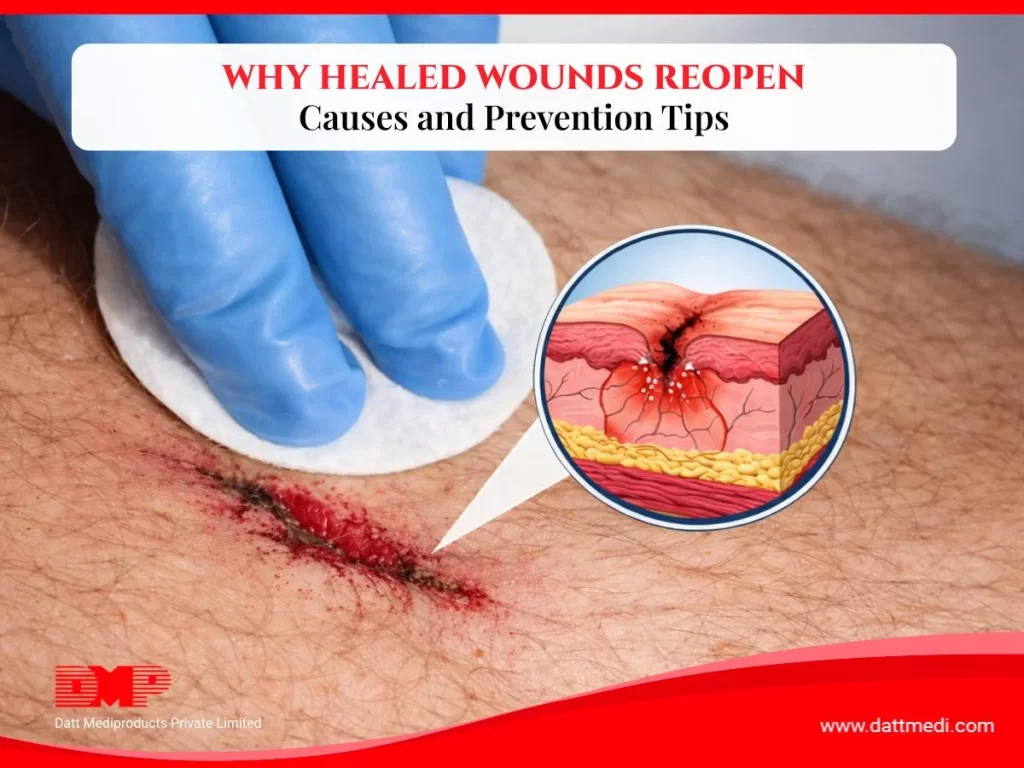
A wound that looks closed on the surface is not the same as wounds that has finished healing. The skin beneath may still be fragile, thin, and far less resilient than the tissue surrounding it. This is the stage where wounds most commonly reopen — not because something went wrong, but because the final phase of healing was not properly supported.

Understanding what makes newly closed skin vulnerable, and what protective measures actually work, can make the difference between a wound that heals completely and one that breaks down again.

Why ‘Closed Wounds’ Does Not Mean ‘Healed’

Wound healing happens in four overlapping stages: haemostasis, inflammation, proliferation, and remodelling. When the wound appears to close, the body is typically entering the remodelling phase — where collagen fibres reorganise and the new tissue gradually strengthens.

This phase can last several weeks to several months. During this time, the repaired skin has significantly lower tensile strength than normal skin — often as little as 50–80% of the original tissue strength, even after full remodelling. In the early weeks after closure, that figure is even lower.

The practical implication: the skin looks fine but cannot tolerate the same level of stress, friction, or pressure that healthy skin can. This is why reopening happens — not from neglect, but from the invisible vulnerability of newly repaired tissue.

The Most Common Reasons Healed Wounds Reopen

1. Mechanical Stress on Fragile Tissue

Areas that move repeatedly — knees, elbows, ankles, knuckles — place constant tension on healing tissue. Even normal daily movement can stretch new collagen fibres beyond what they can tolerate, causing the wound edges to split. This is particularly common in sutured wounds where the closure relies on the tissue holding together under movement.

2. Friction from Clothing or Surfaces

Repeated low-level friction from fabric, footwear, or contact with surfaces can erode the surface of newly healed skin. Unlike healthy skin, which can handle this without damage, fragile remodelling tissue has little resistance. Wounds on the feet, lower legs, or any area in contact with clothing are especially at risk.

3. Removing Dressings Too Early

Once a wound closes, it is easy to assume that dressings are no longer needed. In practice, premature removal of protective cover exposes the area to exactly the mechanical stress and friction described above. The wound may look healed, but the underlying tissue has not yet reached the strength to handle unprotected exposure.
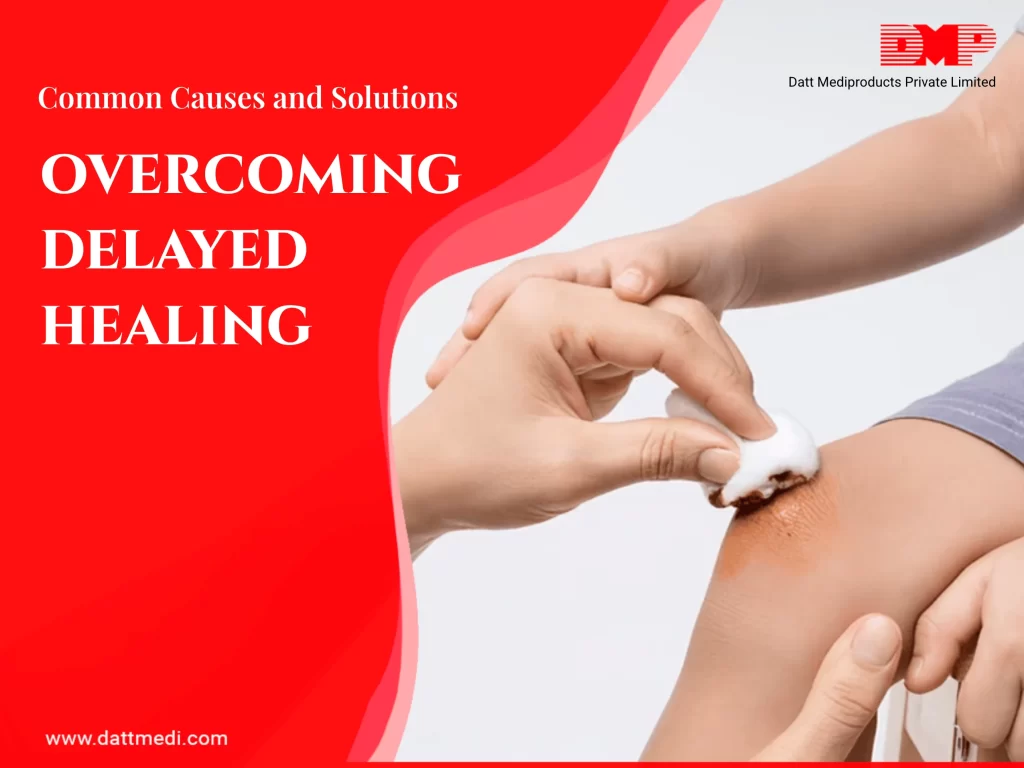
Overcoming Delayed Wounds Healing

Related reading: Overcoming Delayed Healing: Common Causes and Solutions

4. Moisture Imbalance

Both extremes cause problems. Excess moisture — from wound fluid, sweat, or frequent washing without adequate drying — softens the surrounding skin (maceration), making it far easier to break down under light pressure. Very dry skin, on the other hand, becomes rigid and prone to cracking, particularly over joints. Maintaining a balanced moisture environment under and around the dressing is a key part of protecting fragile tissue.

5. Pressure on Immobile Areas

For individuals with reduced mobility, sustained pressure on a single area — particularly bony prominences like heels, sacrum, or hips — can cause tissue breakdown even in areas that appear to have healed. Regular repositioning and pressure redistribution are essential in these cases.

How Film Dressings Protect Wounds During the Remodelling Phase

Post-operative film dressings are one of the most effective tools for protecting healed and near-healed wounds during the remodelling phase. Unlike gauze-based dressings, which are primarily designed for wounds that are still actively healing and producing exudate, film dressings are specifically suited to closed wounds that need surface protection rather than absorption.

The key properties that make film dressings appropriate for this stage wounds are:

  • Physical barrier — blocks friction, bacteria, dirt, and external mechanical stress
  • Breathability — allows moisture vapour to escape, preventing maceration without drying the tissue
  • Transparency — the wound can be visually monitored without removing the dressing
  • Flexibility — conforms to joints and body contours, maintaining protection during movement
  • Waterproof — the wound stays protected during bathing and daily activity

Datt Mediproducts offers three film and post-operative dressings suited to different stages and wound types in the remodelling phase.

Velfix® T-Film — Transparent Film Dressing

A thin, fully transparent PU film dressing designed for closed wounds that no longer produce exudate. The transparent film allows visual inspection of the wound at any time without disturbing it. Velfix® T-Film is waterproof, breathable, and flexible enough to move with the skin across joints and mobile areas. Available in sizes from 5×7.5 cm to 10×35 cm.

Best for: Sutured wounds, minor cuts and abrasions, and wounds in mobile areas such as knees or elbows that need protection without bulk.

Velfix®-Easy+Pad — Film Dressing with Non-Adherent Pad

Combines a transparent film border with a central non-adherent absorbent pad. This makes Velfix®-Easy+Pad suitable for wounds in the later stages of healing that may still produce minimal fluid, or where the wound surface needs a non-stick contact layer to prevent trauma on removal.

Best for: Post-operative wounds in early recovery that are nearly closed but may have light residual drainage.

Velfix®-T+Pad — Film Dressing with Higher Absorbency

Similar in structure to Easy+Pad but with a higher-absorbency central pad. This is the appropriate choice where some exudate management is still needed alongside the protective film border.

Best for: Wounds transitioning from active healing to the remodelling phase, where light-to-moderate fluid output continues.

Choosing the Right Film Dressing for the Wounds Stage

SituationVelfix® T-FilmEasy+PadT+Pad
Wound fully closed, no fluid✓ IdealSuitableUnnecessary
Minimal residual drainageNot sufficient✓ IdealSuitable
Light-moderate exudateNot suitableBorderline✓ Ideal
Joint or mobile area✓ Ideal✓ Suitable✓ Suitable
Needs visual monitoring✓ IdealPartialPartial

Practical Care Tips for the Remodelling Phase

1. Keep the Area Protected Until the Skin Is Fully Strong

Resist the instinct to leave the area uncovered once the wound looks closed. A film dressing provides protection with minimal bulk and does not interfere with daily activity or bathing.

2. Monitor Without Disturbing

The transparency of film dressings means you can check for redness, fluid accumulation, or early signs of breakdown without peeling back the dressing. Only remove when the dressing edges lift, the dressing is full, or at the interval recommended by your healthcare provider.

3. Watch for Early Warning Signs

Address these promptly rather than waiting to see if they resolve on their own:

  • Redness or warmth spreading from the wound edges
  • Skin that looks shiny, wet, or softened around the dressing
  • Small cracks appearing at the wound edges
  • Increased tenderness or a pulling sensation when moving
  • Any reopening of the wound edges
Infection Control in Wound Care

Related reading: Healing on the Go: Orthopedic and Wound Care Solutions for Physical Activity

Protect the Final Stage as Carefully as the First

Most of the attention in wound care goes to the early stages — cleaning, closing, and dressing the wound. The remodelling phase gets far less focus, but it is where a significant number of wound breakdowns occur. Newly closed skin is fragile, and the stress of normal daily life is often enough to cause reopening without adequate protection.

Film dressings provide a practical, low-profile solution for this stage. Transparent, waterproof, flexible, and gentle on removal — they allow recovery to continue without restricting movement or requiring complex care routines.

Browse the Velfix® T-Film and post-operative dressing range at Datt Mediproducts to find the right option for your stage of recovery.
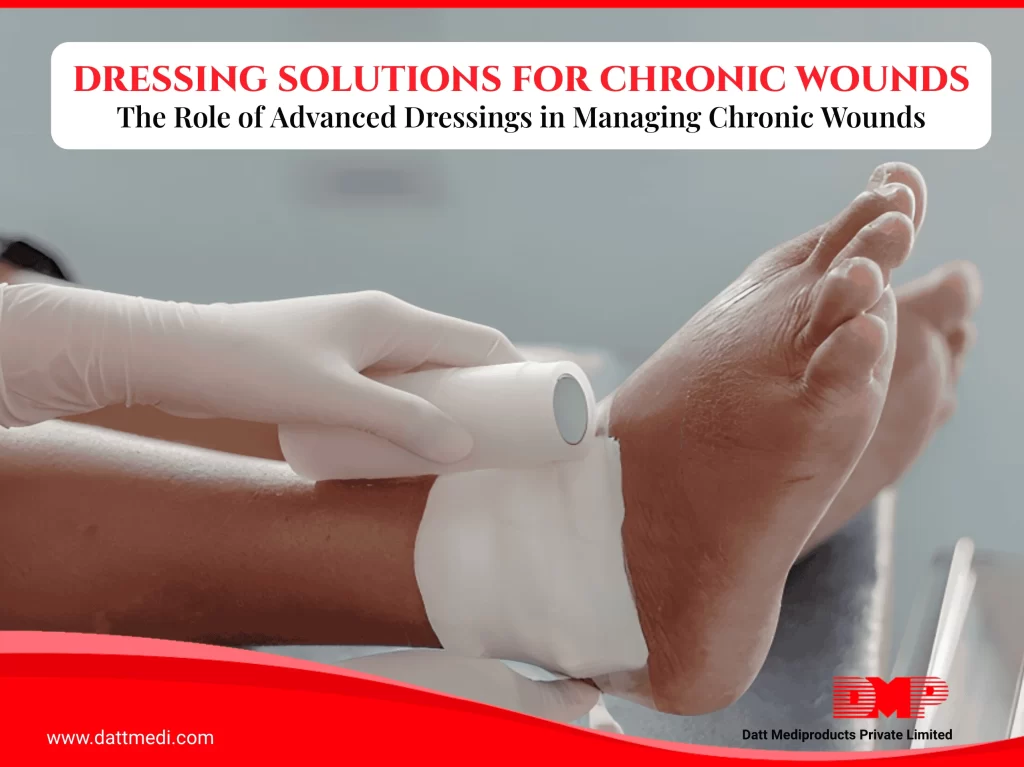
Managing Chronic Wounds

Choosing the Right Dressing for Chronic Wounds

Chronic wounds, such as diabetic ulcers, pressure sores, and venous leg ulcers, present unique challenges in wound care management. These wounds often resist healing due to underlying conditions such as poor circulation, increased infection risks, prolonged or excessive inflammation, and other patient-specific factors.

Selecting appropriate dressings tailored to the needs of chronic wounds is essential to promote healing and prevent complications.

Chronic wounds develop due to systemic issues that delay natural healing. Common types include:

  • Diabetic Ulcers: These ulcers result from reduced blood flow and nerve damage, often occurring on the feet. Proper care involves maintaining a balance between moisture and dryness, ensuring the wound does not become too dry or overly moist.
Stat Spotlight

In India, diabetic foot ulcers account for approximately 20% of all diabetes‑related hospitalizations. ~ Source
  • Pressure Sores: Caused by prolonged pressure on the skin, these wounds are common among bedridden or immobile patients. Managing pressure and ensuring the wound stays clean and protected are vital.
Stat Spotlight

In India, point‑prevalence studies report that approximately 5% of hospitalized patients have pressure ulcers, underscoring the importance of preventive care. ~Source
  • Venous Leg Ulcers: These ulcers result from chronic venous insufficiency, in which impaired venous return causes fluid to accumulate in the lower legs, increasing tissue pressure and leading to skin breakdown. Effective management typically centers on graduated compression therapy to improve circulation, alongside advanced dressings to control exudate, leg elevation, and skin care to protect the periwound area.

Managing these wounds involves addressing infection risks, ensuring patient comfort, and promoting effective healing using evidence-based dressing solutions. Selecting the appropriate dressing depends on the type of wound, its condition, and the specific challenges it presents.

Below are some general guidelines:

Diabetic Ulcers

Dressings should maintain moisture balance and provide effective infection control. Non-adhesive dressings are preferred to minimize skin damage during dressing changes. Velvert®, with its strong antimicrobial properties and excellent moisture management, is ideal for diabetic ulcers and wounds at high risk of infection.

Pressure Sores

These wounds require dressings that redistribute pressure and effectively manage exudate to prevent further tissue damage and support healing. Velfix®-S offers both cushioning and absorption, making it a reliable choice for pressure sores and wounds requiring enhanced comfort and protection.

Venous Leg Ulcers

Advanced dressings used in combination with compression therapy are essential for managing exudate and improving circulation. Velfour®, with its high absorption capacity, is well-suited for heavily exuding wounds, including venous leg ulcers.

Infected Wounds

Antimicrobial dressings are effective in managing bacterial growth and reducing the risk of complications. Silvel™ with its strong silver based antimicrobial action and Velvert™ with their strong silver-based antimicrobial action, are suitable for infected or high-risk wounds such as second-degree burns, necrotizing fasciitis, and traumatic wounds.

Here are some types of advanced dressings that address specific wound care needs:

Antimicrobial Dressings

Designed to manage infection risks, these dressings often contain agents like silver to inhibit bacterial growth. Silvel™ and Velvert™ are widely used for diabetic ulcers and pressure sores prone to infection, owing to their strong antimicrobial properties.

Foam Dressings

Highly absorbent, these dressings are ideal for wounds with significant exudate, such as venous leg ulcers. They also offer cushioning to enhance patient comfort. Velsap™ and Velfix®-S are designed for moderate to heavily exuding wounds, ensuring effective fluid management and reduced dressing change frequency.

Multi-Layer Dressings

These dressings provide both absorption and protection, making them effective for managing pressure sores and heavily exuding wounds. Velfour® is an excellent example, offering essential support for such wound types.

Real-Life Example

A 60-year-old diabetic patient in India developed a non-healing foot ulcer. Initially, traditional gauze dressings were used, leading to frequent infections. After switching to Velvert™ antimicrobial dressing, the wound showed significant improvement within four weeks, with reduced exudate and no further infections. This case highlights the importance of selecting the right dressing for chronic wounds.

Practical Tips for Managing Chronic Wounds

Effective wound care goes beyond dressing selection. Here are additional strategies to optimize healing:

  • Proper Cleaning and Debridement: Regularly cleaning the wound and removing dead tissue helps create an optimal environment for healing.
  • Adjunctive Therapies: Techniques like compression therapy for venous ulcers and offloading for diabetic foot ulcers can significantly improve outcomes.
  • Regular Monitoring: Chronic wounds require consistent evaluation to identify changes in size, depth, or signs of infection, allowing timely adjustments in care.
  • Consulting Professionals: Work with healthcare providers to ensure the care plan addresses the wound’s unique needs and aligns with the patient’s overall health condition.

Selecting the right dressing for chronic wounds can significantly improve healing outcomes and enhance patient comfort. By understanding wound characteristics and tailoring treatments accordingly, healthcare professionals can address even the most challenging cases effectively.

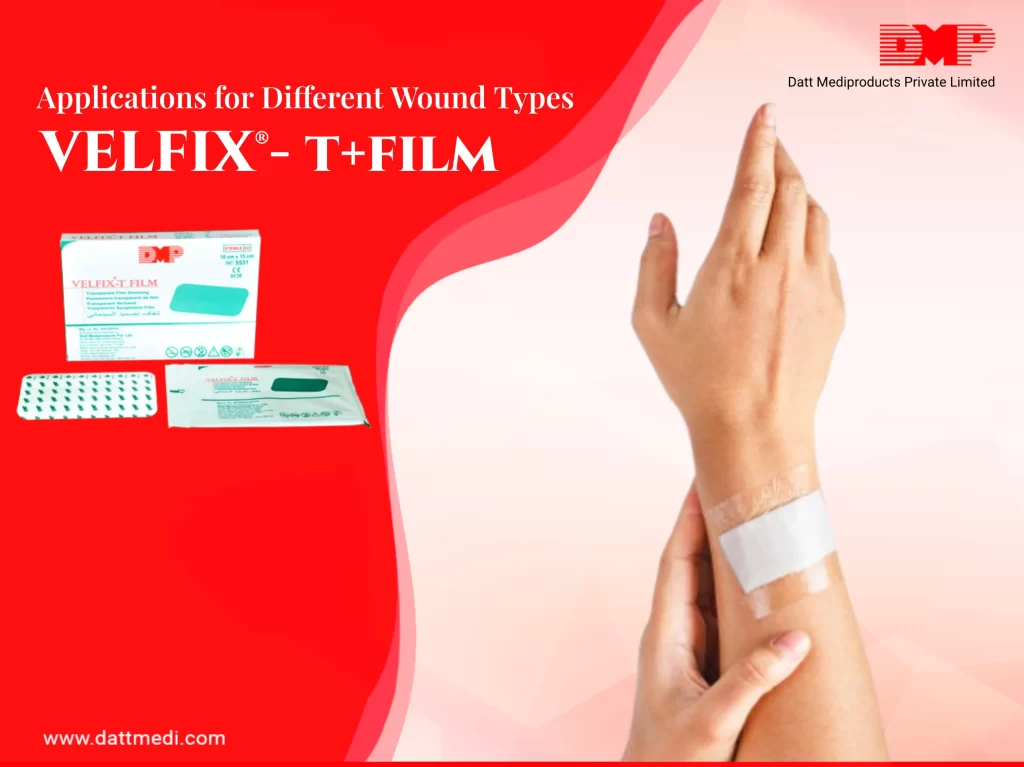
Applications of Velfix®࿯ T Film in Different Wound Types

Wound care has evolved significantly with the development of advanced dressings that cater to various needs. One such innovation is the Velfix® -T Film, a transparent film dressing made from high-quality polyurethane coated with adhesive on one side. This dressing offers a multitude of benefits, making it suitable for different wound types. In this blog, we will explore the various applications of Velfix® -T Film in wound management.

Waterproof Fixation of Wound Dressings:

One of the primary applications of Velfix® -T Film is its use as a waterproof fixation dressing. The film’s impermeability to liquid, water, and bacteria ensures that the wound remains protected from external contaminants. This feature is particularly beneficial for patients who need to shower or come into contact with water during their daily activities. The Velfix® -T Film acts as a barrier, keeping the wound dry and preventing infection while allowing moisture vapor and gases to pass through, promoting a healthy healing environment.

Managing Acute Wounds such as Abrasions and Lacerations:

Acute wounds, such as abrasions and lacerations, require prompt and effective management to prevent complications. Velfix® -T Film is an excellent choice for these types of wounds due to its flexibility and ease of application. The film conforms well to irregular wound contours, providing a secure and comfortable fit. Its transparent nature allows for easy monitoring of the wound’s progress without disturbing the healing process.

Using Velfix® -T Film for Postoperative Incisions:

Postoperative care involves protecting surgical incisions from infection and promoting optimal healing. Velfix® -T Film provides a protective barrier over postoperative wounds, reducing the risk of contamination while allowing for visual inspection without the need to remove the dressing. Its transparent nature facilitates monitoring of the wound site, ensuring early detection of any signs of infection or complications.

Protecting Minor Burns:

Minor burns can be painful and susceptible to infection. Velfix® -T Film offers a gentle and effective solution for protecting these wounds. Its hypoallergenic adhesive ensures secure fixation without causing discomfort, while the film’s barrier properties shield the burn from external irritants. The dressing also promotes a moist environment that supports faster healing and reduces scarring.

Benefits in Treating Superficial Pressure Ulcers:

Superficial pressure ulcers, often caused by prolonged pressure on specific areas of the body, require careful management to prevent further tissue damage. Velfix® -T Film‘s transparent and breathable design makes it ideal for these wounds. The dressing protects the ulcerated area from friction and trauma while allowing clinicians to monitor healing progress easily. Its moisture-retentive properties aid in promoting tissue regeneration and preventing infection.

Hence, Velfix® -T Film stands out as a versatile option in wound care, offering benefits across a range of applications. From waterproof fixation and postoperative wound management to protecting burns and treating pressure ulcers, this transparent film dressing provides a conducive environment for healing while ensuring patient comfort. Its ease of use, breathable design, and hypoallergenic properties make it a valuable tool in modern wound care practices.

Whether used in hospitals, clinics, or home care settings, Velfix® -T Film exemplifies innovation in wound management, enhancing patient outcomes and quality of care. For healthcare providers seeking reliable solutions to enhance wound healing, Velfix® -T Film proves to be an indispensable choice.

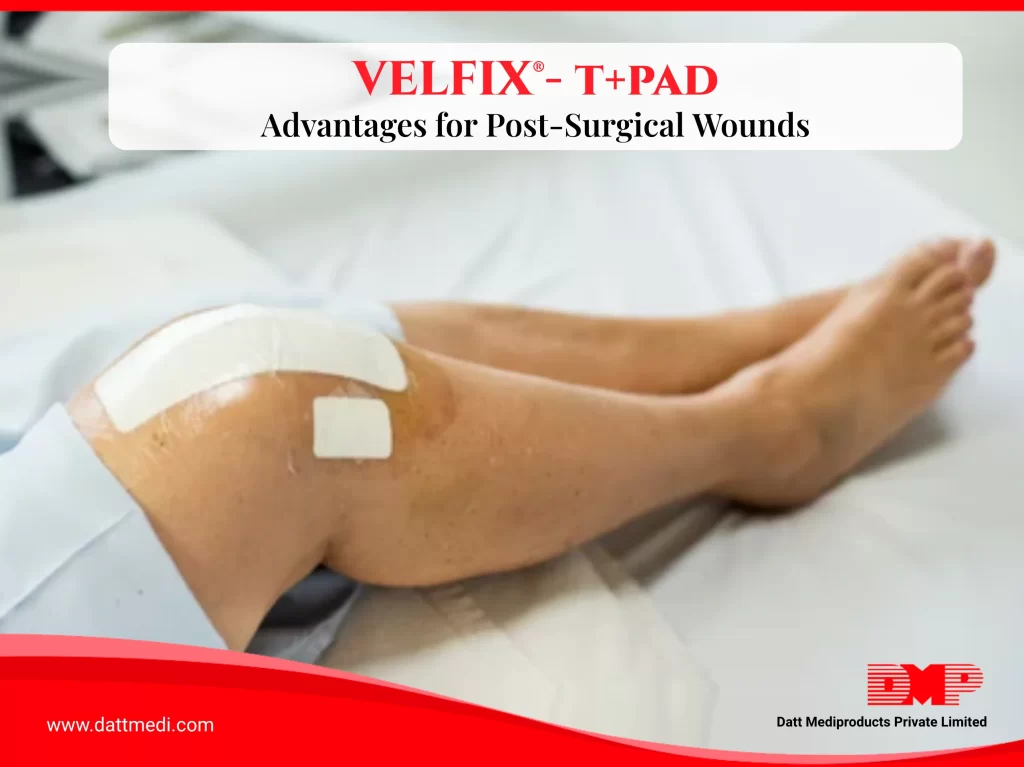
Advantages of Using Velfix®࿯ T+Pad for Post Surgical Wounds

In the field of post-surgical wound care, innovation plays a crucial role in ensuring optimal healing outcomes and patient comfort. Introducing Velfix® -T+Pad, a groundbreaking solution that redefines the standards of wound dressings. Meticulously designed and crafted, Velfix® -T+Pad stands at the forefront of advanced wound care technology, offering not only healing but also unparalleled comfort and convenience.

Waterproof and Bacterial Barrier Properties:

Among the essential features of wound dressings, waterproofing and bacterial barrier stand out. Velfix® -T+Pad not only meets these requirements but surpasses them. Its impermeable yet breathable film forms a protective shield against water and bacteria, safeguarding the wound from external threats and fostering a hygienic healing environment.

Benefits of Continuous Visual Monitoring: 

The advantage of transparent film dressings is the ability to visually monitor the wound without removing the dressing. This allows healthcare providers to detect early signs of infection: clinicians can quickly spot signs of infection, excessive drainage, or other complications, facilitating prompt intervention. It also aids in exudate management : ensuring that the wound exudate is being effectively absorbed and does not pose a risk to the healing process.

Conforming to Body Contours:

Comfort is paramount, especially in areas prone to movement or swelling. Velfix® -T+Pad addresses this need adeptly. Its flexible design seamlessly conforms to the body’s contours, providing a snug fit without compromising comfort. Whether it’s a joint, a curve, or a crease, Velfix® -T+Pad stays in place, ensuring uninterrupted healing.

Effective Evaporation of Moisture:

Moisture management is critical for wound healing, and Velfix® -T+Pad excels in this aspect. Thanks to its innovative adhesive pattern, it facilitates efficient moisture evaporation from the wound bed. This not only keeps the area dry but also prevents maceration, creating optimal conditions for healing.

Reducing Pain Upon Removal:

Dressing changes can be painful, but Velfix® -T+Pad aims to alleviate this discomfort. Featuring a non-adherent pad, it minimizes trauma upon removal, reducing pain and discomfort for the patient. With Velfix® -T+Pad, dressing changes become a smoother, more tolerable process, enhancing the overall patient experience.

In the realm of post-surgical wound care, excellence is imperative. With its innovative design and advanced technology, Velfix® -T+Pad sets a new standard for wound dressings, offering a comprehensive solution that prioritizes healing, comfort, and convenience. 

From its waterproof and bacterial barrier properties to its transparent film for easy monitoring, Velfix® -T+Pad epitomizes cutting-edge wound care. Trust in Velfix® -T+Pad to deliver not only healing but also peace of mind, ensuring a smoother, swiffer path to recovery for patients worldwide.

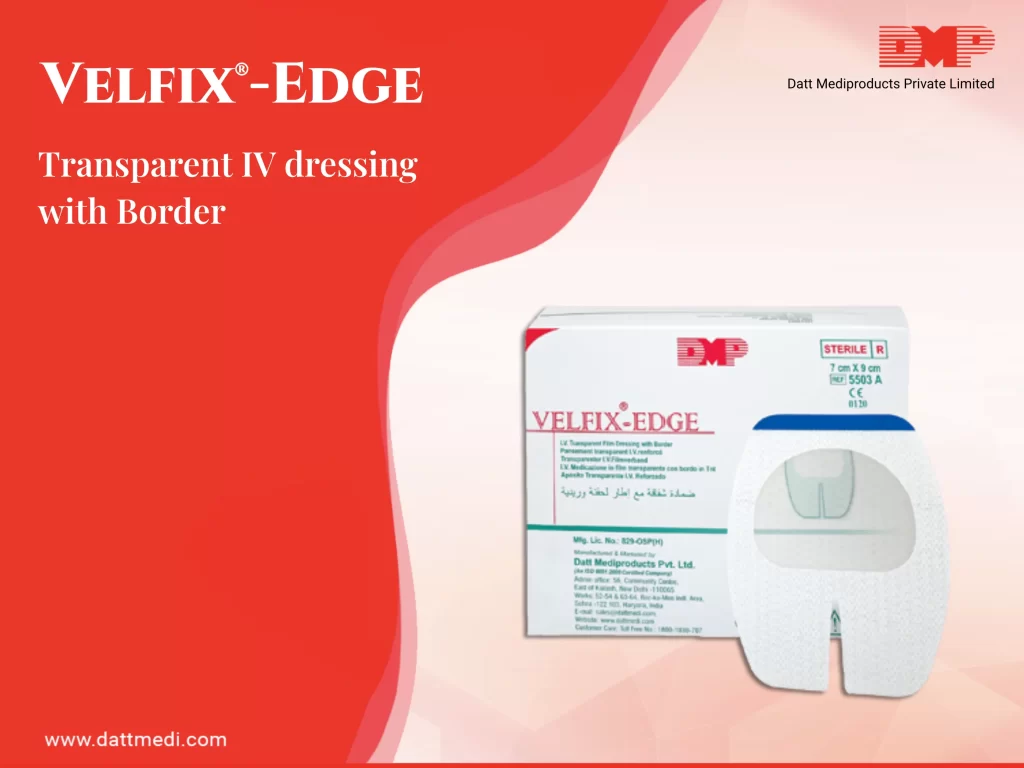
Intravenous (IV) cannulation is a common medical procedure used to administer medications and fluids directly into the bloodstream. While the benefits of IV therapy are clear, the procedure also poses risks, including the possibility of infection at the site of cannula insertion. When it comes to IV therapy, securing the cannula in place is critical for the patient’s safety and comfort.

We present Velfix® -Edge, a specialized IV dressing designed specifically for fixing cannulas, which is used to reduce the associated risks. Velfix® -Edge is a non-woven bordered IV dressings coated with latex free adhesive. Frame delivery system for precise placement. Highly conformable to provide solutions for difficult catheters and IV sites. Promotes best practice and enhanced patient comfort with additional securement strips and date labels. Window Framed delivery system allows for one handed application and prevents dressing sticking to itself. Deep notched design forms a barrier to secondary infection and bacterial contamination.

Some of the unique features and benefits of Velfix® -Edge:

  • It has a window frame design that enables continuous observation of the IV site, which is important for monitoring the patient’s condition and detecting any potential complications.
  • It offers a waterproof sterile barrier that protects the site from external contaminants, reducing the risk of infection.
  • It has stabilization non-woven borders that ensure maximum securement, breathability, and wear time.
  • Its notched design helps to discourage edge lift, which could compromise the sterile environment of the site.
  • It comes with two securement tape strips and a pre-printed documentation label, which facilitates proper labelling and documentation of the procedure.
  • It is easy to handle with gloves and allows for single-handed application, which saves time and improves efficiency.

There are several IV dressings available in the market but Velfix® -Edge stands out from the competition and enables medical practitioners to easily monitor the cannula insertion site.

Instructions for Use:

Velfix® -Edge must be used correctly in order to be effective. Before applying the dressing, the skin in the area of the cannula insertion site needs to be properly washed and dried. The Velfix® -Edge dressing can be placed directly to the skin once the region has been cleaned and dried, ensuring that the cannula stays firmly in place. As directed, the dressing should be changed often.

Precautions and Warnings:

The use of Velfix® -Edge on wounds or other skin-compromised areas is not recommended. It ought to be used exclusively for cannula fixation. Additionally, patients should not use Velfix® -Edge if they have allergies to adhesives or other substances.

Also, to maintain its efficacy and safety, it is crucial to carefully follow the usage instructions and adopt the appropriate safety measures. For securing cannulas, Velfix® -Edge is a great choice and is available in a range of tailored sizes.

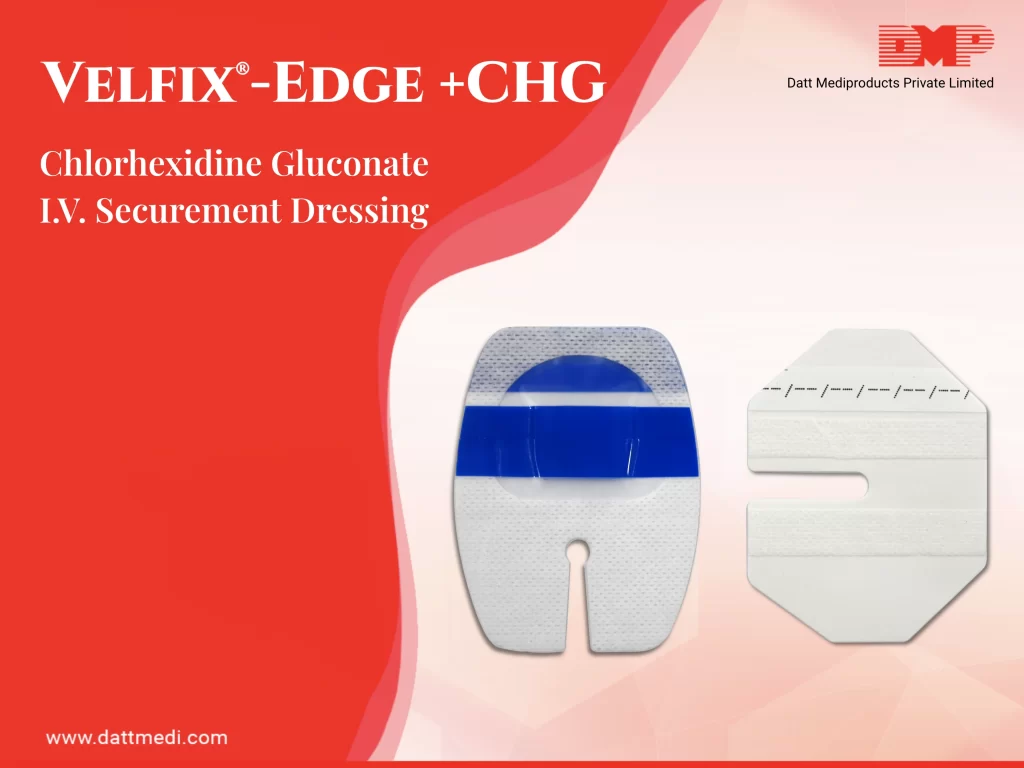
Velfiz Edge CHG

Intravenous catheterization is a common practice for administering fluids directly into the blood stream. It is often associated with a lethal and a very frequent complication of Catheter-related bloodstream infection (CRBSI).

Catheter-related bloodstream infections (CRBSI) are defined as the presence of bacteraemia originating from an intravenous catheter. CRBSIs are a leading cause of nosocomial infections associated with morbidity, mortality, and cost. 

(more…)
Logo

Datt Mediproducts Private Limited

Loading