Search by Blog
Read by Category

Your healing journey continues beyond this blog

Find the right products for better recovery at online store
Cart Image
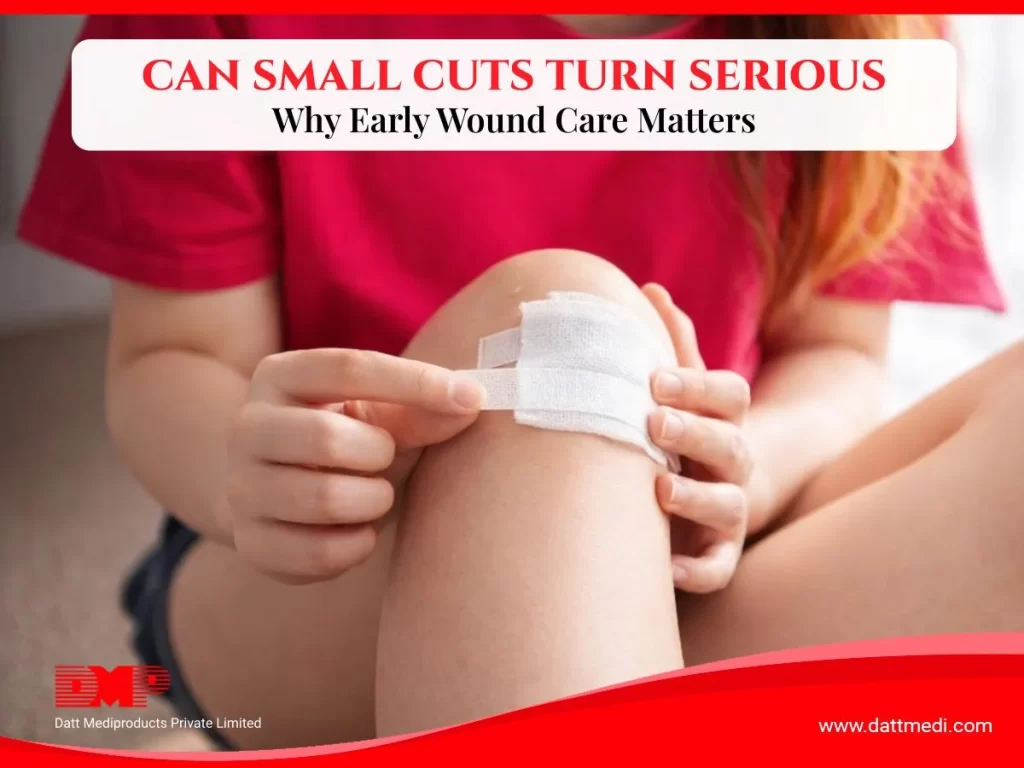
Minor cut being cleaned with antiseptic solution

Yes, even a small cut can become infected if it isn’t cleaned and protected properly. Most minor cuts heal without complications, but bacteria can enter through broken skin and, in some cases, cause infection or deeper tissue problems.

Cuts and scratches are part of daily life, from cooking and gardening to shaving and minor accidents. The good news is that simple first aid can help protect a minor wound and support normal healing.

This blog explains why early wound care matters, the five basic first-aid steps, what to avoid, and the signs that mean a cut needs medical attention.

Why Does Early Wound Care Matter?

Cleaning and protecting a cut early helps remove dirt and reduce exposure to bacteria, friction and further injury.

When the skin breaks, the body’s protective barrier is. Prompt wound care can help reduce contamination and give the skin a cleaner environment to repair itself.

Delayed or inadequate care can contribute to:

  • Increased risk of infection
  • Slower healing
  • Increasing redness or swelling
  • Further irritation or injury
  • In some cases, a deeper infection

How Does a Small Cut Become Infected?

A cut can become infected when bacteria enter through broken skin and multiply in the wound or surrounding tissue.

Common sources of contamination include:

  • Dirt, dust or soil
  • Unwashed hands
  • Contaminated surfaces
  • Dirty tools or objects
  • Animal or human bites

The risk is higher when a wound is deep, contaminated or difficult to clean.

Normal Healing or Infection? How Can You Tell?

Mild redness, tenderness and a small amount of clear fluid can occur during normal healing. Increasing redness, swelling, warmth, pain or pus indicate infection.

SignNormal HealingPossible Infection
RednessMild and limited around the woundSpreads outward or becomes increasingly pronounced
PainGradually improvesBecomes worse or increases 
SwellingMild and gradually settlesIncreases or becomes increasingly warm/tender
DischargeSmall amount of clear or pale fluidPus or cloudy/foul-smelling discharge
OtherGradual improvementFever, red streaks or feeling unwell

The direction of change matters. A wound that is gradually improving is generally less concerning than one that becomes increasingly painful, red or swollen.

How Does Early Protection Help a Wound Heal?

A clean, appropriately covered wound is protected from dirt, friction and further injury while the body’s natural repair process takes place.

Early protection can:

  • Reduce exposure to dirt and contamination
  • Protect the wound from friction
  • Reduce repeated touching or picking
  • Help maintain an appropriate healing environment
  • Protect newly forming tissue from further injury
The dressing should be kept clean and changed according to the needs of the wound and the dressing being used.

How to Treat a Small Cut: 5 First Aid Steps

For a minor cut, wash your hands, control the bleeding with direct pressure, rinse the wound with clean running water, cover it with an appropriate dressing, and monitor it for changes.

1. Wash Your Hands

Clean your hands before touching the wound or dressing.

This helps reduce the chance of introducing additional bacteria.

2. Stop the Bleeding

Apply firm, continuous pressure with sterile gauze or a clean cloth until the bleeding stops.

If blood soaks through the first layer, add more gauze or cloth without removing the original layer.

Seek urgent medical care if heavy bleeding does not stop with firm, continuous pressure or if the wound is deep or severe.

3. Rinse the Wound

Rinse a minor cut with clean running water to remove dirt and debris.

Avoid aggressively scrubbing the wound. Harsh substances can irritate healing tissue.

4. Cover the Cut

Cover the wound with a clean, appropriate dressing to protect it from contamination and friction.

Sterile gauze-based dressings can be useful for many minor wounds, while suitable tapes and adhesives can help secure a dressing.

Choose a dressing large enough to cover the wound and the surrounding area.

5. Check the Wound Regularly

Monitor the wound for increasing redness, swelling, warmth, pain or discharge.

Change the dressing when it becomes wet, dirty or loose, and follow the instructions for the particular dressing.

Tip: Avoid placing loose fibres directly onto an open wound, as they can stick to the healing tissue.

What Should You Avoid Putting on a Small Cut?

Avoid harsh substances, aggressive cleaning and unnecessary handling that can irritate the wound or interfere with healing.

  • Don’t scrub the wound aggressively.
  • Don’t repeatedly disturb the healing tissue.
  • Don’t pick at scabs.
  • Don’t use household chemicals on an open wound.
  • Don’t apply irritating substances unless specifically recommended.
  • Don’t place dirty or loose materials directly onto the wound.

For most minor cuts, gentle cleaning with clean running water and appropriate protection is a better approach than repeatedly applying harsh products.

When Is a Small Cut No Longer a Minor Wound?

A cut needs medical assessment when it is deep, gaping, heavily contaminated, continues bleeding, was caused by a bite or puncture, or develops signs of infection.

Seek medical advice if:

  • Bleeding does not stop with firm pressure
  • The wound is deep or gaping
  • Dirt or debris remains embedded in the wound
  • The injury was caused by an animal or human bite
  • The wound is a puncture injury
  • Redness or swelling continues to spread
  • Pus or unusual discharge develops
  • Pain becomes increasingly severe
  • You develop fever or red streaks near the wound
  • The wound is not improving after several days
  • You are unsure whether your tetanus vaccination is up to date

People with diabetes, poor circulation or a weakened immune system may need earlier medical advice because these conditions can affect wound healing and elevate the infection risk.

When Should You See a Doctor for a Cut?

See a healthcare professional when a wound is deep, difficult to clean, won’t stop bleeding, shows signs of infection, or occurs in someone with a condition that can delay healing.

Prompt medical assessment is particularly important when a wound is caused by a bite, puncture or contaminated object.

Tetanus protection also depends on the type of wound and vaccination history. The CDC’s wound-management guidance provides further information about tetanus prevention after injuries.

If a wound requires specialised care, a healthcare professional may recommend appropriate options such as antimicrobial dressings or products from our advanced wound care range.

Can Small Cuts Become Serious in People with Diabetes?

Yes. A small wound can require closer attention in people with diabetes because reduced sensation or circulation can delay detection and healing.

Check the wound regularly and seek medical advice if it is not improving, becomes increasingly red or swollen, develops discharge, or shows other signs of infection.

This is especially important when reduced sensation makes it difficult to notice pain or injury.

Early Care Can Prevent Bigger Problems

A small cut does not usually become a serious problem, but early cleaning, appropriate protection and regular monitoring can help reduce complications.

The basic approach is simple:

  • Clean the wound
  • Control bleeding
  • Protect it with an appropriate dressing
  • Keep the dressing clean
  • Monitor for changes
  • Seek medical advice when warning signs appear

For additional information on wound care, explore the DMP wound care range.
Visit www.dattmedi.com for more infomation.
Share:

Frequnently Asked Questions

Yes. Bacteria can enter through broken skin and cause an infection. Cleaning and protecting the wound early can help reduce contamination.

Wash your hands, stop the bleeding with direct pressure, rinse the wound with clean running water, cover it with an appropriate dressing and monitor it for changes.

Often, covering a minor cut helps protect it from dirt, friction and further injury. Keep the dressing clean and change it when it becomes wet, dirty or loose.

Increasing redness, swelling, warmth, pain and discharge can indicate infection. Fever, red streaks or feeling unwell can indicate a more significant infection.

Change a dressing when it becomes wet, dirty or loose, and follow the instructions for the particular dressing. Some dressings are designed to remain in place longer than others.

Recent Blogs
Why Muscle Strains Happen

Understanding Muscle Strains: Causes and Effective Recovery Strategies

A muscle strain, or muscle pull, occurs when a muscle is overstretched or torn. This common injury can disrupt daily activities, causing pain and limiting mobility. Understanding the causes and effective recovery strategies can help you heal faster and prevent future injuries. Muscle strains typically happen when the muscle is pushed beyond its limit.

Key factors include:

  1. Overexertion: Intense activity without proper preparation.
  2. Sudden Movements: Abrupt actions, like twisting or jerking.
  3. Lack of Warm-up: Skipping stretching or warm-up exercises.
  4. Poor Posture or Repetitive Motion: These can strain muscles over time.

Recognizing the signs early helps with effective treatment:

  • Sharp or throbbing pain, especially during movement.
  • Inflammation in the affected area.
  • Difficulty moving the muscle fully.
  • Visible bruising from damaged blood vessels.

Start your recovery with these steps:

Rest: Avoid using the muscle until pain subsides.

Ice: Apply ice for 20 minutes every 2 hours to reduce swelling and numb the pain.

Compression: Use a compression bandage to stabilize the muscle and reduce swelling.

Elevation: Elevate the injured area to help reduce swelling.

Velcool®: Instant Cooling Relief

Cooling is one of the best ways to reduce inflammation post-activity. Cold therapy constricts blood vessels, decreases swelling, and slows inflammation. Velcool® offers a convenient and effective solution for reducing swelling and alleviating pain. Its long-lasting cooling effect ensures optimal comfort during the initial recovery phase.
Compression improves circulation and accelerates healing by reducing swelling. Our compression bandages provide targeted support to help the muscle heal more efficiently.

Cokomp™ : Reliable Compression Support

Once inflammation is controlled, compression is crucial for ongoing healing. Cokomp™ provides targeted support, ensuring consistent pressure that enhances circulation and accelerates the healing process. Its lightweight and durable material makes it a perfect choice for both acute care and ongoing recovery.

Once pain subsides:
Begin gentle stretches to restore flexibility.
Slowly incorporate exercises to rebuild muscle strength and prevent future injuries.
Don’t rush back into your normal routine.

Additional recovery tips:

  1. As healing progresses, physical therapy can restore range of motion.
  2. After 48 hours, apply heat to relax muscles and improve circulation.
  3. Stay hydrated and eat a balanced diet rich in protein and vitamins to support muscle repair.

When to consult a healthcare provider:

  1. Persistent pain despite rest.
  2. Inability to move the muscle.
  3. Severe swelling that doesn’t improve.

To reduce the risk of future strains:

  1. Always stretch before physical activity.
  2. Regular strength training can prevent strains.
  3. Ensure good form during exercise to avoid unnecessary strain.

By understanding muscle strains and following effective recovery strategies, you can heal faster and prevent re-injury. Our compression bandages are a key tool in your recovery, offering support and reducing swelling for quicker healing. Explore innovative solutions to support a healthier, more active season ahead.

Managing Orthopedic Injury

From the Field to Recovery: Orthopedic Injury Essentials for Athletes

Sports seasons bring excitement and competition, but they also increase the risk of orthopedic injuries. Athletes must adopt preventive measures and utilize effective orthopedic injury management strategies to ensure peak performance and long-term health.

This guide explores common injuries, prevention strategies, and the role of orthopedic products in recovery.

Common Orthopedic Injuries in Athletes

Athletes often face various orthopedic injury, including:

1. Sprains, Strains, and Fractures

Sprains: A sprain occurs when ligaments (the tissue connecting bones) are stretched or torn, often caused by sudden twisting or rolling of a joint.
Example: A soccer player might twist their ankle while changing direction quickly on the field, resulting in an ankle sprain.

Strains: A strain is an injury to muscles or tendons caused by overuse, overstretching, or excessive force.
Example: A weightlifter lifting a heavy load with improper form might experience a strain in their lower back muscles.

Fractures: A fracture refers to a break in a bone, which can occur due to high-impact collisions or falls.
Example: A cyclist who crashes and lands on their arm might suffer a wrist fracture.

2. Tendon Injuries

Tendons are the fibrous tissues connecting muscles to bones, and they can become inflamed or torn due to overuse or repetitive movements.

Example: 
A tennis player might develop tennis elbow, a condition caused by repetitive strain on the tendons of the forearm. Similarly, a runner could experience Achilles tendonitis from frequent uphill running or poor footwear.

3. Overuse Injuries

Overuse injuries result from repetitive stress on bones, muscles, or joints without adequate rest or recovery time.
Example: A marathon runner who increases mileage too quickly might develop a stress fracture in their foot.

Stress Fractures: Tiny cracks in bones caused by repetitive impact activities like running or jumping.

Shin Splints: Pain along the shin bone caused by overuse of lower leg muscles.
Example: A basketball player who practices on hard courts for extended periods might develop shin splints due to the repetitive impact.

Prevention Strategies for Athletes

Preventing injuries requires a proactive approach that combines preparation, proper equipment, and targeted training:

1. Warm-Up and Cool-Down Routines:

Dynamic stretching and gradually increasing activity levels prepare muscles for exertion, improving flexibility and blood flow. Post-activity stretching helps reduce muscle stiffness and aids in recovery.

2. Proper Gear:

Using well-fitted shoes and sport-specific protective equipment minimizes the risk of injuries caused by poor support or inadequate protection.

3. Strength and Flexibility Training:

Incorporating targeted exercises strengthens muscles, enhances joint stability, and improves range of motion, reducing the likelihood of injury.

Example: 
A sprinter who performs a comprehensive warm-up involving dynamic stretches (such as leg swings and high knees) and wears track-specific, cushioned running shoes is less likely to experience a hamstring strain compared to an athlete who skips these steps and runs in ill-fitted or non-specialized shoes.

Innovative Orthopedic Solutions

Orthopedic products such as Cokomp™ Compression Bandage, Velsoft® Adhesive Bandage, and Velfour®-Plus are designed to provide tailored support and recovery solutions. From managing swelling with targeted compression to providing flexible and lightweight joint support, these products address a variety of athletic needs effectively.

When to Seek Professional Help
Certain signs indicate the need for medical attention to prevent further complications:

  • Severe swelling or bruising that doesn’t subside.
  • Inability to bear weight on the affected limb.
  • Persistent pain or visible deformities.

Physical therapy often plays a key role in recovery, helping athletes regain strength and mobility post-injury.

Building a Safe Sports Culture
Fostering a safe sports environment involves education and awareness:

  • Educating Athletes: Emphasize the importance of injury prevention, recognizing symptoms, and administering first aid.
  • Role of Coaches and Trainers: Encourage proper technique, regular rest, and adherence to safety protocols to minimize injury risks.

Fostering a safe sports environment requires a holistic strategy that emphasizes education, preparation, and recovery. By integrating preventive measures, timely intervention, and the right orthopedic solutions, athletes can minimize the impact of injuries while optimizing performance.

Our advanced orthopedic solutions provide tailored support and comfort, helping athletes recover faster and maintain mobility. Whether it’s targeted compression or flexible support, our products are designed with athletes’ unique needs in mind.

Equip yourself for a safer, healthier sports season with Datt Mediproducts. Our innovative range of orthopedic injury solutions, including high-quality compression bandages and supportive products, is designed to meet the unique needs of athletes. Discover how our products can enhance recovery and performance at Datt Mediproducts.

Logo

Datt Mediproducts Private Limited

Loading
Buy Now Contact Us