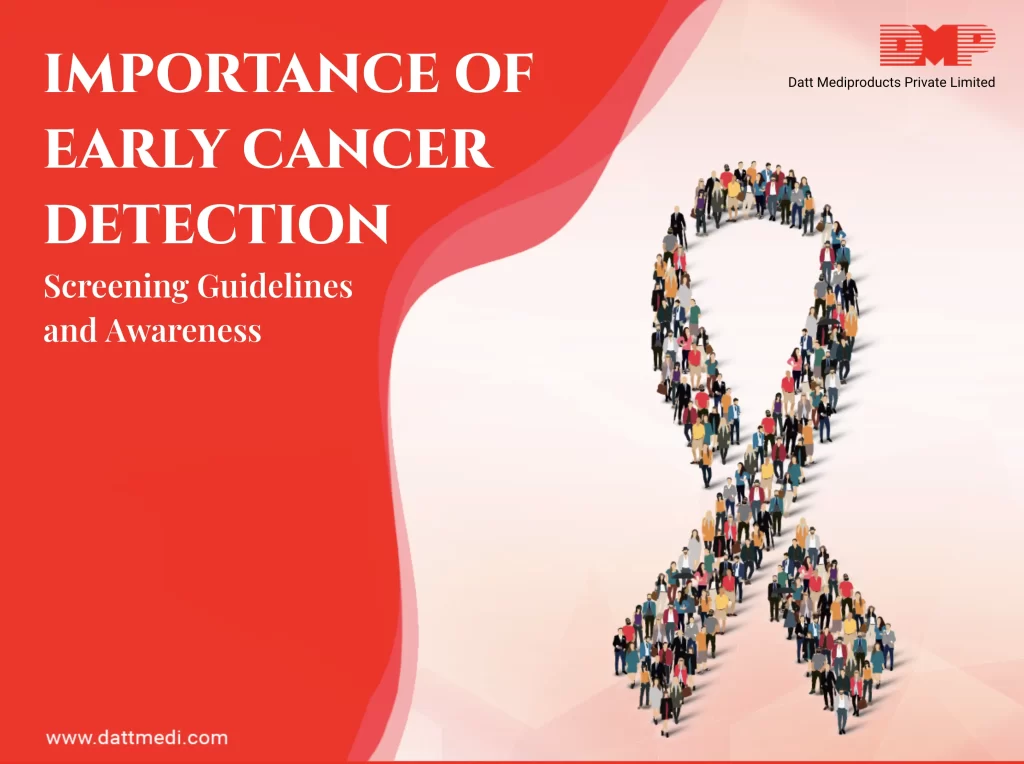
In our fast-paced and demanding modern world, it has become increasingly crucial to prioritize our health and well-being. Among the myriad of health concerns affecting millions worldwide, cancer stands as one of the most significant challenges we face. However, with advances in medical science, early detection has emerged as a powerful tool in the fight against this devastating disease. In this blog, we will explore the importance of early cancer detection, shed light on screening guidelines, and emphasize the necessity of regular screenings for various types of cancer.
The Impact of Early Cancer Detection: Early detection plays a pivotal role in improving cancer outcomes and significantly increasing the chances of successful treatment. When cancer is detected in its early stages, before it has metastasized, treatment options are often less aggressive and more effective. Moreover, early detection significantly enhances survival rates, underscoring the vital importance of regular screenings for individuals.
Screening Guidelines for Different Types of Cancer:
Breast Cancer:
Among women, breast cancer is one of the most prevalent forms of the disease. The American Cancer Society advises that women aged 40 and above should undergo annual mammograms for breast cancer screening. However, individual risk factors may warrant earlier screenings or additional tests.
Colorectal Cancer:
Affecting both men and women, colorectal cancer ranks as the third most common cancer globally. Screening for colorectal cancer typically begins at the age of 45. Methods such as colonoscopy, sigmoidoscopy, and stool-based tests are employed to detect abnormal growths or cancerous cells in the colon or rectum.
Cervical Cancer:
Regular screenings and human papillomavirus (HPV) vaccination can prevent cervical cancer. The American Cancer Society recommends cervical cancer screening for individuals with a cervix starting at the age of 25. This can be achieved through a Pap test, an HPV test, or a combination of both.
Lung Cancer:
As the leading cause of cancer-related deaths worldwide, lung cancer poses a significant threat. For individuals at high risk, such as current or former smokers, low-dose computed tomography (LDCT) scans are recommended. Screening should commence at the age of 50 and continue until age 80, or as long as the individual is in good health.
Prostate Cancer:
Primarily affecting men, prostate cancer typically develops in older individuals. The American Cancer Society advises men to discuss the potential benefits and risks of prostate cancer screening with their healthcare provider. Screening options include prostate-specific antigen (PSA) blood tests and digital rectal exams.
Early cancer detection can save lives by enabling more effective treatment options and improving survival rates. By adhering to the recommended screening guidelines for different types of cancer, individuals can take proactive steps towards their health and potentially detect cancer in its early stages.
Through raising awareness, educating the public, and advocating for regular screenings, we can work together to alleviate the burden of cancer and enhance overall healthcare outcomes. Remember, prevention and early detection are the keys to triumphing over cancer. This strategic stance promises extended lives, improved outcomes, and a brighter future for all, underscoring the vital role of early cancer detection as a beacon of hope in a world where health is paramount.