
Search by Blog
Read by Category

Your healing journey continues beyond this blog

Find the right products for better recovery at online store
Cart Image
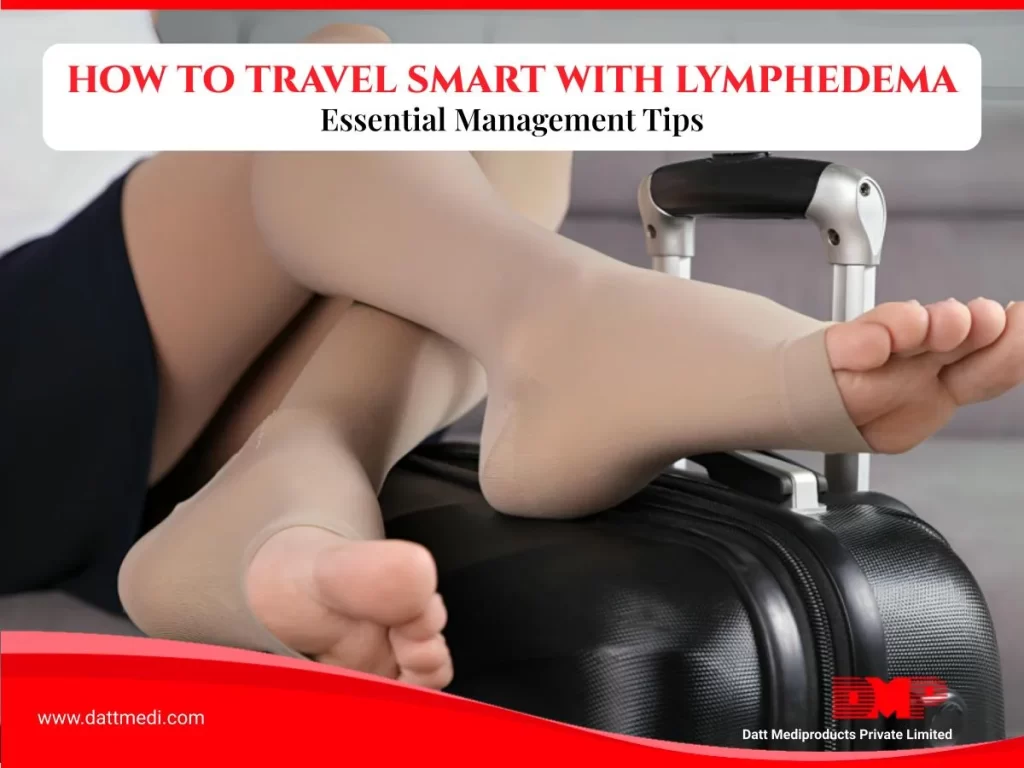
Traveler wearing compression garments on legs

Travel with lymphedema is possible — and with the right routine, most people manage it well. Long hours of sitting, cabin pressure changes, and heat can increase swelling. But simple steps before and during your journey help keep it under control.

This blog covers why travel triggers swelling, what to pack, and how to stay comfortable from start to finish.

Why Travel With Lymphedema Can Make Swelling Worse

  • Long periods of sitting slow lymph flow – The lymphatic system depends on muscle movement to move fluid through the body. Sitting still for hours can cause fluid to build up.
  • Cabin pressure during flights affects fluid movement – Air travel can make swelling worse because changes in cabin pressure influence how fluid circulates in the body.
  • Heat and humidity increase swelling – Warm weather, crowded transport, and hot airports can widen blood vessels and draw extra fluid into soft tissue.
  • Heavy bags add strain to affected areas – Carrying heavy luggage on an affected arm, shoulder, or limb can stress lymphatic pathways. Packing light or getting help with bags can reduce this risk.

How to Travel With Lymphedema: What to Pack

Compression Bandaging

Compression is the most important tool you have. Apply it before you board — not after swelling starts.

The Velcare® Lymphedema Kit is an all-in-one compression bandaging solution designed specifically for managing lymphedema. It includes:

  • Velnet™ Cotton Stockinette — protects skin and absorbs excess moisture under bandages
  • Velkomp® Short Stretch Compression Bandage — applies the controlled, sustained pressure needed to reduce fluid buildup
  • FoamBand Soft Foam Bandage — cushions the limb and distributes pressure evenly
  • Velcare™ Foam Pads — fills anatomical indentations (e.g. around ankles and wrists) for consistent compression
  • Velform™-C Conforming Retention Bandage — wraps individual digits and holds foam pads in place
  • Velpore™ Surgical Paper Tape — secures bandages to prevent slippage during travel with lymphedema

Because it contains everything in one kit, it’s practical to pack without worrying about forgetting a component. Carry a spare set of bandages in case one becomes wet or loses elasticity mid-trip.

Skin Care Essentials

Skin care is important when you travel with lymphedema. Even small cuts or irritation may increase the risk of complications.

  • Carry:
  • Gentle moisturizer
  • Mild soap
  • Antiseptic wipes
  • Small dressings or adhesive bandages
Wound Care for Traveler's: Tips for On-the-Go Healing

Comfortable Clothing

Loose and breathable clothing may help reduce pressure on the affected area and improve comfort during travel.

Travel With Lymphedema: Tips to Reduce Swelling Naturally

Simple daily habits can help support comfort and circulation during your journey.

Wear Your Compression

Put on your compression garment or apply your Velcare® bandaging before boarding — not after swelling has already started. Compression applies gentle, consistent pressure that guides lymph fluid away from swollen tissue and supports its movement back through the body’s natural drainage pathways. This is especially important during long trips when movement is limited.

Compression Stocking for Varicose Veins


Move Every Hour

Stand up and walk for a few minutes whenever you can. If movement is not possible, seated exercises keep circulation active:

  • Ankle circles
  • Foot pumps (press toes down, then lift heels)
  • Shoulder rolls
  • Gentle arm stretches

Stay Hydrated

Dehydration encourages the body to retain fluid, which can make swelling worse. Drink water consistently throughout the journey. Avoid excess caffeine or alcohol, particularly on flights.

Elevate When You Can

During rest stops or once seated, elevate the affected limb slightly above heart level to help reduce fluid accumulation.

Flying-Specific Tips

  • Book an aisle seat so you can stand and move without disturbing others.
  • Ask a flight attendant or fellow passenger to help with overhead luggage — avoid lifting heavy bags yourself.
  • Perform in-seat foot pumps and leg stretches throughout the flight, particularly on journeys over two hours.

After Travel: Warning Signs to Watch For

Most journeys pass without incident when precautions are followed. However, monitor for:

  • Sudden or significant increase in swelling
  • Tightness or heaviness in the limb
  • Skin redness or unusual warmth
  • Pain or tenderness
  • Fever or other signs of infection
Note:
If any of these appear or worsen in the hours after travel, contact a healthcare professional promptly. Early attention prevents complications.

Travel with Lymphedema Confidently

Lymphedema is a condition to manage, not a reason to stay home. With a complete compression kit, a few deliberate habits during the journey, and attention to your body afterwards, most people live fully mobile lives — exploring new places without compromising their health.

The Velcare® Lymphedema Kit provides everything you need in one kit — designed to be packed, carried, and used wherever your journey takes you.
Visit www.dattmedi.com for more infomation.
Share:

Frequnently Asked Questions

There is no universal waiting period — it depends on the type of surgery, how well the wound has healed, and your specialist’s assessment. Most surgeons advise waiting until the surgical site is fully closed and stable, then taking a short test flight before committing to long-haul travel. Always get clearance from your treating physician before flying post-surgery.

It is not legally required in most countries, but carrying a brief letter from your doctor or lymphedema therapist is strongly recommended. It explains why you need compression bandages and any other supplies in your carry-on — which can avoid delays at security screening.

Even a two-hour journey can trigger swelling if you are prone to it. Compression is generally advised for any trip where you will be sitting for more than 90 minutes — regardless of the mode of transport.

A wet or loose garment loses its compression effectiveness and can irritate the skin. This is why carrying a spare set of bandages is part of standard travel preparation. The Velcare® Lymphedema Kit’s components can be reapplied without specialist equipment, making it practical for use on the road.

Heat can cause a temporary increase in swelling, but it does not permanently worsen the condition if managed properly. Stay cool, wear light clothing, avoid hot tubs and prolonged sun exposure on the affected limb, and maintain your compression routine throughout the trip.

Recent Blogs
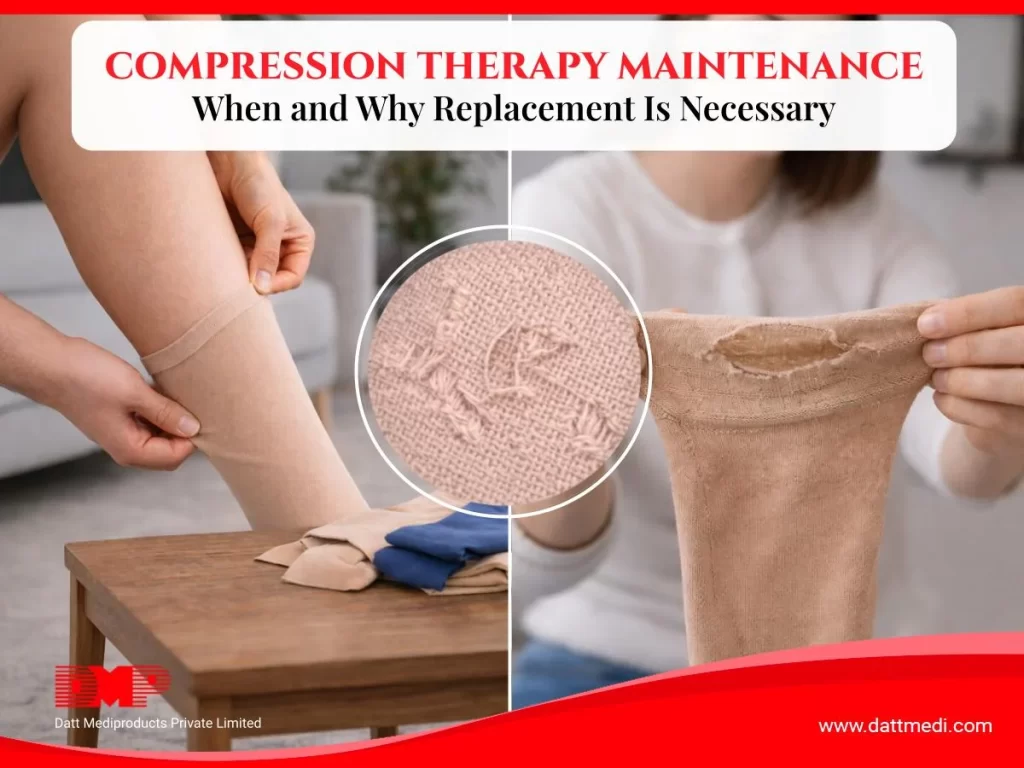
Worn-out compression stocking losing elasticity

Compression stockings rely on elastic fibres to provide consistent pressure and support. Over time, repeated wear and washing can weaken these fibres, reducing how effectively the garment works.

Even if your stockings look fine, they may no longer provide the same level of compression. Knowing what signs to look for can help you decide when it’s time for a replacement and how to keep your garments in good condition.

This blog explains how to recognize worn-out compression stockings, check their condition at home and care for them to extend their lifespan. It explains how long they last, the signs it is time for a new pair, a simple at-home stretch test, and habits that help them last longer. It is written for people who wear compression and for family members and carers who help them.

How Long Do Compression Stockings Last?

With regular daily wear, most compression stockings have a lifespan of around 3 to 6 months. However, this can vary depending on the product, frequency of use and how well it is maintained.

Healthcare guidance supports this recommendation. HSE’s varicose veins guidance, adapted from NHS content, highlights the need for regular replacement.
Northern Ireland’s formula guidance on hosiery also notes that stockings may need replacing sooner if they become damaged or fail to return to their original shape after stretching.

ProductTypical replacement guidanceWhat to watch for
Compression stockings or socks (daily wear)About 3 to 6 monthsLoose fit, slipping, stretching, damage
Compression sleevesDepends on the product and how often it is usedLooseness, reduced grip, loss of shape
Reusable compression bandagesFollow the maker’s reuse and washing instructionsLoss of stretch, damage, soiling
Single-use bandagesOne use, or as directedDo not reuse unless designed for reuse

What changes how long a stocking lasts:

  • How often you wear it (daily wear ages it faster)
  • How you wash and dry it
  • The fabric and how it is made
  • How much it is stretched when you put it on
  • Your activity level
  • Changes in leg size or swelling

If the manufacturer gives a specific replacement interval, follow that instead of a general timeline.

What Are the Signs Your Compression Stockings Need Replacing?

Replace your stockings when they feel loose, look stretched or thin, keep slipping down, or have holes or frayed seams.

What you noticeWhat it may meanWhat to do
Feels looser than when newElastic has weakenedConsider replacing
Goes on much more easily than beforeLess tensionCheck fit, then consider replacing
Slips down again and againLost stretch or gripReplace if the size is correct
Top band rolls or loses shapeWeakened materialReplace
Fabric looks thin or overstretchedWearReplace
Holes, runs or frayed seamsDamageReplace
Less support than beforeWorn elastic or a change in leg sizeRe-measure, then replace if needed

Try the 30-second stretch test. Gently stretch the fabric between your hands, then let go. It should spring back to its original shape. If it stays baggy or takes noticeably longer to recover, the elastic has probably lost its strength.

For caregivers: If the person you care for says their stockings feel "different" or keeps pulling them up, check them. Slipping and bunching can also leave marks or sore spots on fragile skin. Our guide to compression for elderly people with fragile skin explains what to look for.

Why Do Compression Stockings Lose Their Effectiveness?

Elastic fibres give compression its pressure. Repeated stretching, sweat, skin oils and washing slowly reduce that elasticity.

As a stocking ages it may:

  • Feel looser and stretch more easily
  • Lose its shape
  • Slip or roll down
  • Stop giving steady, even pressure

This is why appearance alone is not a reliable guide.

Should You Replace Compression Stockings If They Still Look Fine?

Yes, if they have reached the manufacturer’s replacement interval or have clearly lost elasticity. Elastic can weaken before holes or other damage show.

Reassess your stockings sooner if:

  • Your leg swelling changes
  • Your weight changes noticeably
  • Your measurements have changed
  • You have had surgery or a new diagnosis
  • The stocking is uncomfortable, slipping or bunching
  • Your healthcare professional changes your compression level

If your measurements have changed, read our guide on correct measurement and fit of compression garments before choosing a replacement.

How Can You Make Compression Stockings Last Longer?

Wash them as the manufacturer directs, avoid damaging the elastic and rotate at least two pairs.

  1. Wash them regularly. Many makers advise washing after each wear to remove sweat and skin oils. In hot, humid weather, sweat builds up faster, so regular washing matters even more. Check your product’s instructions.
  2. Use mild detergent only. Avoid fabric softener and bleach, which can damage elastic fibres. NHS patient leaflets commonly advise a gentle wash with non-biological detergent and no fabric conditioner.
  3. Do not wring or twist. Press out extra water gently.
  4. Dry away from direct heat. Avoid radiators, direct sun and tumble dryers unless the label says they are safe. Air drying is usually gentlest.
  5. Keep two or more pairs. Wear one while the other is washed and dried. Each pair rests between wears, which helps both last their full lifespan.
  6. Put them on carefully. Avoid snagging with nails or jewelry. Rubber gloves or a donning aid reduce stretching and make putting them on easier, especially for older people or carers helping someone else.
  7. Note the start date. Write the first-use date on the packet or a calendar so you know when the replacement interval is due.

How many washes is that? The NHS Wilt shire Clinical Commissioning Group’s Medicines Management Team guidance states that compression stockings should last approximately 100 washes when properly cared for. It recommends having two stockings per leg, so one can be worn while the other is washed and dried. The guidance uses this washing and rotation schedule to support replacement twice a year.

What About Compression Bandages, Sleeves and Wraps?

The same rule applies: when the elastic loses its stretch or the garment is damaged, it no longer gives the support it was chosen for.

  • Reusable bandages should be washed and reused only as the maker instructs. Replace them when they lose stretch, fray or become soiled.
  • Single-use bandages are not meant to be reused.
  • Compression sleeves should be replaced when they lose grip or shape.
  • Compression wraps are often replaced about every six months in NHS patient leaflets, but follow your product’s guidance.

Not sure which suits you? Read Compression Bandages vs. Compression Stockings. For how compression supports healing, see Compression Therapy in Wound Healing.

When Should You Speak to a Healthcare Professional?

Speak to a doctor or nurse if your swelling changes, the stocking is uncomfortable, your skin is irritated, or you are unsure your compression level is still right.

Seek advice if:

  • Swelling appears suddenly or gets much worse
  • One leg is clearly more swollen than the other (see why one leg swells more than the other)
  • You develop skin irritation, blisters or colour changes
  • Your leg feels numb
  • Your toes turn unusually cold, pale or bluish
  • The compression feels too tight

Get urgent medical help if you have sudden swelling in one leg with pain, warmth or redness. This can be a sign of a blood clot (deep vein thrombosis). The NHS advises calling 999 or going to Accident and Emergency if DVT symptoms come with chest pain or breathlessness. In India, call 112 or go to the nearest emergency department.

Do not change your size or compression level on your own. Re-measure and get professional advice.

What Happens If You Keep Wearing Worn-Out Compression Stockings?

A worn stocking may not give the intended level or evenness of compression. It may feel loose, slip, lose shape, press unevenly or become uncomfortable. If a stocking has lost its elasticity or no longer fits properly, replacing it is generally better than relying on it.

Quick Checklist: Is It Time for New Compression Stockings?

  • Has it been 3 to 6 months of daily wear, or the interval the maker states?
  • Does it feel looser than when new?
  • Does it slip, roll or bunch?
  • Is the fabric thin, stretched, holed or frayed?
  • Does it fail the stretch test?
  • Has your swelling, weight or measurements changed?

If you answered yes to any of these, check the fit and plan a replacement. For everyday venous support, explore Velcare® Varicose Vein Compression Stockings or the DMP Compression Bandage range. Managing varicose veins? Our guide to varicose veins covers causes and daily care.

This article is general information and does not replace advice from your doctor, nurse or pharmacist.

Related Reading

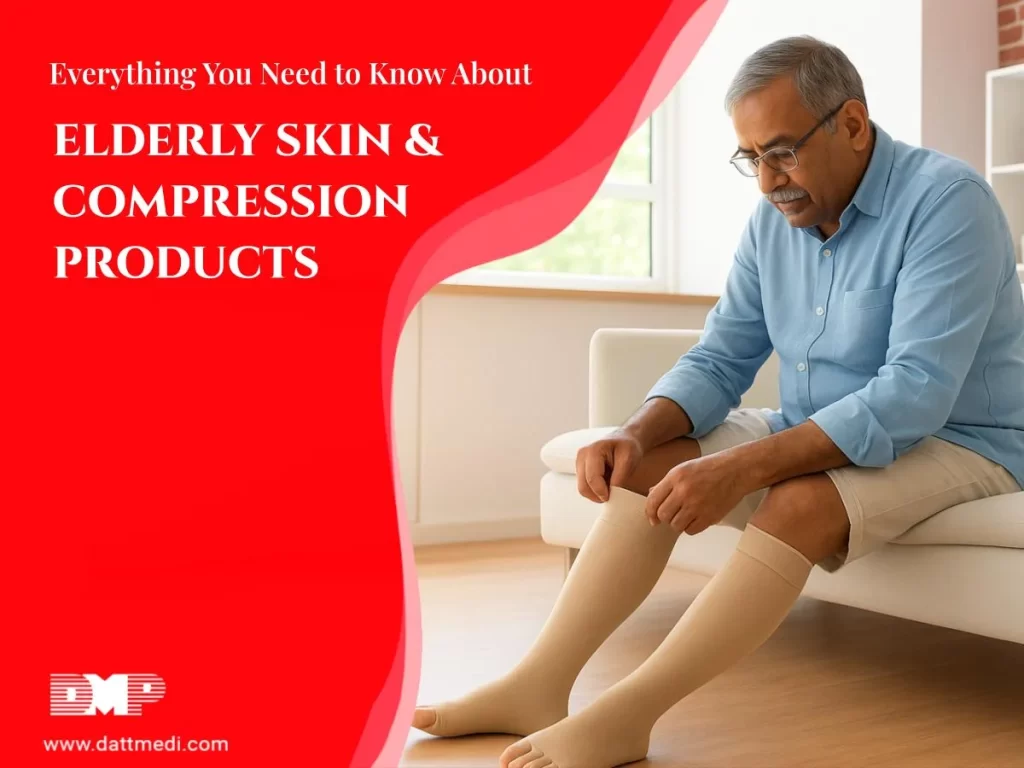
Elderly patient wearing soft compression stocking

Compression can be safe for some older adults with fragile skin, but the right product, pressure and fit matter. If circulation is reduced or the skin is extremely fragile, a healthcare professional should assess the leg before compression is used.

As we age, skin becomes thinner, drier and less elastic. This can make it easier to bruise, tear or become irritated from pressure and friction. That does not automatically mean compression must be avoided. It means the garment or bandage needs to be selected, applied and monitored carefully.

This blog explains how compression stockings and bandages differ, what to look for when skin is fragile, how to use compression more safely, and which warning signs mean you should stop and seek medical advice. 

Why Does Aging Skin Need Extra Care with Compression?

Older skin is more vulnerable to pressure, friction and skin damage, so fit and application become especially important.

Common changes in aging skin include:

  • Thinner skin
  • Reduced elasticity
  • Increased dryness
  • Greater tendency to bruise
  • Higher risk of skin tears
  • Slower recovery from skin damage
A compression garment that fits incorrectly or is applied roughly 
can create unnecessary pressure or friction. Regular skin checks
are therefore particularly important for older adults.

Are Compression Stockings or Bandages Better for Fragile Skin?

Neither option is automatically better. The choice depends on the person’s skin condition, swelling, limb shape, dexterity and the type of compression required.

FactorCompression StockingsCompression Bandages
PressureDesigned to provide a defined level of compressionDepends on the bandage system and application
FitRequires accurate measurementCan be adjusted around the limb
ApplicationMay be difficult for people with limited hand strength or mobilityOften requires correct wrapping technique
SwellingUseful when the limb can be fitted appropriatelyCan be useful when limb size changes
Fragile skinNeeds careful application to avoid pulling or frictionRequires careful wrapping without excessive pressure or folds

For someone who has difficulty putting on or removing a stocking, assistance or an appropriate application aid may be needed.

Read our guide on 
Compression Bandages vs. Compression Stockings
for a closer comparison.

What Should You Look for in Compression Products for Older Skin?

Accurate sizing, appropriate pressure and a comfortable material are three important considerations when skin is fragile.

1. Accurate fit

A garment that is too tight may create excessive pressure, while one that is too loose may not provide the intended support.

Leg measurements should be taken according to the manufacturer’s instructions. Our guide on Correct Measurement and Fit of Compression Garments explains the process in more detail.

2. Appropriate compression level

The correct compression level depends on the reason for compression, circulation, swelling and the person’s medical condition.

Do not assume that a stronger compression level is better. If someone has peripheral arterial disease, reduced sensation, significant skin problems or other medical conditions, professional assessment is particularly important before compression is used.

NICE recommends assessment for peripheral arterial disease when compression hosiery is being considered.

3. Skin-friendly material

Look for material that feels comfortable against the skin and does not create unnecessary rubbing or moisture build-up.

The garment should also sit smoothly against the leg rather than bunching into folds.

What Are the Risks of Incorrect Compression?

Poor fit, excessive pressure, wrinkles or rough application can contribute to skin irritation, pressure damage or circulation problems.

Possible problems include:

  • Redness or irritation
  • Pressure marks
  • Bruising
  • Skin tears
  • Blisters
  • Skin breakdown
  • Numbness or tingling
  • Reduced circulation when compression is inappropriate

The risk is particularly important when the person has reduced sensation and may not notice pressure or discomfort immediately.

How Can Older Adults Use Compression More Safely?

Apply compression gently, avoid wrinkles, check the skin regularly and follow the recommended wear instructions.

1. Apply it gently

Avoid pulling aggressively on fragile skin. Gloves or suitable donning aids may make application easier and reduce unnecessary friction.

2. Keep the skin moisturised

Dry skin can be more vulnerable to cracking and irritation. A suitable fragrance-free moisturiser can help maintain the skin barrier.

Allow moisturiser to absorb before applying compression, and follow the garment manufacturer’s care instructions.

3. Remove wrinkles and folds

Wrinkles can create concentrated areas of pressure.

After applying the garment or bandage, check that it sits smoothly and does not form tight folds.

4. Check the skin every day

Pay particular attention to:

  • Ankles
  • Heels
  • Shins
  • Toes
  • Behind the knees
  • Areas over bony prominences

Look for new redness, bruising, blisters, swelling or skin damage.

5. Follow professional advice on wear time

There is no single wear schedule that is right for everyone. Follow the instructions provided for the specific condition, product and compression level.

When Should Compression Be Avoided or Professionally Assessed?

People with circulation problems, reduced sensation, significant skin damage or certain heart conditions should receive professional advice before using compression.

Extra assessment may be needed when there is:

  • Known or suspected peripheral arterial disease
  • Significant loss of sensation or peripheral neuropathy
  • Very fragile or damaged skin
  • Open wounds or active skin infection
  • Significant or unexplained swelling
  • Heart failure or other significant cardiac conditions
  • A leg shape that makes correct fitting difficult
NICE notes that strong compression can affect arterial blood supply in people with peripheral arterial disease, which is why circulation assessment matters before compression is prescribed.

For people with venous leg ulcers, evidence reviewed by Cochrane indicates that compression can improve healing compared with no compression, although the evidence around adverse effects is less certain.

What Warning Signs Mean Compression Should Come Off?

Stop and seek medical advice if compression causes new or worsening symptoms such as significant pain, numbness, marked colour change, cold toes, blistering or skin damage.

Remove the garment or seek urgent medical assessment if you notice:

  • New numbness or tingling
  • Significant or increasing pain
  • Toes becoming unusually cold, pale or blue
  • New blisters or skin tears
  • Rapidly worsening swelling
  • Skin becoming damaged beneath the garment

Sudden one-sided leg swelling, pain, warmth or redness also needs prompt medical assessment because these symptoms can have causes that require urgent treatment, including a possible blood clot.

Do not simply increase or decrease compression yourself when symptoms appear. Get professional advice about the cause and the appropriate level of support.

Can Compression Help Older Adults with Swelling?

Compression can help manage certain types of leg swelling, particularly when swelling is related to venous or lymphatic problems, but the cause of swelling should be considered first.

Compression is not appropriate for every type of swelling.

If swelling is new, sudden, one-sided or accompanied by pain, warmth or redness, medical assessment is more important than simply applying compression.

For more information about how compression is used in wound care, 
Read our guide to Compression Therapy in Wound Healing.

Supporting Older Skin While Using Compression

Compression does not have to mean compromising skin comfort.

For older adults with fragile skin, the focus should be on:

  • Correct measurement
  • Appropriate compression
  • Gentle application
  • Smooth, wrinkle-free positioning
  • Regular skin checks
  • Professional assessment when medical conditions are present

When these factors are considered, compression can be used appropriately as part of care for some older adults.

For everyday venous support, explore Velcare® Varicose Vein Compression Stockings. For adjustable compression support, explore the DMP Compression Bandage range.

Related Reading

Logo

Datt Mediproducts Private Limited

Loading
Buy Now Contact Us