

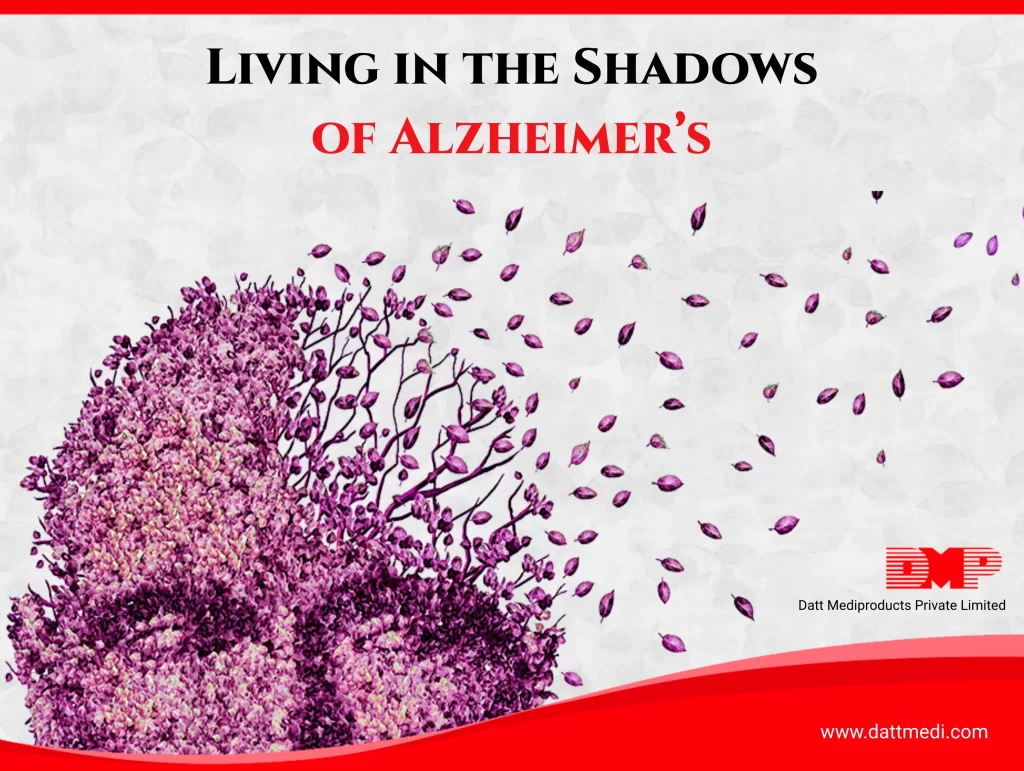
Alzheimer’s is a neurodegenerative disease which occurs when plaques containing beta-amyloid develop in the brain. The healthy neurons (brain cells) thus stop functioning, their connection with other neurons are lost and they die.
The damage initially affects the parts of the brain that are essential in forming memories thereby causing memory loss. The death of the neurons progress to other parts of the brain and the affected parts shrink.
During the severe stage of the disease, brain tissue has shrunk significantly resulting in cognitive decline.
Some Facts:
- Alzheimer’s is a neurological disorder and chronic in nature.
- Symptoms advance gradually.
- There is no cure available but the treatment can slow disease progression.
- People over 65 years of age or those with a family history are at a higher risk.
- Alzheimer’s affect different people differently. Some experience a quick onset of the symptoms and rapid disease progression while others do not.
- In 2016, a study was published in the Journal of Alzheimer’s Disease suggested that a change in sense of humor might be an early sign of Alzheimer’s.
The 10 Warning Signs & Symptoms of Alzheimer’s:
- “Memory Loss” the most common sign of Alzheimer’s disrupting the patient’s life.
- The patient may experience “Difficulty in Planning or Solving Problems”.
- People with Alzheimer’s find it “hard to complete daily familiar tasks”.
- Trouble keeping track of time, dates, seasons or place.
- “Vision issues” might be the signs of Alzheimer’s for some people. They may have difficulty balancing, judging distances, determining colors or trouble reading.
- “Problems with words while speaking or writing”. People with Alzheimer’s may struggle with vocabulary or have trouble following or joining a conversation.
- Alzheimer’s patients may have a “tendency to misplace things” and are unable to find them again.
- “Decreased Poor Judgement or Changes in decision making” could be other symptoms.
- Alzheimer’s might lead to the withdrawal of the person from work or social activities or hobbies.
- “Changes in mood and personality” like confusion, suspicion, depression, fear, and anxiety.
How Alzheimer’s Progresses?
The symptoms of Alzheimer’s disease worsen over a period of time.
The disease progresses through the following seven stages:
Stage 1: Normal Outward Behavior:
This is the earliest stage with no visible symptoms. Only a PET scan or an early diagnosis based on family history can help reveal the disease.
Stage 2: Very Mild Changes:
Earliest symptoms such as forgetfulness or misplacing things appear during this stage.
Stage 3: Mild Decline:
During the 3rd stage, the noticeable changes appear in the patient’s thinking and reasoning abilities involving mild physical and mental impairments.
Stage 4: Moderate Decline:
This is the stage where Alzheimer’s is usually diagnosed. Changes appearing during Stage 3 become more evident now.
Stage 5: Moderately Severe Decline:
Moderate to severe symptoms can be seen during this stage. The patient might start to lose track of time and have trouble remembering life events.
Stage 6: Severe Decline:
At this stage, the patient needs to be helped with basic everyday tasks. Delusions set in. The patient might mistake a person for someone else.
Stage 7: Very Severe Decline:
This is the last and the final stage of Alzheimer’s disease and the most severe one. During this stage, the patient loses basic abilities like eating, walking, etc. Speech and Facial expressions might also be lost.
Although there is no known cure of Alzheimer’s, we @DattMediproducts understand the seriousness of the disease and encourage everyone including the family and friends of the patient to not ignore the symptoms and consult a doctor immediately. Early detection and early treatment may help relieve the symptoms and maintain the independence of the patient for a longer period of time.