

Search by Blog
Read by Category

Your healing journey continues beyond this blog

Find the right products for better recovery at online store
Cart Image
Are you Allergic to your Food?

Has your food ever made you uncomfortable?
Have you ever experienced any unusual reaction in your body post eating some specific foods or have you encountered symptoms like hives, itching, or vomiting?
This is an allergic reaction from the food you ate.

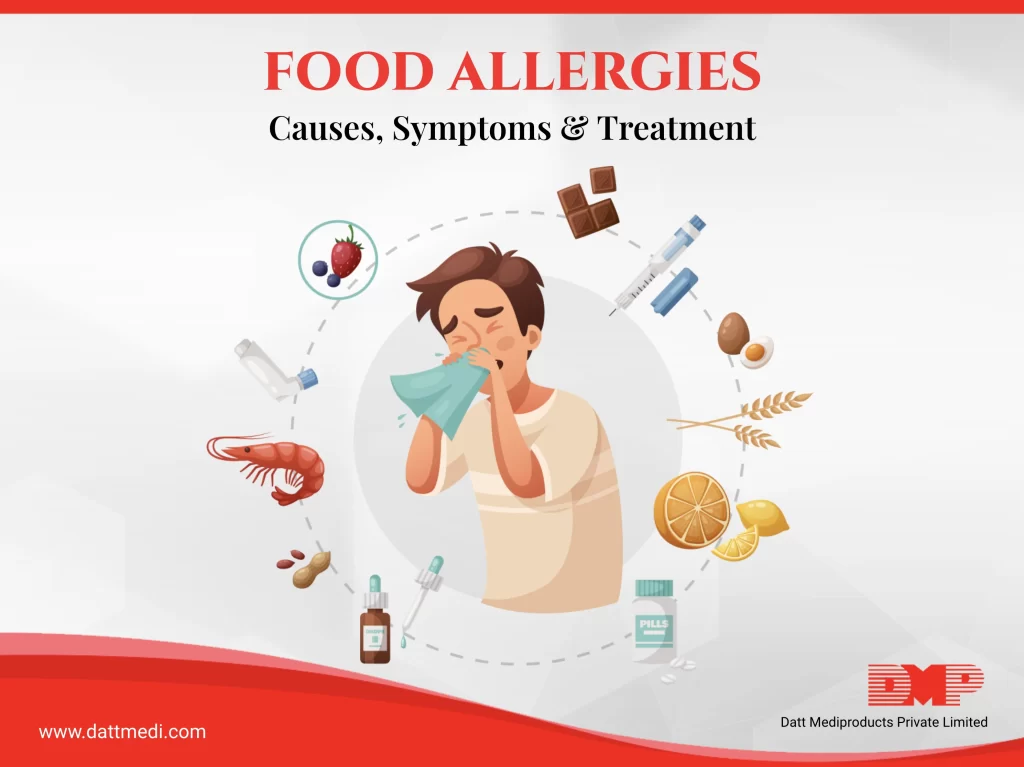
Food Allergy is an over-reaction of your immune system towards certain foods. The body’s defense mechanism treats these foods as invaders, just like a bacterium or a virus, releasing some specific chemicals to defend against them. This includes a range of protective measures such as histamine release, which causes inflammation. Even a tiny amount of a substance in your food can trigger an allergic response.

Food allergy may be divided into types: IgE mediated allergy or Non-IgE mediated food allergy, depending upon the release of the IgE antibody.

Some Info: Immunoglobulin E (IgE) are the antibodies produced by our immune system in case of allergies. These travel to cells that release chemicals and cause allergic reactions.

 Symptoms & Complications:

Food allergy is most common in babies and children. Symptoms may be mild but fatal. The most severe allergic reaction is called ANAPHYLAXIS.

Food allergy can affect our digestive system, skin, respiratory system, or even cardiovascular system. Sometimes, food allergy is often confused with food intolerance but both are different.

The symptoms range from mild to severe and may include the following:

– Stomach cramps or pain
– Vomiting/nausea sensation
– Hoarse throat & trouble while swallowing
– Swelling of the tongue, face, lips or other body parts
– Shortness of breath, nasal congestion, trouble inhaling
– Continuous cough, wheeze
– Weak pulse, loss of consciousness
– Shock or circulatory collapse
– Dizziness, fainting
– Hives, itching or eczema

ANAPHYLAXIS:
It is the most fatal and potentially life-threatening allergic reaction. Symptoms may take a few hours to develop. It impairs normal breathing and sends the body into shock. Various body parts may be affected simultaneously.

Few symptoms may include airways constriction, breathing problems, swollen throat, rapid swelling of the lips, face and mouth, anaphylactic shock causing sudden & severe drop in blood pressure, tachycardia, and dizziness.

Symptoms can occur within a few minutes to several hours later after exposure. Delayed responses are mostly seen in children who may develop eczema.

– Food Protein-Induced Enterocolitis Syndrome
(FPIES):
This is another delayed food allergic reaction that usually occurs after consuming milk, soy, or certain grains, generally within two to six hours. This happens when infants or babies are exposed to these foods for the first-time causing vomiting, dehydration, or bloody diarrhea.

– Oral Allergy Syndrome (OAS):
Being allergic to one food may trigger an immune response against other foods also, which are similar. This is referred to as cross-reactivity and occurs when allergy antibodies confuse the proteins in fresh fruits, nuts, or vegetables with pollen. Thereby, it is also called as Pollen-food syndrome.

The Common Food Allergens:
Although it’s possible to develop an allergy from any kind of food substance, however, the following food allergens have been identified as the most common ones:

-Cow’s milk
– Eggs
– Tree nuts such as almonds, brazil nuts, walnuts, cashews, pistachios, pine nuts, etc.
– Wheat, which is often confused with non-celiac gluten sensitivity.
– Soy products
– Chocolates
– Fish allergy, affecting almost 2% of adults.
The main symptoms include vomiting & diarrhea.
– Shellfish including crabs, shrimps, and mussels.
– Any food can be allergic to anybody. Apart from the above-mentioned food substances, the list may even include sesame seeds, mustard seeds, linseed, chamomile, garlic passion fruit, kiwi fruit, banana, avocado, etc.

Diagnosing food allergies can be challenging.

Therefore, we @Dattmediproducts recommend seeking a doctor’s advice in case of the occurrence of any of the food allergy symptoms soon after eating. Anaphylaxis must be followed by an emergency treatment because an untreated condition can make a patient go to coma or even death.
Visit www.dattmedi.com for more infomation.
Share:
Recent Blogs

Allergies are a common health issue that affect a significant portion of the population worldwide. Allergies are a hypersensitive reaction of the immune system to an otherwise harmless substance, which is known as an allergen. The allergen can be any substance that triggers an allergic reaction in the body, such as pollen, dust, food, or animal dander.

Allergies are caused due to the abnormal response of the immune system, which mistakes a harmless substance for a harmful invader and initiates a defence mechanism, called antibodies, to protect the body from it. This results in various allergic reactions, such as skin rashes, itching, sneezing, watery eyes, and in severe cases, anaphylaxis.

There are various reasons behind the occurrence of allergies. Genetics plays a significant role in determining an individual’s likelihood of developing allergies. Environmental factors such as exposure to pollution, chemicals, and toxins can also trigger allergies.

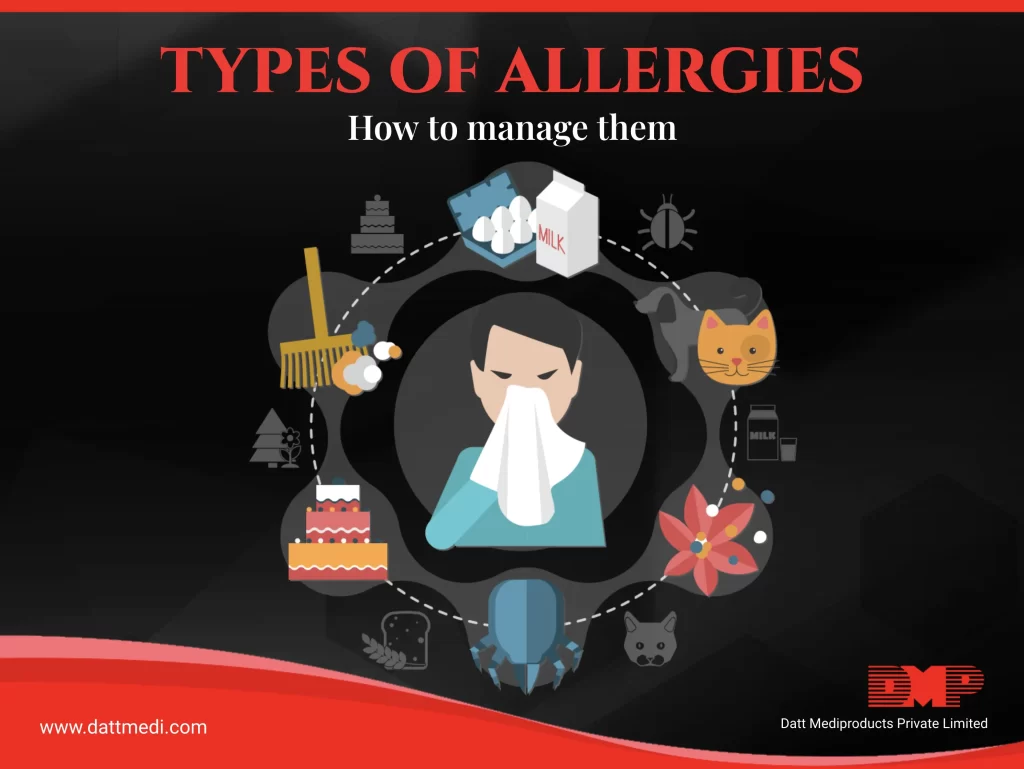
There are several different types of allergies, each with their unique symptoms and triggers.

Some of the most common types of allergies include:

1. Respiratory allergies:

These allergies are triggered by airborne allergens such as pollen, dust mites, and animal dander. The symptoms of respiratory allergies include sneezing, coughing, and wheezing.

2. Food allergies:

These allergies occur when the immune system reacts to certain foods, such as nuts, shellfish, and eggs. Symptoms of food allergies can range from mild itching, tingling in the mouth, hives, swelling of the lips, tongue, face or throat to more severe life-threatening anaphylaxis.

3. Skin allergies:

These allergies occur when the skin comes into contact with an allergen, such as certain fabrics, metals, or cosmetics. The symptoms of skin allergies include rashes, itching, and swelling.

4. Insect allergies:

These allergies occur when an individual is bitten or stung by an insect, such as bees or mosquitoes. The symptoms of insect allergies can range from mild itching to severe anaphylaxis.

5. Medicine allergies:

Medicine allergies are hypersensitive reactions of the immune system to certain medications. They can cause symptoms like skin rashes, itching, swelling, and in severe cases, difficulty breathing or anaphylaxis. It is important to communicate medicine allergies to healthcare providers to ensure safe and effective treatment.

Precautionary methods can be taken to manage allergies. Firstly, it is crucial to identify the allergen that triggers the allergic reaction. This can be done through various tests such as skin tests or blood tests. Once the allergen is identified, it is essential to avoid exposure to it. For example, individuals with food allergies must avoid eating the allergen-containing food.

Similarly, those with respiratory allergies must avoid exposure to airborne allergens, such as pollen or animal dander. If a person has a known severe allergy then they can also wear a medical alert bracelet, which lets others know that you have a serious allergy incase they are unable to communicate it.

Medications such as antihistamines, decongestants, and corticosteroids can be used to manage allergy symptoms. In severe cases, epinephrine injections may be required to manage anaphylaxis.

In addition to medication, several lifestyle changes can also help manage allergies. One of the most important being to try to reduce stress levels. While stress can’t trigger an allergic reaction it can make it worse if you are having one. When in stress your body releases hormones including histamine, which is a powerful chemical that leads to allergy symptoms thus making the reaction worse.

Allergies can significantly impact the lives of those who suffer from them. However, with proper management, it is possible to reduce the severity of allergy symptoms. If you suspect that you have an allergy, it is important to seek medical advice and get a proper diagnosis.

We advice to follow precautionary methods and working with a healthcare professional, that can help you manage allergies and improve your quality of life. Follow us for more such information.

Yoga is an ancient practice ,around for centuries, and can help with overall health. It has been said that “Our breathing process – the way we inhale, hold our breath, and exhale – can change our mind and our body in a positive way,” It is a great practice through which you can improve your physical and mental wellness.

(more…)

Logo

Datt Mediproducts Private Limited

Loading
