In this digital era, people are spending more time browsing food-related media. Cooking shows by celebrity chefs have been flooding our televisions, books, online sites & Apps. Despite this, Food Safety has been the least talked about.
Foodborne diseases are one of the major causes of illness and deaths around the world. The leading cause being the contamination of food by bacteria, viruses, parasites, and fungi. The most common foodborne diseases are due to Salmonella, Clostridium perfringes, norovirus, and Campylobacter.
Foodborne diseases can affect people of any age, creating a vicious cycle of diarrhea and malnutrition. In some cases, food poisoning can cause acute illnesses and long term health illnesses like brain & nerve damage, kidney failure, chronic arthritis or life-threatening complications such as organ failure. Awareness about Food Safety and its measures are the key to prevent foodborne diseases.
When to See a Doctor? :
Visit a doctor if you have fever, blood in the stools, frequent vomiting, diarrhea lasting for more than 3 days or dehydration.
As per the World Health Organization (WHO), the following are the 5 keys to Food Safety & prevention of Foodborne Diseases:
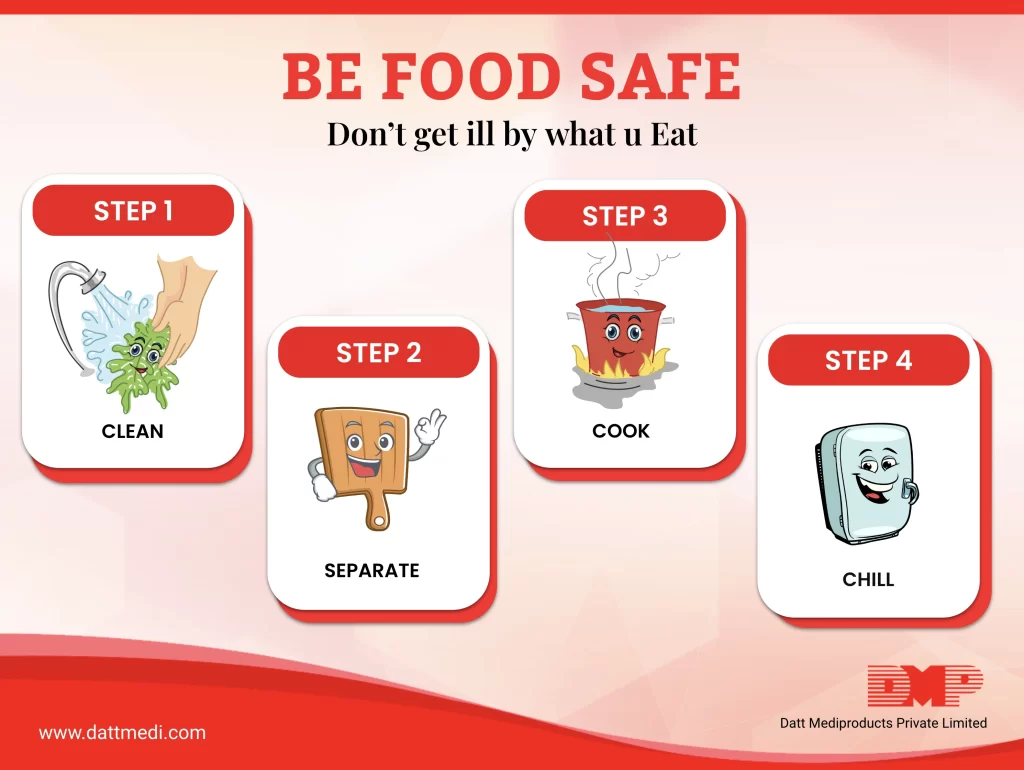
Keep it Clean:
- Hands, food preparation tools and surfaces must be cleaned before eating or handling the food.
- Hands should be washed before and during the food preparation. The kitchen areas and food must be protected from the insects. This can be done by keeping the food in closed containers and by keeping the rubbish bins covered. Cleaning is essential because microorganisms are present everywhere. The slightest contact can transfer them to the food and cause foodborne diseases.
DYK: Something which looks clean doesn’t mean it is clean. Over 2.5 billion bacteria make 250 ml of water look cloudy, but it takes only a few pathogenic bacteria to make one sick.
Separate Raw and Cooked: - Raw and prepared foods must be kept separately to avoid cross-contamination.
- Raw and cooked food must be stored separately to avoid contact. Raw food especially meat, seafood & poultry may contain disease-causing microorganisms which may be transferred to the cooked food during preparation or storage. Keeping them separate avoids cross contamination (transfer of microorganisms from raw to the cooked food)
Cook thoroughly: - Cooking the food to the right temp. is important to get rid of harmful germs.
- Studies show that cooking food to 70˚C makes it safe for consumption. Soups and stews must be boiling. Raw food especially meat, poultry, seafood but be cooked thoroughly to make sure their juices are clear and not pinkish.
- Special care also needs to be taken when cooking frozen food in the microwave as the microwave cooks food unevenly leaving few areas cold where dangerous microorganisms can survive. Only microwave safe containers should be used while cooking food in microwave ovens as some plastic containers release toxic chemicals upon heating.
Keep food at safe temperatures: - Fresh and perishable food needs to be kept in the refrigerator. Cooked food should not be left at room temperature for more than 2 hours. Microorganisms can grow quickly at room temperature. Cooked food should not be refrigerated for too long also as low temp. only slows the bacterial growth, not kills it.
Use safe water and raw materials: - Fruits and vegetables should be washed properly with safe water especially if eaten raw. Water is safe if it is free from dangerous microorganisms and toxic chemicals at a level which doesn’t cause any illness or disease. Untreated water from rivers or canals may contain parasitic microorganisms causing diarrhea, typhoid or dysentery.
Packaging Plays a Role
Be sure not to buy food that has passed it’s expiration date. Check packages carefully. Don’t buy products with bulging cans or cracked jars or loose lids.
As per WHO Foodborne Disease Epidemiology Reference Group (FERG) researchers, the number of foodborne diseases in India is expected to rise to 150-177 million in 2030. This means 1 out of 9 people sick by 2030.
We at Datt Mediproducts understand the importance of Food Safety and that the Proper food handling is the key to foodborne disease prevention.
So, Be Aware, Be Food Safe!