
Search by Blog
Read by Category

Your healing journey continues beyond this blog

Find the right products for better recovery at online store
Cart Image
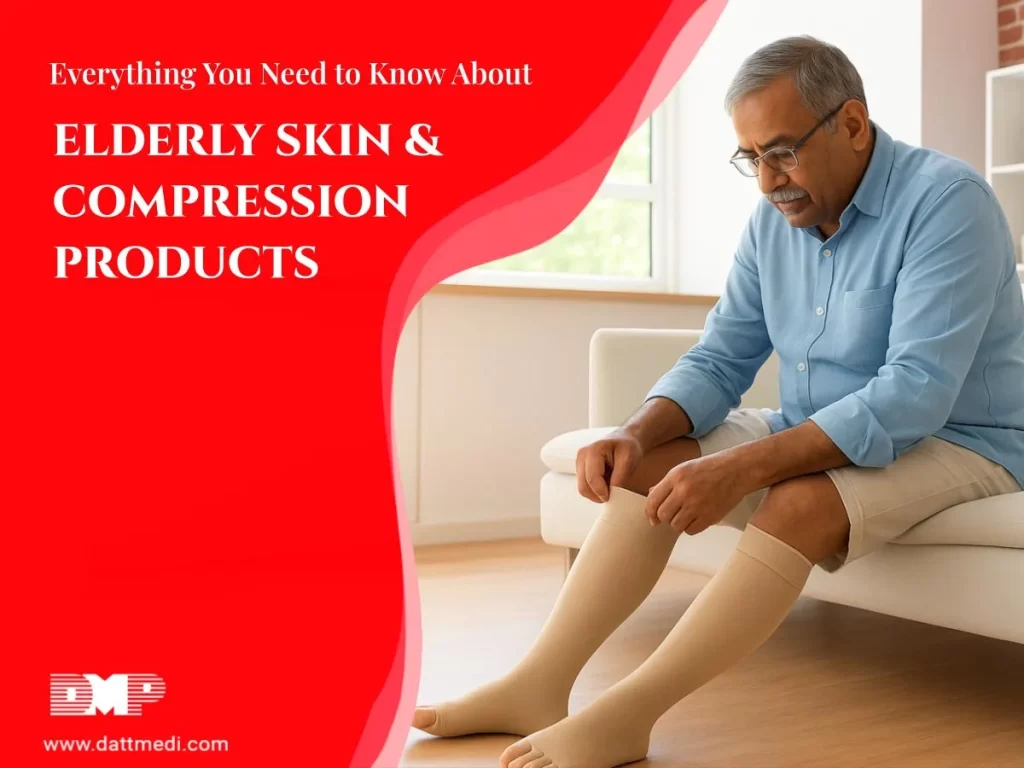
Elderly patient wearing soft compression stocking

Compression can be safe for some older adults with fragile skin, but the right product, pressure and fit matter. If circulation is reduced or the skin is extremely fragile, a healthcare professional should assess the leg before compression is used.

As we age, skin becomes thinner, drier and less elastic. This can make it easier to bruise, tear or become irritated from pressure and friction. That does not automatically mean compression must be avoided. It means the garment or bandage needs to be selected, applied and monitored carefully.

This blog explains how compression stockings and bandages differ, what to look for when skin is fragile, how to use compression more safely, and which warning signs mean you should stop and seek medical advice. 

Why Does Aging Skin Need Extra Care with Compression?

Older skin is more vulnerable to pressure, friction and skin damage, so fit and application become especially important.

Common changes in aging skin include:

  • Thinner skin
  • Reduced elasticity
  • Increased dryness
  • Greater tendency to bruise
  • Higher risk of skin tears
  • Slower recovery from skin damage
A compression garment that fits incorrectly or is applied roughly 
can create unnecessary pressure or friction. Regular skin checks
are therefore particularly important for older adults.

Are Compression Stockings or Bandages Better for Fragile Skin?

Neither option is automatically better. The choice depends on the person’s skin condition, swelling, limb shape, dexterity and the type of compression required.

FactorCompression StockingsCompression Bandages
PressureDesigned to provide a defined level of compressionDepends on the bandage system and application
FitRequires accurate measurementCan be adjusted around the limb
ApplicationMay be difficult for people with limited hand strength or mobilityOften requires correct wrapping technique
SwellingUseful when the limb can be fitted appropriatelyCan be useful when limb size changes
Fragile skinNeeds careful application to avoid pulling or frictionRequires careful wrapping without excessive pressure or folds

For someone who has difficulty putting on or removing a stocking, assistance or an appropriate application aid may be needed.

Read our guide on 
Compression Bandages vs. Compression Stockings
for a closer comparison.

What Should You Look for in Compression Products for Older Skin?

Accurate sizing, appropriate pressure and a comfortable material are three important considerations when skin is fragile.

1. Accurate fit

A garment that is too tight may create excessive pressure, while one that is too loose may not provide the intended support.

Leg measurements should be taken according to the manufacturer’s instructions. Our guide on Correct Measurement and Fit of Compression Garments explains the process in more detail.

2. Appropriate compression level

The correct compression level depends on the reason for compression, circulation, swelling and the person’s medical condition.

Do not assume that a stronger compression level is better. If someone has peripheral arterial disease, reduced sensation, significant skin problems or other medical conditions, professional assessment is particularly important before compression is used.

NICE recommends assessment for peripheral arterial disease when compression hosiery is being considered.

3. Skin-friendly material

Look for material that feels comfortable against the skin and does not create unnecessary rubbing or moisture build-up.

The garment should also sit smoothly against the leg rather than bunching into folds.

What Are the Risks of Incorrect Compression?

Poor fit, excessive pressure, wrinkles or rough application can contribute to skin irritation, pressure damage or circulation problems.

Possible problems include:

  • Redness or irritation
  • Pressure marks
  • Bruising
  • Skin tears
  • Blisters
  • Skin breakdown
  • Numbness or tingling
  • Reduced circulation when compression is inappropriate

The risk is particularly important when the person has reduced sensation and may not notice pressure or discomfort immediately.

How Can Older Adults Use Compression More Safely?

Apply compression gently, avoid wrinkles, check the skin regularly and follow the recommended wear instructions.

1. Apply it gently

Avoid pulling aggressively on fragile skin. Gloves or suitable donning aids may make application easier and reduce unnecessary friction.

2. Keep the skin moisturised

Dry skin can be more vulnerable to cracking and irritation. A suitable fragrance-free moisturiser can help maintain the skin barrier.

Allow moisturiser to absorb before applying compression, and follow the garment manufacturer’s care instructions.

3. Remove wrinkles and folds

Wrinkles can create concentrated areas of pressure.

After applying the garment or bandage, check that it sits smoothly and does not form tight folds.

4. Check the skin every day

Pay particular attention to:

  • Ankles
  • Heels
  • Shins
  • Toes
  • Behind the knees
  • Areas over bony prominences

Look for new redness, bruising, blisters, swelling or skin damage.

5. Follow professional advice on wear time

There is no single wear schedule that is right for everyone. Follow the instructions provided for the specific condition, product and compression level.

When Should Compression Be Avoided or Professionally Assessed?

People with circulation problems, reduced sensation, significant skin damage or certain heart conditions should receive professional advice before using compression.

Extra assessment may be needed when there is:

  • Known or suspected peripheral arterial disease
  • Significant loss of sensation or peripheral neuropathy
  • Very fragile or damaged skin
  • Open wounds or active skin infection
  • Significant or unexplained swelling
  • Heart failure or other significant cardiac conditions
  • A leg shape that makes correct fitting difficult
NICE notes that strong compression can affect arterial blood supply in people with peripheral arterial disease, which is why circulation assessment matters before compression is prescribed.

For people with venous leg ulcers, evidence reviewed by Cochrane indicates that compression can improve healing compared with no compression, although the evidence around adverse effects is less certain.

What Warning Signs Mean Compression Should Come Off?

Stop and seek medical advice if compression causes new or worsening symptoms such as significant pain, numbness, marked colour change, cold toes, blistering or skin damage.

Remove the garment or seek urgent medical assessment if you notice:

  • New numbness or tingling
  • Significant or increasing pain
  • Toes becoming unusually cold, pale or blue
  • New blisters or skin tears
  • Rapidly worsening swelling
  • Skin becoming damaged beneath the garment

Sudden one-sided leg swelling, pain, warmth or redness also needs prompt medical assessment because these symptoms can have causes that require urgent treatment, including a possible blood clot.

Do not simply increase or decrease compression yourself when symptoms appear. Get professional advice about the cause and the appropriate level of support.

Can Compression Help Older Adults with Swelling?

Compression can help manage certain types of leg swelling, particularly when swelling is related to venous or lymphatic problems, but the cause of swelling should be considered first.

Compression is not appropriate for every type of swelling.

If swelling is new, sudden, one-sided or accompanied by pain, warmth or redness, medical assessment is more important than simply applying compression.

For more information about how compression is used in wound care, 
Read our guide to Compression Therapy in Wound Healing.

Supporting Older Skin While Using Compression

Compression does not have to mean compromising skin comfort.

For older adults with fragile skin, the focus should be on:

  • Correct measurement
  • Appropriate compression
  • Gentle application
  • Smooth, wrinkle-free positioning
  • Regular skin checks
  • Professional assessment when medical conditions are present

When these factors are considered, compression can be used appropriately as part of care for some older adults.

For everyday venous support, explore Velcare® Varicose Vein Compression Stockings. For adjustable compression support, explore the DMP Compression Bandage range.
Related Reading

Visit www.dattmedi.com for more infomation.
Share:

Frequnently Asked Questions

Some older adults can use compression stockings safely, but fragile skin requires careful fitting, gentle application and regular skin checks. Professional assessment is particularly important when circulation, sensation or skin integrity is affected.

There is no single compression level that is appropriate for every older adult. The correct level depends on the reason for compression, circulation, swelling, skin condition and other medical factors.

They can contribute to skin damage if they are poorly fitted, applied roughly, or create excessive pressure or friction. Gentle application, correct sizing and regular skin inspection can help reduce the risk.

Not necessarily. Bandages and stockings have different advantages, and the appropriate choice depends on the person’s swelling, skin condition, limb shape, ability to apply the product and required compression.

Not automatically. Wear time depends on the person’s condition, the type of compression and the instructions provided by their healthcare professional or product guidance.

Recent Blogs
Leg Swelling after prolonged standing due to fluid retention

If your legs feel heavy, tight, or visibly swollen by the end of a long shift, you are not imagining it. Prolonged standing is one of the most common drivers of leg swelling in working adults — and it affects people in healthcare, retail, hospitality, manufacturing, teaching, and any other profession that keeps them on their feet for hours at a time.

This guide explains the underlying mechanism, the factors that make some people more susceptible than others, and what actually works to manage and prevent the problem — including when medical-grade compression stockings are the right tool.

What Actually Causes Leg Swelling When You Stand

The heart pumps blood downward through arteries with little effort. Getting it back up through the veins — against gravity — is a much harder job. 

The body relies on three mechanisms to do this: 

  • Venous valves that prevent flowing backward
  • The rhythmic contraction of calf and leg muscles that squeeze blood upward
  • The elastic recoil of the vein walls themselves.

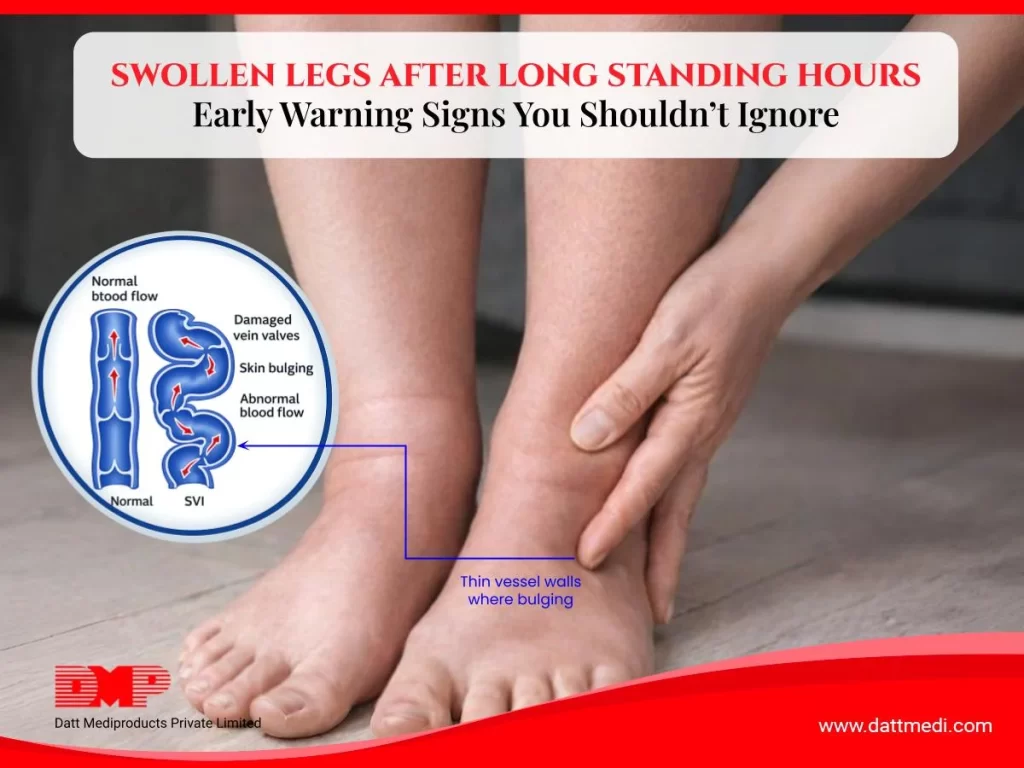
When you stand still for extended periods, the second mechanism — the muscle pump — largely switches off. Blood moves sluggishly in the lower leg veins, pressure builds, and fluid begins leaking through the vein walls into the surrounding tissue. This is venous pooling, and the visible result is swelling around the ankles and lower legs.

The swelling is typically worse at the end of the day and improves after lying down or elevating the legs, because horizontal positioning removes gravity from the equation. This pattern — worsening through the day, improving with rest — is the clearest indicator that prolonged standing is the primary cause.

Why Some People Swell More Than Others

1. Venous Valve Insufficiency

Healthy veins contain one-way valves that prevent blood from flowing back toward the feet between heartbeats. In some people, these valves weaken or become leaky — a condition called chronic venous insufficiency. When this happens, blood pools more easily, swelling occurs faster, and visible varicose veins may develop over time. People with venous insufficiency are significantly more affected by prolonged standing than those with healthy valve function.

2. Varicose Veins

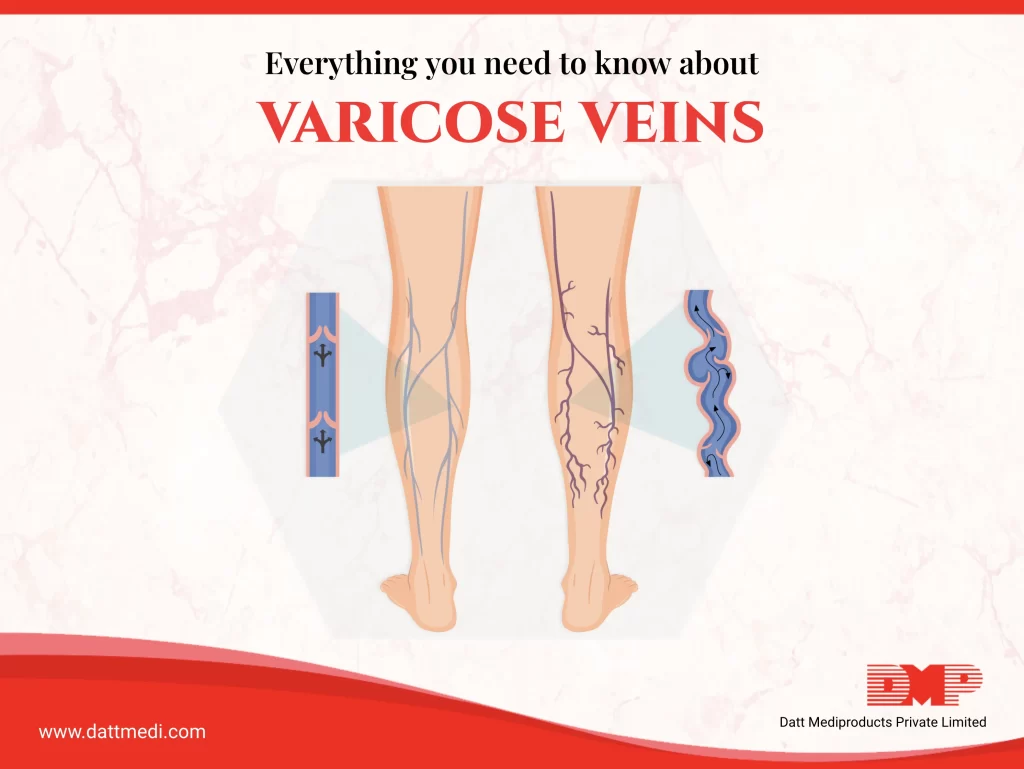
Varicose veins are enlarged, twisted veins that have lost their structural integrity. They are a direct consequence of venous valve failure and represent a more advanced stage of venous disease. Standing for long periods accelerates the pooling in these vessels and worsens both swelling and the aching, heaviness, and fatigue that accompany it.

Varicose Veins

Related reading: The Ultimate Guide to Understanding Varicose Veins

3. Body Weight and Physical Conditioning

Higher body weight places increased pressure on the venous system in the legs. Reduced physical fitness means the leg muscles — which are the primary pump for venous return — are less effective. Both factors increase susceptibility to standing-related swelling.

4. Occupation and Daily Pattern

The duration of unbroken standing matters more than total standing time. Someone who stands for eight hours but walks between tasks frequently will experience less pooling than someone who stands relatively still at a counter or workstation. The absence of walking breaks is a key risk factor.

When Swelling Needs Medical Attention

Swelling that follows the pattern described above — building through the day, resolving overnight — is generally benign and related to venous pooling. However, some patterns warrant prompt medical evaluation:

  • Swelling that is sudden, severe, or in one leg only — may indicate deep vein thrombosis (DVT)
  • Swelling accompanied by redness, warmth, or skin changes — may suggest infection or phlebitis
  • Swelling that does not improve after a full night’s rest
  • Swelling with associated chest pain, breathlessness, or palpitations — seek emergency care
  • Swelling in the context of heart, kidney, or liver conditions
If any of these apply, see a healthcare professional before starting any compression therapy.

Practical Measures That Reduce Standing-Related Swelling

Movement Breaks

Walking — even for two to three minutes per hour — reactivates the calf muscle pump and significantly reduces venous pooling. If walking is not possible, calf raises, foot circles, and toe pumps performed in place have a similar effect. The goal is to avoid completely static standing for long unbroken periods.

Leg Elevation After Work

Elevating the legs above heart level for 15–20 minutes after a long shift allows gravity to assist venous and lymphatic drainage. This is one of the most effective ways to accelerate overnight recovery and reduce residual swelling the next morning.

Footwear

Shoes with cushioned soles and low heels support natural foot movement and reduce fatigue. Tight footwear compresses the foot and can restrict venous return. Flat shoes without arch support reduce calf engagement during walking, which reduces the efficiency of the muscle pump.

Medical-Grade Compression Stockings

Compression stockings are the most evidence-supported intervention for managing venous pooling during prolonged standing. Unlike general support hosiery, medical-grade stockings apply graduated compression — highest at the ankle, reducing toward the knee or thigh — which mechanically assists venous return and prevents fluid from leaking into surrounding tissues.

Velcare® Varicose Vein Medical Compression Stockings

The Velcare® range from Datt Mediproducts is a medical-grade compression stocking designed specifically for venous conditions, including swelling from prolonged standing, phlebitis, varicose veins, venous insufficiency, oedema, deep vein thrombosis management, and post-surgical recovery.

Key specifications:

  • Class 2 compression: 23–32 mmHg — the clinical standard for moderate-to-severe venous conditions
  • Graduated compression: pressure is highest at the ankle and reduces toward the top of the stocking, actively assisting upward blood flow
  • 70% Nylon, 30% Spandex: breathable, latex-free, and suitable for daily extended wear
  • Four-way stretchability: conforms to the leg without restricting movement
  • Soft construction: designed for comfort during long work hours
  • Available in S, M, L, XL

The Velcare® range is available in three styles to suit different clinical needs and preferences:

StyleCoverageBest For
Open Toe, A-D (no silicone band)Ankle to kneeEveryday leg swelling from standing; those who prefer open toe for breathability or foot conditions
Open Toe, A-D with Silicone BandAnkle to kneeUsers who need the stocking to stay in place securely without rolling down during a long shift
Open Toe, A-G with Silicone BandAnkle to groinMore extensive venous conditions, post-surgical recovery, or where thigh-high coverage is clinically indicated

How to Use Compression Stockings Effectively

Put Them On Before Getting Up

Compression stockings work best when applied before venous pooling begins. Put them on in the morning before standing up, while the legs are still at their least swollen. Applying them after standing for an hour is significantly less effective.

Wear Through the Working Day

Keep the stockings on throughout the shift. Removing them mid-day and then reapplying is less effective than continuous wear during standing hours.

Remove in the Evening

Once you are off your feet and resting, the stockings can be removed. Compression is needed during the periods of venous stress — standing and walking — not during rest.

Sizing Matters

An incorrectly sized stocking — too loose or too tight — will not deliver the intended compression level. Measure ankle and calf circumference, and refer to the Velcare® sizing guide before ordering. When in doubt, consult a healthcare professional or pharmacist for fitting guidance.

Care and Longevity

Medical compression stockings should be washed regularly — typically after each wear — in cool water with gentle detergent. Air dry rather than tumble dry to preserve the elastic fibres. Most compression stockings require replacement every 4–6 months with regular daily use, as the elasticity gradually reduces.

Managing Leg Health Is a Daily Habit

Standing-related leg swelling is a physical consequence of how blood moves — or stops moving — during long hours on your feet. It is not inevitable. Movement breaks, appropriate footwear, evening elevation, and the right compression support together make a significant and measurable difference.

For people with varicose veins, venous insufficiency, or a job that keeps them standing for the majority of their working day, medical-grade graduated compression stockings are the most clinically supported intervention available. The Velcare® Varicose Vein Compression Stocking range is designed for exactly this context — durable, breathable, and calibrated to the compression level that delivers real results.

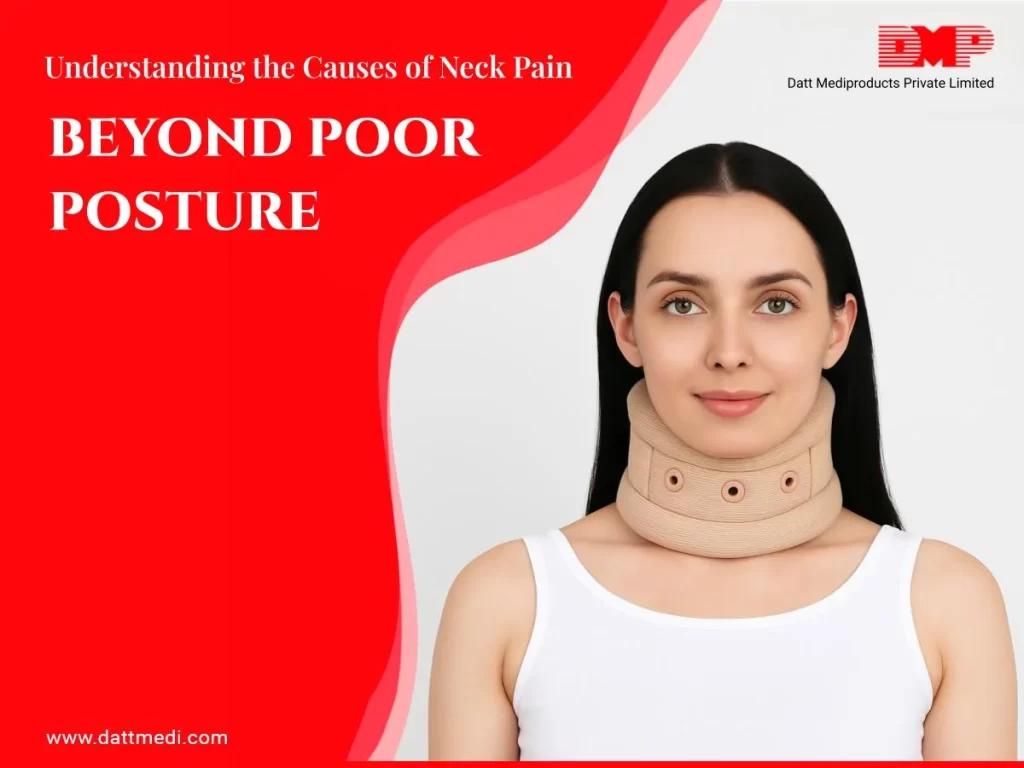
Person using a soft cervical collar for neck support

A stiff or painful neck can make even the simplest movements uncomfortable — turning to check traffic, looking up at a screen, or sleeping without waking. In some cases, a soft cervical collar provides the temporary support the neck needs to recover. However, in other cases, it offers little benefit and may even delay healing if used incorrectly.

This blog covers the clinical situations where a soft cervical collar is genuinely useful, how the Cervical Collar Soft® from Datt Mediproducts is designed, and how to use it safely.

What Is a Soft Cervical Collar?

A cervical collar is a supportive brace worn around the neck to limit excessive movement and allow muscles, ligaments, and joints to rest during recovery. Soft cervical collars provide light, cushioned support — enough to reduce strain and act as a reminder to avoid sudden movement, without fully immobilizing the neck.

The Cervical Collar Soft® is made from soft-density PU foam covered in a smooth cotton stockinette, with a hook-and-loop closure for a secure, adjustable fit. It is available in four sizes (S, M, L, XL) and is designed for both short-term recovery and longer-term comfort use.

When Is a Soft Cervical Collar Recommended?

A soft cervical collar may be advised across a range of conditions. The following are the primary clinical indications.

1. Neck Pain and Muscle Strain

Sudden neck pain from poor posture, sleeping awkwardly, or overexertion can strain the surrounding muscles. A collar provides gentle support and reduces the load on strained tissue during the early recovery phase.

2. Whiplash Recovery

Whiplash — most commonly caused by rear-end car accidents — forces the head to move suddenly forward and backward, stretching and sometimes tearing neck muscles and ligaments. Doctors often recommend a soft cervical collar in the early days after whiplash to reduce discomfort and limit aggravating movement while initial healing begins.

3. Cervical Trauma

Minor cervical trauma from falls, sports injuries, or sudden impacts may involve bruised or strained neck structures. A collar helps limit movement that could worsen the injury while the neck recovers.

4. Excessive Neck Mobility

Some individuals have hypermobility in the cervical spine — where the joints move beyond their normal range. A soft collar can provide a gentle boundary that reduces the risk of strain from over-movement during daily activity.

5. Rheumatoid Arthritis

Rheumatoid arthritis can affect the cervical spine, causing instability and pain. A soft collar may be used during flares to provide support and reduce the load on inflamed joints, typically alongside medical management.

6. Degenerative Disc Disease

Wear and tear on the cervical discs can lead to chronic neck pain, stiffness, and nerve irritation. A soft collar offers intermittent support — particularly during activities that aggravate symptoms — as part of a broader management plan.

7. Post-Surgical Support

Following certain neck or upper spine procedures, surgeons may recommend a cervical collar to protect the surgical site and limit motion during the initial healing period. The surgeon determines the collar type and duration based on the procedure. based on the procedure.

Rigid vs. Soft Cervical Collar: Which Is Needed?

Not all cervical collars are the same. The choice depends on how much movement restriction is required.

FeatureSoft Cervical CollarRigid Cervical Collar
MaterialPU foam with cotton stockinetteFirm plastic with padding
Support LevelLight, cushioned supportStrong, firm support
Movement ControlAllows some movementSignificantly limits movement
Typical UseMild strain, whiplash early stage, arthritis, disc diseaseSerious injury, unstable fractures, post-surgery
For most everyday neck conditions — strain, stiffness, mild whiplash, and chronic disc or joint discomfort — a soft cervical collar is the appropriate choice. Rigid collars are typically reserved for more severe injuries where strict immobilisation is medically necessary.

Soft Cervical Collar by Datt Mediproducts: Design & Features

The Cervical Collar Soft® is built for comfort during wear, with materials selected to minimise skin irritation even with extended use.

  • Soft-density PU foam core — provides cushioned support without rigid restriction
  • Smooth cotton stockinette cover — reduces skin friction and absorbs moisture
  • Hook-and-loop closure — allows a personalized, secure fit without tools
  • Four available sizes (S, M, L, XL) — sized by neck circumference in inches and centimetres
  • Durable construction — designed for longer-term use without losing shape or support

Sizing is based on neck circumference: S (7.5–8.75 cm), M (8.75–10 cm), L (10–11.25 cm), XL (11.25–12.5 cm). Measuring before ordering ensures the collar sits correctly and delivers effective support.

How to Use a Soft Cervical Collar Safely

A cervical collar is most effective when used correctly and for the right duration.

Getting the Fit Right

The collar should sit snugly around the neck — supportive without pressing on the throat or creating difficulty breathing. Hook-and-loop closure makes adjustment straightforward. A collar that is too loose provides little support; one that is too tight can cause pressure and discomfort.

Duration of Use

This depends entirely on the condition. Minor muscle strain may only require a collar for a few days. Whiplash or post-surgical recovery may require longer use under medical guidance. Extended, unsupervised use should be avoided. This is because prolonged reliance on a collar can reduce the neck muscles’ ability to support the head. independently.

Skin Care Under the Collar

The cotton stockinette lining helps manage moisture, but the skin beneath should still be checked regularly for any redness or irritation. Keep the area clean and dry, particularly in warm conditions.

When to Remove It

If the collar causes increased pain, numbness, or pins and needles pricking sensation, remove it and consult a healthcare professional. These may indicate an incorrect fit or that the collar is not appropriate for the specific condition.

What a Soft Cervical Collar Cannot Do

A collar supports recovery — it does not treat the underlying cause of neck pain. It does not replace physiotherapy, medical diagnosis, or specific treatment for conditions like arthritis or disc disease. Used alone without addressing the root cause, it provides temporary comfort relief only.

For best outcomes, a cervical collar is typically one part of a broader recovery plan that includes appropriate exercise, manual therapy, or medical management depending on the diagnosis.

The Right Support, Used the Right Way

A soft cervical collar works best when it matches the condition, fits correctly, and is used for an appropriate duration. For mild to moderate neck conditions — strain, whiplash, arthritis flares, disc discomfort, or post-surgical support — it provides a practical, comfortable solution that allows the neck to rest while daily life continues.The Cervical Collar Soft® is designed with both comfort and durability in mind. If you are managing a neck condition and considering whether a cervical collar is right for you, consult your healthcare provider for guidance tailored to your situation.

Logo

Datt Mediproducts Private Limited

Loading
Buy Now Contact Us