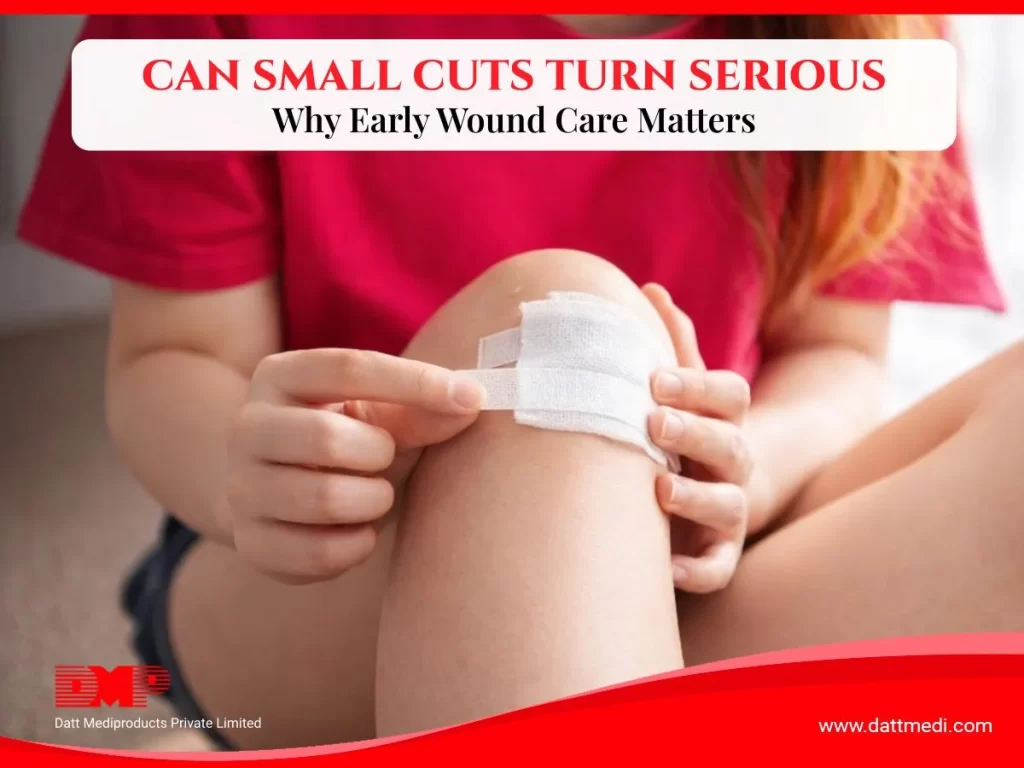
Yes, even a small cut can become infected if it isn’t cleaned and protected properly. Most minor cuts heal without complications, but bacteria can enter through broken skin and, in some cases, cause infection or deeper tissue problems.
Cuts and scratches are part of daily life, from cooking and gardening to shaving and minor accidents. The good news is that simple first aid can help protect a minor wound and support normal healing.
This blog explains why early wound care matters, the five basic first-aid steps, what to avoid, and the signs that mean a cut needs medical attention.
Why Does Early Wound Care Matter?
Cleaning and protecting a cut early helps remove dirt and reduce exposure to bacteria, friction and further injury.
When the skin breaks, the body’s protective barrier is. Prompt wound care can help reduce contamination and give the skin a cleaner environment to repair itself.
Delayed or inadequate care can contribute to:
- Increased risk of infection
- Slower healing
- Increasing redness or swelling
- Further irritation or injury
- In some cases, a deeper infection
How Does a Small Cut Become Infected?
A cut can become infected when bacteria enter through broken skin and multiply in the wound or surrounding tissue.
Common sources of contamination include:
- Dirt, dust or soil
- Unwashed hands
- Contaminated surfaces
- Dirty tools or objects
- Animal or human bites
The risk is higher when a wound is deep, contaminated or difficult to clean.
Normal Healing or Infection? How Can You Tell?
Mild redness, tenderness and a small amount of clear fluid can occur during normal healing. Increasing redness, swelling, warmth, pain or pus indicate infection.
| Sign | Normal Healing | Possible Infection |
| Redness | Mild and limited around the wound | Spreads outward or becomes increasingly pronounced |
| Pain | Gradually improves | Becomes worse or increases |
| Swelling | Mild and gradually settles | Increases or becomes increasingly warm/tender |
| Discharge | Small amount of clear or pale fluid | Pus or cloudy/foul-smelling discharge |
| Other | Gradual improvement | Fever, red streaks or feeling unwell |
The direction of change matters. A wound that is gradually improving is generally less concerning than one that becomes increasingly painful, red or swollen.
How Does Early Protection Help a Wound Heal?
A clean, appropriately covered wound is protected from dirt, friction and further injury while the body’s natural repair process takes place.
Early protection can:
- Reduce exposure to dirt and contamination
- Protect the wound from friction
- Reduce repeated touching or picking
- Help maintain an appropriate healing environment
- Protect newly forming tissue from further injury
The dressing should be kept clean and changed according to the needs of the wound and the dressing being used.
How to Treat a Small Cut: 5 First Aid Steps
For a minor cut, wash your hands, control the bleeding with direct pressure, rinse the wound with clean running water, cover it with an appropriate dressing, and monitor it for changes.
1. Wash Your Hands
Clean your hands before touching the wound or dressing.
This helps reduce the chance of introducing additional bacteria.
2. Stop the Bleeding
Apply firm, continuous pressure with sterile gauze or a clean cloth until the bleeding stops.
If blood soaks through the first layer, add more gauze or cloth without removing the original layer.
Seek urgent medical care if heavy bleeding does not stop with firm, continuous pressure or if the wound is deep or severe.
3. Rinse the Wound
Rinse a minor cut with clean running water to remove dirt and debris.
Avoid aggressively scrubbing the wound. Harsh substances can irritate healing tissue.
4. Cover the Cut
Cover the wound with a clean, appropriate dressing to protect it from contamination and friction.
Sterile gauze-based dressings can be useful for many minor wounds, while suitable tapes and adhesives can help secure a dressing.
Choose a dressing large enough to cover the wound and the surrounding area.
5. Check the Wound Regularly
Monitor the wound for increasing redness, swelling, warmth, pain or discharge.
Change the dressing when it becomes wet, dirty or loose, and follow the instructions for the particular dressing.
Tip: Avoid placing loose fibres directly onto an open wound, as they can stick to the healing tissue.
What Should You Avoid Putting on a Small Cut?
Avoid harsh substances, aggressive cleaning and unnecessary handling that can irritate the wound or interfere with healing.
- Don’t scrub the wound aggressively.
- Don’t repeatedly disturb the healing tissue.
- Don’t pick at scabs.
- Don’t use household chemicals on an open wound.
- Don’t apply irritating substances unless specifically recommended.
- Don’t place dirty or loose materials directly onto the wound.
For most minor cuts, gentle cleaning with clean running water and appropriate protection is a better approach than repeatedly applying harsh products.
When Is a Small Cut No Longer a Minor Wound?
A cut needs medical assessment when it is deep, gaping, heavily contaminated, continues bleeding, was caused by a bite or puncture, or develops signs of infection.
Seek medical advice if:
- Bleeding does not stop with firm pressure
- The wound is deep or gaping
- Dirt or debris remains embedded in the wound
- The injury was caused by an animal or human bite
- The wound is a puncture injury
- Redness or swelling continues to spread
- Pus or unusual discharge develops
- Pain becomes increasingly severe
- You develop fever or red streaks near the wound
- The wound is not improving after several days
- You are unsure whether your tetanus vaccination is up to date
People with diabetes, poor circulation or a weakened immune system may need earlier medical advice because these conditions can affect wound healing and elevate the infection risk.
When Should You See a Doctor for a Cut?
See a healthcare professional when a wound is deep, difficult to clean, won’t stop bleeding, shows signs of infection, or occurs in someone with a condition that can delay healing.
Prompt medical assessment is particularly important when a wound is caused by a bite, puncture or contaminated object.
Tetanus protection also depends on the type of wound and vaccination history. The CDC’s wound-management guidance provides further information about tetanus prevention after injuries.
If a wound requires specialised care, a healthcare professional may recommend appropriate options such as antimicrobial dressings or products from our advanced wound care range.
Can Small Cuts Become Serious in People with Diabetes?
Yes. A small wound can require closer attention in people with diabetes because reduced sensation or circulation can delay detection and healing.
Check the wound regularly and seek medical advice if it is not improving, becomes increasingly red or swollen, develops discharge, or shows other signs of infection.
This is especially important when reduced sensation makes it difficult to notice pain or injury.
Early Care Can Prevent Bigger Problems
A small cut does not usually become a serious problem, but early cleaning, appropriate protection and regular monitoring can help reduce complications.
The basic approach is simple:
- Clean the wound
- Control bleeding
- Protect it with an appropriate dressing
- Keep the dressing clean
- Monitor for changes
- Seek medical advice when warning signs appear
For additional information on wound care, explore the DMP wound care range.