

Search by Blog
Read by Category

Your healing journey continues beyond this blog

Find the right products for better recovery at online store
Cart Image
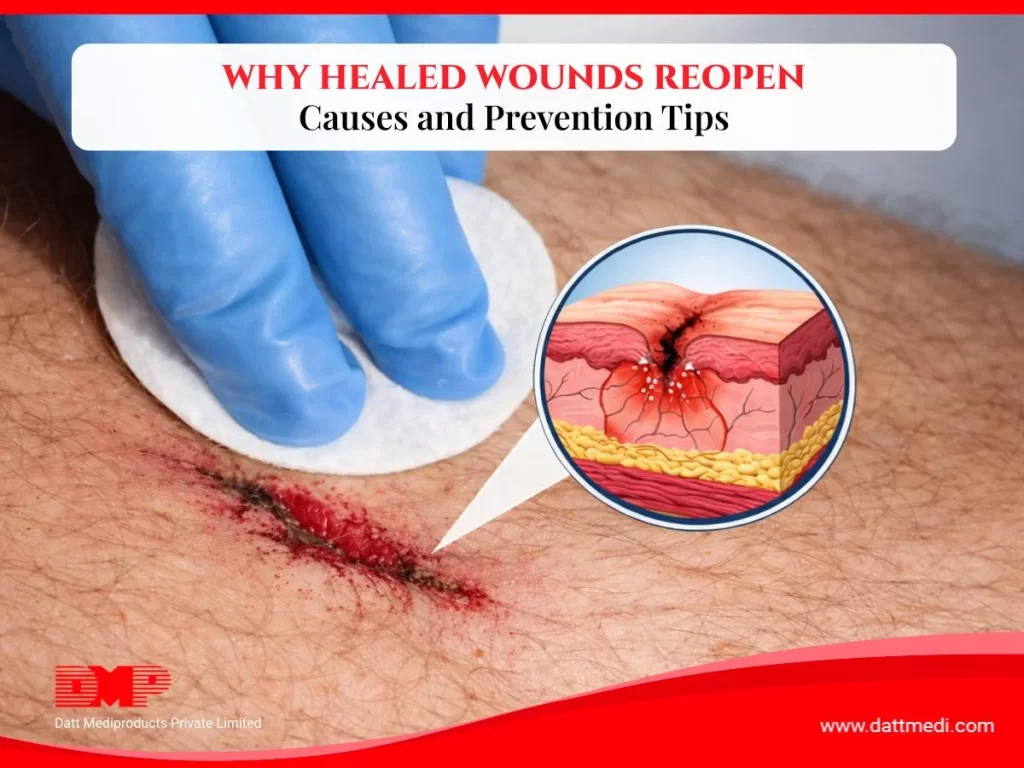
Reopened wounds due to tension and improper care

A wound that looks closed on the surface is not the same as wounds that has finished healing. The skin beneath may still be fragile, thin, and far less resilient than the tissue surrounding it. This is the stage where wounds most commonly reopen — not because something went wrong, but because the final phase of healing was not properly supported.

Understanding what makes newly closed skin vulnerable, and what protective measures actually work, can make the difference between a wound that heals completely and one that breaks down again.

Why ‘Closed Wounds’ Does Not Mean ‘Healed’

Wound healing happens in four overlapping stages: haemostasis, inflammation, proliferation, and remodelling. When the wound appears to close, the body is typically entering the remodelling phase — where collagen fibres reorganise and the new tissue gradually strengthens.

This phase can last several weeks to several months. During this time, the repaired skin has significantly lower tensile strength than normal skin — often as little as 50–80% of the original tissue strength, even after full remodelling. In the early weeks after closure, that figure is even lower.

The practical implication: the skin looks fine but cannot tolerate the same level of stress, friction, or pressure that healthy skin can. This is why reopening happens — not from neglect, but from the invisible vulnerability of newly repaired tissue.

The Most Common Reasons Healed Wounds Reopen

1. Mechanical Stress on Fragile Tissue

Areas that move repeatedly — knees, elbows, ankles, knuckles — place constant tension on healing tissue. Even normal daily movement can stretch new collagen fibres beyond what they can tolerate, causing the wound edges to split. This is particularly common in sutured wounds where the closure relies on the tissue holding together under movement.

2. Friction from Clothing or Surfaces

Repeated low-level friction from fabric, footwear, or contact with surfaces can erode the surface of newly healed skin. Unlike healthy skin, which can handle this without damage, fragile remodelling tissue has little resistance. Wounds on the feet, lower legs, or any area in contact with clothing are especially at risk.

3. Removing Dressings Too Early

Once a wound closes, it is easy to assume that dressings are no longer needed. In practice, premature removal of protective cover exposes the area to exactly the mechanical stress and friction described above. The wound may look healed, but the underlying tissue has not yet reached the strength to handle unprotected exposure.

Overcoming Delayed Wounds Healing

Related reading: Overcoming Delayed Healing: Common Causes and Solutions

4. Moisture Imbalance

Both extremes cause problems. Excess moisture — from wound fluid, sweat, or frequent washing without adequate drying — softens the surrounding skin (maceration), making it far easier to break down under light pressure. Very dry skin, on the other hand, becomes rigid and prone to cracking, particularly over joints. Maintaining a balanced moisture environment under and around the dressing is a key part of protecting fragile tissue.

5. Pressure on Immobile Areas

For individuals with reduced mobility, sustained pressure on a single area — particularly bony prominences like heels, sacrum, or hips — can cause tissue breakdown even in areas that appear to have healed. Regular repositioning and pressure redistribution are essential in these cases.

How Film Dressings Protect Wounds During the Remodelling Phase

Post-operative film dressings are one of the most effective tools for protecting healed and near-healed wounds during the remodelling phase. Unlike gauze-based dressings, which are primarily designed for wounds that are still actively healing and producing exudate, film dressings are specifically suited to closed wounds that need surface protection rather than absorption.

The key properties that make film dressings appropriate for this stage wounds are:

  • Physical barrier — blocks friction, bacteria, dirt, and external mechanical stress
  • Breathability — allows moisture vapour to escape, preventing maceration without drying the tissue
  • Transparency — the wound can be visually monitored without removing the dressing
  • Flexibility — conforms to joints and body contours, maintaining protection during movement
  • Waterproof — the wound stays protected during bathing and daily activity

Datt Mediproducts offers three film and post-operative dressings suited to different stages and wound types in the remodelling phase.

Velfix® T-Film — Transparent Film Dressing

A thin, fully transparent PU film dressing designed for closed wounds that no longer produce exudate. The transparent film allows visual inspection of the wound at any time without disturbing it. Velfix® T-Film is waterproof, breathable, and flexible enough to move with the skin across joints and mobile areas. Available in sizes from 5×7.5 cm to 10×35 cm.

Best for: Sutured wounds, minor cuts and abrasions, and wounds in mobile areas such as knees or elbows that need protection without bulk.

Velfix®-Easy+Pad — Film Dressing with Non-Adherent Pad

Combines a transparent film border with a central non-adherent absorbent pad. This makes Velfix®-Easy+Pad suitable for wounds in the later stages of healing that may still produce minimal fluid, or where the wound surface needs a non-stick contact layer to prevent trauma on removal.

Best for: Post-operative wounds in early recovery that are nearly closed but may have light residual drainage.

Velfix®-T+Pad — Film Dressing with Higher Absorbency

Similar in structure to Easy+Pad but with a higher-absorbency central pad. This is the appropriate choice where some exudate management is still needed alongside the protective film border.

Best for: Wounds transitioning from active healing to the remodelling phase, where light-to-moderate fluid output continues.

Choosing the Right Film Dressing for the Wounds Stage

SituationVelfix® T-FilmEasy+PadT+Pad
Wound fully closed, no fluid✓ IdealSuitableUnnecessary
Minimal residual drainageNot sufficient✓ IdealSuitable
Light-moderate exudateNot suitableBorderline✓ Ideal
Joint or mobile area✓ Ideal✓ Suitable✓ Suitable
Needs visual monitoring✓ IdealPartialPartial

Practical Care Tips for the Remodelling Phase

1. Keep the Area Protected Until the Skin Is Fully Strong

Resist the instinct to leave the area uncovered once the wound looks closed. A film dressing provides protection with minimal bulk and does not interfere with daily activity or bathing.

2. Monitor Without Disturbing

The transparency of film dressings means you can check for redness, fluid accumulation, or early signs of breakdown without peeling back the dressing. Only remove when the dressing edges lift, the dressing is full, or at the interval recommended by your healthcare provider.

3. Watch for Early Warning Signs

Address these promptly rather than waiting to see if they resolve on their own:

  • Redness or warmth spreading from the wound edges
  • Skin that looks shiny, wet, or softened around the dressing
  • Small cracks appearing at the wound edges
  • Increased tenderness or a pulling sensation when moving
  • Any reopening of the wound edges
Infection Control in Wound Care

Related reading: Healing on the Go: Orthopedic and Wound Care Solutions for Physical Activity

Protect the Final Stage as Carefully as the First

Most of the attention in wound care goes to the early stages — cleaning, closing, and dressing the wound. The remodelling phase gets far less focus, but it is where a significant number of wound breakdowns occur. Newly closed skin is fragile, and the stress of normal daily life is often enough to cause reopening without adequate protection.

Film dressings provide a practical, low-profile solution for this stage. Transparent, waterproof, flexible, and gentle on removal — they allow recovery to continue without restricting movement or requiring complex care routines.

Browse the Velfix® T-Film and post-operative dressing range at Datt Mediproducts to find the right option for your stage of recovery.
Visit www.dattmedi.com for more infomation.
Share:

Frequnently Asked Questions

It varies considerably by wound type, location, and individual health. Simple sutured wounds may remodel over 6–8 weeks; deeper wounds or those in high-mobility areas can take 3–6 months. The skin typically does not reach full strength until remodelling is complete.

Yes. Velfix® T film dressings are waterproof and designed to remain in place during bathing. Pat the area dry rather than rubbing after showering. If the dressing edges begin to lift after repeated wetting, replace it promptly to maintain protection.

Peel slowly from one corner, stretching the film parallel to the skin rather than lifting it directly upward. This minimises tension on the wound edges. If resistance is felt, press the skin down gently while peeling rather than pulling harder on the dressing.

A plain film dressing (Velfix® T-Film) is not designed to manage exudate and should not be used on wounds with active drainage. For wounds with minimal fluid, Velfix® Easy+Pad is more appropriate; for light-to-moderate drainage, Velfix® T+Pad provides the necessary absorbency alongside film protection.

Seek advice if the wound reopens, if you notice increasing redness or warmth extending beyond the wound edges, if there is swelling or discharge, or if the area becomes significantly more painful. These may indicate infection or a complication that requires clinical assessment.

Recent Blogs

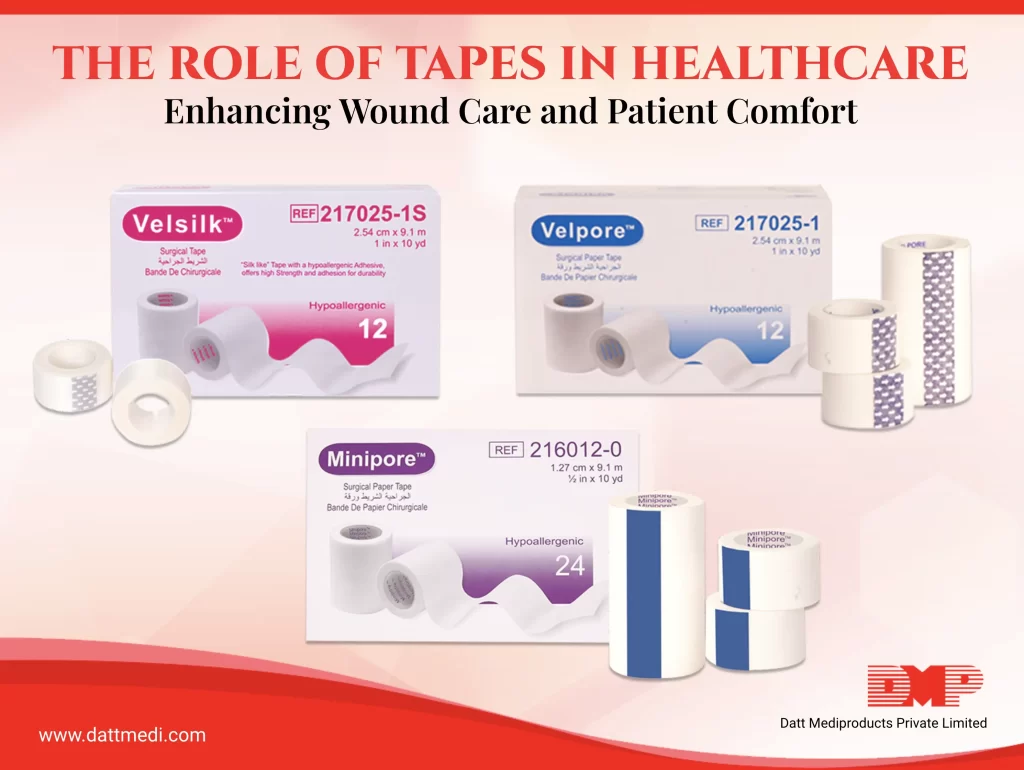
Medical tapes play a crucial role in the healthcare industry, providing essential support in wound care management and ensuring patient comfort and safety. These adhesive products are designed to secure dressings, medical devices, and other materials to the skin, facilitating the healing process and protecting patients from infections. In this blog post, we will explore the importance of medical tapes in healthcare, discuss the different types commonly used, delve into their role in wound care management, address patient comfort and safety concerns, and provide guidelines for their proper application and removal.

Importance of Medical Tapes in the Healthcare Industry:

Medical tapes are indispensable tools in the healthcare industry, offering numerous benefits for both healthcare professionals and patients. These tapes serve as an effective means of securing wound dressings, surgical incisions, and medical devices, such as catheters or IV lines. By keeping these materials in place, medical tapes promote proper healing, prevent contamination, and reduce the risk of infection. Moreover, they provide support to the injured area, minimizing movement and potential damage. The versatility and ease of use of medical tapes make them an essential component of any healthcare setting.

There is a wide range of medical tapes available, each designed to suit specific applications and patient needs. Some commonly used types include:

Minipore™:

Minipore™ tape is a hypoallergenic paper tape that offers gentle adhesion, making it suitable for patients with sensitive or fragile skin. It allows for breathability, reducing the risk of skin maceration while securely holding dressings in place. Read more about products visit https://dattmedi.com/minipore.html

Velpore™:

Velpore surgical paper tape possesses hypoallergenic qualities, making it ideal for individuals with sensitive skin or allergies. Its gentle nature ensures it is kind to the skin. The microporous structure of Velpore enables exceptional breathability, facilitating airflow and minimizing the likelihood of maceration.This tape is frequently utilized for securing wound dressings, delivering dependable fixation while enabling freedom of movement and flexibility. Its mild adhesive properties allow for painless and damage-free removal from the skin. Read more about products visit https://www.dattmedi.com/velpore.html

Velsilk™:

Velsilk tape is a silk-like cloth tape that combines excellent adhesion with gentle removal. It adheres securely to the skin while minimizing discomfort during tape removal. It is particularly useful in situations where frequent dressing changes are required, as it allows for easy application and removal. Read more about products visit https://www.dattmedi.com/velsilk.html

Role of Tapes in Wound Care Management:

Medical tapes play a vital role in wound care management. They help to secure dressings and keep them in place, preventing contamination and facilitating the healing process. Tapes also provide stability and support to the wound, reducing movement and minimizing the risk of further injury.

Additionally, they create a barrier against external pathogens, protecting the wound from infection. Properly applied medical tapes promote optimal wound healing and can contribute to positive patient outcomes.

Significance of Patient Comfort and Safety:

Patient comfort and safety are of utmost importance in healthcare. When using medical tapes, it is essential to consider the comfort and specific needs of each patient. The choice of tape should be based on factors such as skin sensitivity, wound location, and duration of use. It is crucial to select tapes that are hypoallergenic, breathable, and gentle on the skin to minimize the risk of adverse reactions. Regular monitoring of the taped area is necessary to ensure that the tape is not causing any discomfort or skin irritation. Moreover, proper tape removal techniques should be employed to avoid skin damage or pain.
Guidelines and Best Practices for Application and Removal:

To ensure the effective and safe use of medical tapes, the following guidelines should be followed:

  • Clean and dry the area before applying the tape.
  • Select an appropriate tape based on the patient’s needs and skin sensitivity.
  • Avoid excessive tension when applying the tape to prevent skin irritation.
  • Cut the tape to the desired length and shape, considering the wound size and location.
  • Ensure that the tape is firmly but comfortably secured, avoiding any wrinkles or folds.
  • Regularly assess the taped area for signs of skin irritation or discomfort.
  • When removing the tape, gently lift one corner and slowly peel it back, following the direction of hair growth to minimize pain and skin damage.
  • Apply the tape smoothly, avoiding excessive tension or wrinkling.
  • Periodically assess the tape’s integrity and reapply if necessary.
  • When removing the tape, gently lift the edges parallel to the skin while supporting the wound area to minimize pain and skin trauma.
  • If the tape is stubborn or adhered tightly, consider using a medical adhesive remover to aid in its removal.
  • After tape removal, clean the skin and assess for any signs of irritation or redness.

When properly applied and removed, medical tapes contribute to effective wound healing, prevent infection, and enhance patient comfort. By following guidelines for their proper application and removal, healthcare providers can maximize the benefits of medical tapes while minimizing the risk of complications.


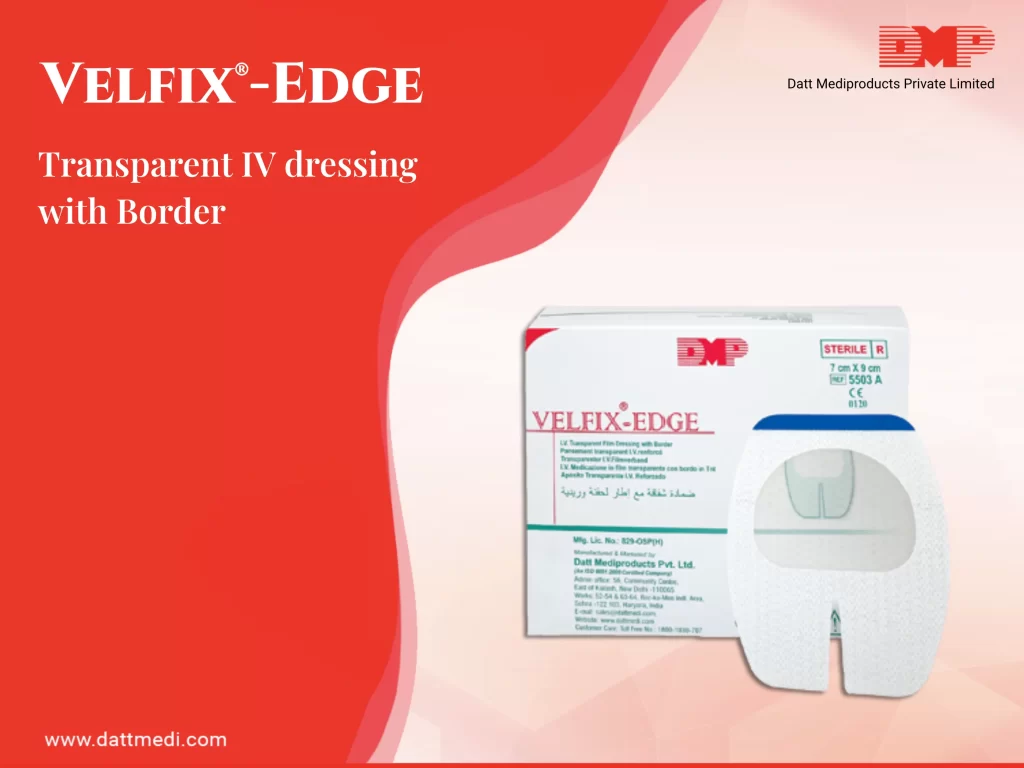
Intravenous (IV) cannulation is a common medical procedure used to administer medications and fluids directly into the bloodstream. While the benefits of IV therapy are clear, the procedure also poses risks, including the possibility of infection at the site of cannula insertion. When it comes to IV therapy, securing the cannula in place is critical for the patient’s safety and comfort.

We present Velfix® -Edge, a specialized IV dressing designed specifically for fixing cannulas, which is used to reduce the associated risks. Velfix® -Edge is a non-woven bordered IV dressings coated with latex free adhesive. Frame delivery system for precise placement. Highly conformable to provide solutions for difficult catheters and IV sites. Promotes best practice and enhanced patient comfort with additional securement strips and date labels. Window Framed delivery system allows for one handed application and prevents dressing sticking to itself. Deep notched design forms a barrier to secondary infection and bacterial contamination.

Some of the unique features and benefits of Velfix® -Edge:

  • It has a window frame design that enables continuous observation of the IV site, which is important for monitoring the patient’s condition and detecting any potential complications.
  • It offers a waterproof sterile barrier that protects the site from external contaminants, reducing the risk of infection.
  • It has stabilization non-woven borders that ensure maximum securement, breathability, and wear time.
  • Its notched design helps to discourage edge lift, which could compromise the sterile environment of the site.
  • It comes with two securement tape strips and a pre-printed documentation label, which facilitates proper labelling and documentation of the procedure.
  • It is easy to handle with gloves and allows for single-handed application, which saves time and improves efficiency.

There are several IV dressings available in the market but Velfix® -Edge stands out from the competition and enables medical practitioners to easily monitor the cannula insertion site.

Instructions for Use:

Velfix® -Edge must be used correctly in order to be effective. Before applying the dressing, the skin in the area of the cannula insertion site needs to be properly washed and dried. The Velfix® -Edge dressing can be placed directly to the skin once the region has been cleaned and dried, ensuring that the cannula stays firmly in place. As directed, the dressing should be changed often.

Precautions and Warnings:

The use of Velfix® -Edge on wounds or other skin-compromised areas is not recommended. It ought to be used exclusively for cannula fixation. Additionally, patients should not use Velfix® -Edge if they have allergies to adhesives or other substances.

Also, to maintain its efficacy and safety, it is crucial to carefully follow the usage instructions and adopt the appropriate safety measures. For securing cannulas, Velfix® -Edge is a great choice and is available in a range of tailored sizes.

Logo

Datt Mediproducts Private Limited

Loading