
Search by Blog
Read by Category

Your healing journey continues beyond this blog

Find the right products for better recovery at online store
Cart Image
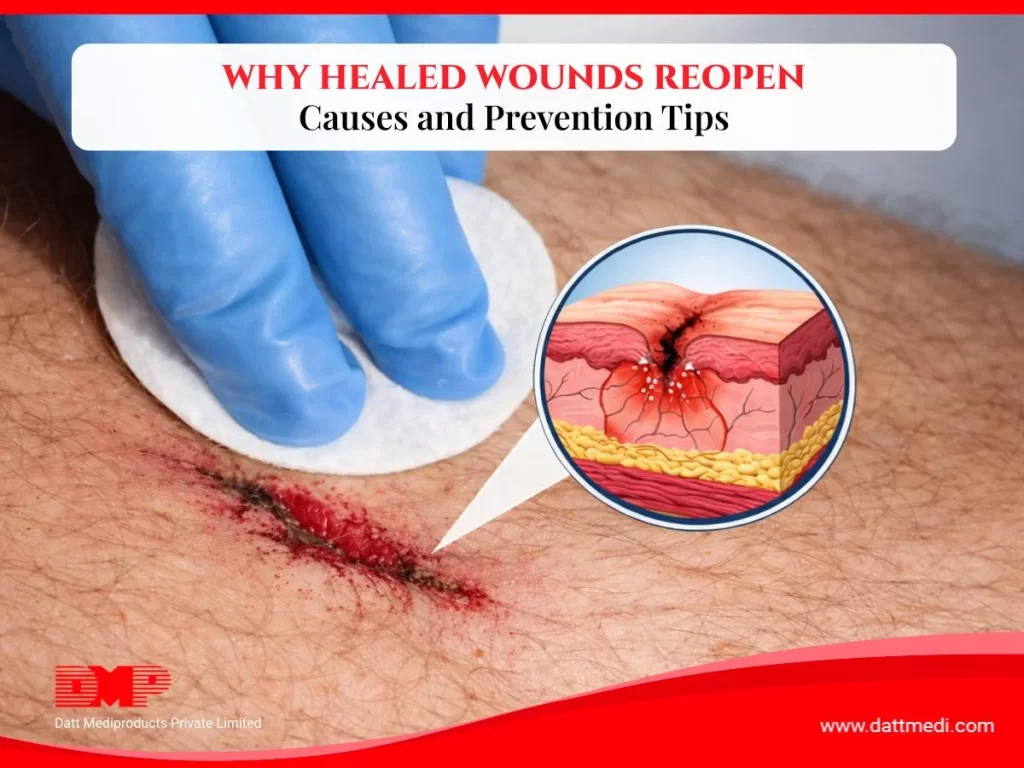
Reopened wounds due to tension and improper care

A wound that looks closed on the surface is not the same as wounds that has finished healing. The skin beneath may still be fragile, thin, and far less resilient than the tissue surrounding it. This is the stage where wounds most commonly reopen — not because something went wrong, but because the final phase of healing was not properly supported.

Understanding what makes newly closed skin vulnerable, and what protective measures actually work, can make the difference between a wound that heals completely and one that breaks down again.

Why ‘Closed Wounds’ Does Not Mean ‘Healed’

Wound healing happens in four overlapping stages: haemostasis, inflammation, proliferation, and remodelling. When the wound appears to close, the body is typically entering the remodelling phase — where collagen fibres reorganise and the new tissue gradually strengthens.

This phase can last several weeks to several months. During this time, the repaired skin has significantly lower tensile strength than normal skin — often as little as 50–80% of the original tissue strength, even after full remodelling. In the early weeks after closure, that figure is even lower.

The practical implication: the skin looks fine but cannot tolerate the same level of stress, friction, or pressure that healthy skin can. This is why reopening happens — not from neglect, but from the invisible vulnerability of newly repaired tissue.

The Most Common Reasons Healed Wounds Reopen

1. Mechanical Stress on Fragile Tissue

Areas that move repeatedly — knees, elbows, ankles, knuckles — place constant tension on healing tissue. Even normal daily movement can stretch new collagen fibres beyond what they can tolerate, causing the wound edges to split. This is particularly common in sutured wounds where the closure relies on the tissue holding together under movement.

2. Friction from Clothing or Surfaces

Repeated low-level friction from fabric, footwear, or contact with surfaces can erode the surface of newly healed skin. Unlike healthy skin, which can handle this without damage, fragile remodelling tissue has little resistance. Wounds on the feet, lower legs, or any area in contact with clothing are especially at risk.

3. Removing Dressings Too Early

Once a wound closes, it is easy to assume that dressings are no longer needed. In practice, premature removal of protective cover exposes the area to exactly the mechanical stress and friction described above. The wound may look healed, but the underlying tissue has not yet reached the strength to handle unprotected exposure.
Overcoming Delayed Wounds Healing

Related reading: Overcoming Delayed Healing: Common Causes and Solutions

4. Moisture Imbalance

Both extremes cause problems. Excess moisture — from wound fluid, sweat, or frequent washing without adequate drying — softens the surrounding skin (maceration), making it far easier to break down under light pressure. Very dry skin, on the other hand, becomes rigid and prone to cracking, particularly over joints. Maintaining a balanced moisture environment under and around the dressing is a key part of protecting fragile tissue.

5. Pressure on Immobile Areas

For individuals with reduced mobility, sustained pressure on a single area — particularly bony prominences like heels, sacrum, or hips — can cause tissue breakdown even in areas that appear to have healed. Regular repositioning and pressure redistribution are essential in these cases.

How Film Dressings Protect Wounds During the Remodelling Phase

Post-operative film dressings are one of the most effective tools for protecting healed and near-healed wounds during the remodelling phase. Unlike gauze-based dressings, which are primarily designed for wounds that are still actively healing and producing exudate, film dressings are specifically suited to closed wounds that need surface protection rather than absorption.

The key properties that make film dressings appropriate for this stage wounds are:

  • Physical barrier — blocks friction, bacteria, dirt, and external mechanical stress
  • Breathability — allows moisture vapour to escape, preventing maceration without drying the tissue
  • Transparency — the wound can be visually monitored without removing the dressing
  • Flexibility — conforms to joints and body contours, maintaining protection during movement
  • Waterproof — the wound stays protected during bathing and daily activity

Datt Mediproducts offers three film and post-operative dressings suited to different stages and wound types in the remodelling phase.

Velfix® T-Film — Transparent Film Dressing

A thin, fully transparent PU film dressing designed for closed wounds that no longer produce exudate. The transparent film allows visual inspection of the wound at any time without disturbing it. Velfix® T-Film is waterproof, breathable, and flexible enough to move with the skin across joints and mobile areas. Available in sizes from 5×7.5 cm to 10×35 cm.

Best for: Sutured wounds, minor cuts and abrasions, and wounds in mobile areas such as knees or elbows that need protection without bulk.

Velfix®-Easy+Pad — Film Dressing with Non-Adherent Pad

Combines a transparent film border with a central non-adherent absorbent pad. This makes Velfix®-Easy+Pad suitable for wounds in the later stages of healing that may still produce minimal fluid, or where the wound surface needs a non-stick contact layer to prevent trauma on removal.

Best for: Post-operative wounds in early recovery that are nearly closed but may have light residual drainage.

Velfix®-T+Pad — Film Dressing with Higher Absorbency

Similar in structure to Easy+Pad but with a higher-absorbency central pad. This is the appropriate choice where some exudate management is still needed alongside the protective film border.

Best for: Wounds transitioning from active healing to the remodelling phase, where light-to-moderate fluid output continues.

Choosing the Right Film Dressing for the Wounds Stage

SituationVelfix® T-FilmEasy+PadT+Pad
Wound fully closed, no fluid✓ IdealSuitableUnnecessary
Minimal residual drainageNot sufficient✓ IdealSuitable
Light-moderate exudateNot suitableBorderline✓ Ideal
Joint or mobile area✓ Ideal✓ Suitable✓ Suitable
Needs visual monitoring✓ IdealPartialPartial

Practical Care Tips for the Remodelling Phase

1. Keep the Area Protected Until the Skin Is Fully Strong

Resist the instinct to leave the area uncovered once the wound looks closed. A film dressing provides protection with minimal bulk and does not interfere with daily activity or bathing.

2. Monitor Without Disturbing

The transparency of film dressings means you can check for redness, fluid accumulation, or early signs of breakdown without peeling back the dressing. Only remove when the dressing edges lift, the dressing is full, or at the interval recommended by your healthcare provider.

3. Watch for Early Warning Signs

Address these promptly rather than waiting to see if they resolve on their own:

  • Redness or warmth spreading from the wound edges
  • Skin that looks shiny, wet, or softened around the dressing
  • Small cracks appearing at the wound edges
  • Increased tenderness or a pulling sensation when moving
  • Any reopening of the wound edges
Infection Control in Wound Care

Related reading: Healing on the Go: Orthopedic and Wound Care Solutions for Physical Activity

Protect the Final Stage as Carefully as the First

Most of the attention in wound care goes to the early stages — cleaning, closing, and dressing the wound. The remodelling phase gets far less focus, but it is where a significant number of wound breakdowns occur. Newly closed skin is fragile, and the stress of normal daily life is often enough to cause reopening without adequate protection.

Film dressings provide a practical, low-profile solution for this stage. Transparent, waterproof, flexible, and gentle on removal — they allow recovery to continue without restricting movement or requiring complex care routines.

Browse the Velfix® T-Film and post-operative dressing range at Datt Mediproducts to find the right option for your stage of recovery.

Visit www.dattmedi.com for more infomation.
Share:

Frequnently Asked Questions

It varies considerably by wound type, location, and individual health. Simple sutured wounds may remodel over 6–8 weeks; deeper wounds or those in high-mobility areas can take 3–6 months. The skin typically does not reach full strength until remodelling is complete.

Yes. Velfix® T film dressings are waterproof and designed to remain in place during bathing. Pat the area dry rather than rubbing after showering. If the dressing edges begin to lift after repeated wetting, replace it promptly to maintain protection.

Peel slowly from one corner, stretching the film parallel to the skin rather than lifting it directly upward. This minimises tension on the wound edges. If resistance is felt, press the skin down gently while peeling rather than pulling harder on the dressing.

A plain film dressing (Velfix® T-Film) is not designed to manage exudate and should not be used on wounds with active drainage. For wounds with minimal fluid, Velfix® Easy+Pad is more appropriate; for light-to-moderate drainage, Velfix® T+Pad provides the necessary absorbency alongside film protection.

Seek advice if the wound reopens, if you notice increasing redness or warmth extending beyond the wound edges, if there is swelling or discharge, or if the area becomes significantly more painful. These may indicate infection or a complication that requires clinical assessment.

Recent Blogs
Skin Integrity in Extreme Weather

Protecting Skin Integrity in Extreme Weather: Hot and Cold Temperature Care Tips

Extreme weather conditions, whether hot or cold, can significantly affect skin integrity, potentially compromising the body’s natural healing process.

Maintaining healthy skin is vital not only for general well-being but also for promoting effective wound healing. In this blog, we’ll explore how extreme temperatures impact skin health and share tips to protect your skin and wounds year-round.

Challenges in Hot Weather

1. Heat and Humidity

Hot temperatures combined with high humidity levels increase perspiration, which can lead to moisture-related skin breakdown. The skin may become macerated, making it more vulnerable to irritation and infection, especially in sensitive areas like underarms and groin.

2. Sun Exposure

Excessive UV radiation from sun exposure can damage the skin, leading to sunburn, heat rashes, and increased risk of further skin issues. Sunburned skin is more prone to infection, which can delay the healing of existing wounds.

3. Dehydration Risks

Hot weather can cause dehydration, which impacts skin hydration and weakens the skin’s barrier function. When skin becomes dry and cracked, it loses its ability to protect against pathogens, affecting both general skin health and wound healing.

Challenges in Cold Weather

  • Dry Air – Cold air often lacks moisture, leading to dehydration of the skin, making it dry and prone to cracks or fissures. These cracks provide an entry point for bacteria, which can cause infections and delay healing.
  • Reduced Blood Flow – In colder temperatures, blood circulation to the skin decreases, which can hinder the delivery of essential nutrients and oxygen to skin cells, slowing down the skin’s natural repair processes and impeding wound healing.
  • Layered Clothing – While layering clothing can help retain warmth in cold weather, it may also cause friction, especially in sensitive or healing areas. This friction can irritate the skin and make it more susceptible to damage.

Tips for Maintaining Skin Integrity in Hot Weather

Stay Hydrated

Hydration is key for healthy skin. Drink plenty of water throughout the day to keep your skin moist from the inside out and to support overall skin health.

Protective Clothing

Wear lightweight, breathable fabrics to allow airflow and reduce sweating. UV-protective clothing can also help shield your skin from harmful sun exposure.

Skin Cleansing and Moisturization

To avoid sweat buildup, ensure regular skin cleansing, followed by the application of a lightweight, non-comedogenic moisturizer. This will help lock in hydration without clogging pores.

Tips for Maintaining Skin Integrity in Cold Weather

  • Hydrating Moisturizers – Cold air can strip the skin of moisture. Use thicker, oil-based moisturizers to prevent water loss and keep the skin barrier intact.
  • Humidify Indoor Air – Consider using humidifiers indoors to add moisture to the air and prevent skin dehydration caused by dry environments.
  • Gentle Skin Care Routine – Avoid using hot water when washing your face or body, as this can further dry out the skin. Opt for mild, fragrance-free cleansers that won’t irritate the skin or damage its natural protective layer.

Special Considerations for Wound Care

i) Temperature Regulation

Maintaining a moderate temperature for wound healing is essential. Extreme heat can worsen inflammation and slow down healing, while cold can cause a reduction in circulation. Aim for a comfortable, consistent environment to support optimal recovery.

ii) Dressing Types

For hot weather, choose dressings that can absorb excess moisture and prevent maceration. For cold weather, opt for dressings that retain moisture to keep the wound hydrated and prevent cracking or dryness.

Regular Inspection

In extreme weather conditions, skin changes can happen quickly. It’s important to inspect your skin and any wounds frequently to monitor for signs of irritation, infection, or other complications.

As the seasons change, so should your skincare routine. Understanding how hot and cold temperatures affect skin integrity is key to protecting your skin and supporting proper wound healing.

By making small adjustments to your daily habits, you can ensure that your skin remains healthy and wounds heal effectively, no matter the weather.

Stay vigilant and adjust your routine as needed to safeguard your skin and enhance your healing process throughout the year.

Overcoming Delayed Healing

Overcoming Delayed Healing: Common Causes and Practical Tips

Healing is a natural process—but sometimes, wounds don’t heal as quickly as expected. Delayed healing can impact physical comfort, increase the risk of infection, and reduce quality of life.

The good news…
Many common causes of delayed healing can be managed with simple lifestyle adjustments. Let’s explore these causes and discover actionable tips for improving the healing process.

Understanding Delayed Healing

Wound healing is influenced by various factors—some within our control, others that may require professional intervention. Identifying these causes is the first step toward a faster, more efficient recovery.

Common Causes of Delayed Healing

  • Poor Nutrition: Lack of essential nutrients, such as proteins, amino acids, fatty acids, carbohydrates, vitamins (A, C & E) and micronutrients (magnesium and zinc) to name a few, slows tissue repair by affecting one or more phases of the wound healing process.
  • Inadequate Hydration: Dehydration impairs skin regeneration.
  • Underlying Health Conditions: Conditions like diabetes, diabetes associated neuropathy, vascular diseases, or immune disorders can complicate healing.
  • Smoking or Alcohol Consumption: These enhance host susceptibility to infections that lead to impaired angiogenesis thereby reducing blood flow and oxygen delivery to tissues which are essential for wound healing.
  • Stress and Poor Sleep: Disrupt hormone balance and deregulate the immune system, which directly affects recovery. Additionally, stressed individuals are more likely to develop unhealthy habits such as inadequate nutrition, smoking, less exercise, poor sleep patterns; negatively modulating the healing mechanism.
  • Infection or Repeated Trauma to the Wound: Can significantly hinder the healing process. Microorganisms obtain easy access to the underlying tissues when skin is injured. The presence of replicating microorganisms in the wound elongates the inflammatory phase of the wound healing process. This can lead to the wound to enter into a chronic state with significant delay in wound healing.

Nutrition & Hydration Matter

Proper nutrition is essential for healing.

Incorporate the following into your diet:

  • Lean proteins (eggs, fish, legumes) for tissue repair
  • Fresh fruits and vegetables for vitamins and antioxidants
  • Whole grains to support energy levels and tissue growth
Tip: Staying well-hydrated ensures nutrients are transported to your cells, promoting faster healing and flushing out toxins.

Sleep & Stress Management

Proper rest accelerates healing. Focus on these habits:

  • Aim for 7–9 hours of sleep each night.
  • Practice mindfulness or relaxation techniques to reduce stress.
  • Limit screen time and caffeine before bed to enhance sleep quality.

Did You Know? Chronic stress raises cortisol levels, slowing wound recovery.

Daily Movement & Gentle Activity

Physical activity promotes circulation, which helps deliver oxygen and nutrients to healing tissues:

  • Engage in light activities, like short walks, if possible.
  • Avoid putting pressure on the wound site, and take care to avoid friction.
  • Elevate limbs to reduce swelling.
Important: Always follow your healthcare provider’s advice regarding movement and wound care.

Basic Wound Hygiene

Maintaining wound hygiene is crucial:

  • Keep the wound clean and protected with proper dressings.
  • Change dressings regularly, as advised by your healthcare provider.
  • Avoid touching or scratching the wound area.
Pro Tip: Wash your hands thoroughly before and after touching a wound to reduce infection risk.

When to Seek Help

If your wound isn’t healing as expected or you get fever or flu-like symptoms or the wound shows signs of infection (such as increased redness, heat, swelling, pus, or a foul odor), seek professional medical guidance. Conditions like diabetes or circulatory issues may require specialized wound care.

Take Small Steps Toward Better Healing

Every small change—from better hydration to taking a short walk—adds up. By staying informed and committed to your healing process, you give your body the best chance to recover naturally.

Empowering You with the Right Solutions

At Datt Mediproducts, we understand the importance of optimal healing. While we don’t provide medical treatment, our advanced wound care solutions are designed to support your recovery by offering comfort, protection, and care where it matters most.


Logo

Datt Mediproducts Private Limited

Loading