
Search by Blog
Read by Category

Your healing journey continues beyond this blog

Find the right products for better recovery at online store
Cart Image
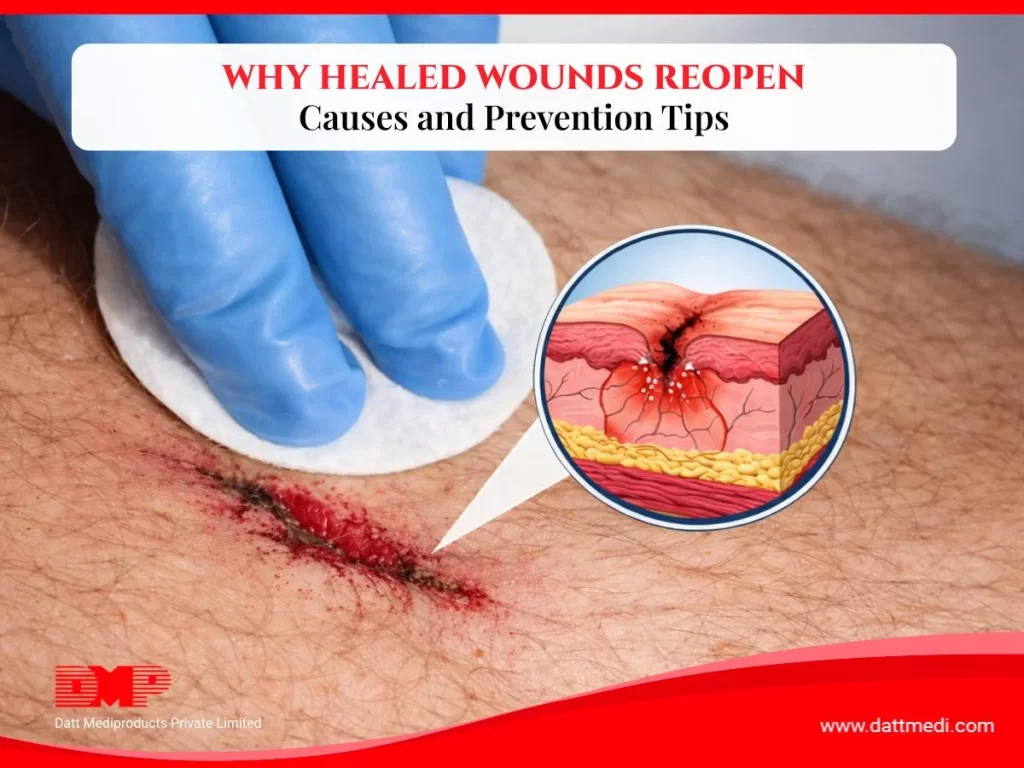
Reopened wounds due to tension and improper care

A wound that looks closed on the surface is not the same as wounds that has finished healing. The skin beneath may still be fragile, thin, and far less resilient than the tissue surrounding it. This is the stage where wounds most commonly reopen — not because something went wrong, but because the final phase of healing was not properly supported.

Understanding what makes newly closed skin vulnerable, and what protective measures actually work, can make the difference between a wound that heals completely and one that breaks down again.

Why ‘Closed Wounds’ Does Not Mean ‘Healed’

Wound healing happens in four overlapping stages: haemostasis, inflammation, proliferation, and remodelling. When the wound appears to close, the body is typically entering the remodelling phase — where collagen fibres reorganise and the new tissue gradually strengthens.

This phase can last several weeks to several months. During this time, the repaired skin has significantly lower tensile strength than normal skin — often as little as 50–80% of the original tissue strength, even after full remodelling. In the early weeks after closure, that figure is even lower.

The practical implication: the skin looks fine but cannot tolerate the same level of stress, friction, or pressure that healthy skin can. This is why reopening happens — not from neglect, but from the invisible vulnerability of newly repaired tissue.

The Most Common Reasons Healed Wounds Reopen

1. Mechanical Stress on Fragile Tissue

Areas that move repeatedly — knees, elbows, ankles, knuckles — place constant tension on healing tissue. Even normal daily movement can stretch new collagen fibres beyond what they can tolerate, causing the wound edges to split. This is particularly common in sutured wounds where the closure relies on the tissue holding together under movement.

2. Friction from Clothing or Surfaces

Repeated low-level friction from fabric, footwear, or contact with surfaces can erode the surface of newly healed skin. Unlike healthy skin, which can handle this without damage, fragile remodelling tissue has little resistance. Wounds on the feet, lower legs, or any area in contact with clothing are especially at risk.

3. Removing Dressings Too Early

Once a wound closes, it is easy to assume that dressings are no longer needed. In practice, premature removal of protective cover exposes the area to exactly the mechanical stress and friction described above. The wound may look healed, but the underlying tissue has not yet reached the strength to handle unprotected exposure.
Overcoming Delayed Wounds Healing

Related reading: Overcoming Delayed Healing: Common Causes and Solutions

4. Moisture Imbalance

Both extremes cause problems. Excess moisture — from wound fluid, sweat, or frequent washing without adequate drying — softens the surrounding skin (maceration), making it far easier to break down under light pressure. Very dry skin, on the other hand, becomes rigid and prone to cracking, particularly over joints. Maintaining a balanced moisture environment under and around the dressing is a key part of protecting fragile tissue.

5. Pressure on Immobile Areas

For individuals with reduced mobility, sustained pressure on a single area — particularly bony prominences like heels, sacrum, or hips — can cause tissue breakdown even in areas that appear to have healed. Regular repositioning and pressure redistribution are essential in these cases.

How Film Dressings Protect Wounds During the Remodelling Phase

Post-operative film dressings are one of the most effective tools for protecting healed and near-healed wounds during the remodelling phase. Unlike gauze-based dressings, which are primarily designed for wounds that are still actively healing and producing exudate, film dressings are specifically suited to closed wounds that need surface protection rather than absorption.

The key properties that make film dressings appropriate for this stage wounds are:

  • Physical barrier — blocks friction, bacteria, dirt, and external mechanical stress
  • Breathability — allows moisture vapour to escape, preventing maceration without drying the tissue
  • Transparency — the wound can be visually monitored without removing the dressing
  • Flexibility — conforms to joints and body contours, maintaining protection during movement
  • Waterproof — the wound stays protected during bathing and daily activity

Datt Mediproducts offers three film and post-operative dressings suited to different stages and wound types in the remodelling phase.

Velfix® T-Film — Transparent Film Dressing

A thin, fully transparent PU film dressing designed for closed wounds that no longer produce exudate. The transparent film allows visual inspection of the wound at any time without disturbing it. Velfix® T-Film is waterproof, breathable, and flexible enough to move with the skin across joints and mobile areas. Available in sizes from 5×7.5 cm to 10×35 cm.

Best for: Sutured wounds, minor cuts and abrasions, and wounds in mobile areas such as knees or elbows that need protection without bulk.

Velfix®-Easy+Pad — Film Dressing with Non-Adherent Pad

Combines a transparent film border with a central non-adherent absorbent pad. This makes Velfix®-Easy+Pad suitable for wounds in the later stages of healing that may still produce minimal fluid, or where the wound surface needs a non-stick contact layer to prevent trauma on removal.

Best for: Post-operative wounds in early recovery that are nearly closed but may have light residual drainage.

Velfix®-T+Pad — Film Dressing with Higher Absorbency

Similar in structure to Easy+Pad but with a higher-absorbency central pad. This is the appropriate choice where some exudate management is still needed alongside the protective film border.

Best for: Wounds transitioning from active healing to the remodelling phase, where light-to-moderate fluid output continues.

Choosing the Right Film Dressing for the Wounds Stage

SituationVelfix® T-FilmEasy+PadT+Pad
Wound fully closed, no fluid✓ IdealSuitableUnnecessary
Minimal residual drainageNot sufficient✓ IdealSuitable
Light-moderate exudateNot suitableBorderline✓ Ideal
Joint or mobile area✓ Ideal✓ Suitable✓ Suitable
Needs visual monitoring✓ IdealPartialPartial

Practical Care Tips for the Remodelling Phase

1. Keep the Area Protected Until the Skin Is Fully Strong

Resist the instinct to leave the area uncovered once the wound looks closed. A film dressing provides protection with minimal bulk and does not interfere with daily activity or bathing.

2. Monitor Without Disturbing

The transparency of film dressings means you can check for redness, fluid accumulation, or early signs of breakdown without peeling back the dressing. Only remove when the dressing edges lift, the dressing is full, or at the interval recommended by your healthcare provider.

3. Watch for Early Warning Signs

Address these promptly rather than waiting to see if they resolve on their own:

  • Redness or warmth spreading from the wound edges
  • Skin that looks shiny, wet, or softened around the dressing
  • Small cracks appearing at the wound edges
  • Increased tenderness or a pulling sensation when moving
  • Any reopening of the wound edges
Infection Control in Wound Care

Related reading: Healing on the Go: Orthopedic and Wound Care Solutions for Physical Activity

Protect the Final Stage as Carefully as the First

Most of the attention in wound care goes to the early stages — cleaning, closing, and dressing the wound. The remodelling phase gets far less focus, but it is where a significant number of wound breakdowns occur. Newly closed skin is fragile, and the stress of normal daily life is often enough to cause reopening without adequate protection.

Film dressings provide a practical, low-profile solution for this stage. Transparent, waterproof, flexible, and gentle on removal — they allow recovery to continue without restricting movement or requiring complex care routines.

Browse the Velfix® T-Film and post-operative dressing range at Datt Mediproducts to find the right option for your stage of recovery.
Visit www.dattmedi.com for more infomation.
Share:

Frequnently Asked Questions

It varies considerably by wound type, location, and individual health. Simple sutured wounds may remodel over 6–8 weeks; deeper wounds or those in high-mobility areas can take 3–6 months. The skin typically does not reach full strength until remodelling is complete.

Yes. Velfix® T film dressings are waterproof and designed to remain in place during bathing. Pat the area dry rather than rubbing after showering. If the dressing edges begin to lift after repeated wetting, replace it promptly to maintain protection.

Peel slowly from one corner, stretching the film parallel to the skin rather than lifting it directly upward. This minimises tension on the wound edges. If resistance is felt, press the skin down gently while peeling rather than pulling harder on the dressing.

A plain film dressing (Velfix® T-Film) is not designed to manage exudate and should not be used on wounds with active drainage. For wounds with minimal fluid, Velfix® Easy+Pad is more appropriate; for light-to-moderate drainage, Velfix® T+Pad provides the necessary absorbency alongside film protection.

Seek advice if the wound reopens, if you notice increasing redness or warmth extending beyond the wound edges, if there is swelling or discharge, or if the area becomes significantly more painful. These may indicate infection or a complication that requires clinical assessment.

Recent Blogs
Wound during physical activity

Healing on the Go: Orthopedic and Wound Care Solutions for Physical Activity

Recovery doesn’t mean slowing down. Staying active while recovering from an injury or managing a wound doesn’t have to be an impossible task. With the right products and strategies, you can keep moving while ensuring that your recovery stays on track.

Whether you’re returning to your workout routine after surgery, dealing with an orthopedic injury, or healing a wound, we’ve got you covered.  Let’s dive into how you can integrate orthopedic and wound care products into your active lifestyle to keep you on the move and in the game.

The hidden risks of being active during recovery

Exercise helps circulation and mental health, but certain movements can disrupt healing. 
For wounds, bending, twisting, or sweating can weaken dressings and delay recovery.

EXAMPLE

Imagine a wound that’s healing well, but every time you move, the bandage loosens or moisture from sweat causes irritation. That can delay healing, reopen a wound, or even introduce bacteria. Similarly, orthopedic injuries like fractures or sprains require careful management to avoid strain that hinders healing.

The first rule of staying active during recovery?

Keep wounds protected during physical activity. The right products will shield your injury from friction, dirt, and moisture while allowing the skin to breathe. Opt for dressings that stay secure, comfortable, and irritation-free.

Our top products for Active Healing

When it comes to active recovery, we understand that you need products that work with you, not against you. That’s why we recommend products designed for ultimate support and flexibility.

  • Velpore™, Pressure-Sensitive Adhesive Tape:
    Hypoallergenic and breathable, it keeps dressings in place during physical activity without skin irritation.
  • Velfix® T+Pad, Waterproof Dressing:
    Ideal for post-surgical recovery, this waterproof dressing provides a bacterial barrier while you stay active.
  • Velfix® -T Film, Transparent Dressing:
    Clear, waterproof, and flexible, it offers protection while maintaining full range of motion.

When dealing with an orthopedic injury, immobilization is essential—but that doesn’t mean you have to sit on the sidelines.  Whether it’s a sprain, strain, or fracture, finding the right orthopedic product can help ensure that your recovery stays on track, even as you navigate through your day-to-day activities.

Hygiene: Clean up after movement

Excess sweat and dirt can compromise wound care. Velfix® -T+Pad helps manage moisture and ensures easy post-workout cleaning, preventing infection while maintaining healing.

While staying active is crucial, some exercises may be more beneficial than others during recovery. Low-impact activities like walking, swimming, or cycling can promote healing without overstraining your injury.

Recognize when to pause

Pay attention to swelling, redness, or increased pain after activity. If these occur, rest and assess—early intervention ensures faster recovery.

Holistic Healing: Rest & Nutrition

Healing requires proper rest and nutrition. A balanced diet, hydration, and enough sleep support tissue repair and overall recovery. Include vitamins, protein, and antioxidants to aid healing. Stay active and heal efficiently by using the right wound care and orthopedic products. With proper protection, hygiene, and mindful activity, your recovery journey can stay on track.

Why Muscle Strains Happen

Understanding Muscle Strains: Causes and Effective Recovery Strategies

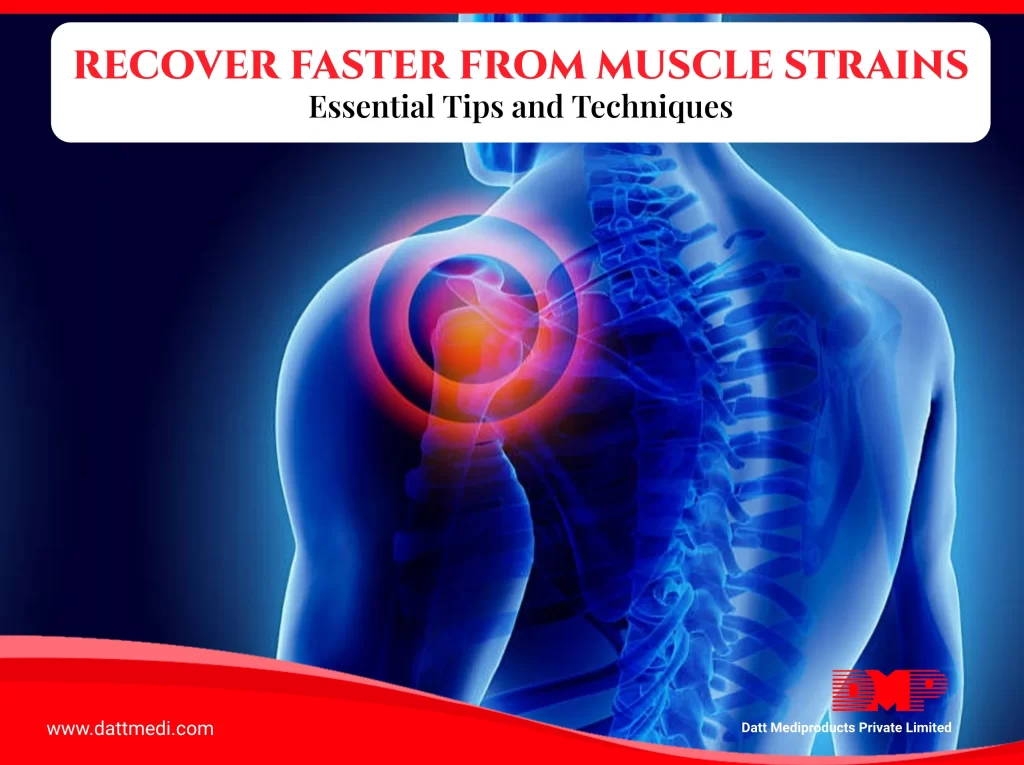
A muscle strain, or muscle pull, occurs when a muscle is overstretched or torn. This common injury can disrupt daily activities, causing pain and limiting mobility. Understanding the causes and effective recovery strategies can help you heal faster and prevent future injuries. Muscle strains typically happen when the muscle is pushed beyond its limit.

Key factors include:

  1. Overexertion: Intense activity without proper preparation.
  2. Sudden Movements: Abrupt actions, like twisting or jerking.
  3. Lack of Warm-up: Skipping stretching or warm-up exercises.
  4. Poor Posture or Repetitive Motion: These can strain muscles over time.

Recognizing the signs early helps with effective treatment:

  • Sharp or throbbing pain, especially during movement.
  • Inflammation in the affected area.
  • Difficulty moving the muscle fully.
  • Visible bruising from damaged blood vessels.

Start your recovery with these steps:

Rest: Avoid using the muscle until pain subsides.

Ice: Apply ice for 20 minutes every 2 hours to reduce swelling and numb the pain.

Compression: Use a compression bandage to stabilize the muscle and reduce swelling.

Elevation: Elevate the injured area to help reduce swelling.

Velcool®: Instant Cooling Relief

Cooling is one of the best ways to reduce inflammation post-activity. Cold therapy constricts blood vessels, decreases swelling, and slows inflammation. Velcool® offers a convenient and effective solution for reducing swelling and alleviating pain. Its long-lasting cooling effect ensures optimal comfort during the initial recovery phase.
Compression improves circulation and accelerates healing by reducing swelling. Our compression bandages provide targeted support to help the muscle heal more efficiently.

Cokomp™ : Reliable Compression Support

Once inflammation is controlled, compression is crucial for ongoing healing. Cokomp™ provides targeted support, ensuring consistent pressure that enhances circulation and accelerates the healing process. Its lightweight and durable material makes it a perfect choice for both acute care and ongoing recovery.

Once pain subsides:
Begin gentle stretches to restore flexibility.
Slowly incorporate exercises to rebuild muscle strength and prevent future injuries.
Don’t rush back into your normal routine.

Additional recovery tips:

  1. As healing progresses, physical therapy can restore range of motion.
  2. After 48 hours, apply heat to relax muscles and improve circulation.
  3. Stay hydrated and eat a balanced diet rich in protein and vitamins to support muscle repair.

When to consult a healthcare provider:

  1. Persistent pain despite rest.
  2. Inability to move the muscle.
  3. Severe swelling that doesn’t improve.

To reduce the risk of future strains:

  1. Always stretch before physical activity.
  2. Regular strength training can prevent strains.
  3. Ensure good form during exercise to avoid unnecessary strain.

By understanding muscle strains and following effective recovery strategies, you can heal faster and prevent re-injury. Our compression bandages are a key tool in your recovery, offering support and reducing swelling for quicker healing. Explore innovative solutions to support a healthier, more active season ahead.

Logo

Datt Mediproducts Private Limited

Loading