
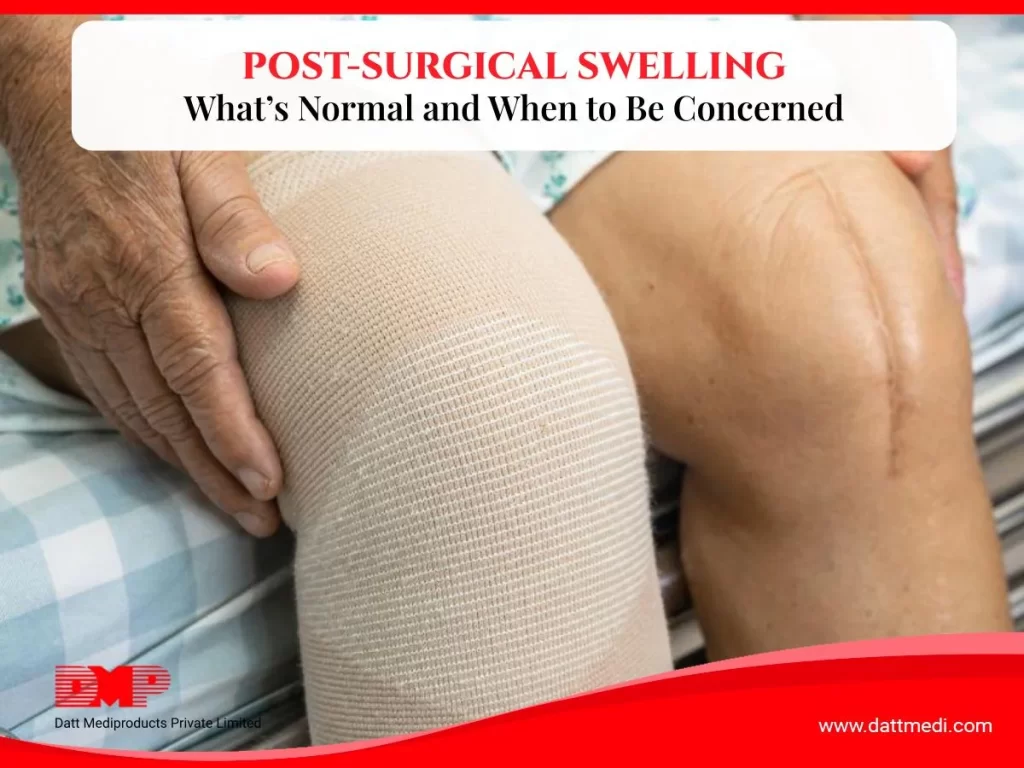
Some swelling after surgery is normal. It usually rises over the first few days, then slowly settles over weeks.
Call your surgical team if swelling is getting worse, becomes more painful, comes with spreading redness, discharge or fever, or is new or much greater in a leg (especially the calf or the leg that was not operated on). Call emergency services if you have sudden breathlessness, chest pain, coughing up blood or fainting.
After surgery, the body sends blood, fluid and immune cells to the area to repair tissue. This temporary build-up of fluid, called post-operative oedema (edema in US spelling), can make the area look puffy or feel tight or firm. How much swelling you get, and for how long, depends on the type of surgery, the area treated and your own recovery.
This blog explains what normal swelling looks like, how long it may last, what may help, what to avoid, and which warning signs should never be ignored. It is written for people recovering from surgery and for the family members and carers helping them.
Is Swelling Normal After Surgery?
Yes. Some swelling is a normal part of healing after many operations.
Normal swelling may:
- Appear in the first few days after surgery
- Make the area feel mildly tight, firm or uncomfortable
- Be more noticeable after activity or at the end of the day
- Improve gradually with rest and elevation, when advised
- Come with some bruising
The amount and length of swelling vary a lot between procedures. Your surgical team can tell you what to expect after your operation.
Why Does Surgery Cause Swelling?
Surgery is a controlled injury, and the body responds with inflammation. Three things usually combine:
- Inflammation: blood vessels widen and become leakier so repair cells can reach the area, and fluid moves into the surrounding tissue.
- Handled tissue: cutting and moving tissue during the operation irritates the area, which can cause bruising and fluid build-up.
- Less movement: when you move less, the muscles that normally help push fluid back toward the heart work less, so fluid can collect, especially in the legs and feet.
How Long Does Swelling Last After Surgery?
Swelling is often worse in the first several days and then gradually settles, but timelines differ by operation.
| Recovery stage | What you may notice |
|---|---|
| First few days | Swelling may increase as part of early healing |
| First 1 to 2 weeks | Swelling may begin to settle but can go up and down |
| Several weeks | Mild swelling may remain, especially after bone, joint or lower-limb surgery |
| Several months | Some joint or leg procedures can leave mild swelling for longer |
There is no single timeline for every surgery. Follow the recovery instructions from your surgeon. For general advice, see the NHS guide to getting back to normal after surgery.
What Is Normal Swelling After Different Types of Surgery?
These are general patterns only. Your surgeon will know what is expected for your operation.
| Type of surgery | What is often seen | Good to know |
|---|---|---|
| Knee, hip or other joint surgery | Swelling around the joint and lower leg that can last for weeks, sometimes months | Often worse after activity and eases with rest and elevation |
| Foot and ankle surgery | Swelling in the foot and ankle for weeks, often more noticeable when the leg hangs down | Elevation as advised matters most |
| Abdominal or hernia surgery | Swelling and bruising near the incision that settles over days to weeks | Report increasing, hard or very painful swelling |
| Keyhole (laparoscopic) surgery | Mild swelling around the small cuts | Usually settles faster, but follow your instructions |
| Surgery involving lymph nodes | Swelling in an arm or leg that may appear later, sometimes months on | Tell your team early, as it may be lymphoedema |
What Does Normal Swelling Look Like?
Normal swelling stays around the surgical area and slowly becomes less noticeable as you heal. It may feel mildly tight or firm, come with bruising, and ease with rest or elevation. A little redness around a healing cut is common. Redness that spreads or becomes more painful needs to be checked.
Normal Swelling vs Warning Signs
Normal swelling improves gradually. Warning signs include swelling that worsens, or that comes with strong pain, spreading redness, warmth, fever or changes to the wound.
| What you notice | What it may mean | What to do |
|---|---|---|
| Swelling slowly improving | Often consistent with recovery | Keep following your care plan |
| Swelling suddenly increases | Possible problem | Contact your surgical team |
| Severe or worsening pain | Possible complication | Seek medical advice |
| Spreading redness, warmth or tenderness | Possible infection | Seek medical advice the same day |
| Fever, chills, pus or discharge | Possible infection | Contact your surgical team promptly |
| Wound opens or changes significantly | Wound problem | Seek medical advice |
| New or much greater swelling in a leg, especially the calf or the leg not operated on | Possible blood clot | Get prompt medical assessment |
| Swelling with calf pain or tenderness | Possible deep vein thrombosis (DVT) | Get prompt medical assessment |
Important: Surgery and reduced movement raise the risk of blood clots in the veins (venous thromboembolism, or VTE). New swelling, pain or tenderness, warmth, or redness or discolouration in one leg can be symptoms of a DVT. See the CDC information on healthcare-associated blood clots and the NHS guidance on DVT.
When Is Swelling After Surgery an Emergency?
Emergency: If you have sudden shortness of breath, chest pain, coughing up blood, fainting or severe difficulty breathing after surgery, call emergency services immediately (112 in India). These can be signs of a pulmonary embolism, which happens when a blood clot travels to the lungs.
The CDC guide to the risks, signs and symptoms of blood clots gives more detail on these symptoms.
What Can Help Reduce Swelling After Surgery?
Elevation, gentle movement and the other steps your surgical team recommends may help control swelling.
- Elevate the area. If your team recommends it, rest with the affected limb raised, and follow the positioning they give you for your operation.
- Move as advised. Gentle movement supports circulation and helps avoid problems from staying still too long. Your team may suggest short walks, ankle movements or physiotherapy exercises. Do not do more than they recommend.
- Use compression only when recommended. Compression stockings or bandages are advised after some operations, but only your healthcare team can say if they are right for you. Do not start compression on your own, especially if you have circulation problems, major swelling or an open wound.
- Follow cold therapy instructions. Cold packs may be advised after some procedures. Wrap the pack in a cloth, never place it directly on skin, and follow your team’s directions on how long to use it and whether the wound can be exposed.
- Follow wound-care instructions. Keep the wound protected and follow the dressing instructions you were given. See our guide, The Ultimate Guide to Safe Wound Care, and our Film & Post-Operative Dressings resources.
What Should You Avoid When You Have Swelling After Surgery?
- Do not massage a swollen calf or leg. If a clot is present, massage could be harmful.
- Do not put a tight bandage or compression on yourself unless your team has advised it.
- Do not apply heat to a fresh surgical area unless your team says it is fine, as heat can increase swelling early on.
- Do not stay still for long stretches if you are cleared to move. Long periods of sitting or lying raise clot risk and can worsen swelling.
- Do not stop prescribed medicines, including blood thinners, or skip physiotherapy without asking your team.
- Do not wait to see if worrying symptoms “go away”. Call your team.
Can Compression Help With Swelling After Surgery?
Sometimes. Compression applies controlled pressure to help manage fluid build-up and support circulation, and it may be part of recovery when your team recommends it for your procedure.
It is not right for everyone or for every stage of recovery. The type, pressure level and timing should be set for your individual situation. To learn more, read Compression Therapy in Wound Healing and Compression Bandages vs. Compression Stockings. If you have been prescribed stockings, our guide on correct measurement and fit of compression garments explains how to get the size right. If your surgeon has recommended compression, you can explore the Datt Mediproducts (DMP) Compression Bandage range.
When Should You Call Your Surgeon?
Contact your surgical team if swelling is increasing, becoming more painful, or appears with signs of infection or other unusual changes.
Seek medical advice if you notice:
- Swelling that is getting worse instead of improving
- Severe or increasing pain
- Spreading redness or warmth
- Fever or chills
- Pus or unusual discharge from the wound
- A wound that opens or changes a lot
- New or much greater swelling in a leg, especially the calf or the leg that was not operated on
- Leg swelling with calf pain, tenderness, warmth or discolouration
For more on one-sided swelling, read Why One Leg Swells More: 7 Expert Causes You Need to Know.
Can Swelling Last for Weeks or Months After Surgery?
Yes. Mild swelling can last weeks or even months after some operations, particularly joint or leg surgery. What matters is the pattern: swelling that slowly shrinks is different from swelling that suddenly grows or arrives with new pain, redness or warmth. Swelling that appears or persists long after surgery, especially after lymph node surgery, should be checked, as it may be lymphoedema. Read Lymphedema: How to Care and Manage for more. If you are unsure, contact your team instead of relying on general timelines.
How Can You Support a Smooth Recovery?
Follow your instructions and check the surgical area daily so you can spot problems early.
Daily checklist for patients and caregivers:
- Look at the surgical area for changes in swelling, redness or discharge
- Follow your activity and physiotherapy plan
- Elevate the area if advised
- Use any prescribed compression exactly as instructed
- Follow wound and dressing instructions
- Call your healthcare team if anything is worsening or unusual
For caregivers: Compare both legs or both sides each day, ask about new pain, and take a photo of the area at the same time daily so changes are easier to see and describe to the doctor. For more, browse our post-surgery recovery articles.
Medical disclaimer: This article is for general education and does not replace advice from your surgeon or another qualified healthcare professional. Recovery varies by procedure and person. If you have worrying or worsening symptoms, contact your healthcare team promptly, or seek emergency care when appropriate.