Search by Blog
Read by Category

Your healing journey continues beyond this blog

Find the right products for better recovery at online store
Cart Image
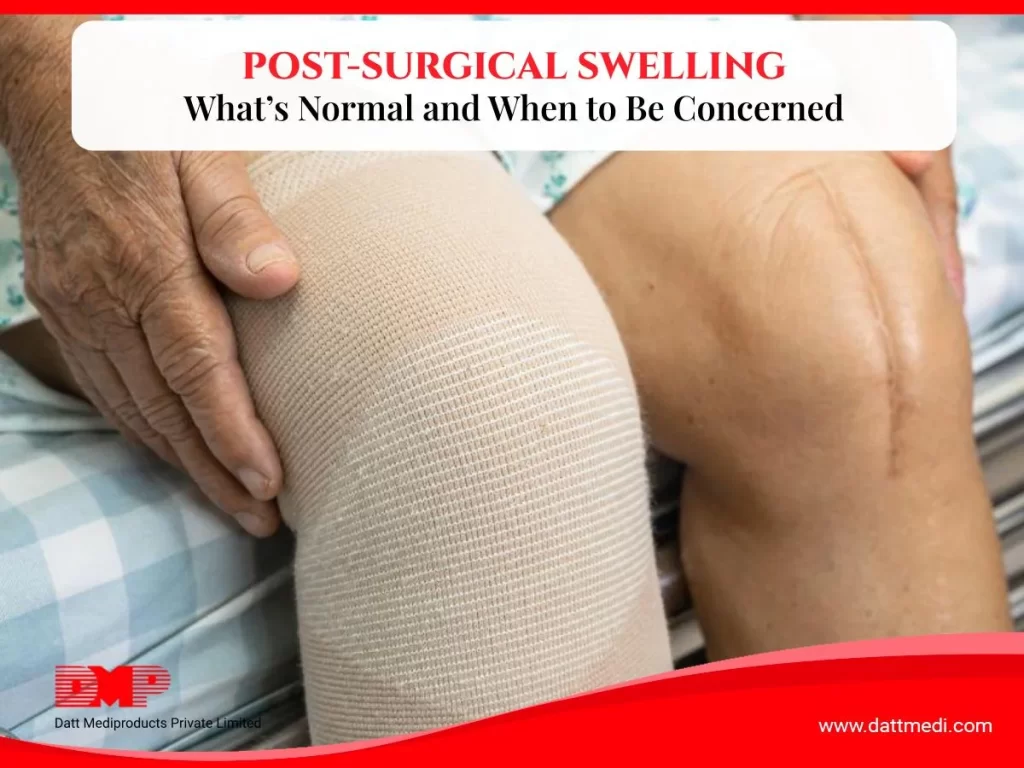
Swelling around surgical site with bandage

Some swelling after surgery is normal. It usually rises over the first few days, then slowly settles over weeks.

Call your surgical team if swelling is getting worse, becomes more painful, comes with spreading redness, discharge or fever, or is new or much greater in a leg (especially the calf or the leg that was not operated on). Call emergency services if you have sudden breathlessness, chest pain, coughing up blood or fainting.

After surgery, the body sends blood, fluid and immune cells to the area to repair tissue. This temporary build-up of fluid, called post-operative oedema (edema in US spelling), can make the area look puffy or feel tight or firm. How much swelling you get, and for how long, depends on the type of surgery, the area treated and your own recovery.

This blog explains what normal swelling looks like, how long it may last, what may help, what to avoid, and which warning signs should never be ignored. It is written for people recovering from surgery and for the family members and carers helping them.

Is Swelling Normal After Surgery?

Yes. Some swelling is a normal part of healing after many operations.

Normal swelling may:

  • Appear in the first few days after surgery
  • Make the area feel mildly tight, firm or uncomfortable
  • Be more noticeable after activity or at the end of the day
  • Improve gradually with rest and elevation, when advised
  • Come with some bruising

The amount and length of swelling vary a lot between procedures. Your surgical team can tell you what to expect after your operation.

Why Does Surgery Cause Swelling?

Surgery is a controlled injury, and the body responds with inflammation. Three things usually combine:

  • Inflammation: blood vessels widen and become leakier so repair cells can reach the area, and fluid moves into the surrounding tissue.
  • Handled tissue: cutting and moving tissue during the operation irritates the area, which can cause bruising and fluid build-up.
  • Less movement: when you move less, the muscles that normally help push fluid back toward the heart work less, so fluid can collect, especially in the legs and feet.

How Long Does Swelling Last After Surgery?

Swelling is often worse in the first several days and then gradually settles, but timelines differ by operation.

Recovery stageWhat you may notice
First few daysSwelling may increase as part of early healing
First 1 to 2 weeksSwelling may begin to settle but can go up and down
Several weeksMild swelling may remain, especially after bone, joint or lower-limb surgery
Several monthsSome joint or leg procedures can leave mild swelling for longer

There is no single timeline for every surgery. Follow the recovery instructions from your surgeon. For general advice, see the NHS guide to getting back to normal after surgery.

What Is Normal Swelling After Different Types of Surgery?

These are general patterns only. Your surgeon will know what is expected for your operation.

Type of surgeryWhat is often seenGood to know
Knee, hip or other joint surgerySwelling around the joint and lower leg that can last for weeks, sometimes monthsOften worse after activity and eases with rest and elevation
Foot and ankle surgerySwelling in the foot and ankle for weeks, often more noticeable when the leg hangs downElevation as advised matters most
Abdominal or hernia surgerySwelling and bruising near the incision that settles over days to weeksReport increasing, hard or very painful swelling
Keyhole (laparoscopic) surgeryMild swelling around the small cutsUsually settles faster, but follow your instructions
Surgery involving lymph nodesSwelling in an arm or leg that may appear later, sometimes months onTell your team early, as it may be lymphoedema

What Does Normal Swelling Look Like?

Normal swelling stays around the surgical area and slowly becomes less noticeable as you heal. It may feel mildly tight or firm, come with bruising, and ease with rest or elevation. A little redness around a healing cut is common. Redness that spreads or becomes more painful needs to be checked.

Normal Swelling vs Warning Signs

Normal swelling improves gradually. Warning signs include swelling that worsens, or that comes with strong pain, spreading redness, warmth, fever or changes to the wound.

What you noticeWhat it may meanWhat to do
Swelling slowly improvingOften consistent with recoveryKeep following your care plan
Swelling suddenly increasesPossible problemContact your surgical team
Severe or worsening painPossible complicationSeek medical advice
Spreading redness, warmth or tendernessPossible infectionSeek medical advice the same day
Fever, chills, pus or dischargePossible infectionContact your surgical team promptly
Wound opens or changes significantlyWound problemSeek medical advice
New or much greater swelling in a leg, especially the calf or the leg not operated onPossible blood clotGet prompt medical assessment
Swelling with calf pain or tendernessPossible deep vein thrombosis (DVT)Get prompt medical assessment
Important: Surgery and reduced movement raise the risk of blood clots in the veins (venous thromboembolism, or VTE). New swelling, pain or tenderness, warmth, or redness or discolouration in one leg can be symptoms of a DVT. See the CDC information on healthcare-associated blood clots and the NHS guidance on DVT.

When Is Swelling After Surgery an Emergency?

Emergency: If you have sudden shortness of breath, chest pain, coughing up blood, fainting or severe difficulty breathing after surgery, call emergency services immediately (112 in India). These can be signs of a pulmonary embolism, which happens when a blood clot travels to the lungs.

The CDC guide to the risks, signs and symptoms of blood clots gives more detail on these symptoms.

What Can Help Reduce Swelling After Surgery?

Elevation, gentle movement and the other steps your surgical team recommends may help control swelling.

  1. Elevate the area. If your team recommends it, rest with the affected limb raised, and follow the positioning they give you for your operation.
  2. Move as advised. Gentle movement supports circulation and helps avoid problems from staying still too long. Your team may suggest short walks, ankle movements or physiotherapy exercises. Do not do more than they recommend.
  3. Use compression only when recommended. Compression stockings or bandages are advised after some operations, but only your healthcare team can say if they are right for you. Do not start compression on your own, especially if you have circulation problems, major swelling or an open wound.
  4. Follow cold therapy instructions. Cold packs may be advised after some procedures. Wrap the pack in a cloth, never place it directly on skin, and follow your team’s directions on how long to use it and whether the wound can be exposed.
  5. Follow wound-care instructions. Keep the wound protected and follow the dressing instructions you were given. See our guide, The Ultimate Guide to Safe Wound Care, and our Film & Post-Operative Dressings resources.

What Should You Avoid When You Have Swelling After Surgery?

  • Do not massage a swollen calf or leg. If a clot is present, massage could be harmful.
  • Do not put a tight bandage or compression on yourself unless your team has advised it.
  • Do not apply heat to a fresh surgical area unless your team says it is fine, as heat can increase swelling early on.
  • Do not stay still for long stretches if you are cleared to move. Long periods of sitting or lying raise clot risk and can worsen swelling.
  • Do not stop prescribed medicines, including blood thinners, or skip physiotherapy without asking your team.
  • Do not wait to see if worrying symptoms “go away”. Call your team.

Can Compression Help With Swelling After Surgery?

Sometimes. Compression applies controlled pressure to help manage fluid build-up and support circulation, and it may be part of recovery when your team recommends it for your procedure.

It is not right for everyone or for every stage of recovery. The type, pressure level and timing should be set for your individual situation. To learn more, read Compression Therapy in Wound Healing and Compression Bandages vs. Compression Stockings. If you have been prescribed stockings, our guide on correct measurement and fit of compression garments explains how to get the size right. If your surgeon has recommended compression, you can explore the Datt Mediproducts (DMP) Compression Bandage range.

When Should You Call Your Surgeon?

Contact your surgical team if swelling is increasing, becoming more painful, or appears with signs of infection or other unusual changes.

Seek medical advice if you notice:

  • Swelling that is getting worse instead of improving
  • Severe or increasing pain
  • Spreading redness or warmth
  • Fever or chills
  • Pus or unusual discharge from the wound
  • A wound that opens or changes a lot
  • New or much greater swelling in a leg, especially the calf or the leg that was not operated on
  • Leg swelling with calf pain, tenderness, warmth or discolouration

For more on one-sided swelling, read Why One Leg Swells More: 7 Expert Causes You Need to Know.

Can Swelling Last for Weeks or Months After Surgery?

Yes. Mild swelling can last weeks or even months after some operations, particularly joint or leg surgery. What matters is the pattern: swelling that slowly shrinks is different from swelling that suddenly grows or arrives with new pain, redness or warmth. Swelling that appears or persists long after surgery, especially after lymph node surgery, should be checked, as it may be lymphoedema. Read Lymphedema: How to Care and Manage for more. If you are unsure, contact your team instead of relying on general timelines.

How Can You Support a Smooth Recovery?

Follow your instructions and check the surgical area daily so you can spot problems early.

Daily checklist for patients and caregivers:

  • Look at the surgical area for changes in swelling, redness or discharge
  • Follow your activity and physiotherapy plan
  • Elevate the area if advised
  • Use any prescribed compression exactly as instructed
  • Follow wound and dressing instructions
  • Call your healthcare team if anything is worsening or unusual
For caregivers: Compare both legs or both sides each day, ask about new pain, and take a photo of the area at the same time daily so changes are easier to see and describe to the doctor. For more, browse our post-surgery recovery articles.

Medical disclaimer: This article is for general education and does not replace advice from your surgeon or another qualified healthcare professional. Recovery varies by procedure and person. If you have worrying or worsening symptoms, contact your healthcare team promptly, or seek emergency care when appropriate.
Related Reading

Visit www.dattmedi.com for more infomation.
Share:

Frequnently Asked Questions

Yes. Some swelling is a normal part of healing. It usually peaks in the first days and then slowly improves, though timing varies by operation.

It often settles over several weeks. After some joint or leg operations, mild swelling can last for months. Ask your surgical team what to expect for your procedure.

It may help reduce swelling in a limb when your surgical team recommends it. Follow the positioning instructions for your operation.

Only as your surgical team advises. Cold packs are recommended after some procedures, wrapped in a cloth and used for limited periods. Avoid heat on a fresh surgical area unless your team says it is fine.

Sometimes. Stockings or bandages are recommended after certain procedures, but use them only as directed by your healthcare team.

Recent Blogs
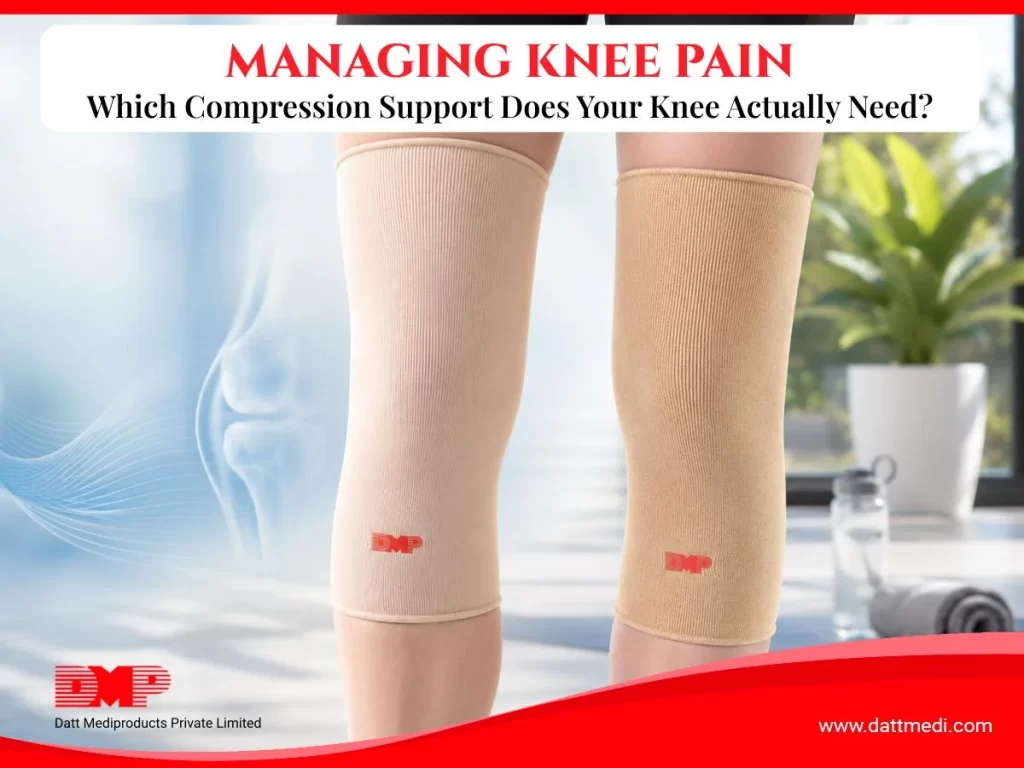
Knee brace and compression sleeve comparison

Knee compression supports are one of the most commonly used orthopedic aids — for good reason. They reduce swelling, provide joint stability, and allow people to stay active during recovery. But picking the wrong one delivers less benefit than it should.

The Datt Mediproducts range includes two knee compression supports: the Knee Cap® and the Knee Cap Classic®. Both share the same anatomically tapered form and four-way elasticized construction, but differ in material composition — and that difference matters for fit, stretch, and the conditions each handles best.

This guide breaks down both products clearly so you can match the right support to the right situation.

Understanding Knee Compression Supports

Before comparing the two products, it helps to understand what knee compression supports actually do — and what they don’t.

A compression sleeve works by applying graduated pressure around the knee joint. This pressure does three things: it reduces fluid accumulation in the surrounding tissue (reducing swelling), it improves preconception — the joint’s sense of its own position in space — which improves stability and coordination, and it provides mild structural support to the muscles and ligaments surrounding the joint.

Compression sleeves are not rigid braces. They do not prevent movement or immobilize the joint. Their role is to support the knee while allowing full, natural range of motion — making them suitable for both active use during daily activity and recovery phases where movement is encouraged.

Knee Cap® vs Knee Cap Classic®: What Is Actually Different?

Both products share the same core design: anatomically tapered, four-way elasticized fabric, breathable moisture-transporting weave, beige color, and easy pull-on application. Available in S to XXL (37–67 cm thigh circumference). The key difference is material composition.

FeatureKnee Cap®Knee Cap Classic®
MaterialPolyamide, Polyester, Cotton, Nylon, Spandex, RubberPolyamide, Polyester, Cotton, Rubber
Key differentiatorContains Spandex + Nylon — higher elasticity and stretch recoveryNo Spandex — firmer, more structured fabric
Compression feelSofter, more flexible compression — moves freely with the jointFirmer, more structured compression — greater sense of support
Best forActive use, exercise, long-duration wear, mild-to-moderate conditionsRecovery, post-operative support, instability, conditions needing firmer hold
IndicationsArthritis, swelling, sprains, ligament/muscle injury, post-op, weak kneesArthritis, swelling, sprains, ligament/muscle injury, post-op, weak knees
SizesS, M, L, XL, XXLS, M, L, XL, XXL
ColourBeigeBeige

Knee Cap® — When to Choose It

The inclusion of Spandex and Nylon gives the Knee Cap® a higher degree of stretch and elastic recovery. The fabric moves with the joint rather than resisting it, making it more comfortable for extended wear and higher-activity use.

Best suited to:

  • Daily activity support — long hours of standing, walking, or commuting
  • Exercise and sports — where full range of motion is needed alongside compression
  • Mild-to-moderate swelling from arthritis or overuse
  • Sprains and strains in active recovery, where movement is encouraged
  • Individuals who have worn a rigid brace and are transitioning to lighter support
  • Long-duration wear where breath-ability and comfort are priorities

The four-way stretch and moisture-transporting weave make it particularly well-suited to warmer climates or extended wear through a full workday.

Knee Cap Classic® — When to Choose It

Without Spandex, the Knee Cap Classic® fabric is slightly firmer and provides a more structured feel against the joint. For some users — particularly those managing instability or recovering from injury — this firmer hold provides greater confidence during movement.

Best suited to:

  • Post-operative knee support — where firmer compression is preferred in the early recovery phase
  • Ligament injuries — where the joint needs a stronger sense of containment
  • Knee instability — where proprioceptive feedback from firmer compression helps prevent giving way
  • Arthritic pain management — particularly where the joint feels loose or unpredictable
  • Individuals who find softer sleeves feel insufficient for their level of discomfort
The Classic’s firmer structure makes it the better starting point when someone is first introducing compression support and needs the reassurance of a more defined hold.

Clinical Indications: Both Products

Both the Knee Cap® and Knee Cap Classic® are indicated for the same range of conditions. The choice between them is about compression feel and activity level, not about which conditions they cover.

  • Arthritic knee pain — reduces swelling and improves joint comfort during movement
  • Swelling from injury or post-operative recovery — graduated compression reduces fluid accumulation
  • Ligament and muscle injuries — supports the surrounding soft tissue during healing
  • Sprains and strains — protects the joint during active recovery
  • stabilization of weak knees — improves preconception and confidence during weight-bearing
  • Post-operative knee support — provides compression during the rehabilitation phase

How to Size Correctly

Both products are sized by thigh circumference, measured approximately 15 cm above the center of the kneecap. An incorrect size is one of the most common reasons compression sleeves under perform — too loose provides minimal compression; too tight restricts circulation.

SizeInchesCentimetres
S14.8 – 17.2″37 – 43 cm
M17.2 – 19.6″43 – 49 cm
L19.6 – 22″49 – 55 cm
XL22 – 24.4″55 – 61 cm
XXL24.4 – 26.8″61 – 67 cm

Safe Use Guidelines

When to Wear It

Compression sleeves are designed for use during periods of activity and weight-bearing — standing, walking, exercising. Most people do not need to wear them at night or during extended rest periods. If your clinician has advised otherwise, follow their specific guidance.

Combining with Rehabilitation

Compression support works alongside rehabilitation — not instead of it. Quadriceps strengthening, hamstring flexibility, and hip stability exercises address the underlying muscle weakness that contributes to knee instability and pain. A compression sleeve manages symptoms during activity; exercise addresses the cause.

Signs the Fit Needs Adjusting

  • Sleeve rolls down or bunches behind the knee — size may be too large
  • Visible skin bulging above or below the sleeve — size may be too small
  • Numbness, tingling, or increased swelling below the knee — too tight, remove immediately
  • No perceptible compression when standing — fabric has lost elasticity, replace the sleeve
Managing Orthopedic Injuries

Related reading: From the Field to Recovery: Orthopedic Injury Essentials for Athletes

When Compression Is Not Enough

Compression sleeves are appropriate for a wide range of common knee conditions. However, some situations require more rigid structural support than a sleeve can provide:

  • Significant ligament instability (ACL, PCL, MCL, LCL tears) — typically requires a hinged brace
  • Meniscal injuries with mechanical symptoms (locking, giving way) — requires clinical assessment
  • Post-operative immobilisation immediately after surgery — rigid brace or cast typically prescribed
  • Fractures or bone stress injuries — require immobilisation, not compression
If you are unsure which level of support your condition requires, consult a physiotherapist or orthopedic specialist before selecting a product.

Choosing the Right Support from the Start

The difference between the Knee Cap® and Knee Cap Classic® comes down to how the compression feels against the joint and what activity level the sleeve needs to accommodate. For flexible, active, long-duration use — the Knee Cap®. For a firmer, more structured hold during recovery or instability — the Knee Cap Classic®.

Both are sized S to XXL, both are breathable and pull-on, and both cover the full range of common knee conditions. The right one is the one that matches how your knee feels and what you need it to do.

Browse: Knee Cap®  |  Knee Cap Classic®

Understanding Arthritis

Related reading: The Role of Orthopedic Support Products in Arthritis Pain Management

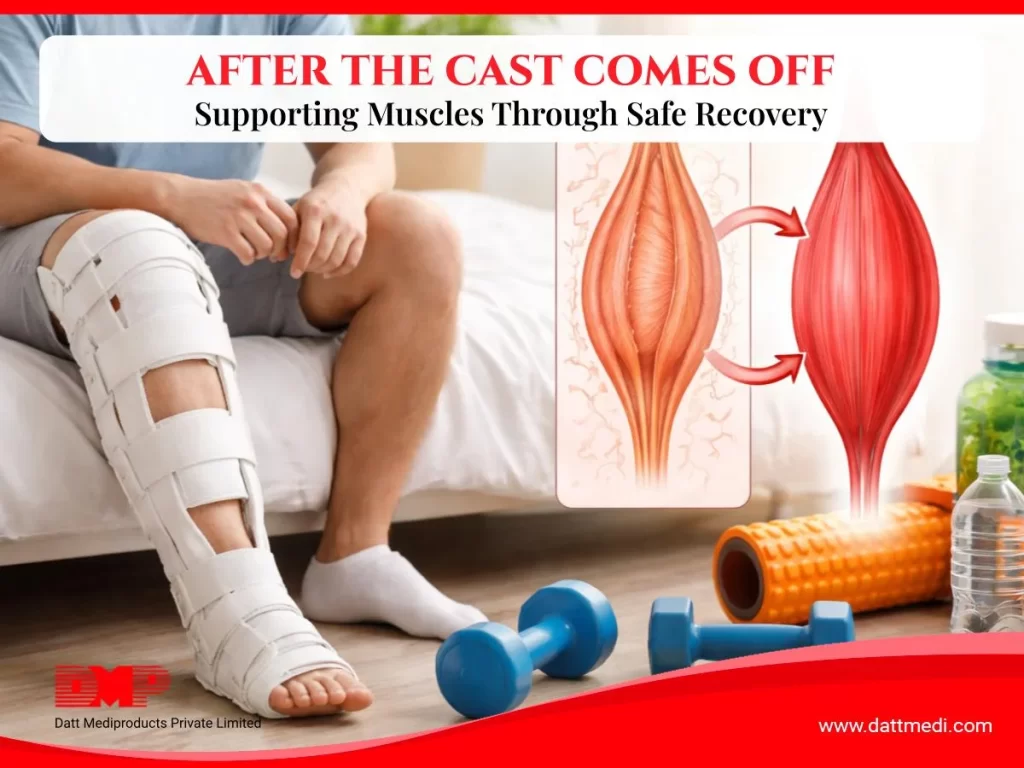
Muscle stiffness after prolonged immobilization with cast

Coming out of a cast, brace, or splint is rarely as straightforward as it looks. The injury may have healed, but the surrounding muscles, joints, and soft tissue have spent weeks in a fixed position with limited activity. What follows is not a return to normal — it is the beginning of a second phase of recovery that requires just as much attention as the first.

This guide covers what actually happens to muscles and joints during immobilization, how to rebuild strength and mobility safely, and which specific orthopedic supports help — matched by body part and stage of recovery.

What immobilization Does to the Body

Muscle reconditioning

Muscles maintain their strength through regular contraction. When a limb is immobilized, the muscles around it stop receiving the mechanical signals they need to stay strong. The result is a measurable loss of muscle mass and endurance — a process called disuse atrophy. Studies show that muscle strength can decline by as much as 3–5% per day in the early stages of immobilization. Even a three-week cast can produce noticeable weakness in the surrounding musculature.

Joint Stiffness and Reduced Range of Motion

Joints rely on movement to stay healthy. Synovial fluid — the lubricant inside joints — circulates through movement. When a joint is held still for weeks, the surrounding capsule and ligaments begin to shorten and stiffen, and the range of motion decreases. Regaining that range requires deliberate, progressive movement — not just returning to normal activity.

Circulation and Swelling

immobilized limbs often develop swelling because the muscle pump that normally drives venous return is inactive. Fluid accumulates in the soft tissue, particularly around the ankle and foot in lower limb immobilization. This swelling can itself delay rehabilitation by limiting movement and causing discomfort.

The Four Phases of Returning to Movement

Phase 1: Protected Range of Motion

Immediately after immobilization ends, the goal is gentle, pain-free movement — not strength. Ankle circles, wrist rotations, finger flexion, and similar small movements reintroduce the joint to its range without stressing the recovering tissue. Movement should stay within a comfortable range and never push into pain.

Phase 2: Circulation and Swelling Control

Before strength can return, swelling needs to reduce. Elevation, gentle movement, and compression where appropriate help manage fluid accumulation. This phase often runs parallel to Phase 1.

Phase 3: Strength Rebuilding

Once range of motion is partly restored and swelling is controlled, progressive resistance exercises can begin. Resistance bands are useful here because they allow graded loading — starting light and increasing gradually without placing sudden stress on healing tissue. Physiotherapy guidance is strongly recommended for this phase.

Phase 4: Functional Reintegration

The final phase returns the person to normal activity — walking, lifting, working, exercising — progressively. Supportive bracing may continue during this phase to provide stability while the muscles are still rebuilding.

Why Muscle Strains Happen

Related reading: Understanding Muscle Strains: Causes and Effective Recovery Strategies

Nutrition That Supports Muscle and Bone Recovery

The body rebuilds muscle tissue and bone using raw materials from diet. The following nutrients are most directly relevant during post-immobilization recovery:

  • Protein — essential for muscle repair and rebuilding. Sources include eggs, legumes, dairy, fish, and lean meat. Aim for consistent intake across meals rather than one large serving.
  • Calcium — supports bone density and structural recovery, particularly relevant after fractures. Dairy products, fortified plant milks, and leafy greens are good sources.
  • Vitamin D — required for calcium absorption. Many people in India are deficient, particularly those with limited sun exposure. Supplementation is often advisable — check with a doctor.
  • Collagen precursors (Vitamin C, zinc) — support soft tissue and tendon repair. Found in citrus fruits, berries, nuts, and seeds.
  • Hydration — adequate water intake supports muscle function, joint lubrication, and circulation during rehabilitation.

Which orthopedic Support to Use — by Body Part and Stage

Supportive braces and sleeves serve two distinct roles during post-immobilization recovery: they protect the recovering joint from excessive or sudden movement, and they provide proprioceptive feedback — helping the nervous system re-learn where the joint is in space. The right product depends on which body part was immobilized and what stage of recovery the person is in.

Body PartRecovery StageRecommended ProductWhy It Helps
KneeEarly — swelling, weakness, instabilityKnee Cap®Firm compression reduces swelling; supports ligaments and muscles during initial movement
KneeLater — returning to activity, mild ongoing instabilityKnee Cap Classic®Lighter everyday support for stable knees still rebuilding strength during functional activity
Lower back / lumbarAny stage post-immobilisation or injuryLumbo Sacral Support®Stabilises the lumbar spine and reduces load on recovering muscles during standing and movement
Shoulder / arm / elbowEarly — immediately after cast or surgeryPouch Arm Sling®Positions the arm comfortably during early recovery; reduces load on shoulder and elbow joints
Neck / cervicalEarly — post-collar or post-surgeryCervical Collar SoftGentle support as neck muscles begin reactivating; acts as a movement reminder without full restriction
Neck / cervicalModerate — where more stability is neededCervical Collar Soft-Support®Firmer foam with reinforced support — suited to cases where more restriction is clinically indicated
Calf / lower legAny stage — venous or lymphatic involvementVelcare® Inelastic WrapInelastic compression supports venous return and reduces swelling when calf muscle pump is inactive or rebuilding
Foot / ankleAny stage — foot swelling or post-castVelcare® Medical StockingGraduated compression for the foot and ankle; particularly useful where swelling persists after lower limb immobilisation
Upper back / postureRehabilitation phase — relearning upright posturePosture Corrector®Supports spinal alignment and shoulder positioning as back and core muscles regain strength

Safe Guidelines for Early Movement

Always Get Clearance First

No exercise or movement programmed should begin without confirmation from the treating clinician or physiotherapist that it is safe to do so. The timeline varies significantly depending on the type of injury, the location, and how healing has progressed.

Start Smaller Than You Think You Need To

The instinct after weeks of immobilization is to move more to make up for lost time. This usually backfires. Muscles and tendons that have been inactive are more vulnerable to strain, and joint tissue is still adapting. Small, controlled movements performed consistently will restore strength faster than pushing into discomfort.

Pain Is a Signal, Not an Obstacle

Discomfort from stiffness is expected and normal. Sharp or worsening pain during exercise is not. If a movement causes significant pain, stop, and raise it with a healthcare professional before continuing.

Use Supports Correctly

A brace or support is most effective when sized and positioned correctly. An ill-fitting support — too loose or too tight — can create pressure points, restrict circulation, or provide false confidence that leads to overexertion. Follow sizing guidance for each product, and if in doubt, seek fitting advice.

When to See a Physiotherapist

Physiotherapy is not just for serious injuries. A physiotherapist can assess the specific degree of muscle weakness and joint restriction after immobilization, design a graduated programmed matched to the person’s actual capacity, and identify any complications — such as tendon tightness, abnormal movement patterns, or persistent swelling — that need addressing before progressing.

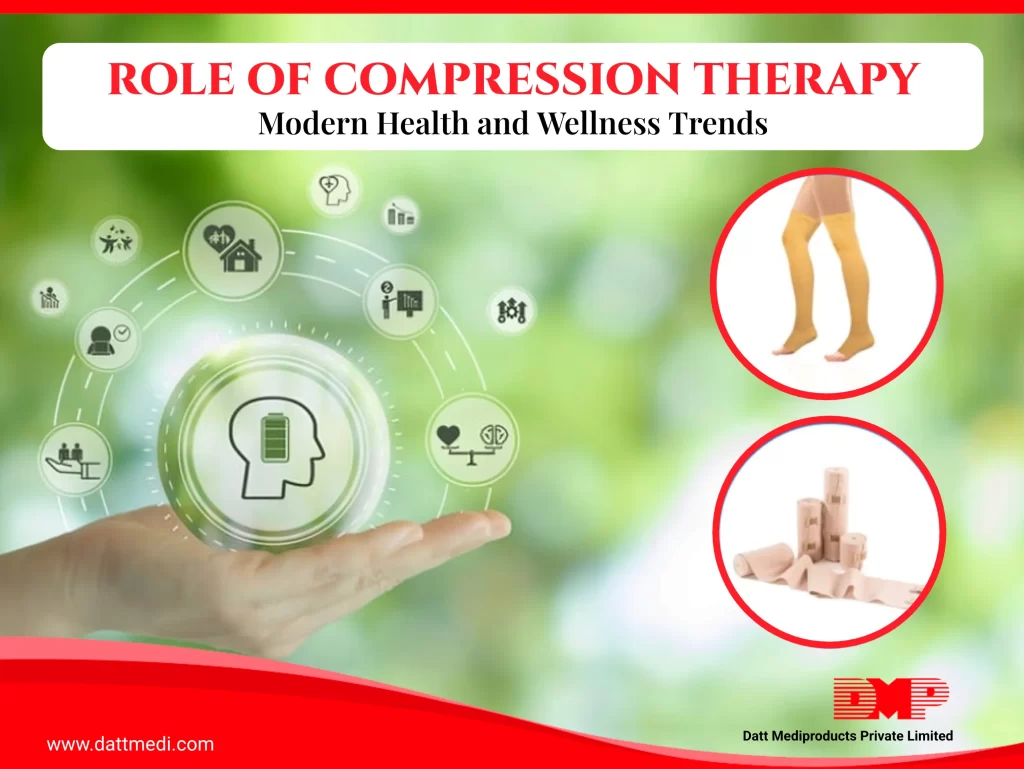
The Role of Compression Therapy

Related reading: Compression Therapy: A Key Trend in Modern Wellness Routines

Recovery Is a Process, Not an Event

The end of immobilization marks the beginning of rebuilding — not the end of recovery. Muscle reconditioning, joint stiffness, and residual swelling are normal consequences of keeping a limb still, and all of them respond well to progressive, consistent rehabilitation.

The right orthopedic support — matched to the body part, the stage of recovery, and the level of activity — makes that process safer and more manageable. Browse the full Datt Mediproducts orthopedic range to find the support that fits your recovery.

Logo

Datt Mediproducts Private Limited

Loading
Buy Now Contact Us