Search by Blog
Read by Category

Your healing journey continues beyond this blog

Find the right products for better recovery at online store
Cart Image
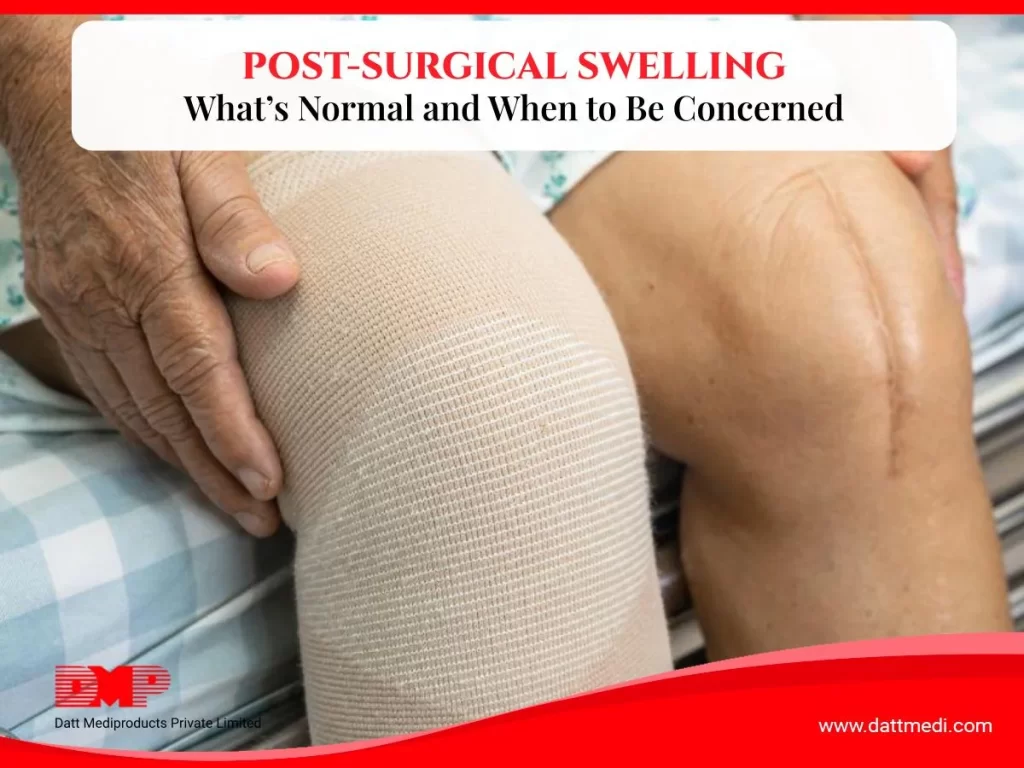
Swelling around surgical site with bandage

Some swelling after surgery is normal. It usually rises over the first few days, then slowly settles over weeks.

Call your surgical team if swelling is getting worse, becomes more painful, comes with spreading redness, discharge or fever, or is new or much greater in a leg (especially the calf or the leg that was not operated on). Call emergency services if you have sudden breathlessness, chest pain, coughing up blood or fainting.

After surgery, the body sends blood, fluid and immune cells to the area to repair tissue. This temporary build-up of fluid, called post-operative oedema (edema in US spelling), can make the area look puffy or feel tight or firm. How much swelling you get, and for how long, depends on the type of surgery, the area treated and your own recovery.

This blog explains what normal swelling looks like, how long it may last, what may help, what to avoid, and which warning signs should never be ignored. It is written for people recovering from surgery and for the family members and carers helping them.

Is Swelling Normal After Surgery?

Yes. Some swelling is a normal part of healing after many operations.

Normal swelling may:

  • Appear in the first few days after surgery
  • Make the area feel mildly tight, firm or uncomfortable
  • Be more noticeable after activity or at the end of the day
  • Improve gradually with rest and elevation, when advised
  • Come with some bruising

The amount and length of swelling vary a lot between procedures. Your surgical team can tell you what to expect after your operation.

Why Does Surgery Cause Swelling?

Surgery is a controlled injury, and the body responds with inflammation. Three things usually combine:

  • Inflammation: blood vessels widen and become leakier so repair cells can reach the area, and fluid moves into the surrounding tissue.
  • Handled tissue: cutting and moving tissue during the operation irritates the area, which can cause bruising and fluid build-up.
  • Less movement: when you move less, the muscles that normally help push fluid back toward the heart work less, so fluid can collect, especially in the legs and feet.

How Long Does Swelling Last After Surgery?

Swelling is often worse in the first several days and then gradually settles, but timelines differ by operation.

Recovery stageWhat you may notice
First few daysSwelling may increase as part of early healing
First 1 to 2 weeksSwelling may begin to settle but can go up and down
Several weeksMild swelling may remain, especially after bone, joint or lower-limb surgery
Several monthsSome joint or leg procedures can leave mild swelling for longer

There is no single timeline for every surgery. Follow the recovery instructions from your surgeon. For general advice, see the NHS guide to getting back to normal after surgery.

What Is Normal Swelling After Different Types of Surgery?

These are general patterns only. Your surgeon will know what is expected for your operation.

Type of surgeryWhat is often seenGood to know
Knee, hip or other joint surgerySwelling around the joint and lower leg that can last for weeks, sometimes monthsOften worse after activity and eases with rest and elevation
Foot and ankle surgerySwelling in the foot and ankle for weeks, often more noticeable when the leg hangs downElevation as advised matters most
Abdominal or hernia surgerySwelling and bruising near the incision that settles over days to weeksReport increasing, hard or very painful swelling
Keyhole (laparoscopic) surgeryMild swelling around the small cutsUsually settles faster, but follow your instructions
Surgery involving lymph nodesSwelling in an arm or leg that may appear later, sometimes months onTell your team early, as it may be lymphoedema

What Does Normal Swelling Look Like?

Normal swelling stays around the surgical area and slowly becomes less noticeable as you heal. It may feel mildly tight or firm, come with bruising, and ease with rest or elevation. A little redness around a healing cut is common. Redness that spreads or becomes more painful needs to be checked.

Normal Swelling vs Warning Signs

Normal swelling improves gradually. Warning signs include swelling that worsens, or that comes with strong pain, spreading redness, warmth, fever or changes to the wound.

What you noticeWhat it may meanWhat to do
Swelling slowly improvingOften consistent with recoveryKeep following your care plan
Swelling suddenly increasesPossible problemContact your surgical team
Severe or worsening painPossible complicationSeek medical advice
Spreading redness, warmth or tendernessPossible infectionSeek medical advice the same day
Fever, chills, pus or dischargePossible infectionContact your surgical team promptly
Wound opens or changes significantlyWound problemSeek medical advice
New or much greater swelling in a leg, especially the calf or the leg not operated onPossible blood clotGet prompt medical assessment
Swelling with calf pain or tendernessPossible deep vein thrombosis (DVT)Get prompt medical assessment
Important: Surgery and reduced movement raise the risk of blood clots in the veins (venous thromboembolism, or VTE). New swelling, pain or tenderness, warmth, or redness or discolouration in one leg can be symptoms of a DVT. See the CDC information on healthcare-associated blood clots and the NHS guidance on DVT.

When Is Swelling After Surgery an Emergency?

Emergency: If you have sudden shortness of breath, chest pain, coughing up blood, fainting or severe difficulty breathing after surgery, call emergency services immediately (112 in India). These can be signs of a pulmonary embolism, which happens when a blood clot travels to the lungs.

The CDC guide to the risks, signs and symptoms of blood clots gives more detail on these symptoms.

What Can Help Reduce Swelling After Surgery?

Elevation, gentle movement and the other steps your surgical team recommends may help control swelling.

  1. Elevate the area. If your team recommends it, rest with the affected limb raised, and follow the positioning they give you for your operation.
  2. Move as advised. Gentle movement supports circulation and helps avoid problems from staying still too long. Your team may suggest short walks, ankle movements or physiotherapy exercises. Do not do more than they recommend.
  3. Use compression only when recommended. Compression stockings or bandages are advised after some operations, but only your healthcare team can say if they are right for you. Do not start compression on your own, especially if you have circulation problems, major swelling or an open wound.
  4. Follow cold therapy instructions. Cold packs may be advised after some procedures. Wrap the pack in a cloth, never place it directly on skin, and follow your team’s directions on how long to use it and whether the wound can be exposed.
  5. Follow wound-care instructions. Keep the wound protected and follow the dressing instructions you were given. See our guide, The Ultimate Guide to Safe Wound Care, and our Film & Post-Operative Dressings resources.

What Should You Avoid When You Have Swelling After Surgery?

  • Do not massage a swollen calf or leg. If a clot is present, massage could be harmful.
  • Do not put a tight bandage or compression on yourself unless your team has advised it.
  • Do not apply heat to a fresh surgical area unless your team says it is fine, as heat can increase swelling early on.
  • Do not stay still for long stretches if you are cleared to move. Long periods of sitting or lying raise clot risk and can worsen swelling.
  • Do not stop prescribed medicines, including blood thinners, or skip physiotherapy without asking your team.
  • Do not wait to see if worrying symptoms “go away”. Call your team.

Can Compression Help With Swelling After Surgery?

Sometimes. Compression applies controlled pressure to help manage fluid build-up and support circulation, and it may be part of recovery when your team recommends it for your procedure.

It is not right for everyone or for every stage of recovery. The type, pressure level and timing should be set for your individual situation. To learn more, read Compression Therapy in Wound Healing and Compression Bandages vs. Compression Stockings. If you have been prescribed stockings, our guide on correct measurement and fit of compression garments explains how to get the size right. If your surgeon has recommended compression, you can explore the Datt Mediproducts (DMP) Compression Bandage range.

When Should You Call Your Surgeon?

Contact your surgical team if swelling is increasing, becoming more painful, or appears with signs of infection or other unusual changes.

Seek medical advice if you notice:

  • Swelling that is getting worse instead of improving
  • Severe or increasing pain
  • Spreading redness or warmth
  • Fever or chills
  • Pus or unusual discharge from the wound
  • A wound that opens or changes a lot
  • New or much greater swelling in a leg, especially the calf or the leg that was not operated on
  • Leg swelling with calf pain, tenderness, warmth or discolouration

For more on one-sided swelling, read Why One Leg Swells More: 7 Expert Causes You Need to Know.

Can Swelling Last for Weeks or Months After Surgery?

Yes. Mild swelling can last weeks or even months after some operations, particularly joint or leg surgery. What matters is the pattern: swelling that slowly shrinks is different from swelling that suddenly grows or arrives with new pain, redness or warmth. Swelling that appears or persists long after surgery, especially after lymph node surgery, should be checked, as it may be lymphoedema. Read Lymphedema: How to Care and Manage for more. If you are unsure, contact your team instead of relying on general timelines.

How Can You Support a Smooth Recovery?

Follow your instructions and check the surgical area daily so you can spot problems early.

Daily checklist for patients and caregivers:

  • Look at the surgical area for changes in swelling, redness or discharge
  • Follow your activity and physiotherapy plan
  • Elevate the area if advised
  • Use any prescribed compression exactly as instructed
  • Follow wound and dressing instructions
  • Call your healthcare team if anything is worsening or unusual
For caregivers: Compare both legs or both sides each day, ask about new pain, and take a photo of the area at the same time daily so changes are easier to see and describe to the doctor. For more, browse our post-surgery recovery articles.

Medical disclaimer: This article is for general education and does not replace advice from your surgeon or another qualified healthcare professional. Recovery varies by procedure and person. If you have worrying or worsening symptoms, contact your healthcare team promptly, or seek emergency care when appropriate.
Related Reading

Visit www.dattmedi.com for more infomation.
Share:

Frequnently Asked Questions

Yes. Some swelling is a normal part of healing. It usually peaks in the first days and then slowly improves, though timing varies by operation.

It often settles over several weeks. After some joint or leg operations, mild swelling can last for months. Ask your surgical team what to expect for your procedure.

It may help reduce swelling in a limb when your surgical team recommends it. Follow the positioning instructions for your operation.

Only as your surgical team advises. Cold packs are recommended after some procedures, wrapped in a cloth and used for limited periods. Avoid heat on a fresh surgical area unless your team says it is fine.

Sometimes. Stockings or bandages are recommended after certain procedures, but use them only as directed by your healthcare team.

Recent Blogs
Leg Swelling after prolonged standing due to fluid retention

If your legs feel heavy, tight, or visibly swollen by the end of a long shift, you are not imagining it. Prolonged standing is one of the most common drivers of leg swelling in working adults — and it affects people in healthcare, retail, hospitality, manufacturing, teaching, and any other profession that keeps them on their feet for hours at a time.

This guide explains the underlying mechanism, the factors that make some people more susceptible than others, and what actually works to manage and prevent the problem — including when medical-grade compression stockings are the right tool.

What Actually Causes Leg Swelling When You Stand

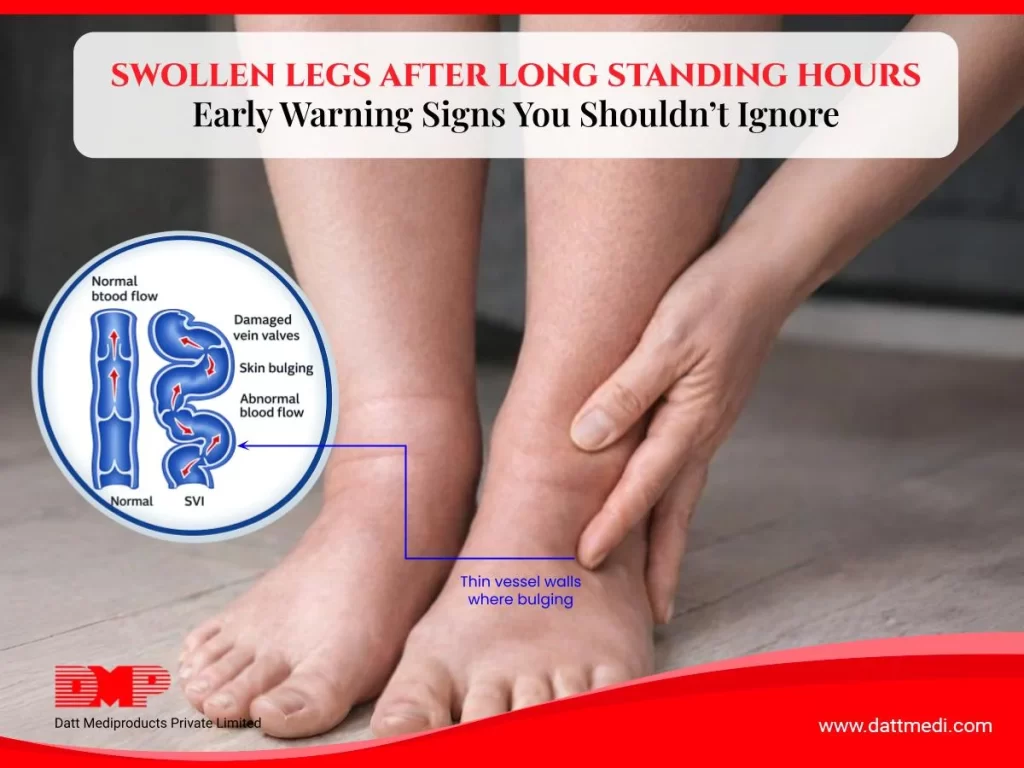
The heart pumps blood downward through arteries with little effort. Getting it back up through the veins — against gravity — is a much harder job. 

The body relies on three mechanisms to do this: 

  • Venous valves that prevent flowing backward
  • The rhythmic contraction of calf and leg muscles that squeeze blood upward
  • The elastic recoil of the vein walls themselves.

When you stand still for extended periods, the second mechanism — the muscle pump — largely switches off. Blood moves sluggishly in the lower leg veins, pressure builds, and fluid begins leaking through the vein walls into the surrounding tissue. This is venous pooling, and the visible result is swelling around the ankles and lower legs.

The swelling is typically worse at the end of the day and improves after lying down or elevating the legs, because horizontal positioning removes gravity from the equation. This pattern — worsening through the day, improving with rest — is the clearest indicator that prolonged standing is the primary cause.

Why Some People Swell More Than Others

1. Venous Valve Insufficiency

Healthy veins contain one-way valves that prevent blood from flowing back toward the feet between heartbeats. In some people, these valves weaken or become leaky — a condition called chronic venous insufficiency. When this happens, blood pools more easily, swelling occurs faster, and visible varicose veins may develop over time. People with venous insufficiency are significantly more affected by prolonged standing than those with healthy valve function.

2. Varicose Veins

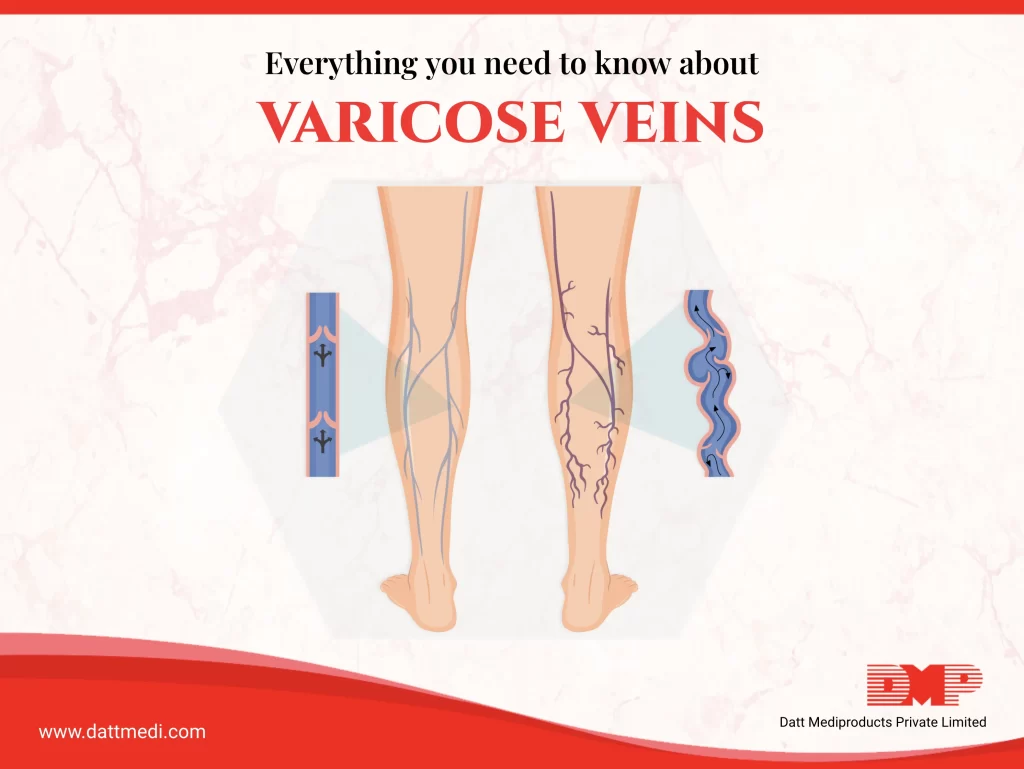
Varicose veins are enlarged, twisted veins that have lost their structural integrity. They are a direct consequence of venous valve failure and represent a more advanced stage of venous disease. Standing for long periods accelerates the pooling in these vessels and worsens both swelling and the aching, heaviness, and fatigue that accompany it.

Varicose Veins

Related reading: The Ultimate Guide to Understanding Varicose Veins

3. Body Weight and Physical Conditioning

Higher body weight places increased pressure on the venous system in the legs. Reduced physical fitness means the leg muscles — which are the primary pump for venous return — are less effective. Both factors increase susceptibility to standing-related swelling.

4. Occupation and Daily Pattern

The duration of unbroken standing matters more than total standing time. Someone who stands for eight hours but walks between tasks frequently will experience less pooling than someone who stands relatively still at a counter or workstation. The absence of walking breaks is a key risk factor.

When Swelling Needs Medical Attention

Swelling that follows the pattern described above — building through the day, resolving overnight — is generally benign and related to venous pooling. However, some patterns warrant prompt medical evaluation:

  • Swelling that is sudden, severe, or in one leg only — may indicate deep vein thrombosis (DVT)
  • Swelling accompanied by redness, warmth, or skin changes — may suggest infection or phlebitis
  • Swelling that does not improve after a full night’s rest
  • Swelling with associated chest pain, breathlessness, or palpitations — seek emergency care
  • Swelling in the context of heart, kidney, or liver conditions
If any of these apply, see a healthcare professional before starting any compression therapy.

Practical Measures That Reduce Standing-Related Swelling

Movement Breaks

Walking — even for two to three minutes per hour — reactivates the calf muscle pump and significantly reduces venous pooling. If walking is not possible, calf raises, foot circles, and toe pumps performed in place have a similar effect. The goal is to avoid completely static standing for long unbroken periods.

Leg Elevation After Work

Elevating the legs above heart level for 15–20 minutes after a long shift allows gravity to assist venous and lymphatic drainage. This is one of the most effective ways to accelerate overnight recovery and reduce residual swelling the next morning.

Footwear

Shoes with cushioned soles and low heels support natural foot movement and reduce fatigue. Tight footwear compresses the foot and can restrict venous return. Flat shoes without arch support reduce calf engagement during walking, which reduces the efficiency of the muscle pump.

Medical-Grade Compression Stockings

Compression stockings are the most evidence-supported intervention for managing venous pooling during prolonged standing. Unlike general support hosiery, medical-grade stockings apply graduated compression — highest at the ankle, reducing toward the knee or thigh — which mechanically assists venous return and prevents fluid from leaking into surrounding tissues.

Velcare® Varicose Vein Medical Compression Stockings

The Velcare® range from Datt Mediproducts is a medical-grade compression stocking designed specifically for venous conditions, including swelling from prolonged standing, phlebitis, varicose veins, venous insufficiency, oedema, deep vein thrombosis management, and post-surgical recovery.

Key specifications:

  • Class 2 compression: 23–32 mmHg — the clinical standard for moderate-to-severe venous conditions
  • Graduated compression: pressure is highest at the ankle and reduces toward the top of the stocking, actively assisting upward blood flow
  • 70% Nylon, 30% Spandex: breathable, latex-free, and suitable for daily extended wear
  • Four-way stretchability: conforms to the leg without restricting movement
  • Soft construction: designed for comfort during long work hours
  • Available in S, M, L, XL

The Velcare® range is available in three styles to suit different clinical needs and preferences:

StyleCoverageBest For
Open Toe, A-D (no silicone band)Ankle to kneeEveryday leg swelling from standing; those who prefer open toe for breathability or foot conditions
Open Toe, A-D with Silicone BandAnkle to kneeUsers who need the stocking to stay in place securely without rolling down during a long shift
Open Toe, A-G with Silicone BandAnkle to groinMore extensive venous conditions, post-surgical recovery, or where thigh-high coverage is clinically indicated

How to Use Compression Stockings Effectively

Put Them On Before Getting Up

Compression stockings work best when applied before venous pooling begins. Put them on in the morning before standing up, while the legs are still at their least swollen. Applying them after standing for an hour is significantly less effective.

Wear Through the Working Day

Keep the stockings on throughout the shift. Removing them mid-day and then reapplying is less effective than continuous wear during standing hours.

Remove in the Evening

Once you are off your feet and resting, the stockings can be removed. Compression is needed during the periods of venous stress — standing and walking — not during rest.

Sizing Matters

An incorrectly sized stocking — too loose or too tight — will not deliver the intended compression level. Measure ankle and calf circumference, and refer to the Velcare® sizing guide before ordering. When in doubt, consult a healthcare professional or pharmacist for fitting guidance.

Care and Longevity

Medical compression stockings should be washed regularly — typically after each wear — in cool water with gentle detergent. Air dry rather than tumble dry to preserve the elastic fibres. Most compression stockings require replacement every 4–6 months with regular daily use, as the elasticity gradually reduces.

Managing Leg Health Is a Daily Habit

Standing-related leg swelling is a physical consequence of how blood moves — or stops moving — during long hours on your feet. It is not inevitable. Movement breaks, appropriate footwear, evening elevation, and the right compression support together make a significant and measurable difference.

For people with varicose veins, venous insufficiency, or a job that keeps them standing for the majority of their working day, medical-grade graduated compression stockings are the most clinically supported intervention available. The Velcare® Varicose Vein Compression Stocking range is designed for exactly this context — durable, breathable, and calibrated to the compression level that delivers real results.

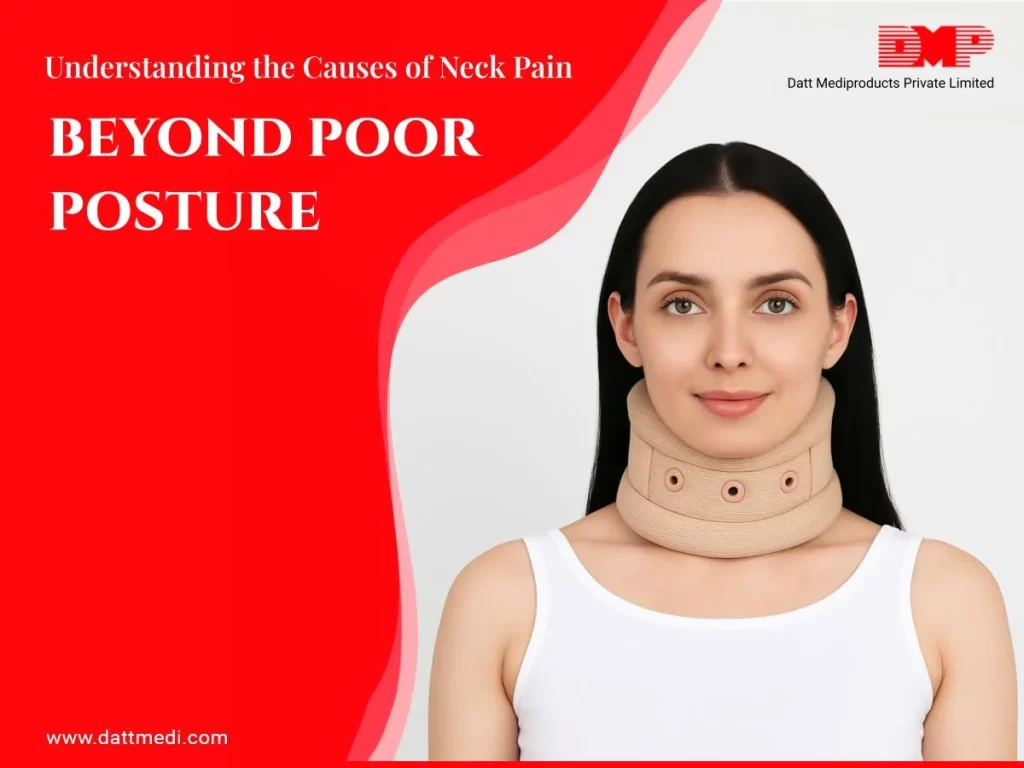
Person using a soft cervical collar for neck support

A stiff or painful neck can make even the simplest movements uncomfortable — turning to check traffic, looking up at a screen, or sleeping without waking. In some cases, a soft cervical collar provides the temporary support the neck needs to recover. However, in other cases, it offers little benefit and may even delay healing if used incorrectly.

This blog covers the clinical situations where a soft cervical collar is genuinely useful, how the Cervical Collar Soft® from Datt Mediproducts is designed, and how to use it safely.

What Is a Soft Cervical Collar?

A cervical collar is a supportive brace worn around the neck to limit excessive movement and allow muscles, ligaments, and joints to rest during recovery. Soft cervical collars provide light, cushioned support — enough to reduce strain and act as a reminder to avoid sudden movement, without fully immobilizing the neck.

The Cervical Collar Soft® is made from soft-density PU foam covered in a smooth cotton stockinette, with a hook-and-loop closure for a secure, adjustable fit. It is available in four sizes (S, M, L, XL) and is designed for both short-term recovery and longer-term comfort use.

When Is a Soft Cervical Collar Recommended?

A soft cervical collar may be advised across a range of conditions. The following are the primary clinical indications.

1. Neck Pain and Muscle Strain

Sudden neck pain from poor posture, sleeping awkwardly, or overexertion can strain the surrounding muscles. A collar provides gentle support and reduces the load on strained tissue during the early recovery phase.

2. Whiplash Recovery

Whiplash — most commonly caused by rear-end car accidents — forces the head to move suddenly forward and backward, stretching and sometimes tearing neck muscles and ligaments. Doctors often recommend a soft cervical collar in the early days after whiplash to reduce discomfort and limit aggravating movement while initial healing begins.

3. Cervical Trauma

Minor cervical trauma from falls, sports injuries, or sudden impacts may involve bruised or strained neck structures. A collar helps limit movement that could worsen the injury while the neck recovers.

4. Excessive Neck Mobility

Some individuals have hypermobility in the cervical spine — where the joints move beyond their normal range. A soft collar can provide a gentle boundary that reduces the risk of strain from over-movement during daily activity.

5. Rheumatoid Arthritis

Rheumatoid arthritis can affect the cervical spine, causing instability and pain. A soft collar may be used during flares to provide support and reduce the load on inflamed joints, typically alongside medical management.

6. Degenerative Disc Disease

Wear and tear on the cervical discs can lead to chronic neck pain, stiffness, and nerve irritation. A soft collar offers intermittent support — particularly during activities that aggravate symptoms — as part of a broader management plan.

7. Post-Surgical Support

Following certain neck or upper spine procedures, surgeons may recommend a cervical collar to protect the surgical site and limit motion during the initial healing period. The surgeon determines the collar type and duration based on the procedure. based on the procedure.

Rigid vs. Soft Cervical Collar: Which Is Needed?

Not all cervical collars are the same. The choice depends on how much movement restriction is required.

FeatureSoft Cervical CollarRigid Cervical Collar
MaterialPU foam with cotton stockinetteFirm plastic with padding
Support LevelLight, cushioned supportStrong, firm support
Movement ControlAllows some movementSignificantly limits movement
Typical UseMild strain, whiplash early stage, arthritis, disc diseaseSerious injury, unstable fractures, post-surgery
For most everyday neck conditions — strain, stiffness, mild whiplash, and chronic disc or joint discomfort — a soft cervical collar is the appropriate choice. Rigid collars are typically reserved for more severe injuries where strict immobilisation is medically necessary.

Soft Cervical Collar by Datt Mediproducts: Design & Features

The Cervical Collar Soft® is built for comfort during wear, with materials selected to minimise skin irritation even with extended use.

  • Soft-density PU foam core — provides cushioned support without rigid restriction
  • Smooth cotton stockinette cover — reduces skin friction and absorbs moisture
  • Hook-and-loop closure — allows a personalized, secure fit without tools
  • Four available sizes (S, M, L, XL) — sized by neck circumference in inches and centimetres
  • Durable construction — designed for longer-term use without losing shape or support

Sizing is based on neck circumference: S (7.5–8.75 cm), M (8.75–10 cm), L (10–11.25 cm), XL (11.25–12.5 cm). Measuring before ordering ensures the collar sits correctly and delivers effective support.

How to Use a Soft Cervical Collar Safely

A cervical collar is most effective when used correctly and for the right duration.

Getting the Fit Right

The collar should sit snugly around the neck — supportive without pressing on the throat or creating difficulty breathing. Hook-and-loop closure makes adjustment straightforward. A collar that is too loose provides little support; one that is too tight can cause pressure and discomfort.

Duration of Use

This depends entirely on the condition. Minor muscle strain may only require a collar for a few days. Whiplash or post-surgical recovery may require longer use under medical guidance. Extended, unsupervised use should be avoided. This is because prolonged reliance on a collar can reduce the neck muscles’ ability to support the head. independently.

Skin Care Under the Collar

The cotton stockinette lining helps manage moisture, but the skin beneath should still be checked regularly for any redness or irritation. Keep the area clean and dry, particularly in warm conditions.

When to Remove It

If the collar causes increased pain, numbness, or pins and needles pricking sensation, remove it and consult a healthcare professional. These may indicate an incorrect fit or that the collar is not appropriate for the specific condition.

What a Soft Cervical Collar Cannot Do

A collar supports recovery — it does not treat the underlying cause of neck pain. It does not replace physiotherapy, medical diagnosis, or specific treatment for conditions like arthritis or disc disease. Used alone without addressing the root cause, it provides temporary comfort relief only.

For best outcomes, a cervical collar is typically one part of a broader recovery plan that includes appropriate exercise, manual therapy, or medical management depending on the diagnosis.

The Right Support, Used the Right Way

A soft cervical collar works best when it matches the condition, fits correctly, and is used for an appropriate duration. For mild to moderate neck conditions — strain, whiplash, arthritis flares, disc discomfort, or post-surgical support — it provides a practical, comfortable solution that allows the neck to rest while daily life continues.The Cervical Collar Soft® is designed with both comfort and durability in mind. If you are managing a neck condition and considering whether a cervical collar is right for you, consult your healthcare provider for guidance tailored to your situation.

Logo

Datt Mediproducts Private Limited

Loading
Buy Now Contact Us