
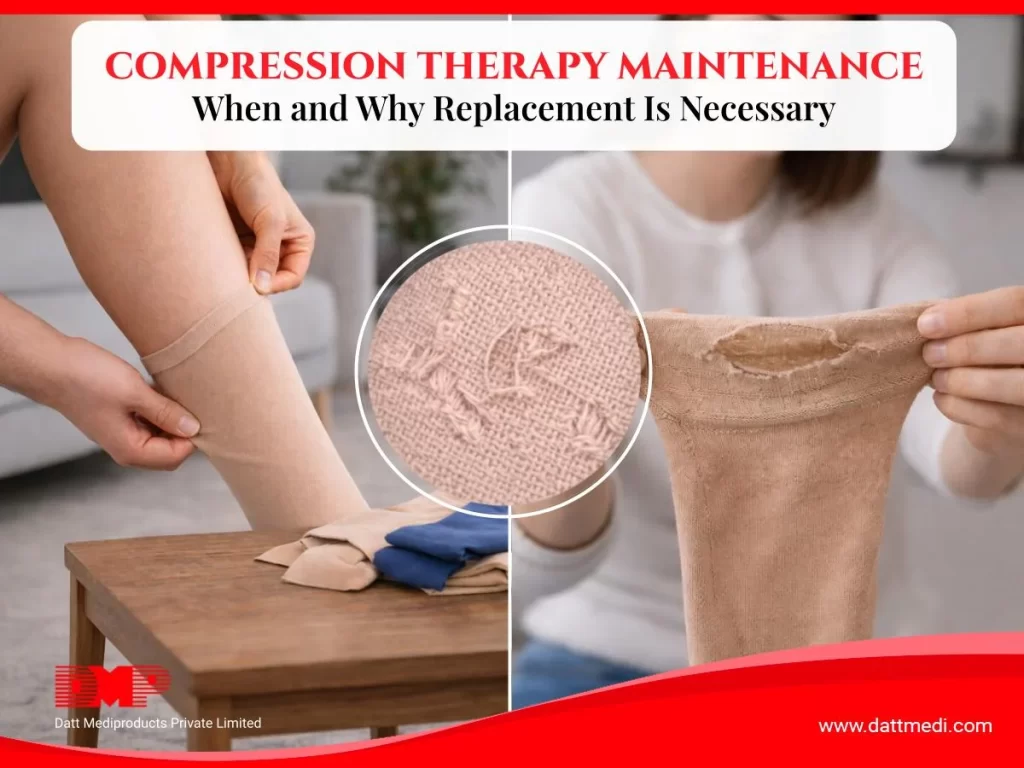
Compression stockings rely on elastic fibres to provide consistent pressure and support. Over time, repeated wear and washing can weaken these fibres, reducing how effectively the garment works.
Even if your stockings look fine, they may no longer provide the same level of compression. Knowing what signs to look for can help you decide when it’s time for a replacement and how to keep your garments in good condition.
This blog explains how to recognize worn-out compression stockings, check their condition at home and care for them to extend their lifespan. It explains how long they last, the signs it is time for a new pair, a simple at-home stretch test, and habits that help them last longer. It is written for people who wear compression and for family members and carers who help them.
How Long Do Compression Stockings Last?
With regular daily wear, most compression stockings have a lifespan of around 3 to 6 months. However, this can vary depending on the product, frequency of use and how well it is maintained.
Healthcare guidance supports this recommendation. HSE’s varicose veins guidance, adapted from NHS content, highlights the need for regular replacement.
Northern Ireland’s formula guidance on hosiery also notes that stockings may need replacing sooner if they become damaged or fail to return to their original shape after stretching.
| Product | Typical replacement guidance | What to watch for |
|---|---|---|
| Compression stockings or socks (daily wear) | About 3 to 6 months | Loose fit, slipping, stretching, damage |
| Compression sleeves | Depends on the product and how often it is used | Looseness, reduced grip, loss of shape |
| Reusable compression bandages | Follow the maker’s reuse and washing instructions | Loss of stretch, damage, soiling |
| Single-use bandages | One use, or as directed | Do not reuse unless designed for reuse |
What changes how long a stocking lasts:
- How often you wear it (daily wear ages it faster)
- How you wash and dry it
- The fabric and how it is made
- How much it is stretched when you put it on
- Your activity level
- Changes in leg size or swelling
If the manufacturer gives a specific replacement interval, follow that instead of a general timeline.
What Are the Signs Your Compression Stockings Need Replacing?
Replace your stockings when they feel loose, look stretched or thin, keep slipping down, or have holes or frayed seams.
| What you notice | What it may mean | What to do |
|---|---|---|
| Feels looser than when new | Elastic has weakened | Consider replacing |
| Goes on much more easily than before | Less tension | Check fit, then consider replacing |
| Slips down again and again | Lost stretch or grip | Replace if the size is correct |
| Top band rolls or loses shape | Weakened material | Replace |
| Fabric looks thin or overstretched | Wear | Replace |
| Holes, runs or frayed seams | Damage | Replace |
| Less support than before | Worn elastic or a change in leg size | Re-measure, then replace if needed |
Try the 30-second stretch test. Gently stretch the fabric between your hands, then let go. It should spring back to its original shape. If it stays baggy or takes noticeably longer to recover, the elastic has probably lost its strength.
For caregivers: If the person you care for says their stockings feel "different" or keeps pulling them up, check them. Slipping and bunching can also leave marks or sore spots on fragile skin. Our guide to compression for elderly people with fragile skin explains what to look for.
Why Do Compression Stockings Lose Their Effectiveness?
Elastic fibres give compression its pressure. Repeated stretching, sweat, skin oils and washing slowly reduce that elasticity.
As a stocking ages it may:
- Feel looser and stretch more easily
- Lose its shape
- Slip or roll down
- Stop giving steady, even pressure
This is why appearance alone is not a reliable guide.
Should You Replace Compression Stockings If They Still Look Fine?
Yes, if they have reached the manufacturer’s replacement interval or have clearly lost elasticity. Elastic can weaken before holes or other damage show.
Reassess your stockings sooner if:
- Your leg swelling changes
- Your weight changes noticeably
- Your measurements have changed
- You have had surgery or a new diagnosis
- The stocking is uncomfortable, slipping or bunching
- Your healthcare professional changes your compression level
If your measurements have changed, read our guide on correct measurement and fit of compression garments before choosing a replacement.
How Can You Make Compression Stockings Last Longer?
Wash them as the manufacturer directs, avoid damaging the elastic and rotate at least two pairs.
- Wash them regularly. Many makers advise washing after each wear to remove sweat and skin oils. In hot, humid weather, sweat builds up faster, so regular washing matters even more. Check your product’s instructions.
- Use mild detergent only. Avoid fabric softener and bleach, which can damage elastic fibres. NHS patient leaflets commonly advise a gentle wash with non-biological detergent and no fabric conditioner.
- Do not wring or twist. Press out extra water gently.
- Dry away from direct heat. Avoid radiators, direct sun and tumble dryers unless the label says they are safe. Air drying is usually gentlest.
- Keep two or more pairs. Wear one while the other is washed and dried. Each pair rests between wears, which helps both last their full lifespan.
- Put them on carefully. Avoid snagging with nails or jewelry. Rubber gloves or a donning aid reduce stretching and make putting them on easier, especially for older people or carers helping someone else.
- Note the start date. Write the first-use date on the packet or a calendar so you know when the replacement interval is due.
How many washes is that? The NHS Wilt shire Clinical Commissioning Group’s Medicines Management Team guidance states that compression stockings should last approximately 100 washes when properly cared for. It recommends having two stockings per leg, so one can be worn while the other is washed and dried. The guidance uses this washing and rotation schedule to support replacement twice a year.
What About Compression Bandages, Sleeves and Wraps?
The same rule applies: when the elastic loses its stretch or the garment is damaged, it no longer gives the support it was chosen for.
- Reusable bandages should be washed and reused only as the maker instructs. Replace them when they lose stretch, fray or become soiled.
- Single-use bandages are not meant to be reused.
- Compression sleeves should be replaced when they lose grip or shape.
- Compression wraps are often replaced about every six months in NHS patient leaflets, but follow your product’s guidance.
Not sure which suits you? Read Compression Bandages vs. Compression Stockings. For how compression supports healing, see Compression Therapy in Wound Healing.
When Should You Speak to a Healthcare Professional?
Speak to a doctor or nurse if your swelling changes, the stocking is uncomfortable, your skin is irritated, or you are unsure your compression level is still right.
Seek advice if:
- Swelling appears suddenly or gets much worse
- One leg is clearly more swollen than the other (see why one leg swells more than the other)
- You develop skin irritation, blisters or colour changes
- Your leg feels numb
- Your toes turn unusually cold, pale or bluish
- The compression feels too tight
Get urgent medical help if you have sudden swelling in one leg with pain, warmth or redness. This can be a sign of a blood clot (deep vein thrombosis). The NHS advises calling 999 or going to Accident and Emergency if DVT symptoms come with chest pain or breathlessness. In India, call 112 or go to the nearest emergency department.
Do not change your size or compression level on your own. Re-measure and get professional advice.
What Happens If You Keep Wearing Worn-Out Compression Stockings?
A worn stocking may not give the intended level or evenness of compression. It may feel loose, slip, lose shape, press unevenly or become uncomfortable. If a stocking has lost its elasticity or no longer fits properly, replacing it is generally better than relying on it.
Quick Checklist: Is It Time for New Compression Stockings?
- Has it been 3 to 6 months of daily wear, or the interval the maker states?
- Does it feel looser than when new?
- Does it slip, roll or bunch?
- Is the fabric thin, stretched, holed or frayed?
- Does it fail the stretch test?
- Has your swelling, weight or measurements changed?
If you answered yes to any of these, check the fit and plan a replacement. For everyday venous support, explore Velcare® Varicose Vein Compression Stockings or the DMP Compression Bandage range. Managing varicose veins? Our guide to varicose veins covers causes and daily care.
This article is general information and does not replace advice from your doctor, nurse or pharmacist.