

Introduction
Swelling in the legs or arms is more than a temporary discomfort. Persistent swelling can slow wound healing, limit mobility, and increase the risk of complications such as skin damage or venous ulcers.
Compression therapy is a widely recommended medical approach used to support circulation and control fluid buildup in affected limbs. Among the most commonly used solutions are compression bandages and compression stockings. While both deliver controlled pressure to improve circulation, they serve different roles in treatment depending on the stage of recovery and the patient’s condition.
What Is Compression Therapy and Why Is It Important?
Compression therapy works by applying graduated pressure to a limb, helping blood and lymphatic fluid move back toward the heart. This controlled pressure reduces fluid accumulation in tissues and improves overall circulation.
Healthcare professionals commonly recommend compression therapy for conditions such as:
- Venous leg ulcers
- Varicose veins
- Lymphedema
- Post-surgical swelling
- Chronic venous insufficiency
- Injury-related edema
- Deep Vein Thrombosis
- Phlebitis
When used correctly, compression therapy helps reduce swelling, protect skin integrity, and support faster recovery.
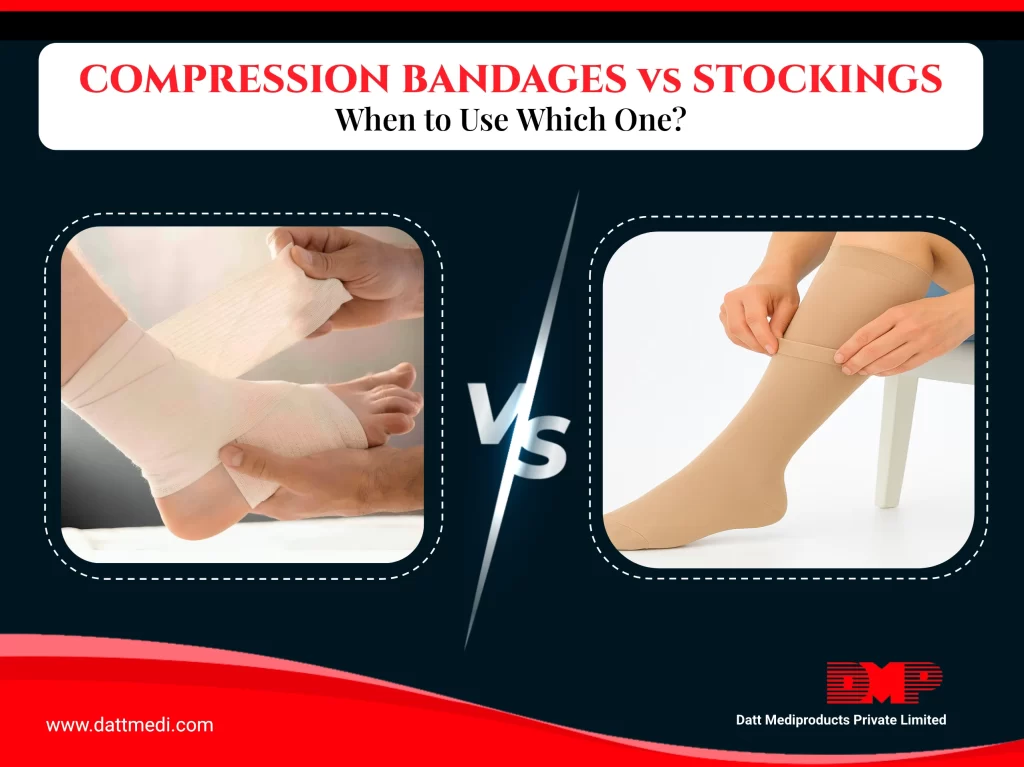
Compression Bandages: Flexible Support for Changing Conditions
Compression bandages are stretchable wraps applied around the affected limb to provide controlled pressure. Because they can be adjusted during application, they are particularly useful when swelling levels change or when wounds require regular monitoring.
Types of Compression Bandages
- Short-Stretch Bandages : Short-stretch bandages provide limited elasticity and generate higher pressure when muscles move. This makes them suitable for patients who remain active, as muscle movement enhances the compression effect and supports venous return.
- Long-Stretch Bandages : Long-stretch bandages offer greater elasticity and maintain consistent pressure even when the limb is at rest. They are often used for patients with limited mobility or those recovering from surgery.
When Compression Bandages Are Commonly Used
Compression bandages are commonly recommended when treatment needs to adapt to changing conditions, including:
- Sudden or severe swelling
- Open wounds requiring wound dressings
- Post-surgical swelling management
- Limbs with irregular or changing shape
Their adjustability allows healthcare providers to modify pressure levels as swelling decreases and healing progresses.
Looking for reliable and adjustable compression bandages for effective therapy?
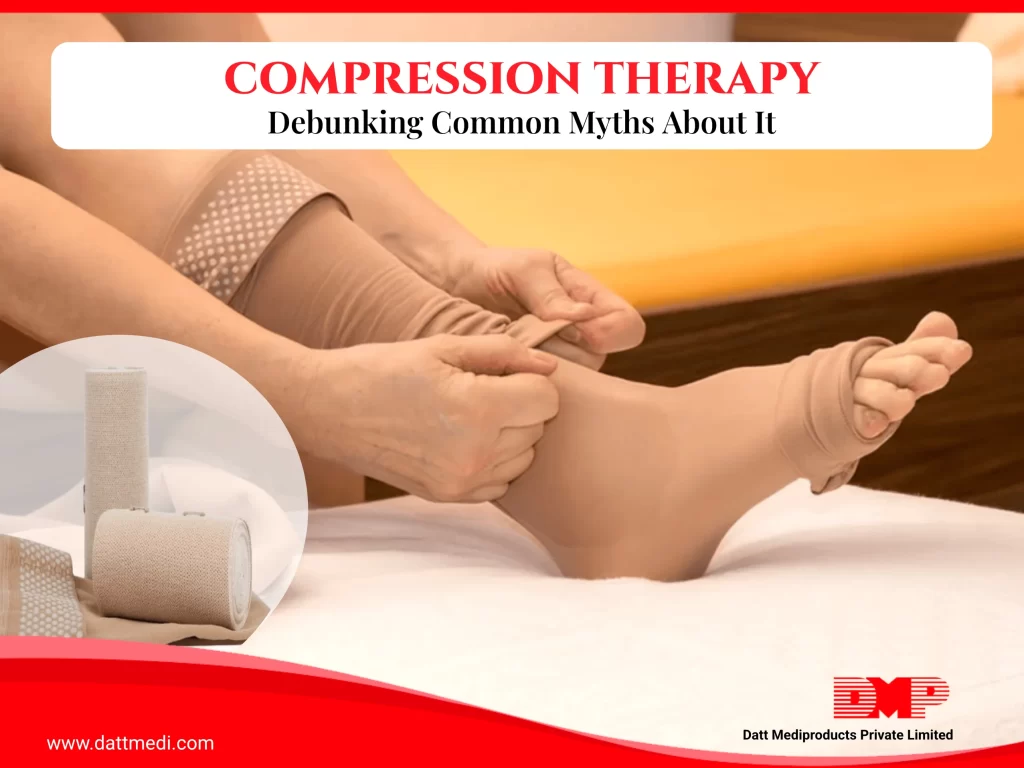
Explore our Compression Bandage here: View Product
Compression Stockings: Consistent Support for Long-Term Care
Compression stockings are specially designed medical garments worn like socks or sleeves. They apply graduated compression, with the highest pressure at the ankle that gradually decreases toward the calf or thigh.
This pressure pattern supports natural blood flow and helps prevent fluid from collecting in the lower limbs.
Compression Levels in Stockings
Medical compression stockings are available in different pressure strengths depending on treatment needs:
- Mild compression – Helps prevent early swelling and leg fatigue
- Moderate compression – Supports varicose veins and mild circulation problems
- Higher compression levels– Used for chronic venous conditions or post-ulcer management
When Compression Stockings Are Typically Used
Compression stockings are typically introduced after swelling has stabilized and the limb size becomes consistent.
They are commonly used for:
- Long-term swelling management
- Ongoing support for circulation disorders
- Prevention of venous ulcer recurrence
- Daily compression therapy for chronic conditions
Because they are easier to wear independently, stockings often improve treatment adherence for long-term care.
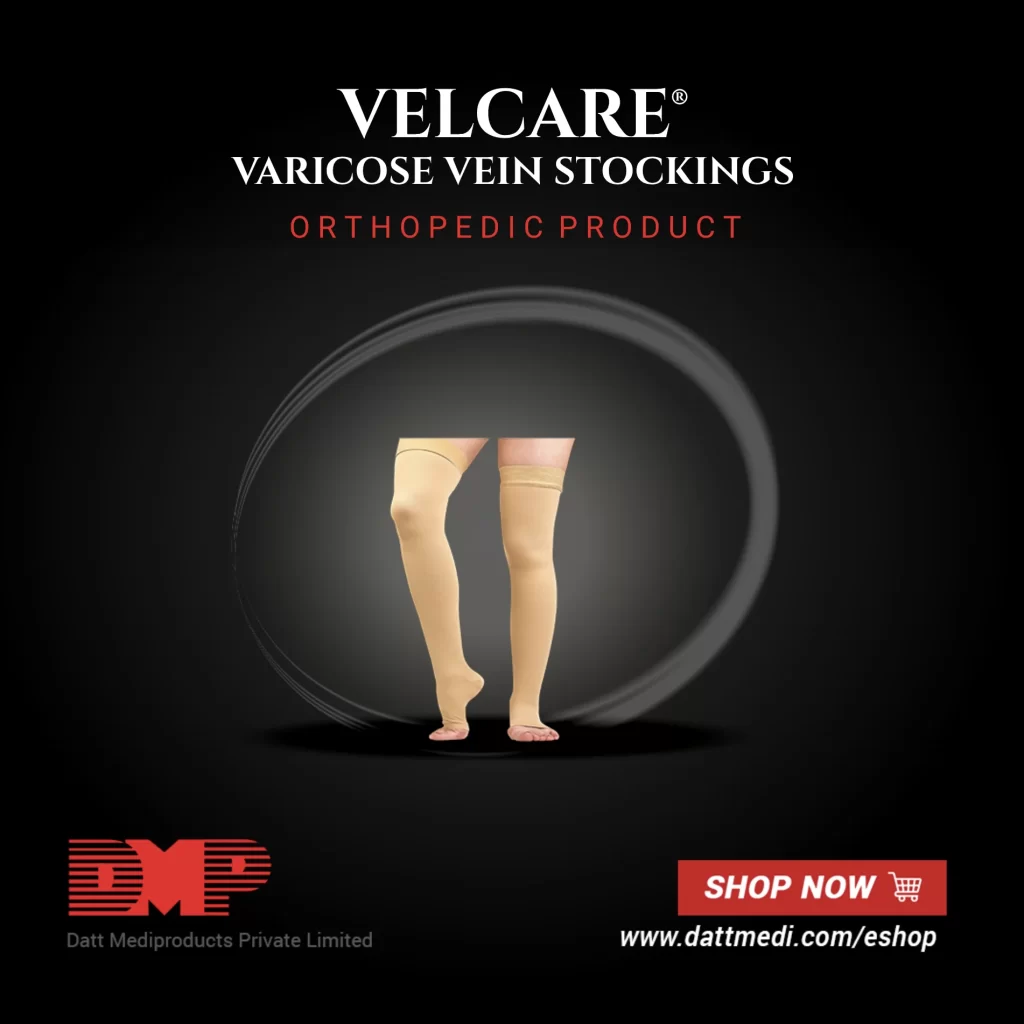
Explore our medical-grade Velcare Varicose Vein Stockings designed for effective compression therapy: View Product
Comparing Compression Bandages and Compression Stockings
| Feature | Compression Bandages | Compression Stockings |
| Flexibility | Highly adjustable | Fixed compression level |
| Best Stage of Treatment | Early or active treatment | Long-term maintenance |
| Ease of Use | Requires trained application | Easy for self-use |
| Wound Compatibility | Suitable for wound dressings | Usually used after wounds heal |
| Comfort for Daily Wear | Moderate | High |
| Adaptability to Swelling | Excellent | Limited |
When Are Compression Bandages the Better Choice?
Compression bandages Compression bandages are generally recommended during the initial stage of treatment, especially when swelling is unstable or wounds are present.
They are most suitable when:
- Swelling changes frequently
- Limb shape is uneven
- Wound dressings require regular replacement
- Compression pressure must be adjusted
Because they can be re-applied and modified, bandages allow clinicians to closely manage swelling while protecting healing tissues.
When Are Compression Stockings More Suitable?
Compression stockings are commonly used after the treatment phase once swelling has been reduced and limb size stabilizes.
They are ideal for:
- Long-term compression therapy
- Preventing recurrence of swelling
- Supporting circulation in chronic venous disorders
- Providing comfortable daily compression support
Regular use of properly fitted stockings helps maintain results achieved during earlier treatment.
Why Professional Guidance Matters
Selecting the right compression therapy requires careful assessment of several factors, including circulation health, wound condition, skin sensitivity, and patient mobility.
Incorrect compression levels or poorly fitted products can reduce treatment effectiveness and cause discomfort. Healthcare professionals ensure the correct compression type, pressure level, and fitting method are used for each patient.
Medical compression products manufactured under internationally recognized standards such as ISO and CE certifications further support safety, performance, and reliability in clinical and homecare environments.
Compression therapy plays an important role in managing swelling, supporting circulation, and improving wound healing outcomes.
Compression bandages offer flexibility during the active treatment stage, allowing healthcare professionals to adjust pressure as swelling changes. Compression stockings provide consistent and convenient compression for long-term management, helping patients maintain recovery and prevent future complications.
Understanding the differences between compression bandages and compression stockings enables more effective treatment decisions and supports better long-term vascular and wound care management.
