

Search by Blog
Read by Category

Your healing journey continues beyond this blog

Find the right products for better recovery at online store
Cart Image
Stress Management As

Are you overworked?
Is your work from home causing you stress?
Is your stress weighing you down?

It’s time to balance your life either by controlling the stressors or by coping with them or both.

Today most of us suffer from stress but are not open enough to discuss the problem. Stress is one of the mental problems which needs to be properly addressed, either on our own or with the help of mental health professional.

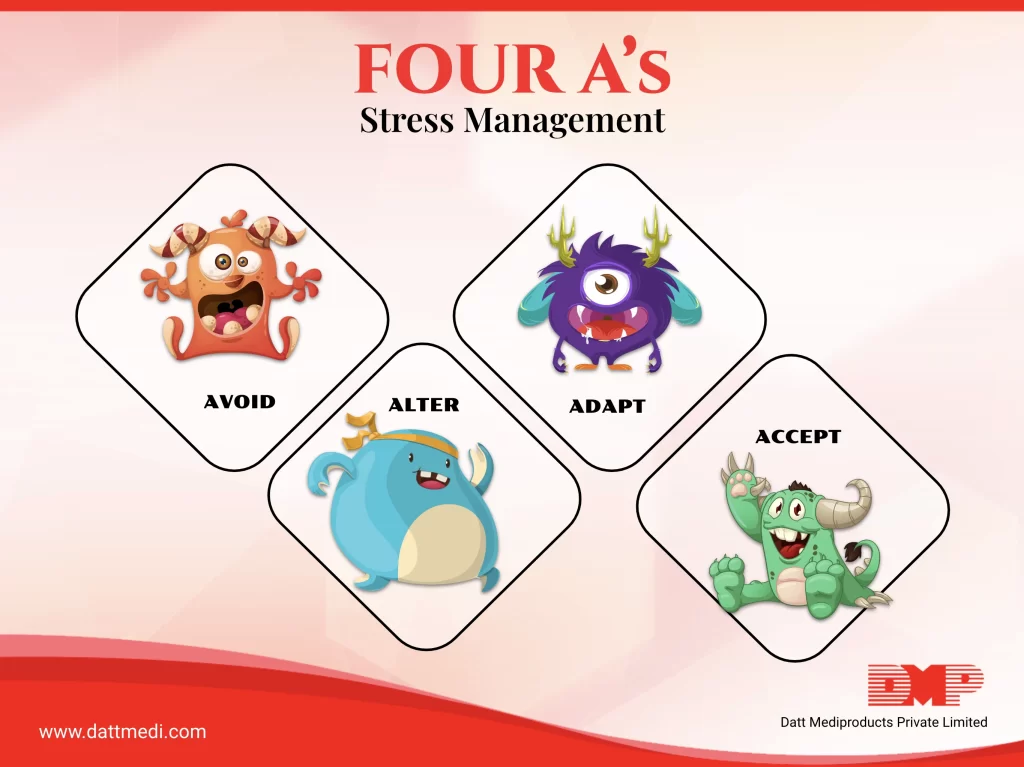
We, list down the well-known 4 A’s of stress management, viz. Avoid, Alter, Accept, and Adapt. You may wish to try using one or all of these strategies.

AVOID Unnecessary Stress:
Identify the stressors in your life, look at your habits, excuses, attitude, etc. Unnecessary stressors can really impact your mental health. Try to manage the things under your control such as avoid people who bother you, and learn to say no if you can’t accommodate that extra piece of work. Don’t accept it when you don’t wish to. Be planned with your daily to-do list as per the importance and need of the hour. You can’t do everything every time and it is okay.

ALTER the Situation:
If you can’t avoid the stressors, try to avoid them. There are some things which are under your control and which you can manage. Take inventory and strive to change the situation for the better. You can’t alter other’s behavior but you can definitely and respectfully ask others to change the part that bothers you; in doing so learn to communicate your feelings openly which helps to keep the frustration apart. State work limits and manage your time in a better way, landing your spare time for yourself or you may also wish to indulge in some hobby.

ADAPT to the Stressor:
It is best to adapt to a stressor when you can’t avoid or alter it. Adapting means you are changing your expectations and standards, thinking that you can’t cope with them. Adjusting your standards is one of the best ways to deal with stress and frustration. One of the main reasons for stress is “Perfectionism”

You can’t be perfect at all times and the habit of being so can really stress you out. Sometimes doing just good is enough. Avoid overdoing just for the sake of perfection. Keep gloomy negative thoughts away; adopt some mantra such as “All is Well” & “I can do it” which you can repeat in your mind in difficult situations. Practice forgiveness and free yourself from negative energy and just move on.

ACCEPT the Unchangeable Things:
Sometimes we are left with no choice but to accept things and the situations as they are. This is because we can neither avoid the stressors nor are they alterable and adaptable. Although it can be a little difficult, accepting does help to keep stress under control. Talk to someone close, pour your heart out, go on a coffee break, control your anger which dwells on your energy, practice forgiveness because you can’t change everyone and everything, let positive thoughts dwell in your mind, introspect yourself, practice positive self-talk, learn from your mistakes, try not to repeat them.

 If you wish to know more then read our blogs “Care for your Mental Health” and “Walk for Your Body & Mind” to keep stress at bay and visit us at www.dattmedi.com.
Visit www.dattmedi.com for more infomation.
Share:
Recent Blogs

Chronic diseases are conditions that must be managed continuously and have a big effect on a person’s quality of life. Diabetes, rheumatoid arthritis, heart disease, and cancer are a few of the most prevalent chronic illnesses. Although managing these illnesses can be difficult, it is doable with the correct approaches and lifestyle modifications. This blog will cover all aspects of offering helpful guidance for treating various chronic conditions at home. You will know about the preventive measures you need to take to reduce and regulate your condition in a short time.

Chronic diseases are long-term conditions that typically progresses slowly over time and requires ongoing medical attention and management. Unlike acute conditions, which are typically short-term, chronic diseases often require ongoing medical care and lifestyle modifications to prevent complications and improve quality of life. There are many different types of chronic diseases, each with their own unique symptoms, causes, and treatment options.

Here are some of the most common types of chronic diseases:

  • Heart diseases
  • Diabetes
  • Arthritis 
  • Lung cancer
  • Osteoporosis
  • Colorectal cancer
  • Depression 
  • Asthma
  • Type 2 diabetes

Preventive measures you can take at home to regulate chronic diseases

Chronic diseases can significantly impact a person’s quality of life, but with proper management and medical care, it is possible to live well with these conditions. In addition to routine doctor visits, a healthy diet, and prescription medicine, certain efficient preventive actions might help you feel better quickly. 

These tips work with medical attention side-by-side to provide you with more pain relief and improve your daily functionalities. Take a look at the best tips to manage chronic diseases below.

Tip 1: Follow a Healthy Diet

A healthy diet is essential for managing chronic diseases. A balanced diet rich in fruits, vegetables, whole grains, and lean protein can help people manage blood sugar levels, lower the risk of inflammation, and keep a healthy weight.

Tip 2: Stay Active

Regular exercise can help treat, delay, or prevent chronic diseases. Aim for at least 150 minutes each week of physical activity, such as walking or cycling. Moreover, two days of strength-training exercises. Low-impact activities like walking, swimming, and yoga are great options for people with arthritis, while resistance training can help build strength and improve bone health.

Tip 3: Get Enough Sleep

Getting enough sleep is important for overall health and well-being, but it’s especially important for people with chronic diseases. Inflammation, blood sugar levels, and weight growth can all be impacted by sleep deprivation. Set a consistent sleep routine and aim for 7-9 hours of sleep each night.

Tip 4: Manage Stress

Stress can have a significant impact on chronic diseases by increasing inflammation, blood pressure, and blood sugar levels. The ability to manage stress through practises like yoga, deep breathing, or meditation can enhance general well-being and lower the risk of problems from chronic illnesses.

Tip 5: Take care of your Mental Health

Fatigue, body pain, and other prevailing symptoms of chronic illness are often invisible, so others may not always be able to assess their impact. Worrying and thinking adversely about potential circumstances can cause anxiety and stress, which can have an adverse effect on general health. Working on mental health concerns should be done in consultation with a doctor. 

Tip 6: Take Medications as Prescribed

Managing chronic diseases often involves taking medications to control symptoms and prevent complications. It’s critical to follow up frequently to check on the effectiveness of your meds and to take them as directed by your physician. Talk to your doctor or chemist about any side effects or worries.

Living with chronic diseases like diabetes, arthritis, and other conditions can be challenging, but by following these tips, it’s possible to manage them effectively. A healthy diet, regular exercise, adequate sleep, stress management, medication adherence, and staying informed are all key components of managing chronic diseases. By working with healthcare providers, making lifestyle changes, and taking control of your health, you can live a full and active life with chronic diseases.

We advice to stay informed about your condition and its management is essential for living well with chronic diseases. Attend support groups, read reputable sources of information, and ask your healthcare provider any questions you may have. This can help you better understand your condition and how to manage it effectively. Follow us for more such information.

DOWN SYNDROME Breaking Down Barriers

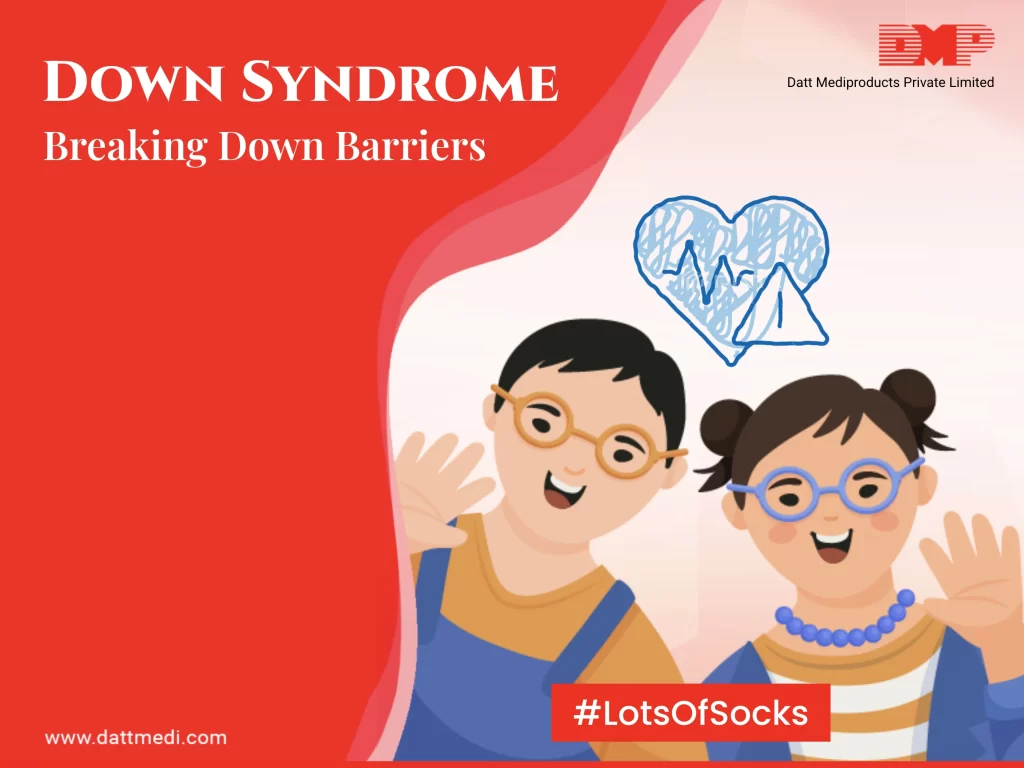
Down Syndrome, also called Trisomy 21, is a genetic condition in which a person has an extra
chromosome. This leads to physical and intellectual disabilities and certain other associated medical issues among children such as hearing loss, obstructive sleep apnea, ear infections, eye diseases or heart defects.

Even though people with Down Syndrome may act or look similar, they have varying degrees of abilities. Their IQ range from mild to moderate and they usually speak slower than normal children. There is no known cause of Down Syndrome. However, with the right support and opportunities, people with Down Syndrome can lead happy and fulfilling lives.

(more…)
Logo

Datt Mediproducts Private Limited

Loading
