

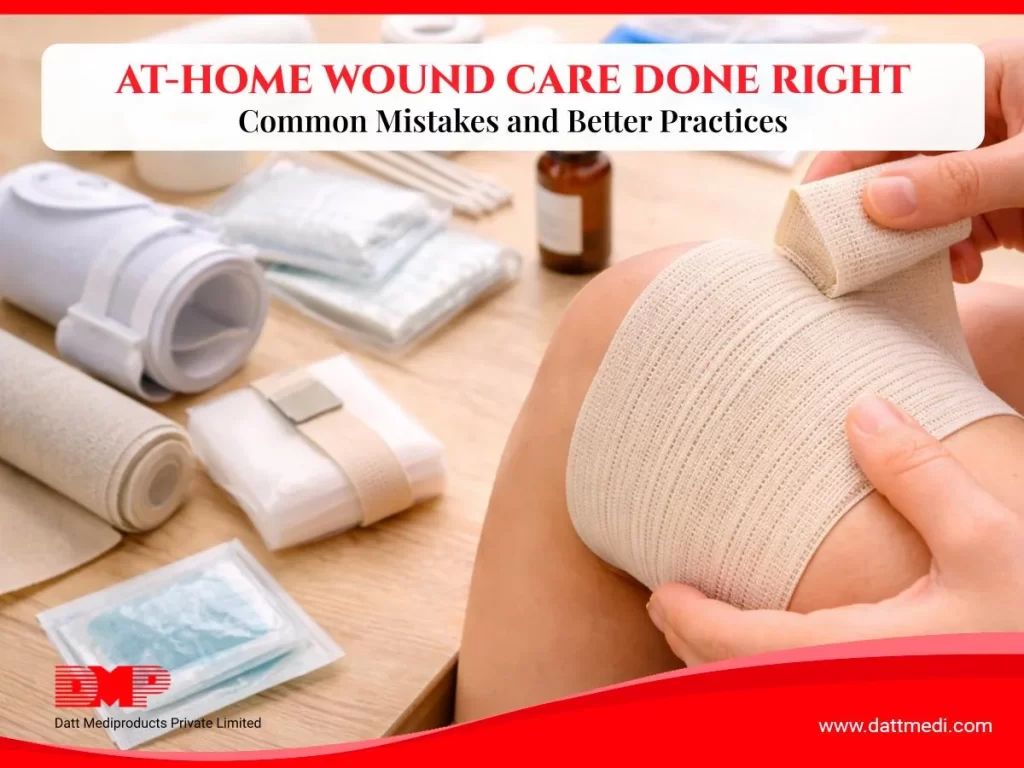
At-home wound care plays a bigger role in healing than most people realize. Many wounds that later become infected or heal slowly don’t start as serious injuries; they worsen because of small, everyday mistakes in home care.
These mistakes are rarely intentional. They usually occur due to confusion, over-cleaning, ignoring signs of infection or using unsuitable dressings. With the right approach, however, effective wound care at home can significantly reduce infection risk, improve comfort, and support faster healing.
This blog is especially helpful for individuals managing minor cuts, post-surgical wounds, or caring for elderly patients at home. It explains the most common at-home wound care mistakes, how to avoid them, and when professional medical help is necessary.
Common At-Home Wound Care Mistakes (And What Works Better)
1. Over-Cleaning the Wound
The Mistake
Cleaning the wound too frequently or using strong solutions such as spirit, iodine, or hydrogen peroxide.
Why This Is a Problem
While cleaning is essential, over-cleaning can damage newly forming tissue and slow the body’s natural healing process. Repeated use of harsh antiseptics may irritate the wound bed and delay recovery.
What to Do Instead
- Always wash your hand thoroughly first
- Clean once daily or if the dressing gets dirty
- Use a mild soap and clean water or saline
- Gently pat dry—do not scrub
Practical Insight
For most minor wounds, gentle cleaning combined with appropriate wound care dressings is sufficient to prevent infection and support healthy healing.
2. Touching the Wound or Dressing Surface
The Mistake
Directly touching the wound or the surface of the dressing that comes in contact with the skin.
Why This Increases Infection Risk
Hands naturally carry bacteria, even after washing. Touching sterile surfaces can transfer germs directly to the wound, increasing the risk of infection.
What to Do Instead
- Wash hands before and after wound care
- Handle dressings only from the edges
- Avoid reusing or adjusting used dressings
Practical Insight
Using sterile ready-to-use dressings helps maintain hygiene and reduces unnecessary handling during home care.
3. Using the Wrong Dressing for the Wound
The Mistake
Applying any available bandage without considering the wound type, size, or location.
Why This Slows Healing
An unsuitable dressing may stick to the wound, trap excess moisture, irritate surrounding skin, or restrict movement—leading to discomfort and delayed healing.
What to Do Instead
- Asses the wound.
- Depending on the type of wound choose an appropriate dressing. If you need help choosing a dressing or have any doubts of the type of wound please contact a healthcare professional.
- Choose sterile, breathable, non-irritating dressings
- Ensure secure but comfortable placement
- Change the dressing regularly and if it becomes wet, dirty, or loose
Practical Insight
Well-designed gauze-based dressings and post-operative film dressings support protection, comfort, and consistent healing at home.
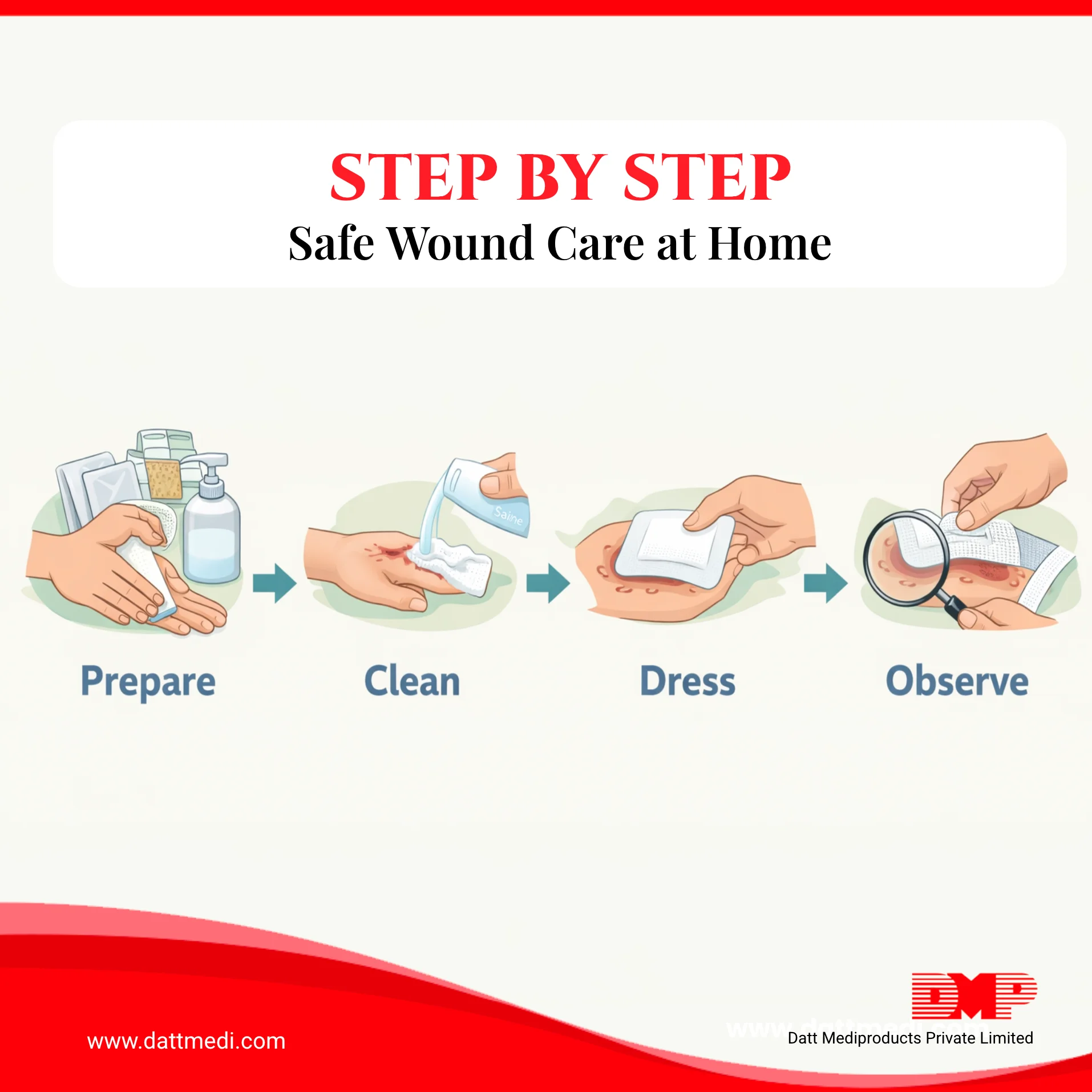
Step-by-Step: Safe Wound Care at Home
Following a simple routine helps prevent infection and supports steady healing.
Step 1: Assess the wound
- Assess the wound to see how serious and what type of wound it is.
- You should seek professional care if:
- you can see the bone or blood vessels
- the bleeding doesn’t stop even after pressure is applied
- it is a burn wound
- it is a bite wound from an animal
Step 2: Prepare
- Wash hands thoroughly
- Keep all dressing materials ready
Step 3: Clean
- Rinse the wound gently with mild soap and clean water or saline
- Pat dry with sterile gauze such as cotton gauze products
Step 4: Dress
- If it is a minor cut of scrape let it air out, it doesn’t need a bandage
- For larger wounds apply a sterile dressing without touching the pad
- Smooth it gently so it stays in place
Step 5: Observe
- Check and clean the wound daily. Monitor for changes
- Replace the dressing as needed
For a more detailed look at everyday care practices that help wounds heal faster, see our wound care dos and don’ts for faster healing guide.

Warning Signs: When to Seek Medical Help
At-home wound care may not be enough if you notice:
- Increasing redness, swelling, or warmth
- Yellow or green discharge
- Persistent pain or fever
- A wound that does not improve after a few days
Early medical attention can prevent serious complications and support timely recovery.
Making At-Home Wound Care Safer and Simpler
Many households prefer sterile wound care solutions because they reduce guesswork and handling. These solutions are designed to:
- Support hygiene
- Reduce infection risk
- Simplify daily wound care routines
Such products are commonly used in hospitals and home-care settings and are manufactured following international quality standards such as ISO and CE, making them trusted across global healthcare markets.
Effective wound care at home is about balance—cleaning gently, protecting properly, and knowing when professional care is needed. By avoiding common mistakes and following simple, hygienic steps, healing outcomes can be significantly improved.
With the right approach and reliable advanced wound care products, healing at home can be safe, comfortable, and confident.
Medical Disclaimer
This content is intended for general wound care education and does not replace professional medical advice. Always consult a healthcare provider for serious, worsening, or non-healing wounds.
