

Search by Blog
Read by Category

Your healing journey continues beyond this blog

Find the right products for better recovery at online store
Cart Image
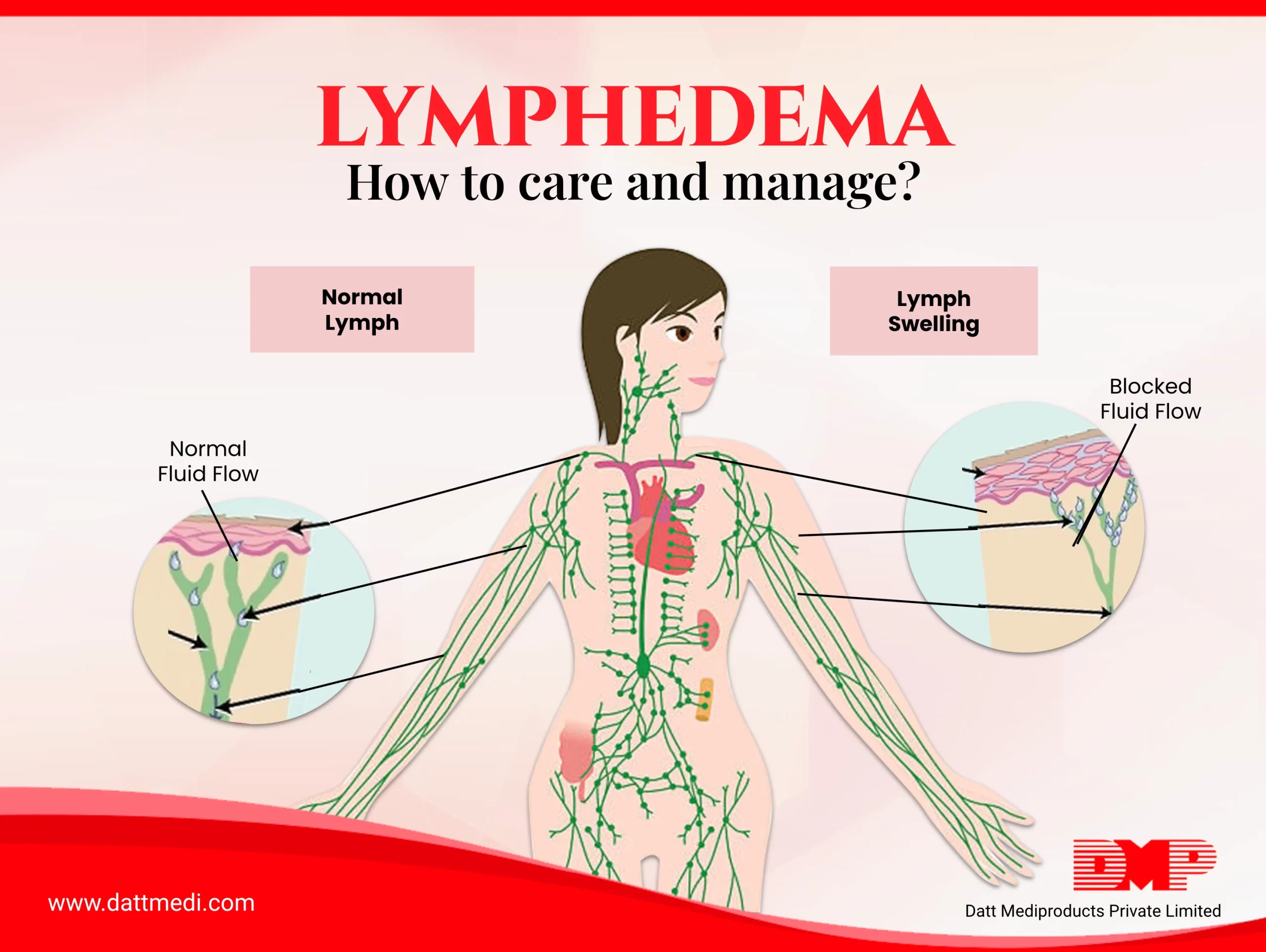
Lymphedema How to care and manage?

Lymphedema is a chronic disease associated with the lymphatic system, which results in swelling in one or more parts of the body. It usually develops in the arms or legs due to the accumulation of lymph fluid.

This condition occurs when the lymph fluid doesn’t flow properly in the lymphatic vessels due to the loss of lymph nodes or a blockage resulting from cancer treatment, trauma, surgeries etc.

A person suffering from Lymphedema in arm or leg may show the following symptoms:

  • Swelling or puffiness
  • A feeling of tightness or heaviness
  • Decreased flexibility
  • Pain or discomfort
  • Recurring infections
  • Hardening and thickening of the skin (fibrosis)

Lymphedema can be classified in the following types:

Primary Lymphedema – is caused by a rare genetic development disorder affecting the lymphs. The symptoms usually develop during infancy or puberty.

Secondary Lymphedema – is caused by damage to the lymphatic system from any injury, infection, surgery, cancer treatment, etc. Secondary lymphedema is more common than the primary type, it affects around 2 in 10 women with breast cancer.

How does lymphedema develop in cancer patients?
The surgery involved in the treatment of breast cancer patients often leads to the removal of lymph nodes. The removal of a minimum of two or three lymph nodes from under the arm is called a sentinel lymph node biopsy and when a greater number of nodes are removed, it is referred to as axillary lymph node dissection.

Radiation therapy also causes damage to the lymph nodes and lymphatic vessels. Over a period of time, the lymph fluid gets accumulated as it doesn’t flow properly because of lymphatic system damage and this causes the swelling.

How can we manage lymphedema?
Lymphedema can’t be cured. There are a few treatment methods available, like compression treatments and physical therapy, which may help to reduce the swelling, discomfort and other symptoms.

Following are few of the available “MEDICAL MANAGEMENT TECHNIQUES”:

  1. Compression Bandages: Compression Bandages encourage the lymph to flow more evenly and reduce the fluid re-accumulation. This works by stimulating the lymph flow through the damaged lymph nodes or lymphatic vessels and reducing swelling by preventing the fluid to collect in the affected area.
  2. Stockings: Stockings or elastic sleeves must fit properly around the limb to ensure gradual compression from the distal end towards the proximal end.
  3. Pneumatic Compression devices: These are the stockings or the sleeves which are connected to a pump for providing compression. These help to prevent long-term scarring. However, these can’t be used in patients with congestive heart failure, deep vein thrombosis (DVT) etc.
  4. Complex Decongestive Therapy: This includes massage techniques involving slow, repetitive stroking & light circular movements, to evenly distribute the lymph fluid from the distal end towards the body. This is also known as manual lymphatic drainage.
  5. Exercise: Exercise may be prescribed by the doctor or the therapist. These exercises may include those which help to stimulate the lymph flow.

Risks & Complications:
The major function of lymph nodes is to filter out the bacteria and other toxins so that they don’t enter our blood. The removal of lymph nodes after the surgery or radiation therapy could lead to further complications like infections, whether or not the patient develops lymphedema.

Even small cuts and breaks in the skin can get infected. This can then lead to serious bacterial infection like CELLULITIS which could spread rapidly and could be life threatening also. Cellulitis would need immediate medical attention and treatment with antibiotics. Skin and tissue infections associated with lymphedema must be treated with antibiotics to avoid any kind of Sepsis.

Prevention is always Better
Cancer patients who have undergone surgery or radiation therapy may ask their doctor if the therapy will affect lymph nodes or lymph vessels. Below are some of the methods which can help reduce the risk of the lymphedema getting worse. Protect the lymphedematous arm or leg from any injury which may invite infections.

  • Provide rest to the affected limb while recovering after cancer treatment.
  • Avoid overexertion, heavy lifting and only perform the exercises prescribed by the doctors.
  • Protect the lymphedema affected limb from extreme cold and heat.
  • Elevate the limb above the level of your heart, whenever it’s possible.
  • Any tight clothing which could constrict the limb should be avoided.
  • Keep the lymphedematous limb clean. The outer layer of the skin is the body’s natural protection barrier, any breaks in the skin could invite infections.
  • Never allow injections or blood draws from the affected limb.

Advantages of Compression Bandages in Managing Lymphedema
Compression bandages are an effective management technique to reduce the build-up of the lymph fluid volume in a lymphedematous limb in the following ways:

  • Reduces capillary filtration
  • Shifts the fluid into the non-compressed parts of the body
  • Increases the lymphatic reabsorption and stimulate lymphatic transport
  • Improves the venous pump in patients with veno-lymphatic dysfunction
  • Breaks fibrosclerotic tissue

We @ Datt Mediproducts manufacture and market multi-layered compression bandages of impeccable quality following international standards.
Visit www.dattmedi.com for more infomation.
Share:
Recent Blogs
Measuring leg circumference for compression garment sizing

A well-fitted compression garment supports movement, reduces swelling, and improves overall comfort during recovery. Even small measurement errors can affect its effectiveness. Whether you are a patient, caregiver, clinician, or distributor, understanding how to measure compression garments correctly ensures safe therapy and reliable results.

For suitable options, check our Compression Stockings Collection.

1. Why the Right Measurement and Fit Matters

Compression garments apply controlled pressure along the limb. The correct size ensures even pressure distribution and therapeutic effectiveness.

Benefits of Proper Fit:

  • Reduces swelling and discomfort
  • Improves blood and lymph circulation
  • Supports healing after injury, surgery, or chronic conditions
  • Makes daily activities like walking, standing, or sitting more comfortable
Example: Someone managing mild swelling or early varicose veins often feels lighter and more supported when using a properly sized garment, following a reliable compression stocking size guide.

2. Tools You Need for Accurate Measurement

Accurate sizing doesn’t require advanced tools.

You need:

  • A soft measuring tape
  • Manufacturer’s compression measurement chart or sizing guide
  • Notebook or phone to record values
  • Mirror or assistance for hard-to-reach areas
  • Good lighting for accurate readings
These simple tools help follow a medical compression garment sizing guide and reduce measurement errors.

3. Step-by-Step Guide: How to Measure Correctly

i) Ankle: Measure the narrowest point above the ankle bone.

ii) Calf: Measure the widest part of the calf for proper fit and support, including wide-calf users.

iii) Thigh (for thigh-high garments): Measure the thickest part of the thigh to avoid rolling and ensure secure fit.

Leg Length:

  • Knee-high: heel to just below the knee crease
  • Thigh-high: heel to the top of the thigh

iv) Arms (for sleeves/supports): Measure wrist, forearm, upper arm, and arm length. This ensures smooth, even compression from wrist to shoulder.

Quick Tips: 

  • Measure early in the morning when swelling is minimal.
  • Sit comfortably, keep tape snug, measure twice, and avoid measuring over clothes.

4. Common Fitting Mistakes to Avoid

  • Too Tight: Can cause numbness, tingling, or deep marks.
  • Too Loose: Slipping or wrinkling reduces effectiveness.
  • Incorrect Length: Too short rolls or digs in; too long bunches or slides down.
  • Not Rechecking: Limb size changes due to swelling, healing, or weight changes—regular measurement is important.

For reference, see our Compression Stockings Size Chart India.

5. When to Consult a Healthcare Professional

Specialists can confirm the correct compression level and ensure measurements match your condition, especially after surgery or for vascular issues.

Consult if you notice:

  • Persistent or increasing swelling
  • Discomfort while wearing the garment
  • Size falling between two chart options
  • Post-surgical changes
  • Conditions like diabetes or vascular disorders

Professional guidance ensures safe and effective therapy, particularly when using compression garments for varicose veins.

Accurate measurements are the foundation of effective compression therapy. Using simple tools, careful technique, and a trusted compression stocking size guide ensures your garment fits comfortably and supports healing. When unsure, consulting a healthcare professional provides confidence and safer results.

Compression therapy applied to the lower limb to support wound healing

Wound healing is often slowed when the body cannot efficiently move blood and excess fluid away from the affected area. This causes low blood flow which leads to reduced oxygen & nutrient supply, both are critical for cell repair. This is frequently seen in chronic venous ulcers, lymphedema, diabetic wounds, and post-surgical swelling.

Compression therapy is one of the most effective clinical methods to improve circulation, support healing, and enhance overall wound management.

By applying controlled and consistent pressure, compression therapy reduces fluid buildup, improves oxygen delivery, and creates a stable environment that promotes faster tissue repair.

What Is Compression Therapy? How It Works

Compression therapy uses medical tools such as compression bandages, garments, or dressings to apply even pressure to a limb or wound site. This helps to:

  • Redirect blood flow toward the heart
  • Reduce fluid accumulation under the skin
  • Improve oxygen supply to damaged tissues
  • Support formation of healthier new tissue
This controlled pressure creates a stable, balanced healing environment and reduces strain on surrounding skin.

Types of Compression Therapy

1. Elastic Compression Bandages

Widely used for venous ulcers and chronic wounds because they allow adjustable pressure and support daily wound care.
Related Product: Compression Bandages – Wound Care Range

2. Compression Garments

Ideal for long-term swelling, lymphedema care, and post-surgical recovery. They offer uniform pressure and help maintain inflammation control. Velcare® Varicose Vein Stockings– Compression Garments

Know More About – Velcare® Varicose Vein Stockings- Compression Garments

3. Dressings With Built-In Mild Compression

Foam and hydrocolloid dressings provide gentle compression while maintaining moisture balance. Recommended options:

How Compression Therapy Supports Wound Healing

  1. Improved Blood Flow – Prevents blood pooling and delivers oxygen and nutrients for efficient tissue repair.
  2. Swelling Control (Edema Management) – Removes trapped fluid, reducing discomfort and creating a stable environment.
  3. Enhanced New Tissue Formation – Supports orderly tissue repair and faster wound closure.
  4. Reduced Risk of Raised Scars – Mild compression after surgery or burns helps prevent thick or raised scars.

When Compression Therapy Is Recommended

  • Chronic Venous Ulcers – Supports circulation and long-term healing.
  • Lymphedema Care – Manages fluid buildup, heaviness, and infection risk.
  • Post-Surgical Recovery – Controls inflammation, stabilizes the wound area, and supports smoother healing.
  • Diabetic Foot Ulcers – Can support healthy circulation under clinical guidance.
Top Misconceptions About Compression Therapy

Read more about Compression Therapy

Benefits of Compression Therapy

  • Faster wound healing through improved circulation
  • Reduced risk of recurrence, especially in venous ulcers
  • Lower pain and discomfort due to decreased swelling
  • Better mobility and overall patient comfort

How to Use Compression Therapy Safely

  1. Ensure Proper Fit – Pressure must match clinical needs; too little is ineffective, too much can cause skin damage.
  2. Monitor the Skin Regularly – Watch for numbness, tingling, coldness, or unusual pain.
  3. Increase Pressure Gradually – Start with lower compression levels and increase slowly under clinical supervision.

When Compression Therapy Should NOT Be Used:

Avoid compression unless recommended by a clinician if the patient has:

  • Poor arterial circulation
  • Active infection at wound site
  • Acute heart failure
  • Severe peripheral arterial disease (ABI)

Always consult a healthcare professional before beginning or modifying compression therapy.

Best Practices for Better Healing

Compression works best when combined with:

  • Gentle wound cleansing
  • Moisture-balancing dressings (foam, antimicrobial)
  • Adequate nutrition (protein, vitamins, minerals)
  • Regular assessments by wound-care specialists

Together, these steps create a complete, supportive healing environment.

Compression therapy is vital for accelerated wound healing, edema control, venous ulcer management, lymphedema care, and post-surgical recovery. When combined with appropriate dressings and monitored safely, it offers faster healing, improved patient comfort, and reduced risk of complications or recurrence.

Explore Professional Wound-Care Solutions – Wound Care Category

Logo

Datt Mediproducts Private Limited

Loading
