

Search by Blog
Read by Category

Your healing journey continues beyond this blog

Find the right products for better recovery at online store
Cart Image
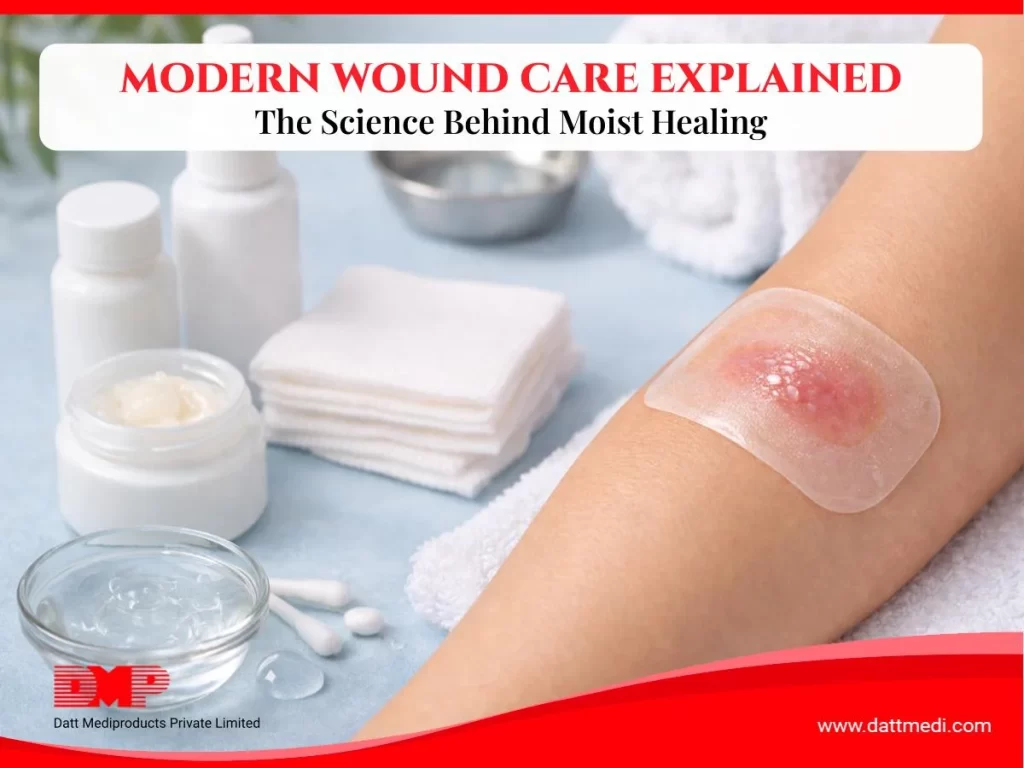
Moist wound environment supporting tissue regeneration

For many years, people believed that allowing a wound to dry out and form a scab was the best way to promote healing. Modern wound care science has shown that maintaining a moist healing environment can support faster tissue repair, reduce discomfort, and improve skin recovery.

Since its clinical adoption in the 1960s, moist wound healing has become a cornerstone of modern wound care in hospitals and home care settings worldwide. By protecting the wound and supporting the body’s natural repair process, this method helps improve healing outcomes and patient comfort.

What Is Moist Wound Healing?

Moist wound healing involves covering a wound with an advanced wound care dressing that maintains optimal moisture while protecting it from contaminants and bacteria.

Dry Healing Approach

  • Allows a hard scab to form
  • Can slow skin cell movement
  • May delay tissue repair

Moist Healing Approach

  • Keeps the wound hydrated
  • Enables faster cell migration
  • Supports efficient tissue regeneration
This balanced environment helps the body heal more effectively.

Moist Wound Healing vs Dry Healing: Key Differences

FeatureMoist HealingDry Healing
Healing SpeedFasterSlower
Pain LevelReducedOften higher
Infection ProtectionBarrier protectionExposure risk
ScarringLess visibleMore likely
Tissue RepairContinuousInterrupted by scab

Why Moist Wound Healing Is Beneficial

1. Faster Healing

A moist environment allows skin cells to move easily across the wound surface.

  • No hard scab blocking repair
  • Continuous tissue rebuilding
  • Shorter recovery time

This is especially beneficial for surgical wounds, burns, and chronic ulcers.

2. Reduced Pain and Discomfort

Dry wounds can expose nerve endings, increasing sensitivity and pain.

Moist dressings:

  • Protect delicate tissue
  • Reduce irritation
  • Provide cushioning comfort

They are commonly used to soothe painful wounds and burns.

3. Lower Risk of Infection

Advanced wound dressings create a protective barrier against dirt and bacteria.

When combined with antimicrobial protection, they:

  • Reduce contamination risk
  • Support safer healing
  • Assist infection prevention in wound care

This is particularly important for post-surgical and chronic wounds. 
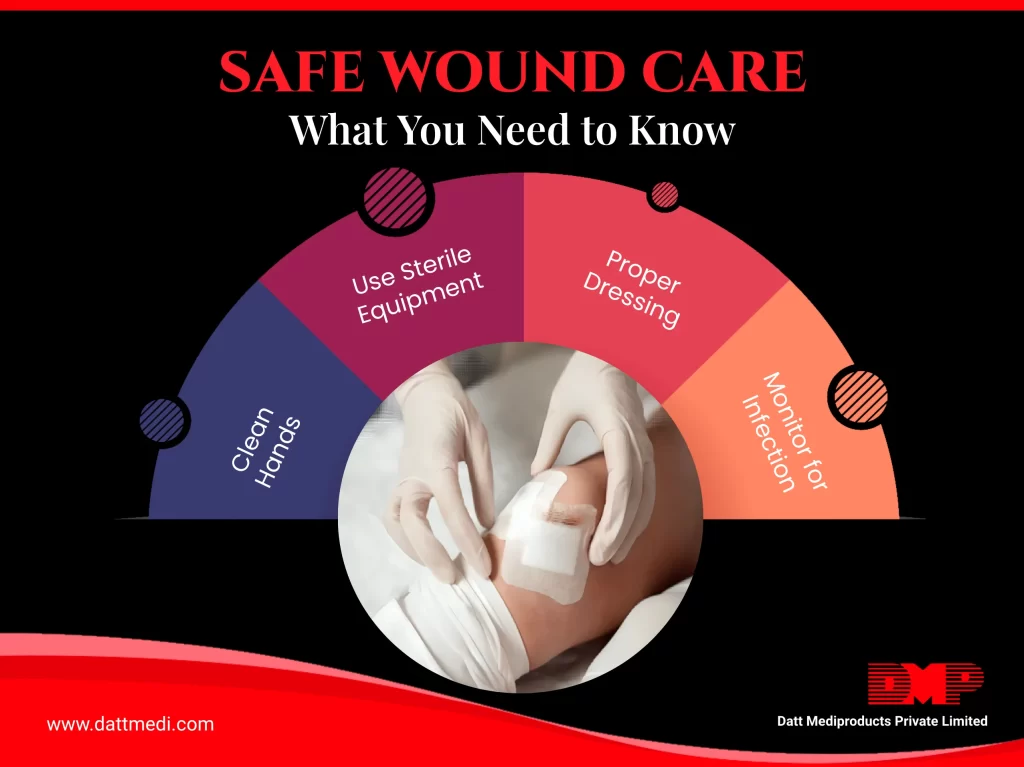
In addition to moisture balance, adopting safe wound care practices to prevent infections further enhances healing outcomes.

4. Less Scarring and Better Skin Repair

When tissue dries out, scarring may become more noticeable.

Moist wound healing:

  • Maintains tissue flexibility
  • Supports smoother skin regeneration
  • Improves cosmetic outcomes

This is beneficial for both medical recovery and aesthetic healing.

5. Natural Removal of Dead Tissue (Autolytic Debridement)

Moisture supports the body’s natural ability to break down and remove dead tissue.

This process:

  • Promotes healthy tissue growth
  • Reduces the need for manual cleaning
  • Supports chronic wound management

How Moist Wound Healing Supports Recovery

Moisture-retentive dressings create an ideal healing environment by:

  • Maintaining stable temperature
  • Supporting new tissue formation
  • Encouraging healthy blood circulation
  • Preserving growth factors and healing proteins

This environment aligns with global medical wound management protocols and modern clinical practices supported by organizations such as the World Health Organization.

Choosing the Right Dressing for Moist Wound Healing

Selecting the best dressing for wound healing depends on wound type, exudate level, and skin condition.

Hydrocolloid Dressings

  • Maintain moisture balance
  • Suitable for minor burns and light drainage wounds

Foam Dressings

  • Absorb excess fluid
  • Keep the wound moist
  • Ideal for moderate to heavily draining wounds 

Hydrogel Dressings

  • Hydrate dry wounds
  • Provide cooling relief
  • Reduce pain and discomfort 

Alginate Dressings

  • Highly absorbent
  • Suitable for heavy exudate wounds

Film Dressings

  • Thin and transparent
  • Protect superficial wounds and abrasions (Velfix T Film)

Wounds That Benefit from Moist Healing

1. Chronic Wounds

2. Acute Wounds

3. Fragile Skin Conditions

  • Pediatric wounds
  • Elderly skin injuries
Moist healing protects delicate skin and reduces friction damage.

Common Misbeliefs About Moist Wound Healing

  • Myth: Moist wounds cause infections.
  • Fact: Proper wound dressings create a protective barrier that helps prevent contamination.
  • Myth: Scabs help wounds heal faster.
  • Fact: Scabs can slow healing by blocking new cell growth.

Tips for Effective Moist Wound Healing

  • Choose dressings based on wound size and fluid level
  • Change dressings as recommended
  • Avoid excessive moisture around wound edges
  • Monitor for redness, swelling, or unusual discharge
  • Seek medical care for deep or chronic wounds

For more detailed guidance on wound care best practices — including cleaning, dressing changes, and monitoring — see our Best wound care practices for faster healing.

Challenges to Consider

Moist healing is highly effective, but improper use may cause complications:

  • Excessive moisture may cause skin maceration
  • Incorrect dressing selection can delay healing
  • Increased susceptibility to infections and further damage

Guidance from healthcare professionals helps ensure safe and effective wound care and regular monitoring ensures optimal results

Evidence Supporting Moist Wound Healing

Clinical research shows moist wound environments can:

  • Accelerate healing rates
  • Reduce complications
  • Improve skin regeneration
  • Lower overall treatment costs

These benefits have made moist wound care a globally accepted standard supported by organizations such as the National Institute for Health and Care Excellence.

Studies indicate that wounds maintained in a moist environment may heal up to 40% faster compared to dry healing methods.

Moist wound healing has transformed modern wound care by enabling faster recovery, reducing discomfort, minimizing scarring, and improving overall healing outcomes. Using advanced wound care dressings helps maintain optimal moisture balance while protecting wounds from external contaminants.

For safe and effective healing, wound care decisions should always be guided by qualified healthcare professionals.
Visit www.dattmedi.com for more infomation.
Share:

Frequnently Asked Questions

Moist wound healing supports faster tissue repair, reduces pain, lowers infection risk, and minimizes scarring. Unlike dry healing, it allows skin cells to regenerate efficiently. Modern wound care guidelines widely recommend moisture-retentive dressings for safer recovery.

Yes. A moist wound environment allows skin cells (keratinocytes) to migrate and rebuild tissue more efficiently, faster collagen production and accelerating healing. Studies show moist healing conditions can significantly improve recovery time compared to wounds left to dry.

The ideal dressing depends on the wound condition. Hydrocolloid dressings help maintain moisture, foam dressings manage fluid, hydrate dry wounds, and alginate dressings absorb heavy discharge. Selecting the right dressing ensures optimal healing conditions.

Yes. Advanced wound dressings create a protective barrier against bacteria and contaminants while maintaining optimal moisture. When used correctly, they support infection prevention and promote safer healing.

Moist wound healing is widely used for chronic wounds such as diabetic foot ulcers, pressure injuries, and venous leg ulcers. It supports tissue regeneration, reduces complications, and promotes faster healing outcomes when guided by healthcare professionals.

Recent Blogs

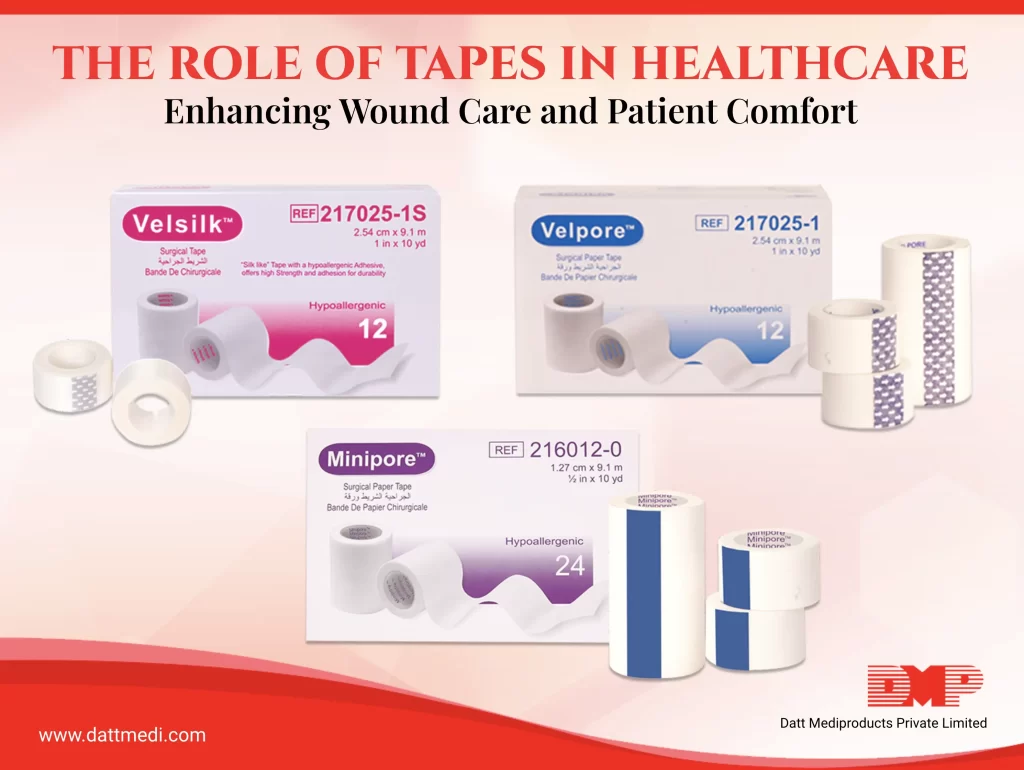
Medical tapes play a crucial role in the healthcare industry, providing essential support in wound care management and ensuring patient comfort and safety. These adhesive products are designed to secure dressings, medical devices, and other materials to the skin, facilitating the healing process and protecting patients from infections. In this blog post, we will explore the importance of medical tapes in healthcare, discuss the different types commonly used, delve into their role in wound care management, address patient comfort and safety concerns, and provide guidelines for their proper application and removal.

Importance of Medical Tapes in the Healthcare Industry:

Medical tapes are indispensable tools in the healthcare industry, offering numerous benefits for both healthcare professionals and patients. These tapes serve as an effective means of securing wound dressings, surgical incisions, and medical devices, such as catheters or IV lines. By keeping these materials in place, medical tapes promote proper healing, prevent contamination, and reduce the risk of infection. Moreover, they provide support to the injured area, minimizing movement and potential damage. The versatility and ease of use of medical tapes make them an essential component of any healthcare setting.

There is a wide range of medical tapes available, each designed to suit specific applications and patient needs. Some commonly used types include:

Minipore™:

Minipore™ tape is a hypoallergenic paper tape that offers gentle adhesion, making it suitable for patients with sensitive or fragile skin. It allows for breathability, reducing the risk of skin maceration while securely holding dressings in place. Read more about products visit https://dattmedi.com/minipore.html

Velpore™:

Velpore surgical paper tape possesses hypoallergenic qualities, making it ideal for individuals with sensitive skin or allergies. Its gentle nature ensures it is kind to the skin. The microporous structure of Velpore enables exceptional breathability, facilitating airflow and minimizing the likelihood of maceration.This tape is frequently utilized for securing wound dressings, delivering dependable fixation while enabling freedom of movement and flexibility. Its mild adhesive properties allow for painless and damage-free removal from the skin. Read more about products visit https://www.dattmedi.com/velpore.html

Velsilk™:

Velsilk tape is a silk-like cloth tape that combines excellent adhesion with gentle removal. It adheres securely to the skin while minimizing discomfort during tape removal. It is particularly useful in situations where frequent dressing changes are required, as it allows for easy application and removal. Read more about products visit https://www.dattmedi.com/velsilk.html

Role of Tapes in Wound Care Management:

Medical tapes play a vital role in wound care management. They help to secure dressings and keep them in place, preventing contamination and facilitating the healing process. Tapes also provide stability and support to the wound, reducing movement and minimizing the risk of further injury.

Additionally, they create a barrier against external pathogens, protecting the wound from infection. Properly applied medical tapes promote optimal wound healing and can contribute to positive patient outcomes.

Significance of Patient Comfort and Safety:

Patient comfort and safety are of utmost importance in healthcare. When using medical tapes, it is essential to consider the comfort and specific needs of each patient. The choice of tape should be based on factors such as skin sensitivity, wound location, and duration of use. It is crucial to select tapes that are hypoallergenic, breathable, and gentle on the skin to minimize the risk of adverse reactions. Regular monitoring of the taped area is necessary to ensure that the tape is not causing any discomfort or skin irritation. Moreover, proper tape removal techniques should be employed to avoid skin damage or pain.
Guidelines and Best Practices for Application and Removal:

To ensure the effective and safe use of medical tapes, the following guidelines should be followed:

  • Clean and dry the area before applying the tape.
  • Select an appropriate tape based on the patient’s needs and skin sensitivity.
  • Avoid excessive tension when applying the tape to prevent skin irritation.
  • Cut the tape to the desired length and shape, considering the wound size and location.
  • Ensure that the tape is firmly but comfortably secured, avoiding any wrinkles or folds.
  • Regularly assess the taped area for signs of skin irritation or discomfort.
  • When removing the tape, gently lift one corner and slowly peel it back, following the direction of hair growth to minimize pain and skin damage.
  • Apply the tape smoothly, avoiding excessive tension or wrinkling.
  • Periodically assess the tape’s integrity and reapply if necessary.
  • When removing the tape, gently lift the edges parallel to the skin while supporting the wound area to minimize pain and skin trauma.
  • If the tape is stubborn or adhered tightly, consider using a medical adhesive remover to aid in its removal.
  • After tape removal, clean the skin and assess for any signs of irritation or redness.

When properly applied and removed, medical tapes contribute to effective wound healing, prevent infection, and enhance patient comfort. By following guidelines for their proper application and removal, healthcare providers can maximize the benefits of medical tapes while minimizing the risk of complications.


Intravenous (IV) cannulation is a common medical procedure used to administer medications and fluids directly into the bloodstream. While the benefits of IV therapy are clear, the procedure also poses risks, including the possibility of infection at the site of cannula insertion. When it comes to IV therapy, securing the cannula in place is critical for the patient’s safety and comfort.

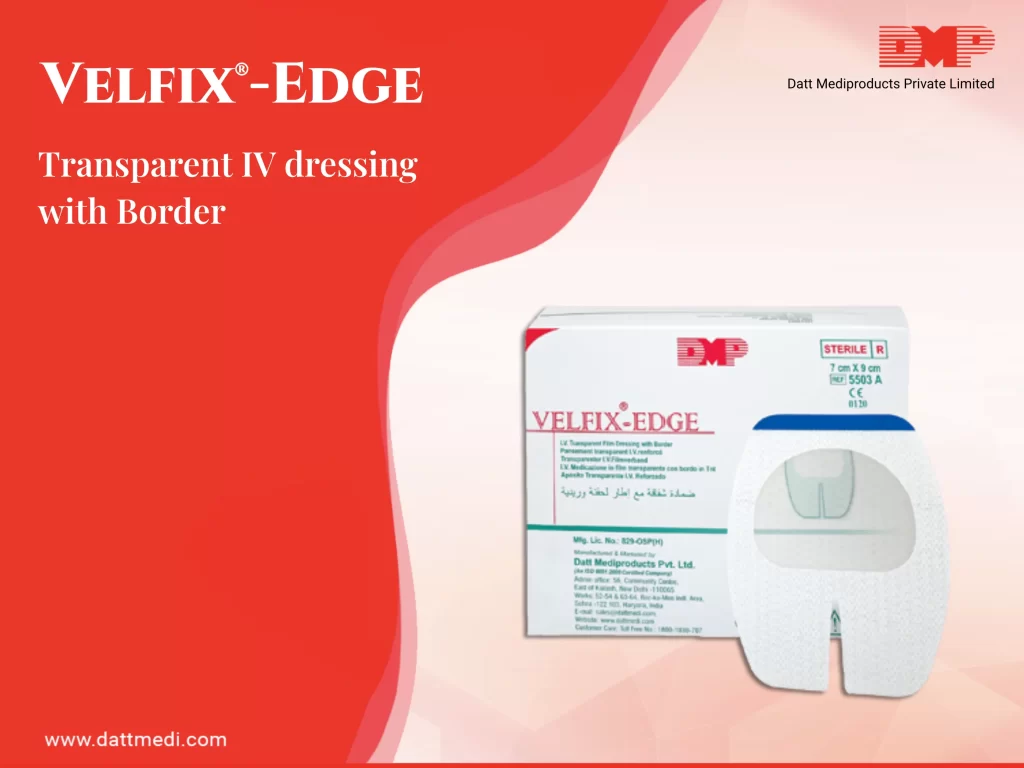
We present Velfix® -Edge, a specialized IV dressing designed specifically for fixing cannulas, which is used to reduce the associated risks. Velfix® -Edge is a non-woven bordered IV dressings coated with latex free adhesive. Frame delivery system for precise placement. Highly conformable to provide solutions for difficult catheters and IV sites. Promotes best practice and enhanced patient comfort with additional securement strips and date labels. Window Framed delivery system allows for one handed application and prevents dressing sticking to itself. Deep notched design forms a barrier to secondary infection and bacterial contamination.

Some of the unique features and benefits of Velfix® -Edge:

  • It has a window frame design that enables continuous observation of the IV site, which is important for monitoring the patient’s condition and detecting any potential complications.
  • It offers a waterproof sterile barrier that protects the site from external contaminants, reducing the risk of infection.
  • It has stabilization non-woven borders that ensure maximum securement, breathability, and wear time.
  • Its notched design helps to discourage edge lift, which could compromise the sterile environment of the site.
  • It comes with two securement tape strips and a pre-printed documentation label, which facilitates proper labelling and documentation of the procedure.
  • It is easy to handle with gloves and allows for single-handed application, which saves time and improves efficiency.

There are several IV dressings available in the market but Velfix® -Edge stands out from the competition and enables medical practitioners to easily monitor the cannula insertion site.

Instructions for Use:

Velfix® -Edge must be used correctly in order to be effective. Before applying the dressing, the skin in the area of the cannula insertion site needs to be properly washed and dried. The Velfix® -Edge dressing can be placed directly to the skin once the region has been cleaned and dried, ensuring that the cannula stays firmly in place. As directed, the dressing should be changed often.

Precautions and Warnings:

The use of Velfix® -Edge on wounds or other skin-compromised areas is not recommended. It ought to be used exclusively for cannula fixation. Additionally, patients should not use Velfix® -Edge if they have allergies to adhesives or other substances.

Also, to maintain its efficacy and safety, it is crucial to carefully follow the usage instructions and adopt the appropriate safety measures. For securing cannulas, Velfix® -Edge is a great choice and is available in a range of tailored sizes.

Logo

Datt Mediproducts Private Limited

Loading
