
Search by Blog
Read by Category

Your healing journey continues beyond this blog

Find the right products for better recovery at online store
Cart Image
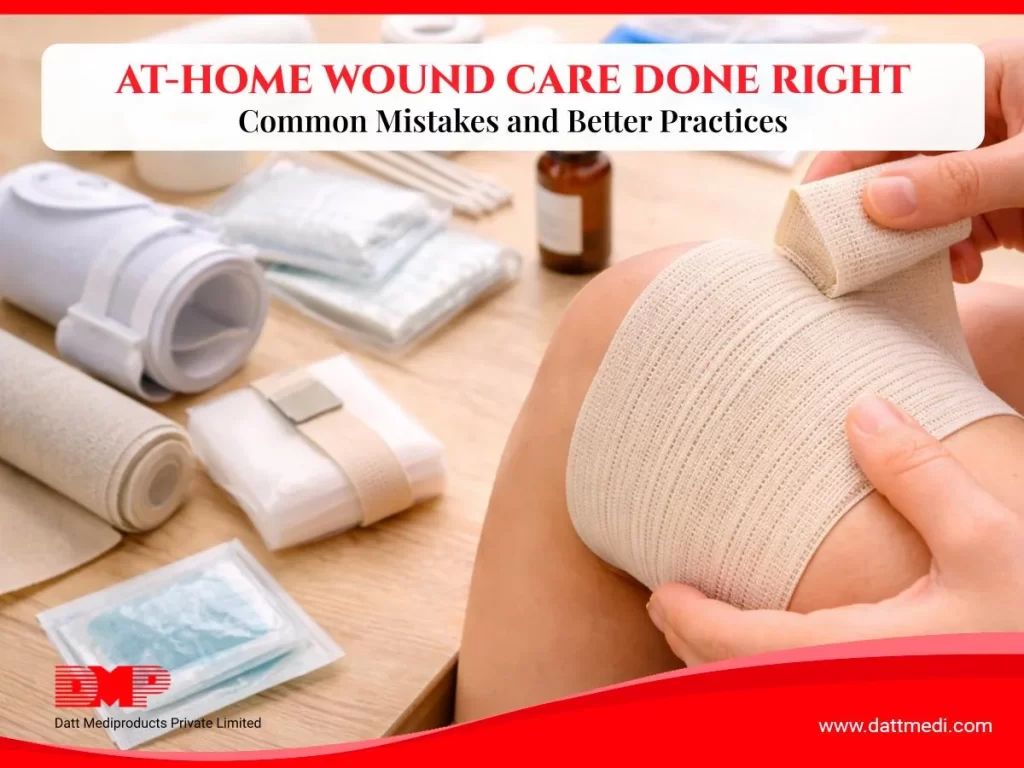
Improper wound cleaning and dressing at home

At-home wound care plays a bigger role in healing than most people realize. Many wounds that later become infected or heal slowly don’t start as serious injuries; they worsen because of small, everyday mistakes in home care.

These mistakes are rarely intentional. They usually occur due to confusion, over-cleaning, ignoring signs of infection or using unsuitable dressings. With the right approach, however, effective wound care at home can significantly reduce infection risk, improve comfort, and support faster healing.

This blog is especially helpful for individuals managing minor cuts, post-surgical wounds, or caring for elderly patients at home. It explains the most common at-home wound care mistakes, how to avoid them, and when professional medical help is necessary.

Common At-Home Wound Care Mistakes (And What Works Better)

1. Over-Cleaning the Wound

The Mistake
Cleaning the wound too frequently or using strong solutions such as spirit, iodine, or hydrogen peroxide.

Why This Is a Problem
While cleaning is essential, over-cleaning can damage newly forming tissue and slow the body’s natural healing process. Repeated use of harsh antiseptics may irritate the wound bed and delay recovery.

What to Do Instead

  • Always wash your hand thoroughly first
  • Clean once daily or if the dressing gets dirty
  • Use a mild soap and clean water or saline
  • Gently pat dry—do not scrub
Practical Insight
For most minor wounds, gentle cleaning combined with appropriate wound care dressings is sufficient to prevent infection and support healthy healing.

2. Touching the Wound or Dressing Surface

The Mistake
Directly touching the wound or the surface of the dressing that comes in contact with the skin.

Why This Increases Infection Risk
Hands naturally carry bacteria, even after washing. Touching sterile surfaces can transfer germs directly to the wound, increasing the risk of infection.

What to Do Instead

  • Wash hands before and after wound care
  • Handle dressings only from the edges
  • Avoid reusing or adjusting used dressings
Practical Insight
Using sterile ready-to-use dressings helps maintain hygiene and reduces unnecessary handling during home care.

3. Using the Wrong Dressing for the Wound

The Mistake
Applying any available bandage without considering the wound type, size, or location.

Why This Slows Healing
An unsuitable dressing may stick to the wound, trap excess moisture, irritate surrounding skin, or restrict movement—leading to discomfort and delayed healing.

What to Do Instead

  • Asses the wound.
  • Depending on the type of wound choose an appropriate dressing. If you need help choosing a dressing or have any doubts of the type of wound please contact a healthcare professional.
  • Choose sterile, breathable, non-irritating dressings
  • Ensure secure but comfortable placement
  • Change the dressing regularly and if it becomes wet, dirty, or loose
Practical Insight
Well-designed gauze-based dressings and post-operative film dressings support protection, comfort, and consistent healing at home.

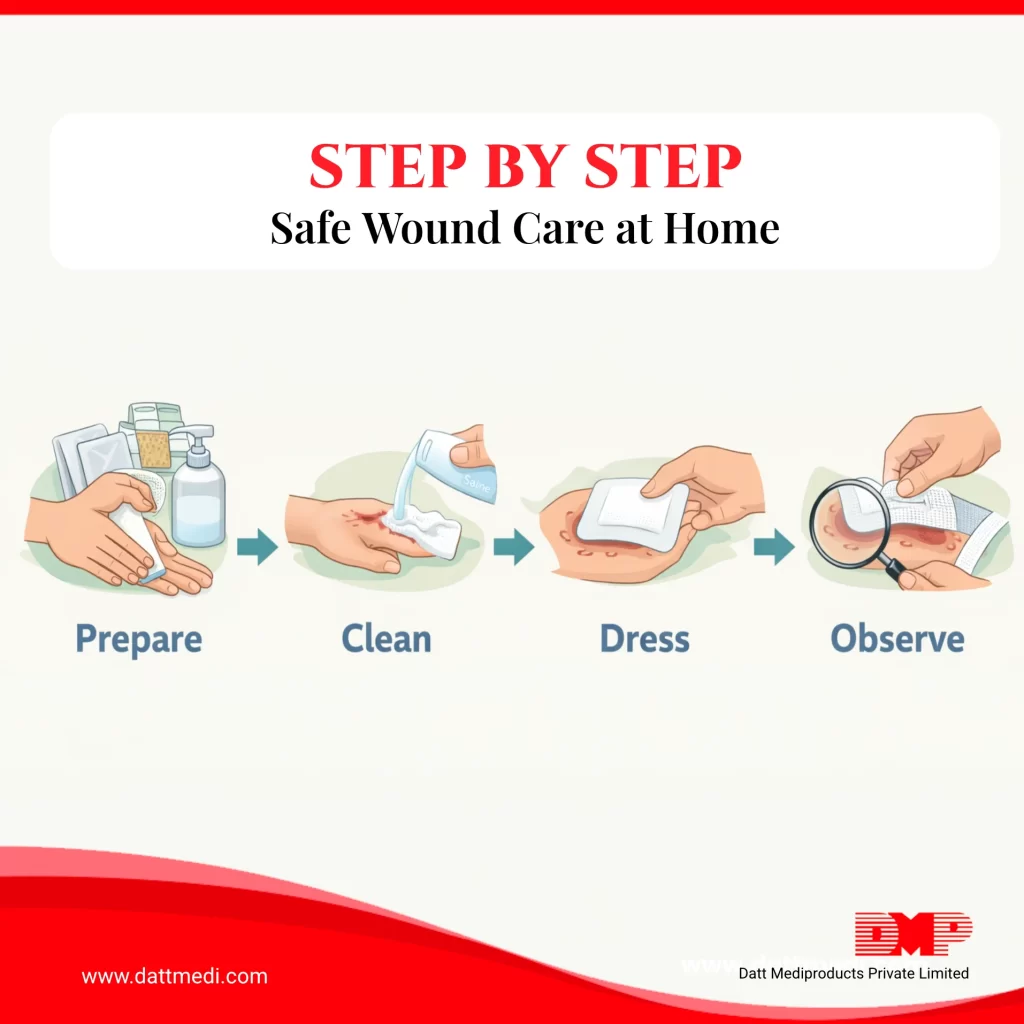
Step-by-Step: Safe Wound Care at Home

Following a simple routine helps prevent infection and supports steady healing.

Step 1: Assess the wound

  • Assess the wound to see how serious and what type of wound it is.
  • You should seek professional care if:
  • you can see the bone or blood vessels
  • the bleeding doesn’t stop even after pressure is applied
  • it is a burn wound
  • it is a bite wound from an animal

Step 2: Prepare

  • Wash hands thoroughly
  • Keep all dressing materials ready

Step 3: Clean

  • Rinse the wound gently with mild soap and clean water or saline
  • Pat dry with sterile gauze such as cotton gauze products

Step 4: Dress

  • If it is a minor cut of scrape let it air out, it doesn’t need a bandage
  • For larger wounds apply a sterile dressing without touching the pad
  • Smooth it gently so it stays in place

Step 5: Observe

  • Check and clean the wound daily. Monitor for changes
  • Replace the dressing as needed

For a more detailed look at everyday care practices that help wounds heal faster, see our wound care dos and don’ts for faster healing guide.

Warning Signs: When to Seek Medical Help

At-home wound care may not be enough if you notice:

  • Increasing redness, swelling, or warmth
  • Yellow or green discharge
  • Persistent pain or fever
  • A wound that does not improve after a few days

Early medical attention can prevent serious complications and support timely recovery.

Making At-Home Wound Care Safer and Simpler

Many households prefer sterile wound care solutions because they reduce guesswork and handling. These solutions are designed to:

  • Support hygiene
  • Reduce infection risk
  • Simplify daily wound care routines

Such products are commonly used in hospitals and home-care settings and are manufactured following international quality standards such as ISO and CE, making them trusted across global healthcare markets.

Effective wound care at home is about balance—cleaning gently, protecting properly, and knowing when professional care is needed. By avoiding common mistakes and following simple, hygienic steps, healing outcomes can be significantly improved.

With the right approach and reliable advanced wound care products, healing at home can be safe, comfortable, and confident.

Medical Disclaimer

This content is intended for general wound care education and does not replace professional medical advice. Always consult a healthcare provider for serious, worsening, or non-healing wounds.

Visit www.dattmedi.com for more infomation.
Share:

Frequnently Asked Questions

Clean the wound gently once a day using a mild soap and clean water or saline. Avoid scrubbing or using strong liquids like spirit or hydrogen peroxide, as they can damage healing skin. Pat the area dry with sterile gauze dressings before applying a clean dressing.

A wound dressing should be changed if it becomes wet, dirty, or loose. For most clean wounds, changing the dressing once a day is enough unless a healthcare professional advises otherwise. Using ready-to-use sterile dressings can make daily changes easier and more hygienic.

Warning signs include increasing redness, swelling, warmth, pain, pus or yellow-green discharge, foul smell, or fever. If any of these appear, medical advice should be sought promptly to prevent complications related to improper wound care management.

The best dressing is one that is sterile, breathable, and comfortable while protecting the wound. Post-operative film dressings and sterile gauze-based options help reduce infection risk and make wound care easier for home use.

You should seek medical care if the wound does not show improvement within a few days, becomes more painful, shows signs of infection, or if the wound is deep, large, or caused by a burn or injury. In such cases, advanced wound care solutions may be required under professional supervision.

Recent Blogs
Wound Care for Athletes

Peak Performance, Optimal Recovery: A Guide to Wound Care in Sports

Athletes constantly push their bodies to the limit, making them more prone to injuries and wounds. From minor cuts and bruises to more serious sprains and strains, managing these injuries effectively is crucial for maintaining peak performance and ensuring a swift recovery. This blog delves into effective wound care strategies for athletes and highlights how the innovative Velcool® cooling and compression bandage can play a pivotal role in their recovery.

Understanding Common Athletic Injuries

Athletic activities can lead to a variety of injuries, including:

  • Sprains and Strains: Overstretching or tearing of ligaments and muscles.
  • Bruises: Caused by impact, leading to bleeding under the skin.
  • Cuts and Abrasions: Resulting from falls or contact with rough surfaces.
  • Overuse Injuries: Such as tendonitis, caused by repetitive motion.

The RICE Method: A Foundation for Acute Injury Management

The RICE method is a tried-and-true approach for managing acute sports injuries. It stands for Rest, Ice, Compression, and Elevation, each component playing a vital role in minimizing damage and speeding up recovery.

  • Rest: Essential to prevent further injury and allow the body to begin the healing process. Avoiding stress on the injured area helps prevent exacerbation of the damage.
  • Ice: Applying ice reduces pain and inflammation by constricting blood vessels, limiting blood flow to the affected area.
  • Compression: Helps reduce swelling and provides support to the injured tissue by limiting fluid accumulation around the injury.
  • Elevation: Keeping the injured part above the level of the heart reduces swelling, associated pain, and discomfort.

Introducing Velcool® : Enhancing the RICE Method

Velcool®  is a state-of-the-art cooling and compression bandage that adheres perfectly to the principles of the RICE method. It offers several benefits that make it an indispensable tool for athletes.

Strategies for Effective Wound Care in Athletes

1. Immediate Attention:

  • Address injuries immediately to prevent them from worsening.
  • Use products like Velcool® for instant cold and compression therapy.

2. Proper Cleansing:

  • Clean cuts and abrasions thoroughly to prevent infection.
  • Use antiseptic solutions and keep the wound covered with sterile dressings.

3. Monitor Healing:

  • Regularly check the injury for signs of infection or complications.
  • Adjust the level of activity based on the healing progress.

4. Nutrition and Hydration:

  • 4a. Maintain a balanced diet rich in proteins, vitamins, and minerals to support the healing process.
  • 4b. Stay hydrated to promote overall health and recovery.

5. Gradual Return to Activity:

  • Gradually reintroduce physical activity to avoid re-injury.
  • Follow a rehabilitation plan designed by a healthcare professional.

Effective wound care is vital for athletes to maintain their active lifestyles and ensure quick recovery from injuries. The RICE method provides a solid foundation for managing acute injuries, and innovations like the Velcool® cooling and compression bandage enhance this approach. By incorporating these strategies and utilizing advanced products, athletes can minimize downtime, promote healing, and get back to their peak performance levels swiftly.

For athletes and sports enthusiasts, embracing the right wound care techniques and products like Velcool® can make a significant difference in their overall health and performance. Stay active, stay safe, and ensure your body gets the care it deserves.

In the realm of healthcare, attention to detail is paramount, especially when it comes to catering to the needs of sensitive patients. One often overlooked aspect is the choice of medical tapes for securing dressings, tubes, and medical devices.

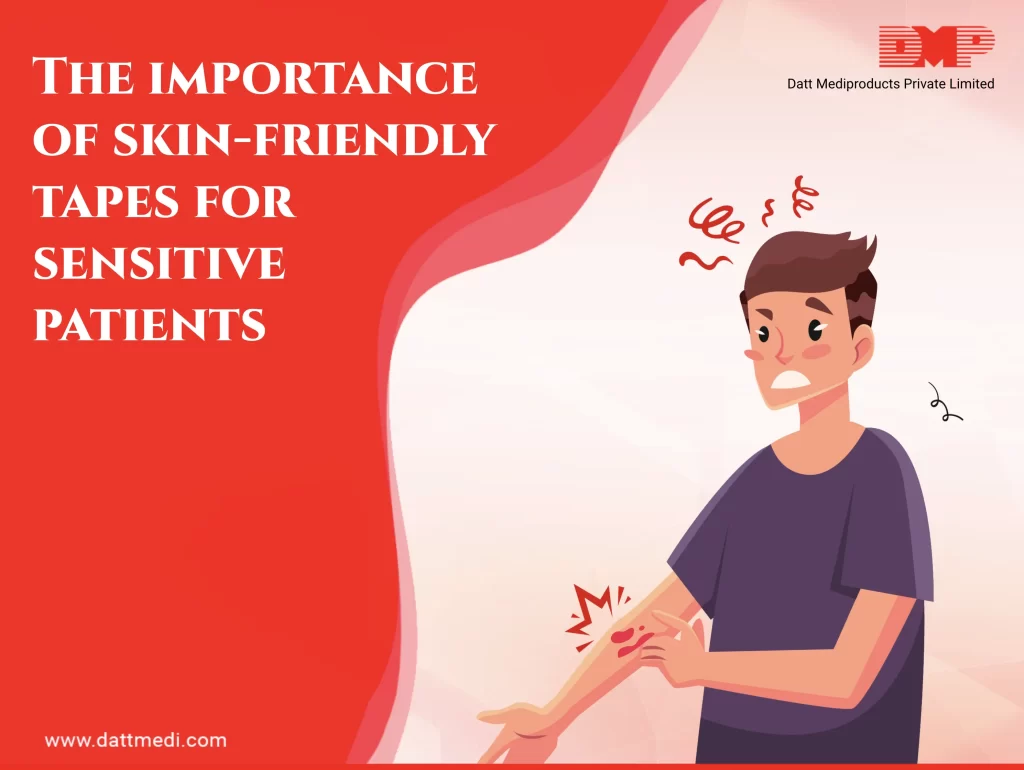
For individuals with delicate or sensitive skin, such as pediatric patients, the elderly, and those with skin conditions, the selection of appropriate tapes can make a significant difference in their comfort and recovery process. This blog will cover the importance of skin-friendly tapes like Minipore™, Velpore™, and Velsilk™ in enhancing patient care and promoting healing.

Understanding the Sensitivity

Sensitive skin can be a result of various factors, such as age, skin conditions, or prolonged exposure to medical treatments. Patients undergoing chemotherapy, individuals with dermatitis, or those with compromised immune systems require extra care to prevent skin damage. Traditional medical tapes, while effective in securing medical devices, can sometimes cause irritation, allergic reactions, or damage to fragile skin. This is precisely where the importance of skin-friendly tapes becomes conspicuous

Introducing Minipore™, Velpore™, and Velsilk™ Tapes

Minipore™, Velpore™, and Velsilk™ are revolutionary medical tapes designed to address the unique needs of sensitive patients. These tapes stand out for their skin-friendly properties and their contribution to patient comfort.

Minipore™:

Minipore™ tape is a hypoallergenic paper tape that offers gentle adhesion, making it suitable for patients with sensitive or fragile skin. It allows for breathability, reducing the risk of skin maceration while securely holding dressings in place.
Read more about products visit https://dattmedi.com/minipore.html

Velpore™:

Velpore™ surgical paper tape possesses hypoallergenic qualities, making it ideal for individuals with sensitive skin or allergies. Its gentle nature ensures it is kind to the skin. The microporous structure of Velpore enables exceptional breathability, facilitating airflow and minimizing the likelihood of maceration.This tape is frequently utilized for securing wound dressings, delivering dependable fixation while enabling freedom of movement and flexibility. Its mild adhesive properties allow for painless and damage-free removal from the skin.
Read more about products visit https://www.dattmedi.com/velpore.html

Velsilk™:

Velsilk™ tape is a silk-like cloth tape that combines excellent adhesion with gentle removal. It adheres securely to the skin while minimizing discomfort during tape removal. It is particularly useful in situations where frequent dressing changes are required, as it allows for easy application and removal.
Read more about products visit https://www.dattmedi.com/velsilk.html

Advantages of Skin-Friendly Tapes

The importance of using skin-friendly tapes like Minipore™, Velpore™, and Velsilk™ cannot be overstated. Here are some key advantages they offer:

  • Reduced Skin Irritation: The hypoallergenic adhesive and soft materials minimize the risk of skin irritation or allergic reactions, promoting patient comfort during the healing process.
  • Enhanced Healing: Breathable materials enable proper air circulation around wounds, supporting the body’s natural healing mechanisms.
  • Painless Removal: The gentle adhesive used in these tapes ensures painless removal, reducing the potential for skin trauma.
  • Versatility: Skin-friendly tapes are versatile in their applications, suitable for various medical scenarios, from wound dressings to tubing fixation.
  • Patient Confidence: Patients experience enhanced comfort and security, which can have a positive impact on their overall well-being and recovery.

When it comes to healthcare, the focus should always be on patient well-being and comfort. The use of skin-friendly tapes like Minipore™, Velpore™, and Velsilk™ exemplifies this commitment. These tapes not only provide reliable adhesion for medical devices but also prioritize patient comfort and skin health

Logo

Datt Mediproducts Private Limited

Loading