

Search by Blog
Read by Category

Your healing journey continues beyond this blog

Find the right products for better recovery at online store
Cart Image
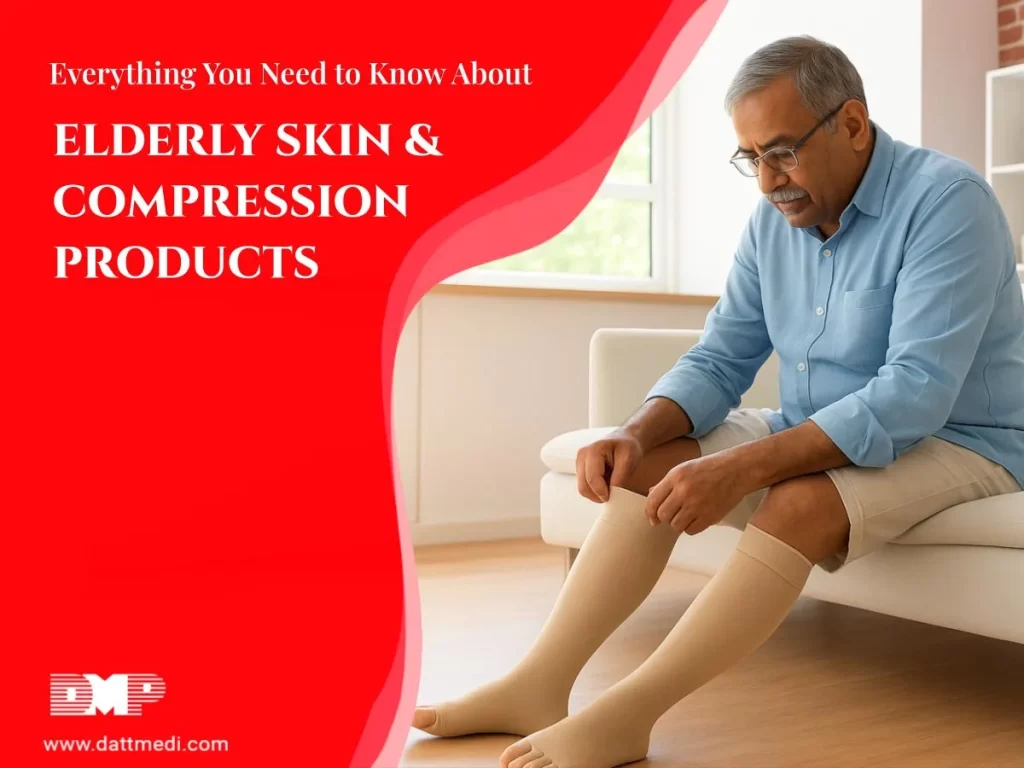
Elderly patient wearing soft compression stocking

Compression can be safe for some older adults with fragile skin, but the right product, pressure and fit matter. If circulation is reduced or the skin is extremely fragile, a healthcare professional should assess the leg before compression is used.

As we age, skin becomes thinner, drier and less elastic. This can make it easier to bruise, tear or become irritated from pressure and friction. That does not automatically mean compression must be avoided. It means the garment or bandage needs to be selected, applied and monitored carefully.

This blog explains how compression stockings and bandages differ, what to look for when skin is fragile, how to use compression more safely, and which warning signs mean you should stop and seek medical advice. 

Why Does Aging Skin Need Extra Care with Compression?

Older skin is more vulnerable to pressure, friction and skin damage, so fit and application become especially important.

Common changes in aging skin include:

  • Thinner skin
  • Reduced elasticity
  • Increased dryness
  • Greater tendency to bruise
  • Higher risk of skin tears
  • Slower recovery from skin damage
A compression garment that fits incorrectly or is applied roughly 
can create unnecessary pressure or friction. Regular skin checks
are therefore particularly important for older adults.

Are Compression Stockings or Bandages Better for Fragile Skin?

Neither option is automatically better. The choice depends on the person’s skin condition, swelling, limb shape, dexterity and the type of compression required.

FactorCompression StockingsCompression Bandages
PressureDesigned to provide a defined level of compressionDepends on the bandage system and application
FitRequires accurate measurementCan be adjusted around the limb
ApplicationMay be difficult for people with limited hand strength or mobilityOften requires correct wrapping technique
SwellingUseful when the limb can be fitted appropriatelyCan be useful when limb size changes
Fragile skinNeeds careful application to avoid pulling or frictionRequires careful wrapping without excessive pressure or folds

For someone who has difficulty putting on or removing a stocking, assistance or an appropriate application aid may be needed.

Read our guide on 
Compression Bandages vs. Compression Stockings
for a closer comparison.

What Should You Look for in Compression Products for Older Skin?

Accurate sizing, appropriate pressure and a comfortable material are three important considerations when skin is fragile.

1. Accurate fit

A garment that is too tight may create excessive pressure, while one that is too loose may not provide the intended support.

Leg measurements should be taken according to the manufacturer’s instructions. Our guide on Correct Measurement and Fit of Compression Garments explains the process in more detail.

2. Appropriate compression level

The correct compression level depends on the reason for compression, circulation, swelling and the person’s medical condition.

Do not assume that a stronger compression level is better. If someone has peripheral arterial disease, reduced sensation, significant skin problems or other medical conditions, professional assessment is particularly important before compression is used.

NICE recommends assessment for peripheral arterial disease when compression hosiery is being considered.

3. Skin-friendly material

Look for material that feels comfortable against the skin and does not create unnecessary rubbing or moisture build-up.

The garment should also sit smoothly against the leg rather than bunching into folds.

What Are the Risks of Incorrect Compression?

Poor fit, excessive pressure, wrinkles or rough application can contribute to skin irritation, pressure damage or circulation problems.

Possible problems include:

  • Redness or irritation
  • Pressure marks
  • Bruising
  • Skin tears
  • Blisters
  • Skin breakdown
  • Numbness or tingling
  • Reduced circulation when compression is inappropriate

The risk is particularly important when the person has reduced sensation and may not notice pressure or discomfort immediately.

How Can Older Adults Use Compression More Safely?

Apply compression gently, avoid wrinkles, check the skin regularly and follow the recommended wear instructions.

1. Apply it gently

Avoid pulling aggressively on fragile skin. Gloves or suitable donning aids may make application easier and reduce unnecessary friction.

2. Keep the skin moisturised

Dry skin can be more vulnerable to cracking and irritation. A suitable fragrance-free moisturiser can help maintain the skin barrier.

Allow moisturiser to absorb before applying compression, and follow the garment manufacturer’s care instructions.

3. Remove wrinkles and folds

Wrinkles can create concentrated areas of pressure.

After applying the garment or bandage, check that it sits smoothly and does not form tight folds.

4. Check the skin every day

Pay particular attention to:

  • Ankles
  • Heels
  • Shins
  • Toes
  • Behind the knees
  • Areas over bony prominences

Look for new redness, bruising, blisters, swelling or skin damage.

5. Follow professional advice on wear time

There is no single wear schedule that is right for everyone. Follow the instructions provided for the specific condition, product and compression level.

When Should Compression Be Avoided or Professionally Assessed?

People with circulation problems, reduced sensation, significant skin damage or certain heart conditions should receive professional advice before using compression.

Extra assessment may be needed when there is:

  • Known or suspected peripheral arterial disease
  • Significant loss of sensation or peripheral neuropathy
  • Very fragile or damaged skin
  • Open wounds or active skin infection
  • Significant or unexplained swelling
  • Heart failure or other significant cardiac conditions
  • A leg shape that makes correct fitting difficult
NICE notes that strong compression can affect arterial blood supply in people with peripheral arterial disease, which is why circulation assessment matters before compression is prescribed.

For people with venous leg ulcers, evidence reviewed by Cochrane indicates that compression can improve healing compared with no compression, although the evidence around adverse effects is less certain.

What Warning Signs Mean Compression Should Come Off?

Stop and seek medical advice if compression causes new or worsening symptoms such as significant pain, numbness, marked colour change, cold toes, blistering or skin damage.

Remove the garment or seek urgent medical assessment if you notice:

  • New numbness or tingling
  • Significant or increasing pain
  • Toes becoming unusually cold, pale or blue
  • New blisters or skin tears
  • Rapidly worsening swelling
  • Skin becoming damaged beneath the garment

Sudden one-sided leg swelling, pain, warmth or redness also needs prompt medical assessment because these symptoms can have causes that require urgent treatment, including a possible blood clot.

Do not simply increase or decrease compression yourself when symptoms appear. Get professional advice about the cause and the appropriate level of support.

Can Compression Help Older Adults with Swelling?

Compression can help manage certain types of leg swelling, particularly when swelling is related to venous or lymphatic problems, but the cause of swelling should be considered first.

Compression is not appropriate for every type of swelling.

If swelling is new, sudden, one-sided or accompanied by pain, warmth or redness, medical assessment is more important than simply applying compression.

For more information about how compression is used in wound care, 
Read our guide to Compression Therapy in Wound Healing.

Supporting Older Skin While Using Compression

Compression does not have to mean compromising skin comfort.

For older adults with fragile skin, the focus should be on:

  • Correct measurement
  • Appropriate compression
  • Gentle application
  • Smooth, wrinkle-free positioning
  • Regular skin checks
  • Professional assessment when medical conditions are present

When these factors are considered, compression can be used appropriately as part of care for some older adults.

For everyday venous support, explore Velcare® Varicose Vein Compression Stockings. For adjustable compression support, explore the DMP Compression Bandage range.
Related Reading

Visit www.dattmedi.com for more infomation.
Share:

Frequnently Asked Questions

Some older adults can use compression stockings safely, but fragile skin requires careful fitting, gentle application and regular skin checks. Professional assessment is particularly important when circulation, sensation or skin integrity is affected.

There is no single compression level that is appropriate for every older adult. The correct level depends on the reason for compression, circulation, swelling, skin condition and other medical factors.

They can contribute to skin damage if they are poorly fitted, applied roughly, or create excessive pressure or friction. Gentle application, correct sizing and regular skin inspection can help reduce the risk.

Not necessarily. Bandages and stockings have different advantages, and the appropriate choice depends on the person’s swelling, skin condition, limb shape, ability to apply the product and required compression.

Not automatically. Wear time depends on the person’s condition, the type of compression and the instructions provided by their healthcare professional or product guidance.

Recent Blogs
Venous Health and Compression Therapy

Understanding Venous Insufficiency: The Role of Compression in Managing Symptoms

World Heart Day, observed annually on September 29, focuses on promoting cardiovascular health worldwide. An essential but often overlooked aspect of cardiovascular wellness is venous health, which plays a critical role in overall circulation and mobility. 

Compression therapy has emerged as a cornerstone in managing venous insufficiency and related disorders, offering effective support for improved circulation and symptom relief.

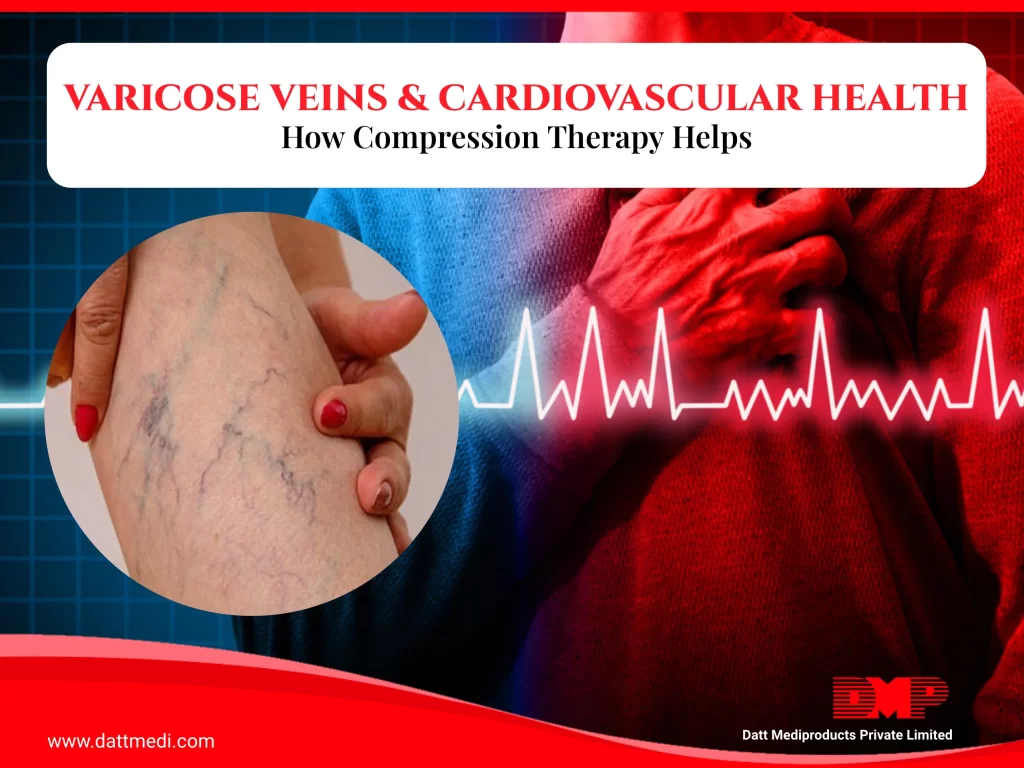
Understanding Venous Insufficiency and Varicose Veins

1. Venous Insufficiency:

This condition arises when the veins, especially in the lower limbs, fail to efficiently return blood to the heart. It results in blood pooling, leading to symptoms such as leg swelling, heaviness, pain, and fatigue. Normally one-way valves or muscles pump blood back to the hear, but in venous insufficiency the valves are weakened or damaged causing blood to flow backwards or pool in the legs.

2. Varicose Veins:

This is one of the by products of venous insufficiency. Caused by weakened vein walls and malfunctioning valves, varicose veins are dilated, twisted veins visible under the skin surface. These can cause discomfort, skin changes, and increase the risk of ulcers if left unmanaged.

Role of Compression Therapy in Venous Health

Compression therapy applies controlled, graduated pressure to the legs, enhancing venous return by supporting vein walls and valves. This mechanical assistance:

  • Improves blood flow velocity
  • Reduces venous pressure and pooling
  • Minimizes edema (swelling) and associated discomfort and pain
  • Improves micro circulation in tiny blood vessels which is crucial for tissue oxygenation and healing 

Benefits of Compression Therapy for Cardiovascular Health

  • Enhanced Circulation: Promotes efficient blood return to the heart, thereby reducing risks of deep vein thrombosis (DVT) and venous stasis.
  • Symptom Management: Compression alleviates pain, swelling, and skin changes, improving patient mobility and quality of life.
  • Post-Surgical Recovery: Compression therapy accelerates healing after vein surgery or injury by controlling inflammation and supporting tissue repair.

Scientific Backing and Clinical Guidelines

Multiple clinical studies and guidelines from vascular health authorities endorse the use of compression therapy as a first-line, evidence-based treatment for venous insufficiency and related conditions. 

Compression products that deliver consistent and graduated pressure are shown to significantly reduce recurrence rates of venous ulcers and improve functional outcomes.

How DMP Supports Your Venous Care Needs

At DMP, we provide a comprehensive portfolio of premium compression therapy products tailored to address diverse clinical requirements and patient needs. Our offerings are designed to support effective venous health management with a focus on comfort, durability, and therapeutic efficacy.

Velcare® Varicose Vein Stocking:

Engineered for superior comfort and long-lasting durability, these stockings are available in multiple compression classes to suit varying degrees of venous insufficiency and post-operative care. Velcare® is ideal for daily use, providing reliable support to alleviate symptoms associated with chronic venous conditions.

Velkomp® Compression Bandage:

Designed to deliver firm, adjustable compression, Velkomp® is recommended for managing post-injury recovery and chronic venous disorders. These inelastic, non-stretch bandages offer higher compression levels essential for controlling edema and supporting healing in cases of venous ulcers and lymphedema.

All our products are manufactured under strict quality controls and comply with international standards, including ISO 13485 and CE certification, ensuring consistent safety, reliability, and clinical effectiveness.

Venous health plays a pivotal role in overall cardiovascular wellness, making effective management essential to prevent complications and enhance quality of life. 

Incorporating compression therapy into patient care protocols is a proven strategy that delivers measurable benefits, from symptom relief to accelerated recovery.

On this World Heart Day, we reaffirm our commitment to supporting healthcare professionals and patients with advanced compression solutions that align with the highest standards of care. 

Early intervention and sustained management with DMP’s trusted products can significantly improve venous circulation and long-term cardiovascular health outcomes.

The Role of Compression Therapy

Compression Therapy: A Key Trend in Modern Wellness Routines

In today’s evolving wellness landscape, compression therapy has become a trusted and evidence-based practice. From elite athletes and healthcare professionals to individuals managing chronic conditions or sedentary lifestyles, compression products are now integral to modern self-care.

By improving circulation, reducing swelling, and supporting muscle health, compression therapy blends medical efficacy with everyday wellness—making it more accessible and beneficial than ever before.

1. Compression Therapy and Athletic Performance

Athletes across all disciplines are increasingly using compression therapy to improve outcomes on and off the field.

Improved Blood Flow:

Graduated compression supports venous return, helping muscles function more efficiently during strenuous activity.

Reduced Muscle Strain:

Aids in clearing metabolic waste like lactic acid, limiting inflammation and easing post-exercise soreness.

Enhanced Recovery Window:

Promotes faster readiness between training sessions by minimizing strain and supporting tissue repair.

Today, compression garments and wraps are a standard part of professional sports recovery protocols.

2. Compression Therapy in Injury Prevention and Healing

Whether after a sprain, strain, or surgery, compression therapy plays a vital role in musculoskeletal support.

  • Controls Swelling (Edema): Facilitates lymphatic drainage from muscles & surrounding tissues, minimizing fluid build-up, inflammation and discomfort.
  • Provides Stability: Delivers targeted pressure to support ligaments and muscles during healing.
  • Boosts Oxygen Delivery: Improves nutrient supply and waste removal at the affected site, aiding tissue regeneration and reducing strain & fatigue.
This makes compression an essential component of post-surgical care, orthopedic treatment plans, and rehabilitation.

3. Daily Health and Wellness Benefits

Compression is not limited to sports or medical recovery—it supports everyday health and preventive care.

  • Reduces Leg Tiredness:
    Particularly helpful for professionals like nurses, teachers, and frequent travelers who spend long hours standing or sitting.
  • Manages Varicose Veins & Chronic Venous Insufficiency (CVI):
    By applying gentle graduated pressure, compression stockings prevent blood from pooling in the veins, reducing discomfort, heaviness, and swelling in the legs.
  • Supports Circulation in Sedentary Lifestyles:
    Maintains healthy blood flow in lower extremities during prolonged immobility, reducing the risk of complications linked to poor venous return.
Modern compression stockings and bandages provide discreet, all-day support for busy routines.

4. DMP’s Trusted Compression Solutions

At Datt Mediproducts, we deliver high-performance compression solutions tailored to diverse needs:

Velkomp® Compression Bandage:

  • Adjustable pressure for injury management and swelling control
  • Ideal for sports recovery, post-operative support, and general care

Velcare® Varicose Vein Stocking:

  • Promotes circulation in the lower limbs
  • Recommended for daily use by professionals and patients with venous disorders

👉 If you’re curious : Click Here to Explore our full range of compression products

5. Integrating Compression into Wellness Routines

Wellness goes beyond fitness—it’s about balance and consistency. Compression can be seamlessly included into everyday life:

  • During or after workouts for improved performance and recovery
  • At work or during travel to limit swelling and discomfort
  • Alongside hydration, stretching, and nutrition to strengthen overall health outcomes

6. Backed by Science

Clinical evidence highlights that compression therapy:

  • Enhances venous return and reduces pooling in extremities
  • Supports healing in post-operative and trauma cases
  • Improves endurance and physical comfort when used consistently

7. Comfort and Modern Design

Today’s compression products are designed with convenience in mind:

  • Lightweight, breathable, and skin-friendly materials
  • Easy to wear discreetly under clothing
  • Simple to maintain for daily and long-term use
Far from the bulky models of the past, modern solutions combine medical effectiveness with everyday wearability.

8. The Future of Compression in Health & Wellness

Compression therapy is expanding beyond hospitals to become a lifestyle choice. Innovations on the horizon include:

  • Smart wearables that adjust pressure in real time
  • Sustainable fabrics and user-focused designs for improved comfort
Compression is no longer just a medical necessity—it’s a proactive wellness essential.

Whether you’re an athlete, recovering from an injury, or seeking to improve circulation during daily routines, compression therapy provides practical, science-backed support. At Datt Mediproducts, we are proud to offer innovative solutions that address the evolving needs of modern consumers.

Logo

Datt Mediproducts Private Limited

Loading
Buy Now Contact Us