A well-fitted compression garment supports movement, reduces swelling, and improves overall comfort during recovery. Even small measurement errors can affect its effectiveness. Whether you are a patient, caregiver, clinician, or distributor, understanding how to measure compression garments correctly ensures safe therapy and reliable results.
Compression garments apply controlled pressure along the limb. The correct size ensures even pressure distribution and therapeutic effectiveness.
Benefits of Proper Fit:
Reduces swelling and discomfort
Improves blood and lymph circulation
Supports healing after injury, surgery, or chronic conditions
Makes daily activities like walking, standing, or sitting more comfortable
Example: Someone managing mild swelling or early varicose veins often feels lighter and more supported when using a properly sized garment, following a reliable compression stocking size guide.
2. Tools You Need for Accurate Measurement
Accurate sizing doesn’t require advanced tools.
You need:
A soft measuring tape
Manufacturer’s compression measurement chart or sizing guide
Notebook or phone to record values
Mirror or assistance for hard-to-reach areas
Good lighting for accurate readings
These simple tools help follow a medical compression garment sizing guide and reduce measurement errors.
3. Step-by-Step Guide: How to Measure Correctly
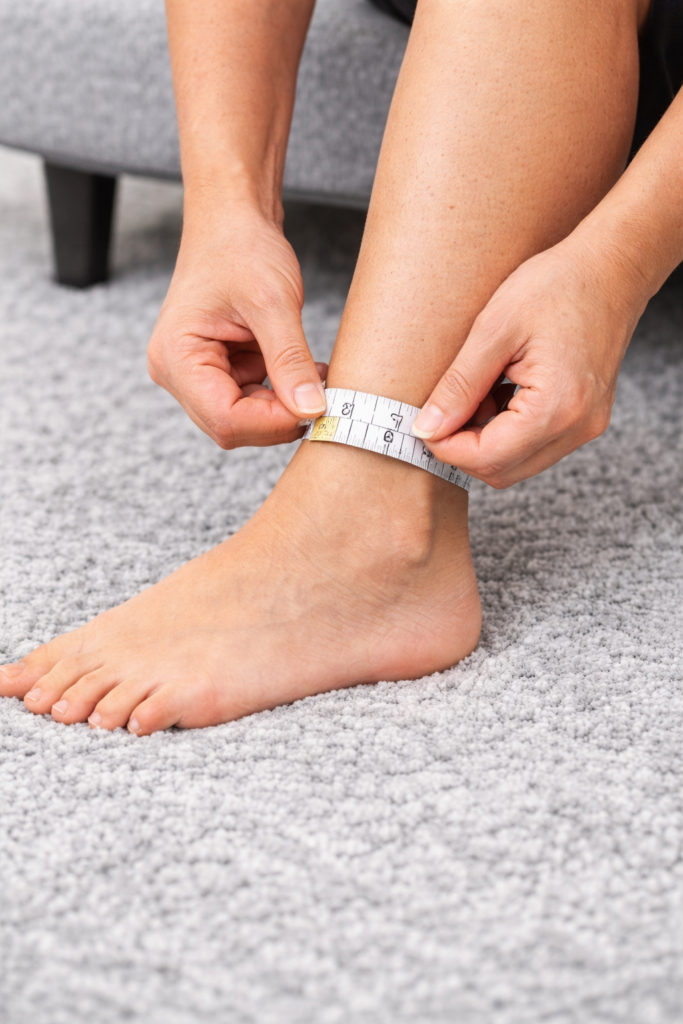
i) Ankle: Measure the narrowest point above the ankle bone.
ii) Calf: Measure the widest part of the calf for proper fit and support, including wide-calf users.
iii) Thigh (for thigh-high garments): Measure the thickest part of the thigh to avoid rolling and ensure secure fit.
Leg Length:
Knee-high: heel to just below the knee crease
Thigh-high: heel to the top of the thigh
iv) Arms (for sleeves/supports): Measure wrist, forearm, upper arm, and arm length. This ensures smooth, even compression from wrist to shoulder.
Quick Tips:
Measure early in the morning when swelling is minimal.
Sit comfortably, keep tape snug, measure twice, and avoid measuring over clothes.
4. Common Fitting Mistakes to Avoid
Too Tight: Can cause numbness, tingling, or deep marks.
Too Loose: Slipping or wrinkling reduces effectiveness.
Incorrect Length: Too short rolls or digs in; too long bunches or slides down.
Not Rechecking: Limb size changes due to swelling, healing, or weight changes—regular measurement is important.
Specialists can confirm the correct compression level and ensure measurements match your condition, especially after surgery or for vascular issues.
Consult if you notice:
Persistent or increasing swelling
Discomfort while wearing the garment
Size falling between two chart options
Post-surgical changes
Conditions like diabetes or vascular disorders
Professional guidance ensures safe and effective therapy, particularly when using compression garments for varicose veins.
Accurate measurements are the foundation of effective compression therapy. Using simple tools, careful technique, and a trusted compression stocking size guide ensures your garment fits comfortably and supports healing. When unsure, consulting a healthcare professional provides confidence and safer results.
Why is accurate measurement important for compression garments?
Correct sizing ensures safe, even pressure along the limb, reduces swelling, improves circulation, and enhances comfort. Referring to a compression measurement chart helps select the most accurate size. Learn more in ourCompression Stockings Collection.
What tools do I need to measure compression garments accurately?
A soft measuring tape and sizing guide are essential. Following a trusted medical compression garment sizing guide ensures precise measurement. Check ourCompression Garment Sizing Guide for reference.
How do I measure my ankle, calf, and thigh for compression stockings correctly?
Measure the narrowest point above the ankle, the widest part of the calf, and the thickest part of the thigh for thigh-high garments. Use a reliable compression stocking size guide like ourCompression Stockings Collection to select the right size.
What are the most common compression garment measurement mistakes to avoid?
Avoid measuring over clothes, pulling the tape too tightly, or using outdated measurements. Measure in the morning when swelling is minimal and refer to a trusted size guide, such as ourCompression Garments for Varicose Veins.
How can I tell if my compression garment fits properly?
A proper fit feels snug but not painful, without rolling, slipping, or causing numbness. Recheck your measurements using ourCompression Stockings Size Chart India if unsure.
Recent Blogs
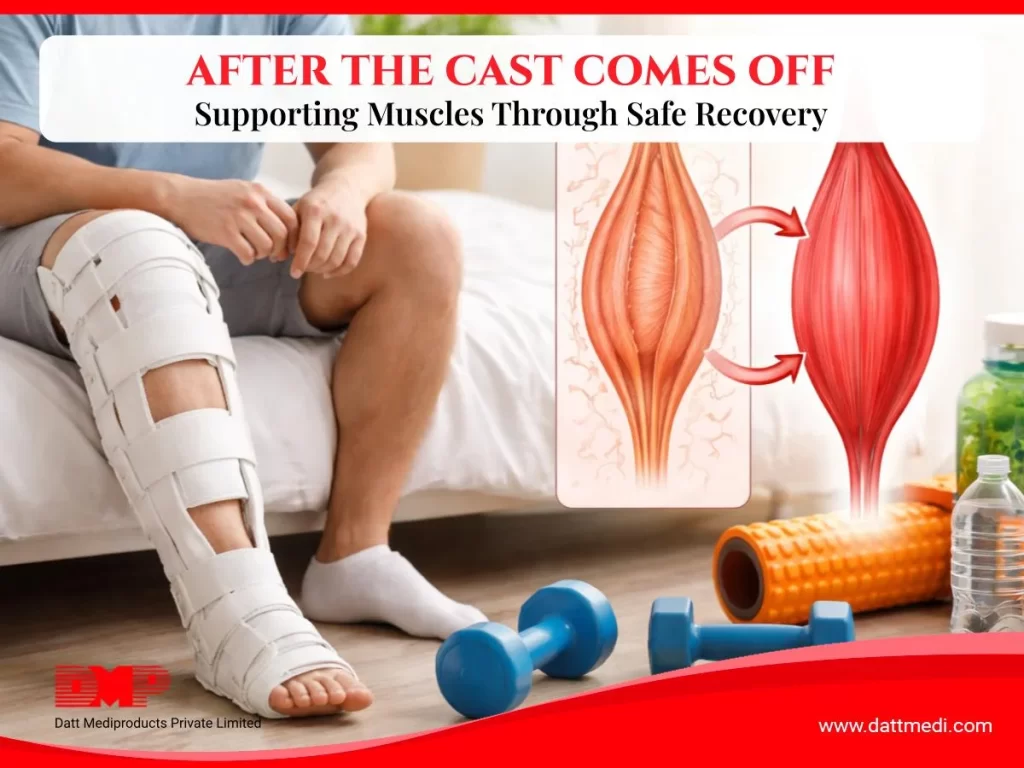
Coming out of a cast, brace, or splint is rarely as straightforward as it looks. The injury may have healed, but the surrounding muscles, joints, and soft tissue have spent weeks in a fixed position with limited activity. What follows is not a return to normal — it is the beginning of a second phase of recovery that requires just as much attention as the first.
This guide covers what actually happens to muscles and joints during immobilization, how to rebuild strength and mobility safely, and which specific orthopedic supports help — matched by body part and stage of recovery.
What immobilization Does to the Body
Muscle reconditioning
Muscles maintain their strength through regular contraction. When a limb is immobilized, the muscles around it stop receiving the mechanical signals they need to stay strong. The result is a measurable loss of muscle mass and endurance — a process called disuse atrophy. Studies show that muscle strength can decline by as much as 3–5% per day in the early stages of immobilization. Even a three-week cast can produce noticeable weakness in the surrounding musculature.
Joint Stiffness and Reduced Range of Motion
Joints rely on movement to stay healthy. Synovial fluid — the lubricant inside joints — circulates through movement. When a joint is held still for weeks, the surrounding capsule and ligaments begin to shorten and stiffen, and the range of motion decreases. Regaining that range requires deliberate, progressive movement — not just returning to normal activity.
Circulation and Swelling
immobilized limbs often develop swelling because the muscle pump that normally drives venous return is inactive. Fluid accumulates in the soft tissue, particularly around the ankle and foot in lower limb immobilization. This swelling can itself delay rehabilitation by limiting movement and causing discomfort.
The Four Phases of Returning to Movement
Phase 1: Protected Range of Motion
Immediately after immobilization ends, the goal is gentle, pain-free movement — not strength. Ankle circles, wrist rotations, finger flexion, and similar small movements reintroduce the joint to its range without stressing the recovering tissue. Movement should stay within a comfortable range and never push into pain.
Phase 2: Circulation and Swelling Control
Before strength can return, swelling needs to reduce. Elevation, gentle movement, and compression where appropriate help manage fluid accumulation. This phase often runs parallel to Phase 1.
Phase 3: Strength Rebuilding
Once range of motion is partly restored and swelling is controlled, progressive resistance exercises can begin. Resistance bands are useful here because they allow graded loading — starting light and increasing gradually without placing sudden stress on healing tissue. Physiotherapy guidance is strongly recommended for this phase.
Phase 4: Functional Reintegration
The final phase returns the person to normal activity — walking, lifting, working, exercising — progressively. Supportive bracing may continue during this phase to provide stability while the muscles are still rebuilding.
The body rebuilds muscle tissue and bone using raw materials from diet. The following nutrients are most directly relevant during post-immobilization recovery:
Protein — essential for muscle repair and rebuilding. Sources include eggs, legumes, dairy, fish, and lean meat. Aim for consistent intake across meals rather than one large serving.
Calcium — supports bone density and structural recovery, particularly relevant after fractures. Dairy products, fortified plant milks, and leafy greens are good sources.
Vitamin D — required for calcium absorption. Many people in India are deficient, particularly those with limited sun exposure. Supplementation is often advisable — check with a doctor.
Collagen precursors (Vitamin C, zinc) — support soft tissue and tendon repair. Found in citrus fruits, berries, nuts, and seeds.
Hydration — adequate water intake supports muscle function, joint lubrication, and circulation during rehabilitation.
Which orthopedic Support to Use — by Body Part and Stage
Supportive braces and sleeves serve two distinct roles during post-immobilization recovery: they protect the recovering joint from excessive or sudden movement, and they provide proprioceptive feedback — helping the nervous system re-learn where the joint is in space. The right product depends on which body part was immobilized and what stage of recovery the person is in.
Supports spinal alignment and shoulder positioning as back and core muscles regain strength
Safe Guidelines for Early Movement
Always Get Clearance First
No exercise or movement programmed should begin without confirmation from the treating clinician or physiotherapist that it is safe to do so. The timeline varies significantly depending on the type of injury, the location, and how healing has progressed.
Start Smaller Than You Think You Need To
The instinct after weeks of immobilization is to move more to make up for lost time. This usually backfires. Muscles and tendons that have been inactive are more vulnerable to strain, and joint tissue is still adapting. Small, controlled movements performed consistently will restore strength faster than pushing into discomfort.
Pain Is a Signal, Not an Obstacle
Discomfort from stiffness is expected and normal. Sharp or worsening pain during exercise is not. If a movement causes significant pain, stop, and raise it with a healthcare professional before continuing.
Use Supports Correctly
A brace or support is most effective when sized and positioned correctly. An ill-fitting support — too loose or too tight — can create pressure points, restrict circulation, or provide false confidence that leads to overexertion. Follow sizing guidance for each product, and if in doubt, seek fitting advice.
When to See a Physiotherapist
Physiotherapy is not just for serious injuries. A physiotherapist can assess the specific degree of muscle weakness and joint restriction after immobilization, design a graduated programmed matched to the person’s actual capacity, and identify any complications — such as tendon tightness, abnormal movement patterns, or persistent swelling — that need addressing before progressing.
The end of immobilization marks the beginning of rebuilding — not the end of recovery. Muscle reconditioning, joint stiffness, and residual swelling are normal consequences of keeping a limb still, and all of them respond well to progressive, consistent rehabilitation.
The right orthopedic support — matched to the body part, the stage of recovery, and the level of activity — makes that process safer and more manageable. Browse the full Datt Mediproducts orthopedic range to find the support that fits your recovery.
If your legs feel heavy, tight, or visibly swollen by the end of a long shift, you are not imagining it. Prolonged standing is one of the most common drivers of leg swelling in working adults — and it affects people in healthcare, retail, hospitality, manufacturing, teaching, and any other profession that keeps them on their feet for hours at a time.
This guide explains the underlying mechanism, the factors that make some people more susceptible than others, and what actually works to manage and prevent the problem — including when medical-grade compression stockings are the right tool.
What Actually Causes Leg Swelling When You Stand
The heart pumps blood downward through arteries with little effort. Getting it back up through the veins — against gravity — is a much harder job.
The body relies on three mechanisms to do this:
Venous valves that prevent flowing backward
The rhythmic contraction of calf and leg muscles that squeeze blood upward
The elastic recoil of the vein walls themselves.
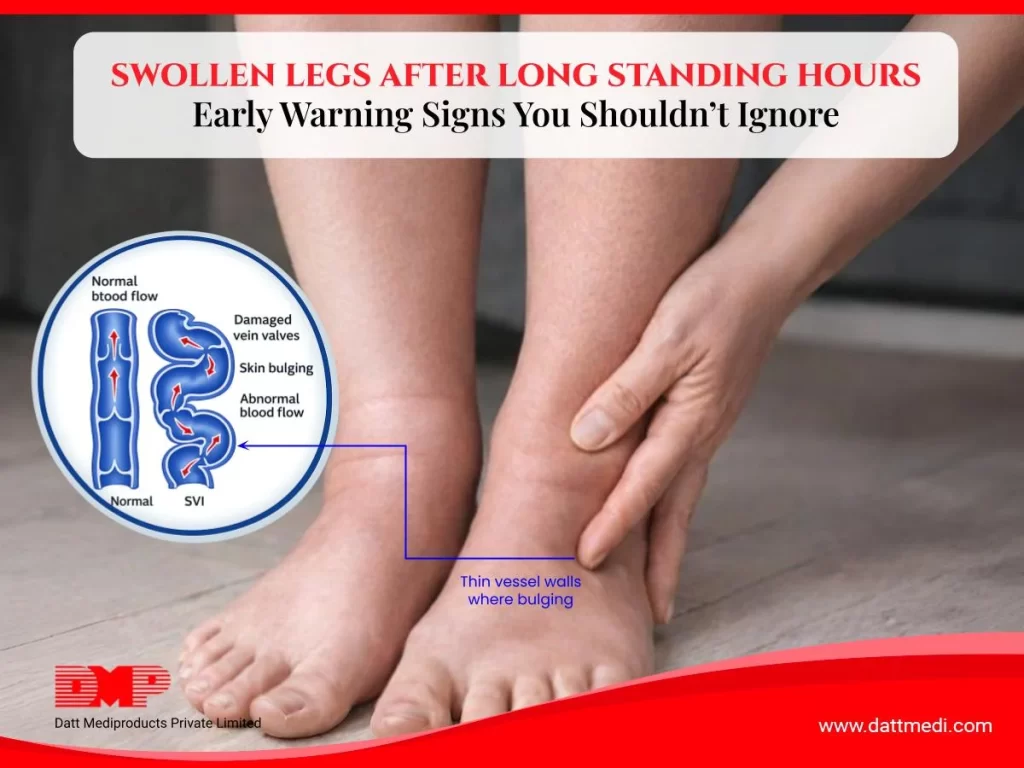
When you stand still for extended periods, the second mechanism — the muscle pump — largely switches off. Blood moves sluggishly in the lower leg veins, pressure builds, and fluid begins leaking through the vein walls into the surrounding tissue. This is venous pooling, and the visible result is swelling around the ankles and lower legs.
The swelling is typically worse at the end of the day and improves after lying down or elevating the legs, because horizontal positioning removes gravity from the equation. This pattern — worsening through the day, improving with rest — is the clearest indicator that prolonged standing is the primary cause.
Why Some People Swell More Than Others
1. Venous Valve Insufficiency
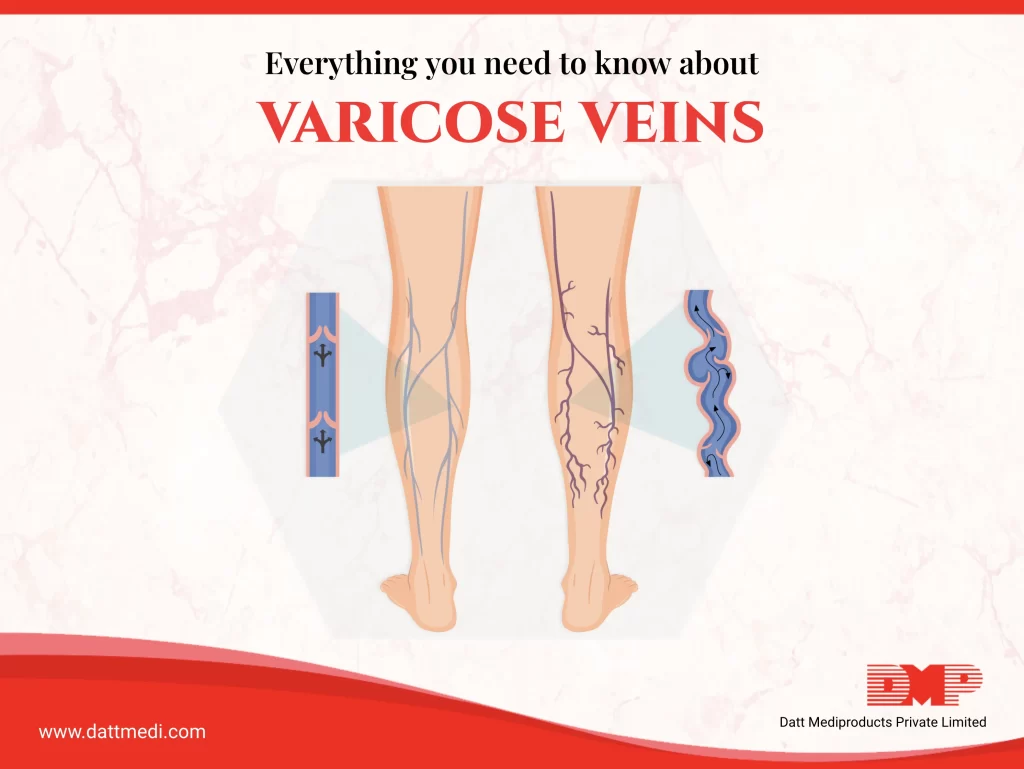
Healthy veins contain one-way valves that prevent blood from flowing back toward the feet between heartbeats. In some people, these valves weaken or become leaky — a condition called chronic venous insufficiency. When this happens, blood pools more easily, swelling occurs faster, and visible varicose veins may develop over time. People with venous insufficiency are significantly more affected by prolonged standing than those with healthy valve function.
2. Varicose Veins
Varicose veins are enlarged, twisted veins that have lost their structural integrity. They are a direct consequence of venous valve failure and represent a more advanced stage of venous disease. Standing for long periods accelerates the pooling in these vessels and worsens both swelling and the aching, heaviness, and fatigue that accompany it.
Higher body weight places increased pressure on the venous system in the legs. Reduced physical fitness means the leg muscles — which are the primary pump for venous return — are less effective. Both factors increase susceptibility to standing-related swelling.
4. Occupation and Daily Pattern
The duration of unbroken standing matters more than total standing time. Someone who stands for eight hours but walks between tasks frequently will experience less pooling than someone who stands relatively still at a counter or workstation. The absence of walking breaks is a key risk factor.
When Swelling Needs Medical Attention
Swelling that follows the pattern described above — building through the day, resolving overnight — is generally benign and related to venous pooling. However, some patterns warrant prompt medical evaluation:
Swelling that is sudden, severe, or in one leg only — may indicate deep vein thrombosis (DVT)
Swelling accompanied by redness, warmth, or skin changes — may suggest infection or phlebitis
Swelling that does not improve after a full night’s rest
Swelling with associated chest pain, breathlessness, or palpitations — seek emergency care
Swelling in the context of heart, kidney, or liver conditions
If any of these apply, see a healthcare professional before starting any compression therapy.
Practical Measures That Reduce Standing-Related Swelling
Movement Breaks
Walking — even for two to three minutes per hour — reactivates the calf muscle pump and significantly reduces venous pooling. If walking is not possible, calf raises, foot circles, and toe pumps performed in place have a similar effect. The goal is to avoid completely static standing for long unbroken periods.
Leg Elevation After Work
Elevating the legs above heart level for 15–20 minutes after a long shift allows gravity to assist venous and lymphatic drainage. This is one of the most effective ways to accelerate overnight recovery and reduce residual swelling the next morning.
Footwear
Shoes with cushioned soles and low heels support natural foot movement and reduce fatigue. Tight footwear compresses the foot and can restrict venous return. Flat shoes without arch support reduce calf engagement during walking, which reduces the efficiency of the muscle pump.
Medical-Grade Compression Stockings
Compression stockings are the most evidence-supported intervention for managing venous pooling during prolonged standing. Unlike general support hosiery, medical-grade stockings apply graduated compression — highest at the ankle, reducing toward the knee or thigh — which mechanically assists venous return and prevents fluid from leaking into surrounding tissues.
Velcare® Varicose Vein Medical Compression Stockings
The Velcare® range from Datt Mediproducts is a medical-grade compression stocking designed specifically for venous conditions, including swelling from prolonged standing, phlebitis, varicose veins, venous insufficiency, oedema, deep vein thrombosis management, and post-surgical recovery.
Key specifications:
Class 2 compression: 23–32 mmHg — the clinical standard for moderate-to-severe venous conditions
Graduated compression: pressure is highest at the ankle and reduces toward the top of the stocking, actively assisting upward blood flow
70% Nylon, 30% Spandex: breathable, latex-free, and suitable for daily extended wear
Four-way stretchability: conforms to the leg without restricting movement
Soft construction: designed for comfort during long work hours
Available in S, M, L, XL
The Velcare® range is available in three styles to suit different clinical needs and preferences:
Style
Coverage
Best For
Open Toe, A-D (no silicone band)
Ankle to knee
Everyday leg swelling from standing; those who prefer open toe for breathability or foot conditions
Open Toe, A-D with Silicone Band
Ankle to knee
Users who need the stocking to stay in place securely without rolling down during a long shift
Open Toe, A-G with Silicone Band
Ankle to groin
More extensive venous conditions, post-surgical recovery, or where thigh-high coverage is clinically indicated
How to Use Compression Stockings Effectively
Put Them On Before Getting Up
Compression stockings work best when applied before venous pooling begins. Put them on in the morning before standing up, while the legs are still at their least swollen. Applying them after standing for an hour is significantly less effective.
Wear Through the Working Day
Keep the stockings on throughout the shift. Removing them mid-day and then reapplying is less effective than continuous wear during standing hours.
Remove in the Evening
Once you are off your feet and resting, the stockings can be removed. Compression is needed during the periods of venous stress — standing and walking — not during rest.
Sizing Matters
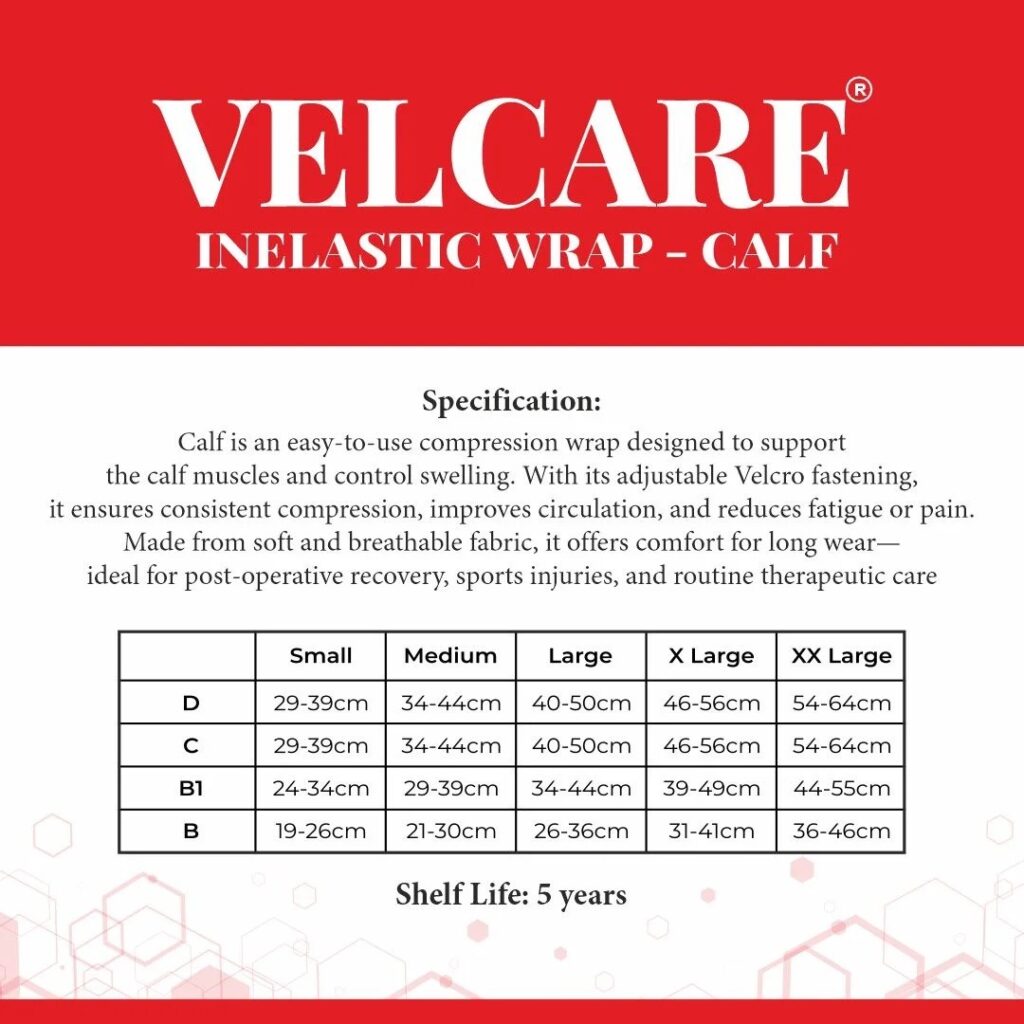
An incorrectly sized stocking — too loose or too tight — will not deliver the intended compression level. Measure ankle and calf circumference, and refer to the Velcare® sizing guide before ordering. When in doubt, consult a healthcare professional or pharmacist for fitting guidance.
Care and Longevity
Medical compression stockings should be washed regularly — typically after each wear — in cool water with gentle detergent. Air dry rather than tumble dry to preserve the elastic fibres. Most compression stockings require replacement every 4–6 months with regular daily use, as the elasticity gradually reduces.
Managing Leg Health Is a Daily Habit
Standing-related leg swelling is a physical consequence of how blood moves — or stops moving — during long hours on your feet. It is not inevitable. Movement breaks, appropriate footwear, evening elevation, and the right compression support together make a significant and measurable difference.
For people with varicose veins, venous insufficiency, or a job that keeps them standing for the majority of their working day, medical-grade graduated compression stockings are the most clinically supported intervention available. The Velcare® Varicose Vein Compression Stocking range is designed for exactly this context — durable, breathable, and calibrated to the compression level that delivers real results.