

Search by Blog
Read by Category

Your healing journey continues beyond this blog

Find the right products for better recovery at online store
Cart Image
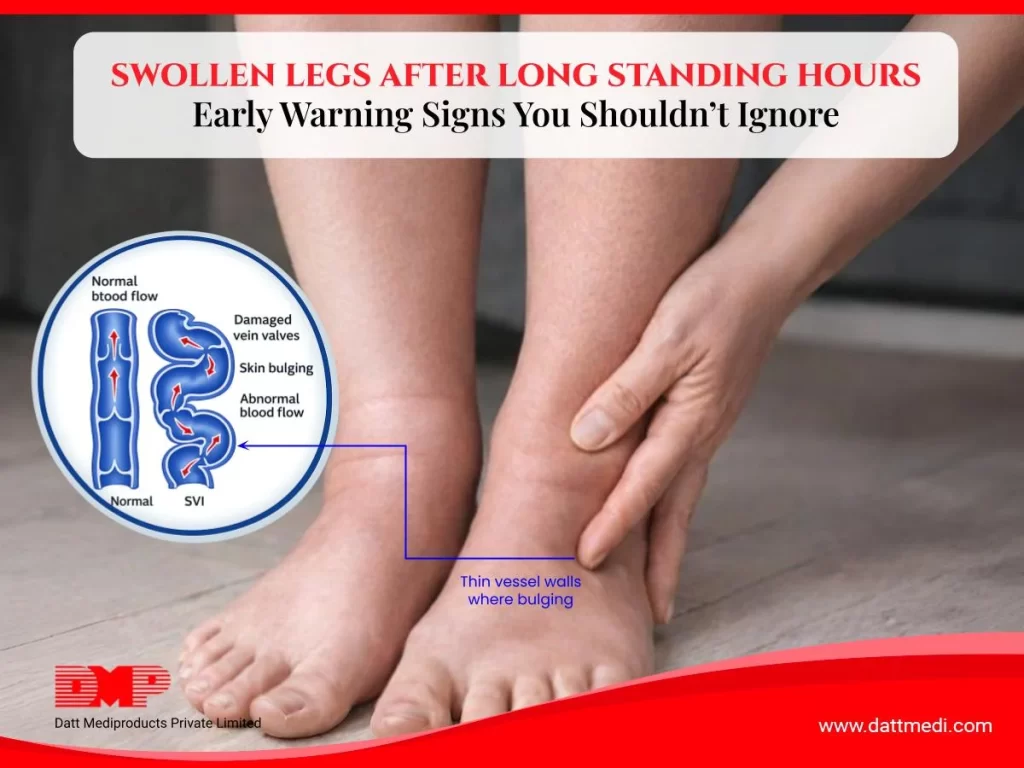
Leg Swelling after prolonged standing due to fluid retention

If your legs feel heavy, tight, or visibly swollen by the end of a long shift, you are not imagining it. Prolonged standing is one of the most common drivers of leg swelling in working adults — and it affects people in healthcare, retail, hospitality, manufacturing, teaching, and any other profession that keeps them on their feet for hours at a time.

This guide explains the underlying mechanism, the factors that make some people more susceptible than others, and what actually works to manage and prevent the problem — including when medical-grade compression stockings are the right tool.

What Actually Causes Leg Swelling When You Stand

The heart pumps blood downward through arteries with little effort. Getting it back up through the veins — against gravity — is a much harder job. 

The body relies on three mechanisms to do this: 

  • Venous valves that prevent flowing backward
  • The rhythmic contraction of calf and leg muscles that squeeze blood upward
  • The elastic recoil of the vein walls themselves.

When you stand still for extended periods, the second mechanism — the muscle pump — largely switches off. Blood moves sluggishly in the lower leg veins, pressure builds, and fluid begins leaking through the vein walls into the surrounding tissue. This is venous pooling, and the visible result is swelling around the ankles and lower legs.

The swelling is typically worse at the end of the day and improves after lying down or elevating the legs, because horizontal positioning removes gravity from the equation. This pattern — worsening through the day, improving with rest — is the clearest indicator that prolonged standing is the primary cause.

Why Some People Swell More Than Others

1. Venous Valve Insufficiency

Healthy veins contain one-way valves that prevent blood from flowing back toward the feet between heartbeats. In some people, these valves weaken or become leaky — a condition called chronic venous insufficiency. When this happens, blood pools more easily, swelling occurs faster, and visible varicose veins may develop over time. People with venous insufficiency are significantly more affected by prolonged standing than those with healthy valve function.

2. Varicose Veins

Varicose veins are enlarged, twisted veins that have lost their structural integrity. They are a direct consequence of venous valve failure and represent a more advanced stage of venous disease. Standing for long periods accelerates the pooling in these vessels and worsens both swelling and the aching, heaviness, and fatigue that accompany it.
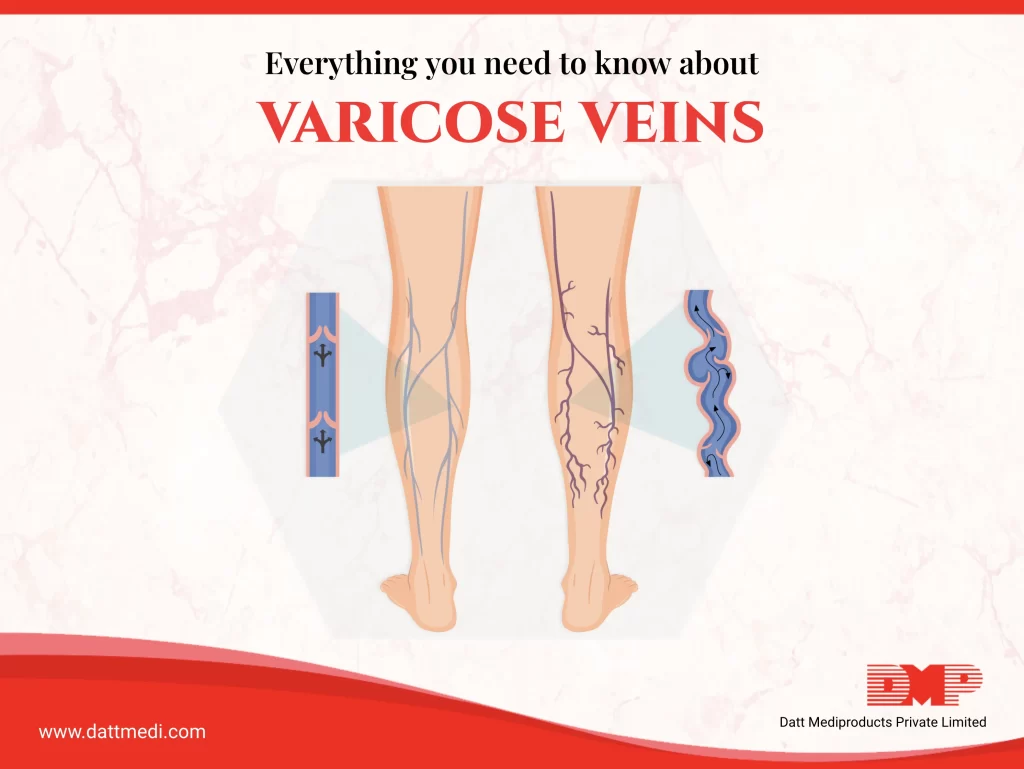
Related reading: The Ultimate Guide to Understanding Varicose Veins

3. Body Weight and Physical Conditioning

Higher body weight places increased pressure on the venous system in the legs. Reduced physical fitness means the leg muscles — which are the primary pump for venous return — are less effective. Both factors increase susceptibility to standing-related swelling.

4. Occupation and Daily Pattern

The duration of unbroken standing matters more than total standing time. Someone who stands for eight hours but walks between tasks frequently will experience less pooling than someone who stands relatively still at a counter or workstation. The absence of walking breaks is a key risk factor.

When Swelling Needs Medical Attention

Swelling that follows the pattern described above — building through the day, resolving overnight — is generally benign and related to venous pooling. However, some patterns warrant prompt medical evaluation:

  • Swelling that is sudden, severe, or in one leg only — may indicate deep vein thrombosis (DVT)
  • Swelling accompanied by redness, warmth, or skin changes — may suggest infection or phlebitis
  • Swelling that does not improve after a full night’s rest
  • Swelling with associated chest pain, breathlessness, or palpitations — seek emergency care
  • Swelling in the context of heart, kidney, or liver conditions
If any of these apply, see a healthcare professional before starting any compression therapy.

Practical Measures That Reduce Standing-Related Swelling

Movement Breaks

Walking — even for two to three minutes per hour — reactivates the calf muscle pump and significantly reduces venous pooling. If walking is not possible, calf raises, foot circles, and toe pumps performed in place have a similar effect. The goal is to avoid completely static standing for long unbroken periods.

Leg Elevation After Work

Elevating the legs above heart level for 15–20 minutes after a long shift allows gravity to assist venous and lymphatic drainage. This is one of the most effective ways to accelerate overnight recovery and reduce residual swelling the next morning.

Footwear

Shoes with cushioned soles and low heels support natural foot movement and reduce fatigue. Tight footwear compresses the foot and can restrict venous return. Flat shoes without arch support reduce calf engagement during walking, which reduces the efficiency of the muscle pump.

Medical-Grade Compression Stockings

Compression stockings are the most evidence-supported intervention for managing venous pooling during prolonged standing. Unlike general support hosiery, medical-grade stockings apply graduated compression — highest at the ankle, reducing toward the knee or thigh — which mechanically assists venous return and prevents fluid from leaking into surrounding tissues.

Velcare® Varicose Vein Medical Compression Stockings

The Velcare® range from Datt Mediproducts is a medical-grade compression stocking designed specifically for venous conditions, including swelling from prolonged standing, phlebitis, varicose veins, venous insufficiency, oedema, deep vein thrombosis management, and post-surgical recovery.

Key specifications:

  • Class 2 compression: 23–32 mmHg — the clinical standard for moderate-to-severe venous conditions
  • Graduated compression: pressure is highest at the ankle and reduces toward the top of the stocking, actively assisting upward blood flow
  • 70% Nylon, 30% Spandex: breathable, latex-free, and suitable for daily extended wear
  • Four-way stretchability: conforms to the leg without restricting movement
  • Soft construction: designed for comfort during long work hours
  • Available in S, M, L, XL

The Velcare® range is available in three styles to suit different clinical needs and preferences:

StyleCoverageBest For
Open Toe, A-D (no silicone band)Ankle to kneeEveryday leg swelling from standing; those who prefer open toe for breathability or foot conditions
Open Toe, A-D with Silicone BandAnkle to kneeUsers who need the stocking to stay in place securely without rolling down during a long shift
Open Toe, A-G with Silicone BandAnkle to groinMore extensive venous conditions, post-surgical recovery, or where thigh-high coverage is clinically indicated

How to Use Compression Stockings Effectively

Put Them On Before Getting Up

Compression stockings work best when applied before venous pooling begins. Put them on in the morning before standing up, while the legs are still at their least swollen. Applying them after standing for an hour is significantly less effective.

Wear Through the Working Day

Keep the stockings on throughout the shift. Removing them mid-day and then reapplying is less effective than continuous wear during standing hours.

Remove in the Evening

Once you are off your feet and resting, the stockings can be removed. Compression is needed during the periods of venous stress — standing and walking — not during rest.

Sizing Matters

An incorrectly sized stocking — too loose or too tight — will not deliver the intended compression level. Measure ankle and calf circumference, and refer to the Velcare® sizing guide before ordering. When in doubt, consult a healthcare professional or pharmacist for fitting guidance.

Care and Longevity

Medical compression stockings should be washed regularly — typically after each wear — in cool water with gentle detergent. Air dry rather than tumble dry to preserve the elastic fibres. Most compression stockings require replacement every 4–6 months with regular daily use, as the elasticity gradually reduces.

Managing Leg Health Is a Daily Habit

Standing-related leg swelling is a physical consequence of how blood moves — or stops moving — during long hours on your feet. It is not inevitable. Movement breaks, appropriate footwear, evening elevation, and the right compression support together make a significant and measurable difference.

For people with varicose veins, venous insufficiency, or a job that keeps them standing for the majority of their working day, medical-grade graduated compression stockings are the most clinically supported intervention available. The Velcare® Varicose Vein Compression Stocking range is designed for exactly this context — durable, breathable, and calibrated to the compression level that delivers real results.

Visit www.dattmedi.com for more infomation.
Share:

Frequnently Asked Questions

Yes, for most people managing venous conditions or standing-related swelling. Medical-grade compression stockings like Velcare® are designed for daily use. If you have arterial circulation problems, peripheral neuropathy, or certain skin conditions, consult a healthcare professional before use.

Class 1 stockings provide 18–21 mmHg of compression and are suited to mild venous conditions or preventive use. Class 2 (23–32 mmHg), like the Velcare® range, is the clinical standard for moderate-to-severe varicose veins, oedema, DVT management, and post-surgical recovery. The higher compression provides meaningful mechanical support for the venous return.

Yes. Compression stockings are often recommended as a preventive measure for people with varicose veins who stand for long periods, even before significant swelling develops. They slow the progression of venous insufficiency and reduce daily discomfort.

For most people managing everyday leg swelling from work, the A-D (ankle to knee) open toe style without silicone band is sufficient. If the stocking tends to roll or slip during a long shift, the silicone band version provides a more secure fit. A-G coverage (ankle to groin) is typically recommended when there is venous involvement above the knee, or when a clinician has specifically advised thigh-high stockings.

For mild, everyday swelling from standing, most adults can use Class 2 compression stockings without a prescription. However, if you have diabetes, arterial disease, heart conditions, or if the swelling is unexplained or asymmetric, consult a healthcare professional before starting compression therapy.

Recent Blogs

In the field of healthcare, compression therapy plays a crucial role in the treatment of various conditions, particularly in wound care and managing lymphatic and vascular disorders. Compression therapy involves the application of pressure to affected areas to improve blood circulation, reduce swelling, and promote healing.

One important component of compression therapy is the compression bandages, specifically short-stretch bandages, which offer numerous benefits and are instrumental in achieving effective compression. In this blog, we will explore the purpose of Velkomp® Short Stretch Bandage and discuss the advantages and proper application techniques.

Understanding the Purpose of Short Stretch Bandages:

Short-stretch bandages are compression bandages that have the ability to stretch to a limited extent. Unlike long-stretch bandages, which can stretch significantly, short-stretch bandages provide firm and sustained compression. They are designed to exert pressure on the underlying tissues, offering support and reducing edema or swelling. The unique properties of short-stretch bandages make them ideal for providing moderate compression in a variety of healthcare applications.

Overview of Velkomp®

Short Stretch Bandage for Moderate Compression

Velkomp® Short Stretch Bandage is a high-quality, latex-free product widely used in compression therapy. It is specifically designed to deliver moderate compression, making it suitable for a range of conditions such as venous insufficiency, lymphedema, and chronic wounds. The bandage is made from a blend of cotton, ensuring a comfortable fit while maintaining the necessary compression levels. Its woven structure allows for air permeability, preventing excessive moisture build-up and promoting a healthy wound environment.

Key Advantages

Short Stretch Bandages for Compression Therapy

1. Controlled and Sustained Compression:

They provide controlled compression by exerting constant pressure on the affected area. This helps to reduce swelling, promote blood circulation, and alleviate discomfort.

2. Enhanced Patient Comfort:

They offer excellent conformability and elasticity, ensuring a snug fit without compromising patient comfort. The bandage adapts to body contours and movements, allowing for a full range of motion while providing the necessary compression.

3. Reduced Slippage and Shifting:

They have minimal recoil, which means they maintain their applied tension and stay securely in place. This prevents the bandage from slipping or shifting during movement, ensuring consistent compression therapy.

4. Proper Application Techniques:

When applying, it is essential to follow proper techniques to achieve optimal results.

Here are a few considerations to keep in mind:

  • Prepare the Skin:
    Ensure the skin is clean and dry before application to promote adherence and prevent skin irritation.
  • Apply with Appropriate Tension:
    Begin by applying the bandage with low tension and gradually increase the tension as you wrap. This helps achieve the desired compression while avoiding excessive pressure.
  • Overlap and Secure:
    Overlap each wrap by at least 50% to ensure even compression. Secure the end of the bandage with tape or clips to prevent unravelling.
Short stretch bandages, such as Velkomp®, play a vital role in compression therapy. They offer controlled compression, enhanced patient comfort, and reduced slippage, making them a valuable tool in managing various conditions.

By understanding the purpose of short-stretch bandages and employing proper application techniques, healthcare professionals can optimize the benefits of compression therapy and contribute to better patient outcomes. Embracing the significance of short-stretch bandages is essential for advancing wound care and promoting the overall well-being of patients in need of compression.  We are committed to providing valuable information and insights to support your journey toward improved wound healing and patient well-being.

Velfour® is a revolutionary 4-layer compression bandaging system designed to manage venous leg ulcers and associated conditions. With a sub-bandage pressure of 35-40 mm Hg at the ankle, this high-compression system incorporates elastic layers to achieve sustained compression and promote healing.

Velfour® consists of four essential components that work together synergistically to deliver effective compression and support:

1. Velfour®#1 (Orthopaedic wool):

This layer serves as the primary absorbent material, effectively managing exudate while redistributing pressure evenly around the limb.

2. Velfour® #2 (Cotton crepe bandage):

Designed to enhance absorbency, the cotton crepe bandage smooths out the Orthopaedic Wool layer, ensuring optimal comfort and performance.

3. Velfour®#3 (Elastic Compression Bandage):

The first layer of elastic compression sub-bandage, exerting a pressure of approximately 17 mm Hg at the ankle. This layer provides the initial compression necessary for effective treatment.

4. Velfour® #4 (Cohesive Bandage):

The second layer of compression, adding the remaining 23 mm Hg of pressure while ensuring the bandage remains securely in place. The cohesive properties of this bandage contribute to its stability and adherence.

Velfour® offers a range of features and benefits that make it an exceptional choice for venous leg ulcer management:

1. Effective compression:

With a pressure of approximately 40 mm Hg at the ankle, it delivers the necessary compression to promote healing, gradually reducing to 17 mm Hg at the knee. This graduated compression approach ensures optimal therapeutic results.

2. Graduated compression:

The bandage provides high compression at the ankle and gradually decreases the pressure at the calf.

3. Sustained compression:

It maintains a consistent level of compression for up to a full week, allowing for uninterrupted therapy and reducing the frequency of bandage changes. The treatment process is made simpler by this feature, which also increases patient compliance.

The leading option for treating venous leg ulcers, Velfour® also has additional advantages for a number of other ailments, such as:

1. Treatment of Venous Ulcers:

It improves results by hastening the healing process and facilitating the closure of venous leg ulcers.

2. Prevention of Ulcer Recurrence:

In cases where traditional compression stockings are not tolerated, It provides an effective alternative for preventing the recurrence of venous ulcers.

3. Symptomatic Relief of Superficial Thrombophlebitis:

The compression offered by Velfour®alleviates pain and inflammation associated with superficial thrombophlebitis, providing much-needed comfort to patients.

4. Traumatic Wounds with Local Edema:

It aids in reducing edema and promoting the healing of traumatic wounds, helping to restore the affected area to its optimal state.

5. Venous/Lymphatic Disorders:

It is suitable for managing various venous and lymphatic disorders by providing effective compression and support.

To ensure the optimal application and use of Velfour®, it is essential to follow these guidelines:

1. Limb Assessment:

Accurate measurement of the ankle circumference is crucial to determine the appropriate combination of bandages needed. Any changes in limb contour should also be noted for reference.

2. Wound Assessment:

Mapping the ulcer provides a baseline to track progress throughout the treatment. Regular wound assessment enables healthcare professionals to evaluate the effectiveness of Velfour® and make necessary adjustments.

3. Pain Assessment:

This plays a crucial role in managing venous leg ulcers. Compression therapy with it can alleviate pain, although a slight increase may occur initially.

Velfour® stands as a game-changing solution for managing venous leg ulcers. Its innovative 4-layer compression bandage system, combined with its effective pressure distribution and sustained compression, offers unparalleled benefits for patients and healthcare professionals alike.

We are committed to providing valuable information and insights to support your journey towards improved wound healing and patient well-being.

Logo

Datt Mediproducts Private Limited

Loading
