

Search by Blog
Read by Category

Your healing journey continues beyond this blog

Find the right products for better recovery at online store
Cart Image
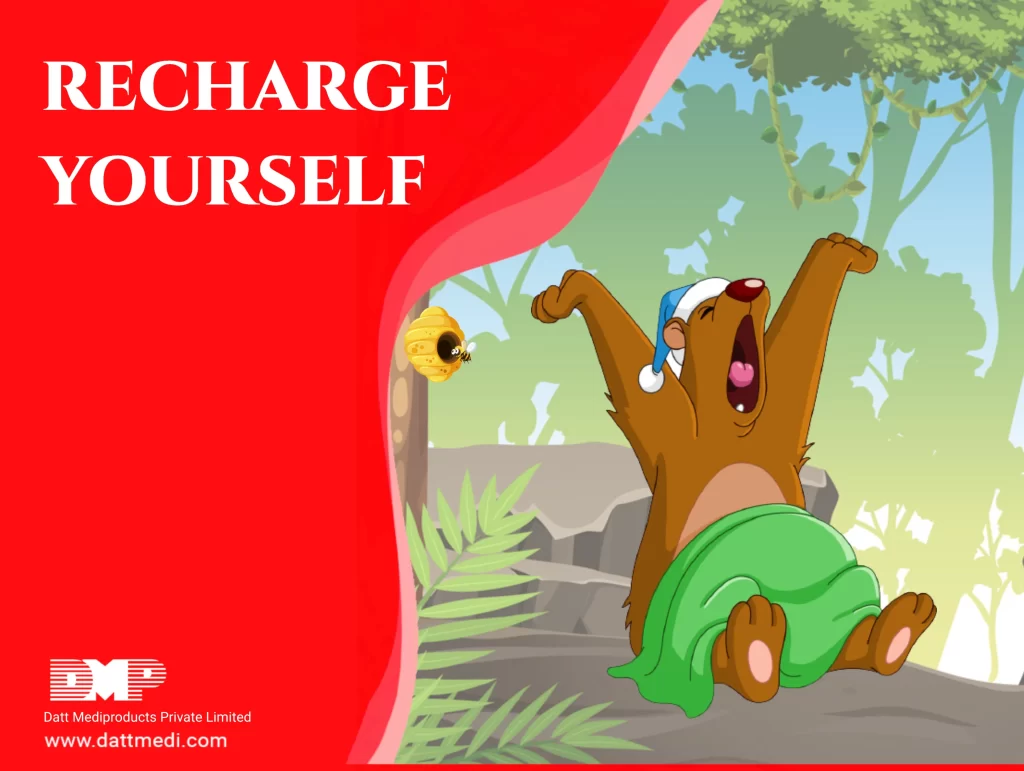
How to know if you need to RECHARGE!

Long working hours, desk jobs with no physical exertion, and extensive use of gadgets are a few  prime reasons for a stressful lifestyle. The Covid 19 pandemic has added Work from Home as a new normal and has further aggravated stress in day to day life.

We have started working longer while shuffling between office and household chores, leading to burnout. Recent study by Monster found that 69% of employees working from home are experiencing symptoms of burnout.

Burnout is nothing but a situation where we feel totally exhausted and start disliking things which we used to enjoy before. At times it can have a catastrophic impact on our health, family, job and relationships.

Stress leads to a disillusioned state of mind and not having the ability to concentrate or pay attention on minor jobs. This psyche not only impacts our professional life but also our personal relationships.

Spot the Red flags

– Physical and mental exhaustion
– Emotional and physical detachment from activity which you enjoy
– Lack of enjoyment
– Reduced performance
– Change in appetite or sleep habits
– Compromised immunity leading to frequent illness
– Getting frustrated and irritated by small things

What is the way out?

You charge your mobile phone daily then why not yourself!!! 

Many ways to relax include meditation, going for a stroll, listening music of choice, reading and visiting family and friends.

Nurture your hobby – Try to invest time in hobbies like gardening, cooking, painting, writing and many more. Indulging in activities like sports, fitness, social activities and volunteering programs increases feel good hormones and raises a sense of accomplishment.

Disconnect – At times it is necessary to unplug from the outer world and have me time. Keep mobiles, tabs and other gadgets at bay during dinner time and have ample family time. 

Ample sleep – Try to have seven to nine hours of undisturbed sleep. Follow the old saying – “Early to bed early to rise makes a man healthy, wealthy and wise”. Practice putting cell-phones on “Flight Mode” or “Do Not Disturb” during sleeping hours.

Afternoon Naps – Short midday snoozes are really big energy boosters. As per the study conducted by psychologists and behavioural sleep disorder specialist napping improves performance, boosts memory and helps face frustrations.

Getaways – Short vacations for a few days breaks the monotony and gives the experience of different emotions. Getting close to nature improves our mood.

Mindfulness – Mindful meditation involves deep breathing and self awareness. This reduces feeling of anxiety, anger, depression and confusion. According to Georgetown University Medical Center’s Department of Psychiatry there is a sharp decline in stress-hormone after taking mindfulness meditation courses.

Exercise and Stretching – When we exercise, Endorphins are released and they are natural pain relievers and mood up-lifters. It is good to indulge in yoga or aerobic class to relieve stress and revitalize your body. Going for a walk or cycling leaves us energized for hours.

We @dattmediproducts recommend you to take some time out just for yourself, understand your needs, recognize the signs. Consider activities which could help recharge you both physically and mentally.

Relaxation repairs our body itself and boosts our immunity this in turn keeps us well and increases our life expectancy. Moreover, it helps you to maintain healthy relationships with your loved ones. Remember, it is important to find what exactly is draining you and the next step is to find the best way to recharge yourself as per your temperament.
Visit www.dattmedi.com for more infomation.
Share:
Recent Blogs
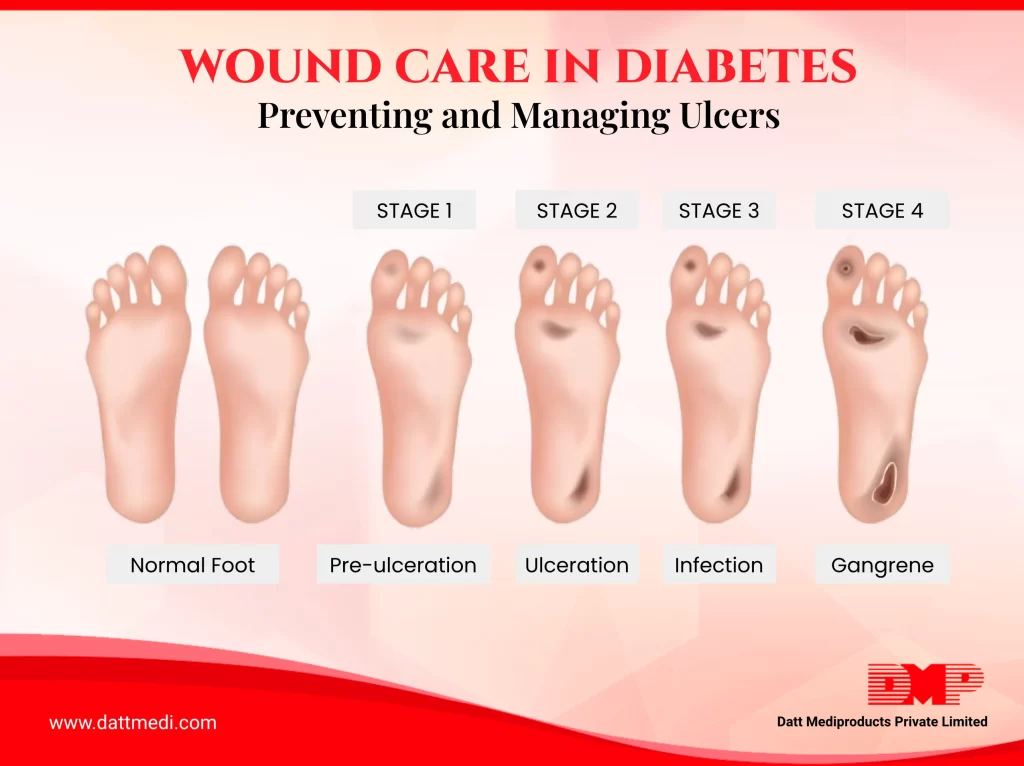
Wound Care in Diabetes

Diabetes significantly increases the risk of developing chronic wounds, particularly foot ulcers. Effective wound care is crucial for preventing complications and promoting healing in diabetic patients. In this blog, you will explore the nature of diabetic wounds, prevention techniques, and management strategies to help healthcare professionals and patients navigate these challenges.

Understanding Diabetic Wounds

Diabetic wounds, especially foot ulcers, are common complications resulting from prolonged high blood sugar levels. These wounds often develop due to neuropathy (nerve damage) and peripheral arterial disease, which impair sensation and blood flow. Consequently, minor injuries can go unnoticed and progress into serious ulcers. Left untreated, these ulcers can lead to severe infections and, in extreme cases, amputations.

1. Prevention Techniques for Diabetic Ulcers:

Preventing diabetic ulcers is essential to reduce the risk of severe complications. Here are some effective prevention strategies.

2. Regular Foot Inspections: 

Diabetic patients should inspect their feet (or have someone inspect it) on a daily basis for cuts, blisters, redness, or swelling. Early detection of potential issues can prevent minor problems from becoming serious ulcers.

3. Proper Footwear: 

  • Wearing well-fitting shoes and socks designed for diabetics can prevent pressure points and reduce the risk of injuries. 
  • Avoid wearing tight stockings or socks with elastic tops as they can reduce blood flow.
  • Avoid extreme hot or cold temperatures.
  • Do not treat corn or calluses on your own. 
  • Avoiding barefoot walking, even at home, is crucial.

4. Good Hygiene: 

Keeping feet clean and dry is essential. Patients should wash their feet daily with mild soap and water, then dry them thoroughly, especially between the toes.

5. Blood Sugar Control: 

Maintaining optimal blood sugar levels through diet, exercise, and medication can significantly reduce the risk of neuropathy and poor circulation, which contribute to ulcer formation.

6. Regular Medical Foot Check-Ups: 

Routine visits to a healthcare provider or a podiatrist for foot exams can help identify and address problems early.

7. Management Strategies for Diabetic Patients:

When ulcers do occur, effective management is vital to promote healing and prevent complications.

Here are some key strategies:

  • Wound Cleaning and Dressing: Keeping the ulcer clean and protected is essential. Cleaning the wound with a saline solution and using appropriate dressings, such as those provided by DMP Velvert®, can create an optimal healing environment. It provides a barrier to external contaminants, aids absorption of exudates and accelerates wound healing.
  • Debridement: Removing dead tissue from the wound (debridement) can accelerate the healing process. This procedure should be performed by a healthcare professional.
  • Pressure Offloading: Reducing pressure on the affected area is crucial. Patients may need special footwear, casts, or braces to alleviate pressure on the ulcer. Foot or mobility exercises also help in decreasing peak pressure, increasing foot and ankle range of motion and it improves neuropathy symptoms.
  • Infection Control: Monitoring for signs of infection and using antibiotics when necessary is critical. Proper wound care products, like Velvert®, which offer antimicrobial properties, can help prevent infections.
  • Blood Flow Improvement: Enhancing blood circulation through medical treatments or lifestyle changes can aid in the healing process. This might include medications, physical therapy, or surgical interventions. Revascularization results in increased tissue perfusion, which can further reduce amputation rates.
Diabetic ulcers are a serious complication of diabetes, but with proper prevention and management strategies, their impact can be significantly reduced. Regular foot inspections, good hygiene, appropriate footwear, and effective blood sugar control are key preventive measures. When ulcers do develop, it is best to catch them in the early stages when they are small, products combined with professional medical care, can promote healing and prevent complications.

At Datt Mediproducts, we offer Velvert®, an advanced wound care solution designed to aid in the management of diabetic ulcers. Velvert® dressings are crafted to provide superior moisture retention and protection, creating an optimal environment for wound healing. They also incorporate antimicrobial properties to reduce the risk of infection, which is crucial for diabetic patients. Velvert® is easy to apply and remove, ensuring minimal discomfort for patients.

Understanding Parkinson's Disease : Symptoms, Causes, and Treatment Options

Understanding Parkinson’s Disease: Symptoms, Causes, and Treatment Options

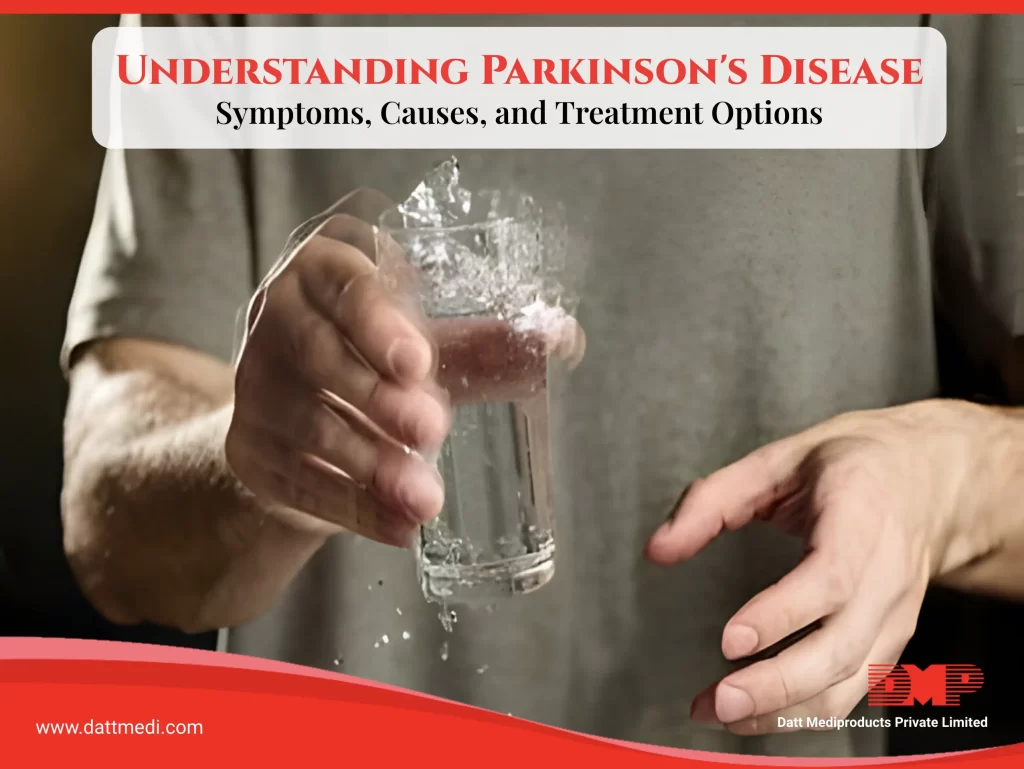
Parkinson’s disease is a complex and often misunderstood neurodegenerative disorder that affects millions of people worldwide. It is characterized by a progressive loss of dopamine-producing cells in the brain, leading to a range of motor and non-motor symptoms that can significantly impact daily life. In this blog, we will explore the symptoms, causes, and treatment options for Parkinson’s disease, as well as the importance of support and advocacy for those living with the condition.

Symptoms of Parkinson’s Disease :

Parkinson’s disease primarily affects movement, causing a variety of motor symptoms that can vary in severity from person to person. The most common symptoms include tremors, stiffness, and bradykinesia (slowness of movement). Individuals with Parkinson’s may also experience freezing gait, a sudden inability to initiate or continue walking, as well as a stooped posture and changes in speech and handwriting.

In addition to motor symptoms, Parkinson’s disease can also cause a range of non-motor symptoms that may be less visible but equally challenging. These can include depression, anxiety, cognitive impairment, sleep disturbances, and autonomic dysfunction. It is important for individuals with Parkinson’s and their caregivers to be aware of these non-motor symptoms and seek appropriate support and management strategies.

Causes and Risk Factors:

The exact cause of Parkinson’s disease is not yet fully understood, but it is believed to involve a combination of genetic and environmental factors. Advancing age is the most significant risk factor, with the majority of cases diagnosed in people over the age of 60. However, younger individuals can also develop Parkinson’s, particularly if they have a family history of the disease or are exposed to certain environmental toxins such as pesticides and solvents.

Recent research has also identified specific genetic mutations associated with an increased risk of Parkinson’s disease, although these account for only a small percentage of cases. Overall, Parkinson’s is thought to result from a complex interplay of genetic susceptibility and environmental triggers, and further research is needed to fully understand these mechanisms.

Treatment Options and Management Strategies:

While there is currently no cure for Parkinson’s disease, there are a variety of treatments available to help manage symptoms and improve quality of life. Medications such as levodopa, dopamine agonists, and MAO-B inhibitors can help alleviate motor symptoms by increasing dopamine levels in the brain. Physical therapy, occupational therapy, and speech therapy can also be beneficial in addressing specific motor and non-motor symptoms.

In addition to medical interventions, lifestyle modifications such as regular exercise, healthy diet, and stress management techniques can also play a key role in managing Parkinson’s disease. Social support and community resources are also invaluable for individuals living with Parkinson’s and their caregivers, providing emotional support, practical assistance, and opportunities for socialization.

Support and Advocacy:

In India, there are several organizations dedicated to supporting individuals with Parkinson’s disease and raising awareness about the condition. One such organization is the Parkinson’s Disease and Movement Disorder Society (PDMDS), which offers rehabilitation programs, support groups, and educational resources for people living with Parkinson’s and their families. The Indian Parkinson’s Disease Association (IPDA) is another valuable resource, providing information, advocacy, and support services to improve the lives of those affected by Parkinson’s disease.

Parkinson’s disease is a challenging and complex condition that requires a comprehensive approach to management and care. By understanding the symptoms, causes, and treatment options for Parkinson’s, as well as the importance of support and advocacy, we can work together to improve the lives of individuals living with this condition. Through education, awareness, and community involvement, we can make a difference in the lives of those affected by Parkinson’s disease.

Logo

Datt Mediproducts Private Limited

Loading
