
Search by Blog
Read by Category

Your healing journey continues beyond this blog

Find the right products for better recovery at online store
Cart Image
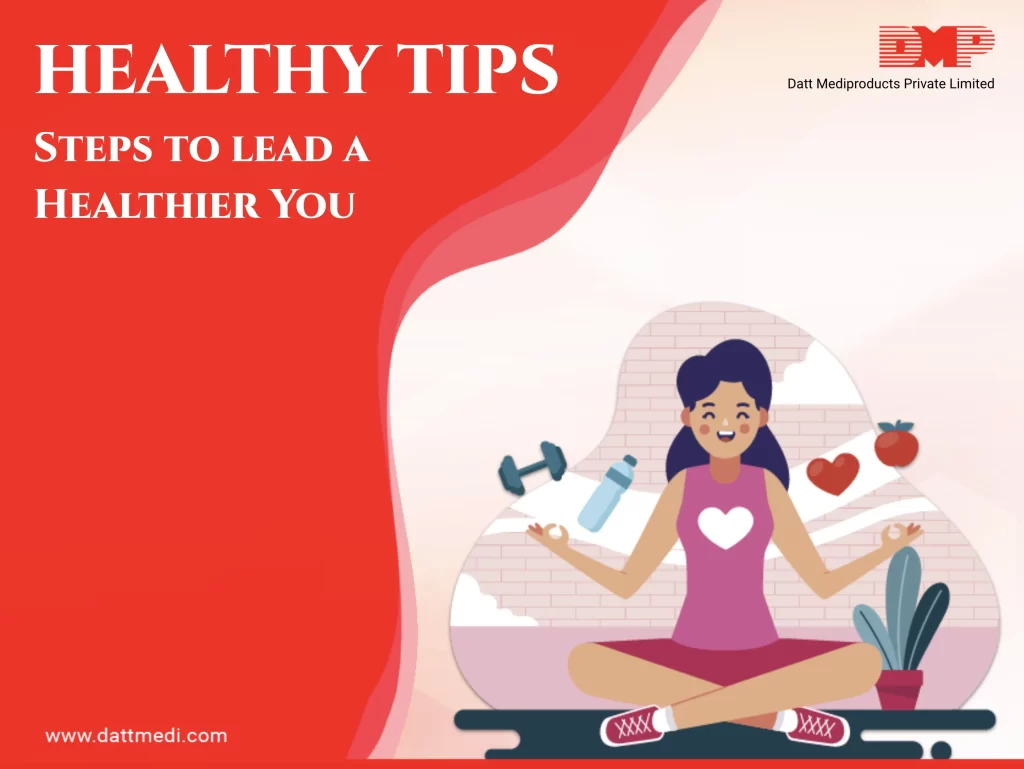
Small Steps that lead to a Healthier You

Good health is a requisite of happiness and is one thing we can’t buy. Buddha says “To keep the body in good health is a duty…otherwise we shall not be able to keep the mind strong and clear.”

We understand that good health can’t be achieved overnight.

Thereby, we bring a list of small habits and steps which can be followed everyday for a healthier you.

Don’t Skip Breakfast:
Breakfast is the most important meal of the day and you should make a regular habit of eating breakfast on an everyday basis. A breakfast including whole grains, fruits, fibers provides the body with essential nutrients and energy to kickstart your day and supplies a constant energy needed to keep you going.

Drink plenty of water:
Staying sufficiently hydrated the entire day has several health benefits. Thereby, drinking 8-10 glasses of water is recommended everyday which may also depend on weather conditions and physical activity you are indulged in.

Maintain a balanced nutrients intake:
Proteins, fats and carbohydrates are the three main food components which are vital for optimal health. But their intake should be balanced. Too much of anything is bad for your body. For instance, an excessive entail of carbohydrates can increase blood sugar levels. The key is to eat fruits, veggies, pulses, legumes, cereal and whole grains in the right proportion to ensure a balanced nutrient intake

Eat Regularly:
Make it a mantra to not skip any meal. Skipping meals makes you feel famished and you might end up eating more than usual at the end of the day.

Make Healthy Swaps such as choosing olive oil over butter, fresh fruits over candies, baked snacks over fried ones, healthy choices over fast foods etc. Cut out soda and choose green tea or water over it. Pick fresh over processed foods

Stay Hydrated:

Drinking water has a lot of health benefits. It increases your energy, regularizes appetite and helps improve digestion also.

Stay Physically active:
Indulging in some kind of physical activity is a main component to achieve good health. Whether it’s a simple walk, a jog, swimming or climbing stairs, the objective is to stay physically active which will help to enhance metabolism too. Take stairs instead of an elevator.

Give up your sedentary lifestyle:
Move more, sit less. If you have a sitting job, take minute breaks and walk time to time.

Get enough sleep:
A lack of sleep is the source of various health problems. A sound sleep helps to rejuvenate mind and body for the next day. It increases your concentration, reduces depressions, uplifts moods, boosts energy and decreases irritability.

Mellow Out Daily:
Spend some time every day for meditation, yoga, praying or breathing exercise. Such activities help to declutter your mind and unwind your soul. After all, mental health is just as important as physical health.

Keep a Track of your daily activities and reach your goals with the help of digital health technology.

We @dattmediproducts recommend making one positive change in your daily routine, and try to be consistent. Gradually increasing your efforts and focussing on taking small steps everyday are surely going to help achieve the end result.

Health is Wealth!
Visit www.dattmedi.com for more infomation.
Share:
Recent Blogs

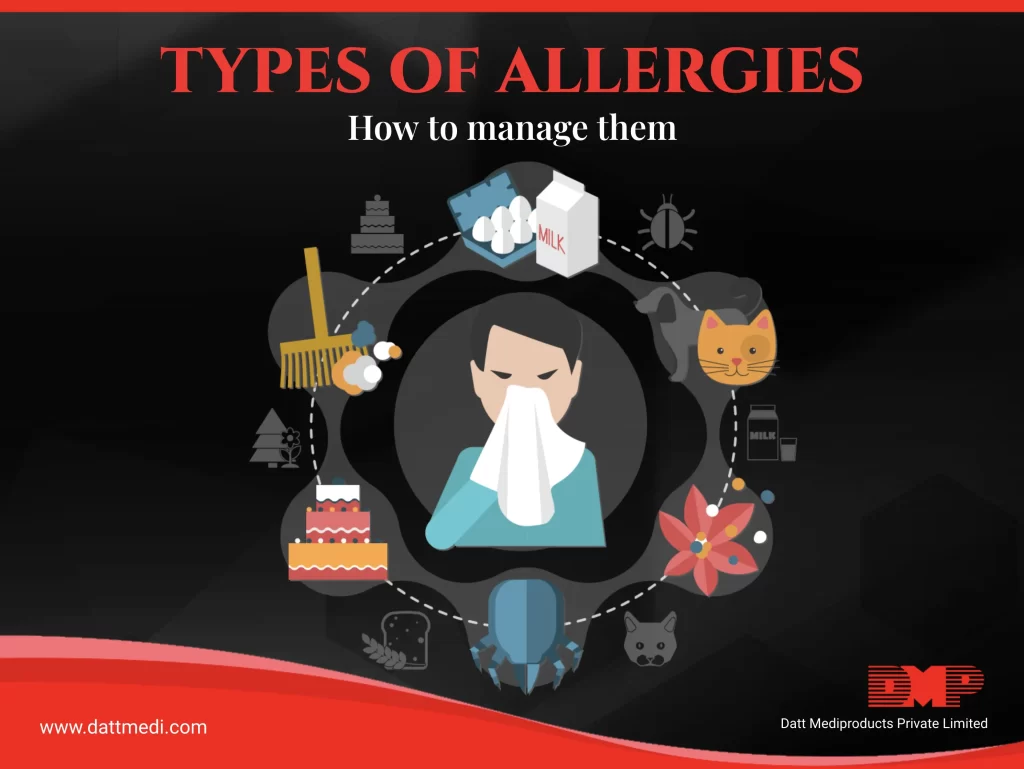
Allergies are a common health issue that affect a significant portion of the population worldwide. Allergies are a hypersensitive reaction of the immune system to an otherwise harmless substance, which is known as an allergen. The allergen can be any substance that triggers an allergic reaction in the body, such as pollen, dust, food, or animal dander.

Allergies are caused due to the abnormal response of the immune system, which mistakes a harmless substance for a harmful invader and initiates a defence mechanism, called antibodies, to protect the body from it. This results in various allergic reactions, such as skin rashes, itching, sneezing, watery eyes, and in severe cases, anaphylaxis.

There are various reasons behind the occurrence of allergies. Genetics plays a significant role in determining an individual’s likelihood of developing allergies. Environmental factors such as exposure to pollution, chemicals, and toxins can also trigger allergies.

There are several different types of allergies, each with their unique symptoms and triggers.

Some of the most common types of allergies include:

1. Respiratory allergies:

These allergies are triggered by airborne allergens such as pollen, dust mites, and animal dander. The symptoms of respiratory allergies include sneezing, coughing, and wheezing.

2. Food allergies:

These allergies occur when the immune system reacts to certain foods, such as nuts, shellfish, and eggs. Symptoms of food allergies can range from mild itching, tingling in the mouth, hives, swelling of the lips, tongue, face or throat to more severe life-threatening anaphylaxis.

3. Skin allergies:

These allergies occur when the skin comes into contact with an allergen, such as certain fabrics, metals, or cosmetics. The symptoms of skin allergies include rashes, itching, and swelling.

4. Insect allergies:

These allergies occur when an individual is bitten or stung by an insect, such as bees or mosquitoes. The symptoms of insect allergies can range from mild itching to severe anaphylaxis.

5. Medicine allergies:

Medicine allergies are hypersensitive reactions of the immune system to certain medications. They can cause symptoms like skin rashes, itching, swelling, and in severe cases, difficulty breathing or anaphylaxis. It is important to communicate medicine allergies to healthcare providers to ensure safe and effective treatment.

Precautionary methods can be taken to manage allergies. Firstly, it is crucial to identify the allergen that triggers the allergic reaction. This can be done through various tests such as skin tests or blood tests. Once the allergen is identified, it is essential to avoid exposure to it. For example, individuals with food allergies must avoid eating the allergen-containing food.

Similarly, those with respiratory allergies must avoid exposure to airborne allergens, such as pollen or animal dander. If a person has a known severe allergy then they can also wear a medical alert bracelet, which lets others know that you have a serious allergy incase they are unable to communicate it.

Medications such as antihistamines, decongestants, and corticosteroids can be used to manage allergy symptoms. In severe cases, epinephrine injections may be required to manage anaphylaxis.

In addition to medication, several lifestyle changes can also help manage allergies. One of the most important being to try to reduce stress levels. While stress can’t trigger an allergic reaction it can make it worse if you are having one. When in stress your body releases hormones including histamine, which is a powerful chemical that leads to allergy symptoms thus making the reaction worse.

Allergies can significantly impact the lives of those who suffer from them. However, with proper management, it is possible to reduce the severity of allergy symptoms. If you suspect that you have an allergy, it is important to seek medical advice and get a proper diagnosis.

We advice to follow precautionary methods and working with a healthcare professional, that can help you manage allergies and improve your quality of life. Follow us for more such information.

Yoga is an ancient practice ,around for centuries, and can help with overall health. It has been said that “Our breathing process – the way we inhale, hold our breath, and exhale – can change our mind and our body in a positive way,” It is a great practice through which you can improve your physical and mental wellness.

(more…)

Logo

Datt Mediproducts Private Limited

Loading