
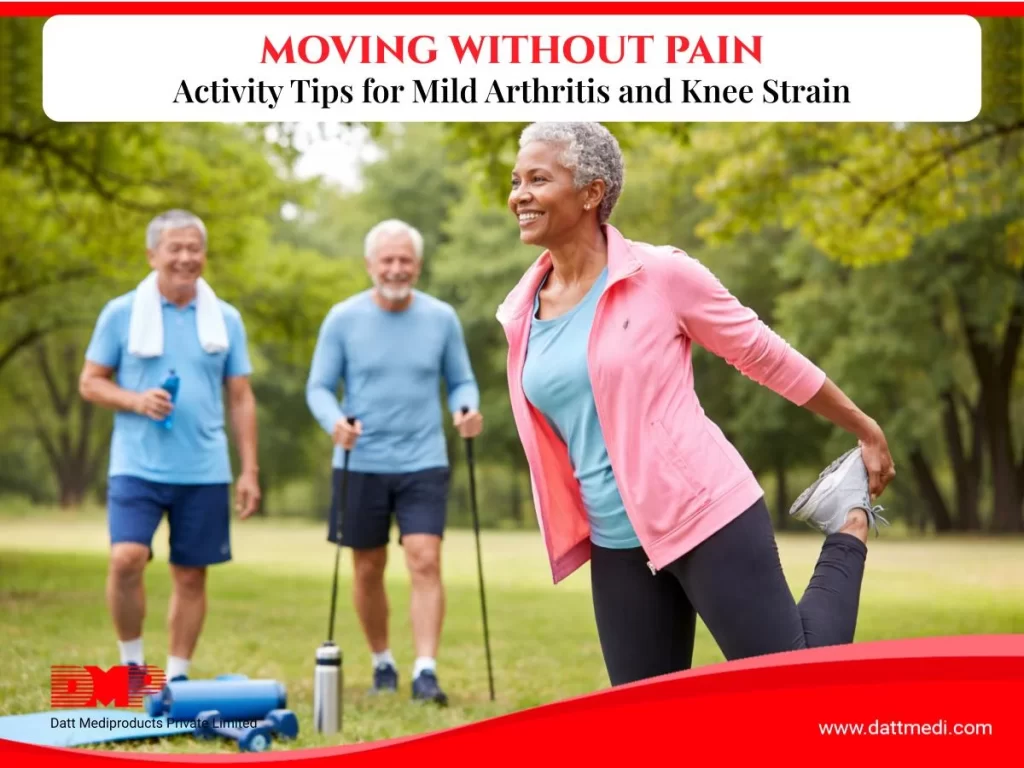
Avoiding movement because of mild arthritis or knee strain usually backfires — it leads to more stiffness, not less. The safer path is choosing joint-friendly, low-impact activity and adding support where it genuinely helps.
Many people assume rest is always the right answer for joint pain. But joints depend on regular movement to stay flexible and well-lubricated. Inactivity tends to weaken the surrounding muscles, which puts more pressure on the joint itself — not less.
This blog breaks down what actually helps, what to avoid, and how to build a routine that keeps you moving safely.
Rest vs Movement: What Is Actually Different?
Both approaches feel intuitive when a joint hurts, but they lead to very different long-term outcomes. The key difference is what each one does to the muscles and tissue surrounding the knee over time.
| Factor | Prolonged Rest | Gentle, Regular Movement |
| Effect on stiffness | Increases stiffness over time | Reduces stiffness after periods of rest |
| Effect on muscle strength | Weakens supporting muscles | Strengthens muscles that support the knee |
| Effect on joint lubrication | Reduces natural lubrication | Keeps the joint lubricated |
| Effect on pressure through the joint | Indirectly increases pressure (via weaker muscles) | Reduces pressure by sharing load with stronger muscles |
Prolonged rest may be appropriate during acute flare-ups or when recommended as part of clinician-directed recovery. For day-to-day management of mild arthritis or knee strain, gentle, regular movement is generally more suitable.
However, both approaches can have drawbacks when overdone. Too much rest can contribute to long-term mobility loss, and on the other hand exercising at too high an intensity that the body is not ready for can aggravate pain.
Why Movement Matters for Joint Health
Gentle, regular movement keeps the joint lubricated, keeps the muscles around it strong, and actually reduces stiffness — the opposite of what many people expect.
Gentle, regular movement can help:
- Improve joint flexibility
- Strengthen the muscles that support the knee
- Reduce stiffness after periods of rest
- Support overall mobility
Low-Impact Exercises That Are Easier on the Knees
Which to Choose
Walking, swimming, and cycling are the three most commonly recommended options because they build strength and mobility without the sudden impact that aggravates joint pain.
| Activity | Impact Level | Best For | Key Benefit |
| Walking | Low | Daily movement, circulation, beginners | Simple, accessible, supports circulation without jarring the joint |
| Swimming / water aerobics | Very low | Significant pain, higher body weight, flare-ups | Water supports body weight, letting you move with far less strain |
| Cycling (stationary or smooth terrain) | Low | Building quadriceps and hamstring strength | Controlled, repetitive motion strengthens muscles without impact |
Walking
On flat, stable surfaces, walking is one of the simplest ways to stay active and supports circulation in the legs without jarring the joint.
Swimming or water exercise
Water supports your body weight, so swimming and water aerobics let you move comfortably with far less strain on the knees than land-based exercise.
Cycling
A stationary bike or smooth terrain lets you strengthen the muscles around the knee through controlled, repetitive motion, without impact.
Do Knee Supports Actually Help During Activity?
Yes, as an aid; not a replacement for strengthening.
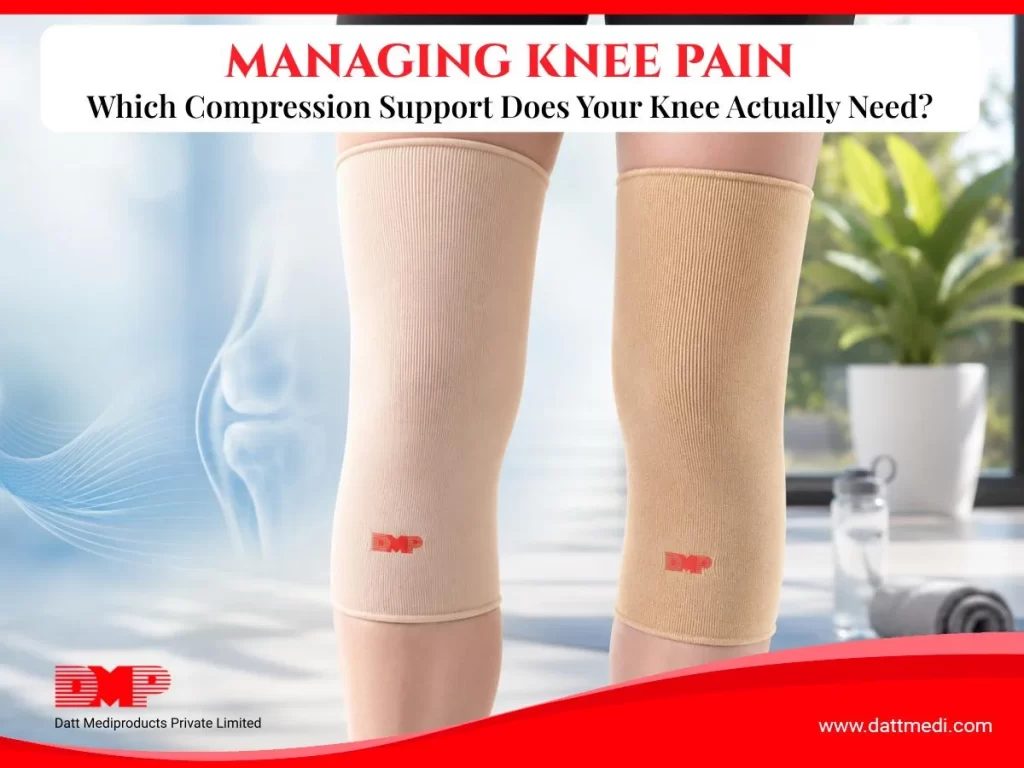
Knee sleeves and braces add mild compression and stability,
which can make movement feel safer and more comfortable, especially early on.
Supports may help by:
Providing mild compression around the joint Adding extra stability during movement Increasing confidence while walking or exercising. Options like Knee Cap® or Knee Cap Classic® offer light, breathable compression suited for daily activity.
However, knee supports should not become a long-term substitute for strengthening the muscles around the joint. Over-reliance on external supports may reduce how much the muscles have to work, which can contribute to weakness over time. As strength and stability improve, it may be appropriate to reduce or stop using the support, depending on individual needs and professional guidance.
Strengthening the Muscles Around the Knee
Stronger muscles around the knee take pressure off the joint itself. This is one of the most effective long-term ways to reduce strain, more so than rest alone.
After getting professional guidance, useful exercises often include:
- Gentle resistance exercises for the quadriceps Light hamstring strengthening Controlled stretching for flexibility
- If you’re recovering from an actual strain rather than general stiffness, the difference in approach matters.
- Related reading: Muscle Strains: Causes and Effective Recovery Strategies
- Arthritis specifically carries its own considerations for compression and activity level.
Lifestyle Habits That Support Joint Health
Body weight, footwear, and seating all affect how much daily pressure lands on your knees — small adjustments here reduce strain without any exercise involved.
Helpful adjustments:
- Maintaining a healthy body weight
- Wearing supportive footwear
- Choosing chairs with proper back and leg support
- Pacing activity and taking breaks when needed
For added support during activity, compression bandages are sometimes used to manage strain, and tapes and adhesive supports can help with dressing security if there's any accompanying skin sensitivity or minor injury.
When to Scale Back and Check In With a Professional
- Movement should feel manageable, not punishing. Some signals mean it’s time to pause and get guidance rather than push through.
- Pain increases noticeably during or after activity
- Swelling develops or worsens
- Movement becomes noticeably more difficult than usual
- The knee feels unstable or gives way
Physiotherapists can build a personalised activity plan that supports recovery without overloading the joint.
Staying Active Safely
Staying active with mild arthritis or knee strain isn’t about avoiding movement, it’s about choosing the right kind. Low-impact exercise, appropriate support, and a few lifestyle adjustments let most people keep moving comfortably while protecting long-term joint health.