
Search by Blog
Read by Category

Your healing journey continues beyond this blog

Find the right products for better recovery at online store
Cart Image
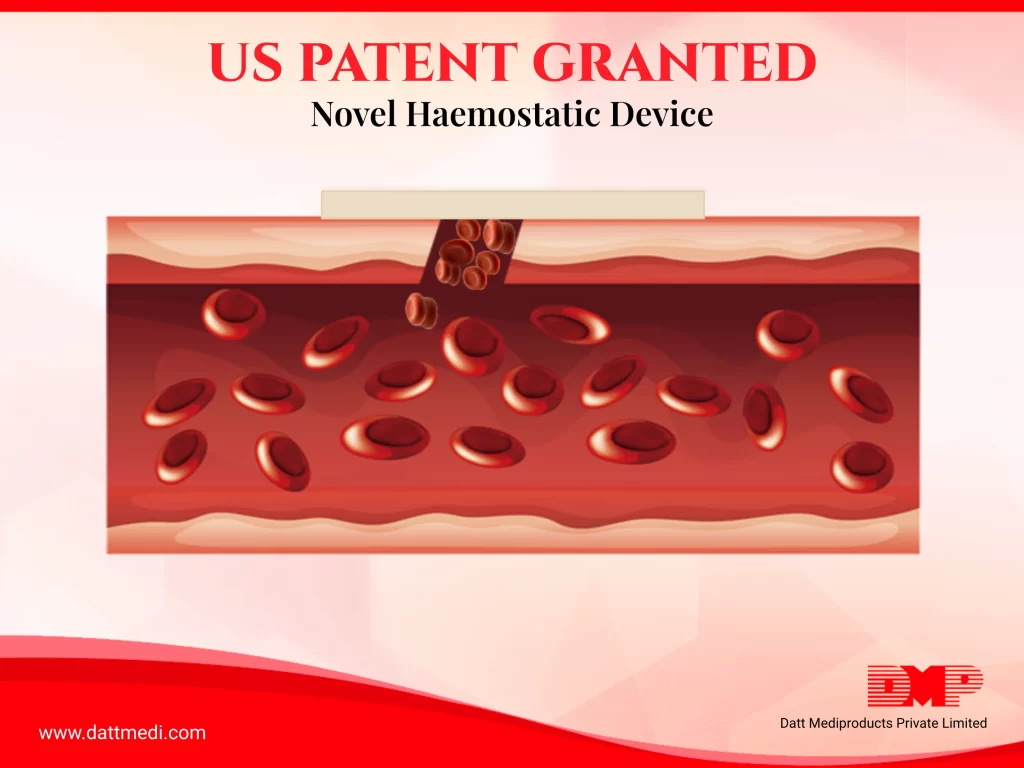
US Patent Granted for a Novel Haemostatic Device

Patent No.: US 10,124,084 B2
Date of the Patent Granted: Nov. 13, 2018
Title of the Patent: READY TO USE BIODEGRADABLE AND BIOCOMPATIBLE DEVICE AND A METHOD OF PREPARATION THEREOF

Background of the Invention:
Haemostatic products are the agents which promote haemostasis (stop bleeding). These can be used for both surgical or traumatic wounds. Heavy blood loss from the wounds may result in a hypovolemic shock (when the body loses one-fifth of its blood and heart is not able to pump sufficient amount of blood to the body) leading to tissue and organ damage.

Several active ingredients are used in the manufacturing of haemostatic products. These ingredients like Thrombin, Gelatin, Collagen, Fibrin, Synthetic, etc. help to accelerate the process the haemostasis. Several products are available in the market but none of these products comprise of the active ingredients and the method to prepare the same as covered in the present invention.

 Summary of the Invention:
The innovative product described in this patent is a ready to use biodegradable and biocompatible device used to stop wound bleeding and a method of preparation thereof.

The invention is a device comprising of a novel porous scaffold of an absorbent gelatin-chitosan Polyelectrolyte complex (GCPEC) which quickly stops bleeding from any type of wounds, i.e. surgical or non-surgical. This innovative device is developed with a combined application of air dry and freeze dry method.
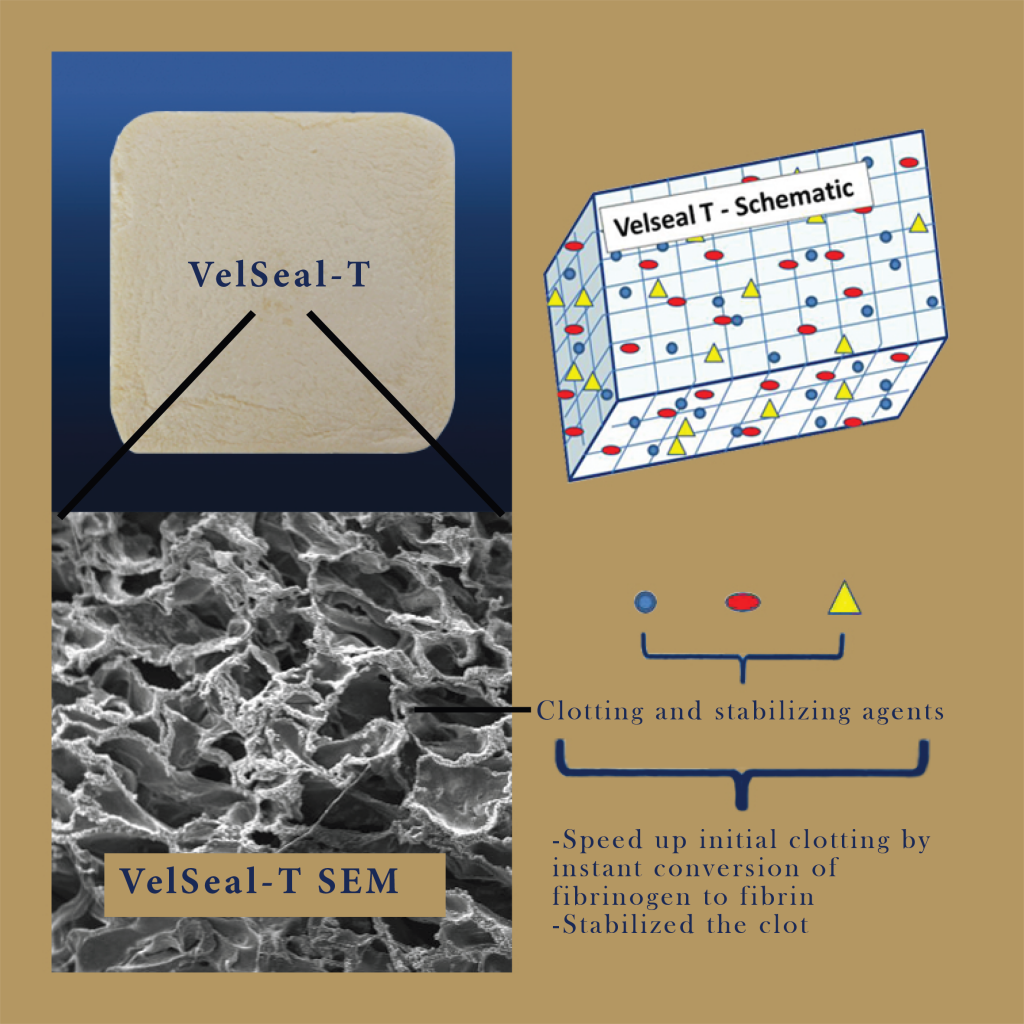
This sterile dressing product carries the therapeutic and bioactive molecules with preference to accelerate the process of stopping the bleeding of the wounds.

The device has excellent ventilation features which prevent infections which may be caused due to bleeding. Further, the scaffold under the present invention comprises of differential porosity and regulated pores on the same platform in a molecularly integrated PEG matrix.

Advantages of the Invention:

  • Ready – to – use bandage for stopping bleeding of wounds and prevents from loss of life due bleeding.
  • The present invention stops bleeding within few minutes.
    • requires less time to stop bleeding
    • patient can be addressed immediately
  • Prevents secondary bleeding.
  • Does not stick to the wound.
  • Does not disturb the normal of blood flow.
  • The present invention comprises of improved wound hygiene.
  • Useful in cases of multiple injury.
  • Can be used in surgical procedures including Vascular surgical procedures, accidental and combat field.
  • The present invention helps in earlier mobilization of the patient.
  • Can be manufactured in any size and shape as per the requirement.
  • Easy to handle.
  • Interconnected Porous in structure.
  • Packed in a laminated foil pack to protect it from environmental factors (sunlight & moisture).
  • Thermostat pack (such as Styrofoam) as an insulator and to protect a product from getting compressed during transportation or storage.
  • Multiple bandages can be applied for larger wounds.
  • Capable of use for at least 24 hours, however, haemostasis achieves within few minutes only.
  • Can be removed easily without using saline solution or water.
  • Long Shelf life at ambient temperature. Can be disposed of by burning or degradation.

Follow us @DattMediproducts to know more about these Haemostatic products. Stay tuned for our next blogs and know more about our patented products.
Visit www.dattmedi.com for more infomation.
Share:
Recent Blogs
High-absorbency foam dressing for exuding wounds

Absorbent foam dressings are advanced wound care solutions specifically designed to manage moderate to heavy wound exudate while maintaining a moist healing environment.

Maintaining the right moisture balance is critical for wound healing. Excess fluid can cause maceration and delay recovery, while insufficient moisture may slow tissue regeneration. Foam dressings are engineered to maintain this balance—supporting safer, more efficient healing across acute and chronic wound types.

Widely used in hospitals, long-term care facilities, and home-care settings, absorbent foam dressings are a core component of modern wound management protocols.

Clinical Overview: Absorbent Foam Dressings

  • Designed for moderate to heavy exudate
  • Maintain a controlled moist wound environment
  • Reduce risk of periwound maceration
  • Provide cushioning and mechanical protection
  • Support atraumatic dressing removal
  • Suitable for pressure ulcers, diabetic foot ulcers, venous leg ulcers, and surgical wounds

What Are Absorbent Foam Dressings?

Absorbent foam dressings are multi-layer wound dressings typically made from polyurethane foam. They are engineered to:

  • Absorb and retain moderate to heavy wound fluid
  • Protect surrounding skin from excess moisture
  • Provide thermal insulation and cushioning
  • Maintain optimal moisture levels for tissue repair
They are widely used in advanced wound care settings where effective exudate control and periwound protection are essential.

Why foam dressings are used

Wounds that produce fluid need balance—not dryness, not pooling moisture. Foam dressings maintain this balance, which supports natural tissue repair.

How they are built

  • A highly absorbent foam layer that draws in and holds wound fluid
  • A protective outer layer that allows airflow but blocks bacteria and external moisture
  • Optional adhesive borders for secure placement without extra fixation

Foam dressings are widely used in acute care, long-term wound management, and post-surgical recovery across global healthcare systems, especially in wound care settings.

How Absorbent Foam Dressings Work

1. Managing Moderate to Heavy Wound Exudate

Foam dressings absorb excess fluid and lock it inside the dressing.

Why this matters:

Uncontrolled fluid can soften surrounding skin, increase leakage, and slow healing.

How it helps healing:

By keeping the wound surface balanced—not wet, not dry—foam dressings create conditions where new tissue forms more efficiently. Products such as Velnext® Foam Dressing are designed for this purpose.

2. Maintaining a Stable Healing Environment

While absorbing excess fluid, foam dressings preserve gentle moisture at the wound surface.

Clinical benefit:

Stable moisture supports faster cell growth and reduces repeated tissue disruption caused by frequent dressing changes, which is especially important in chronic wounds managed with advanced foam dressings

3. Cushioning and Physical Protection

The soft foam structure absorbs pressure and reduces friction.

Especially useful for:

  • Heels
  • Sacral area
  • Elbows
  • Other pressure-prone or mobile body parts
This protection helps prevent further tissue damage during daily movement and is a key benefit of foam-based wound dressings.

Read More about : VELFIX-S: Foam Dressings in Wound Care

Key Benefits of Absorbent Foam Dressings

Protects Periwound Skin

By preventing fluid leakage and excessive moisture accumulation, foam dressings reduce the risk of maceration and surrounding skin breakdown.

Enhances Patient Comfort

The flexible, conformable structure minimizes pain during wear and dressing removal, especially in chronic wound management.

Reduces Dressing Change Frequency

Due to their high absorbency, foam dressings can often remain in place for several days (subject to clinical assessment), improving patient compliance and care efficiency.

Supports Infection Management

In wounds with elevated infection risk, antimicrobial silver foam dressings  may help manage bacterial load. These are typically used when clinical signs of infection are present or when risk factors exist.

Types of Absorbent Foam Dressings

Adhesive Foam Dressings

  • Integrated fixation border
  • Easy application
  • Suitable for ambulatory patients and post-operative care

Non-Adhesive Foam Dressings

  • Gentle on fragile or sensitive skin
  • Require secondary fixation
  • Ideal for elderly patients or delicate wound sites

Antimicrobial Foam Dressings

  • Contain antimicrobial agents
  • Support bacterial load management
  • Used in infected or high-risk wounds

Foam Dressings vs Other Dressing Types

Dressing TypeBest ForNot Suitable For
Foam DressingsModerate–heavy exudateDry wounds
HydrocolloidsLight–moderate exudateHeavily exuding wounds
AlginatesHeavy exudate or bleedingDry wounds
Transparent FilmsSuperficial woundsModerate–heavy exudate

Selecting the appropriate dressing depends on wound characteristics, fluid level, and clinical assessment.

Ideal Wound Types for Foam Dressings

Absorbent foam dressings are commonly recommended for:

  • Pressure ulcers
  • Diabetic foot ulcers
  • Venous leg ulcers
  • Post-surgical wounds
  • Traumatic injuries
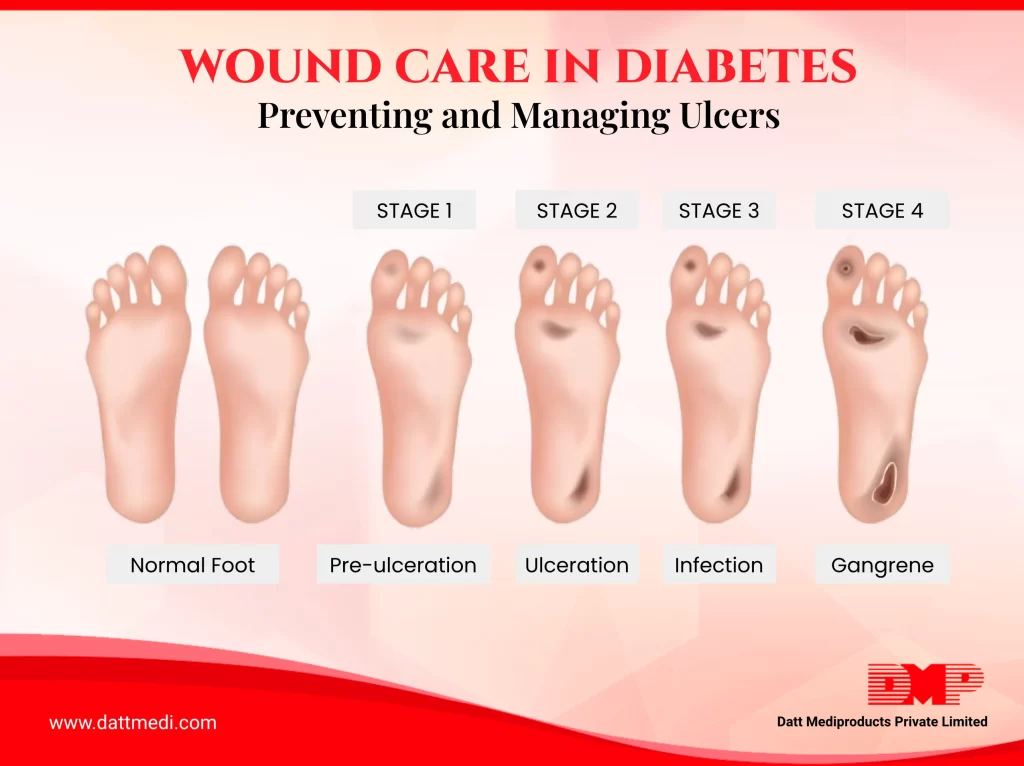
Wound Care in Diabetes

Read More: Proven Ways to Prevent Complications

Their ability to absorb fluid while protecting tissue makes them a reliable option for both acute and chronic wound care, including hospital-grade wound management.

When Foam Dressings May Not Be Appropriate

Foam dressings may not be suitable for:

  • Dry or minimally exuding wounds
  • Hard necrotic tissue or dry scabs
  • Wounds requiring active debridement
In such cases, alternative dressing categories that donate moisture or facilitate debridement may be more appropriate based on professional evaluation.

Quality Standards and Clinical Reliability

High-performance absorbent foam dressings are manufactured in accordance with internationally recognized quality and safety standards, including ISO 13485 and CE certification.

As a manufacturer of certified advanced wound care solutions, DMP designs foam dressings aligned with global clinical standards, ensuring product reliability, patient safety, and consistent performance across healthcare environments.

Absorbent foam dressings combine smart material design with practical wound care needs. By controlling wound fluid, protecting fragile skin, and improving comfort, they play a vital role in modern wound management.

Selecting the right foam dressing—based on wound type, fluid level, and patient needs—can significantly improve healing outcomes and overall care quality.

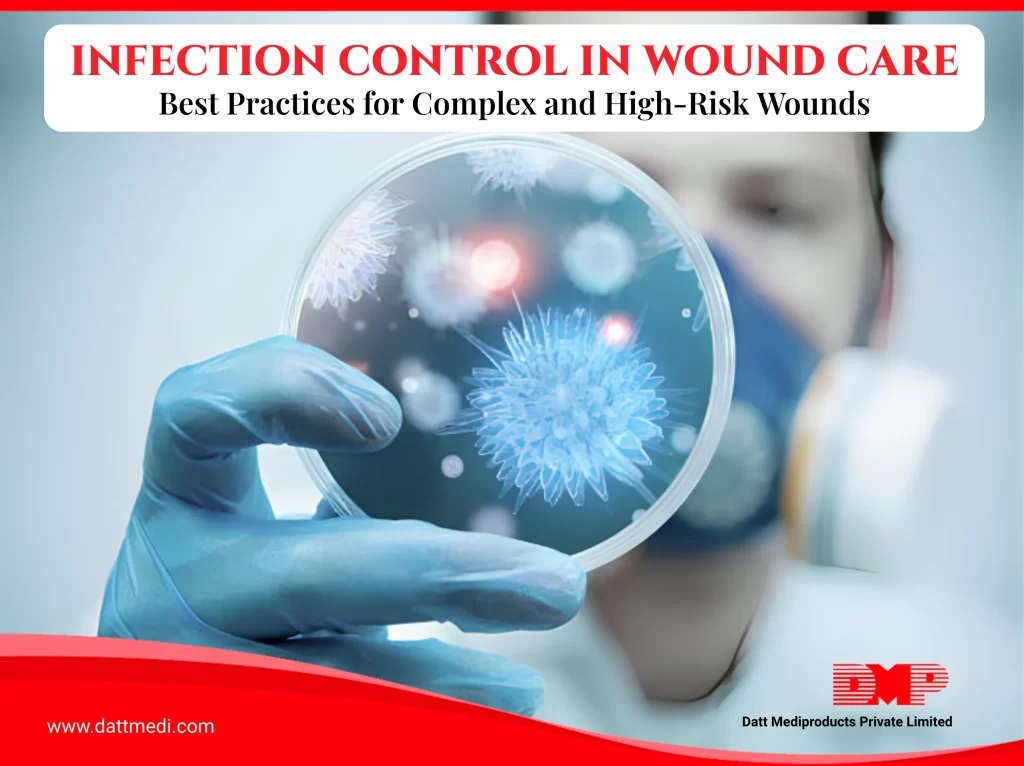
Infection Control in Wound Care

The Role of Antimicrobial Dressings in Infection Prevention and Wound Healing

In wound care, infection prevention involves proactive measures to avoid contamination, while infection control refers to the steps taken after an infection has occurred—to contain its spread and reduce complications.

Understanding this distinction is vital, particularly when dealing with diabetic foot ulcers, surgical wounds, or chronic ulcers like those from varicose veins. These wounds, once infected, require more than just hygiene and topical care—they demand targeted intervention.

Why Infection Prevention is Critical in Wound Care

In high-risk patients (e.g., diabetics, post-operative individuals, or those with vascular issues), a wound infection can:

  • Impair tissue regeneration can significantly slow down the body’s natural healing process. 
  • Trigger inflammation beyond the wound site
  • Lead to sepsis or systemic failure
  • Delay healing indefinitely without the right approach

Once bacteria attach to the wound surface and multiply, they secrete an Extracurricular Polymeric Substance (EPS) over the wound bed in the form of a patchy layer called BIOFILM. This biofilm is not only resistant to the host’s immune system but also to various basic antimicrobials. This is why even proper hygiene may not suffice creating a need for advanced infection control measures. 

Common Signs of Infection Include:

  • Increased redness or warmth
  • Foul odor or purulent discharge
  • Delayed granulation
  • Pain out of proportion to wound size
  • Systemic symptoms like fever or fatigue

The Role of Antimicrobial Dressing

Not all antimicrobial dressings work the same way. Selection should depend on the type of wound, degree of infection, and underlying comorbidities.

AgentMechanism of ActionIdeal Use Cases
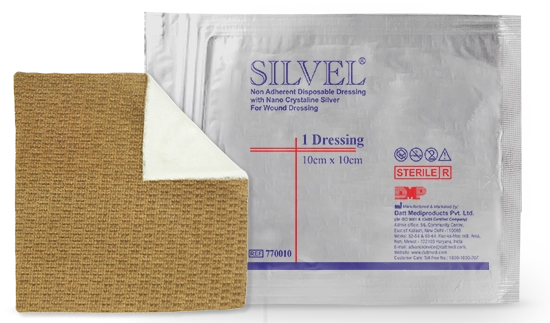
Nano-crystalline silverDisrupts bacterial DNA and cell wallsChronic wounds, surgical sites, burn care
IodineBroad-spectrum bactericidal effectInfected diabetic foot ulcers, contaminated wounds
PHMBDisrupts membrane integrity of microbesSuperficial infected wounds
VelvetKills microbes, hinders replication. Promotes angiogenesis & cell proliferationManagement of partial & full thickness wounds such as DFU, VLU, Necrotising Fasciitis, Burns or even other traumatic or surgical infected wounds

Using the wrong dressing can delay healing or exacerbate infection. Selection must be guided by wound assessment, not just product availability.

Best Practices for Infection Prevention:

  • Sterile Cleansing: Use prescribed solutions like saline, not harsh agents.
  • Hygiene Compliance: Strict hand hygiene and PPE protocols for caregivers.
  • Moisture Balance: Avoid dry wound beds or maceration.

Infection Control (Post-Infection Onset):

  • Debridement if needed to remove necrotic tissue or biofilm
  • Antimicrobial Dressings selected as per exudate level and infection type
  • Systemic antibiotics for deep or spreading infections
  • Regular monitoring to track changes in wound condition

Different Wounds Demand Different Protocols

  • A clean surgical wound may require simple antimicrobial protection.
  • A diabetic foot ulcer with infection may require systemic antibiotics, debridement, and layered dressing strategy.
  • A venous ulcer may need antimicrobial compression therapy.
Avoid a one-size-fits-all approach—treatment must align with wound pathology.

Don’t overlook:

  • Nutritional Support: Protein, Vitamin C, and Zinc for immune function and tissue repair
  • Glycemic Control: Especially crucial in diabetic patients
  • Patient Education: Empower caregivers with infection warning signs and dressing techniques

Wound care is both a science and a strategy. While infection prevention is essential, being prepared for infection control—with the right knowledge, products, and protocols—can make the difference between recovery and chronicity.

From nano-crystalline silver dressings to advanced wound care materials, our range is engineered for outcomes that matter. To Explore our full range of antimicrobial dressings: Click Here

Logo

Datt Mediproducts Private Limited

Loading