

Search by Blog
Read by Category

Your healing journey continues beyond this blog

Find the right products for better recovery at online store
Cart Image
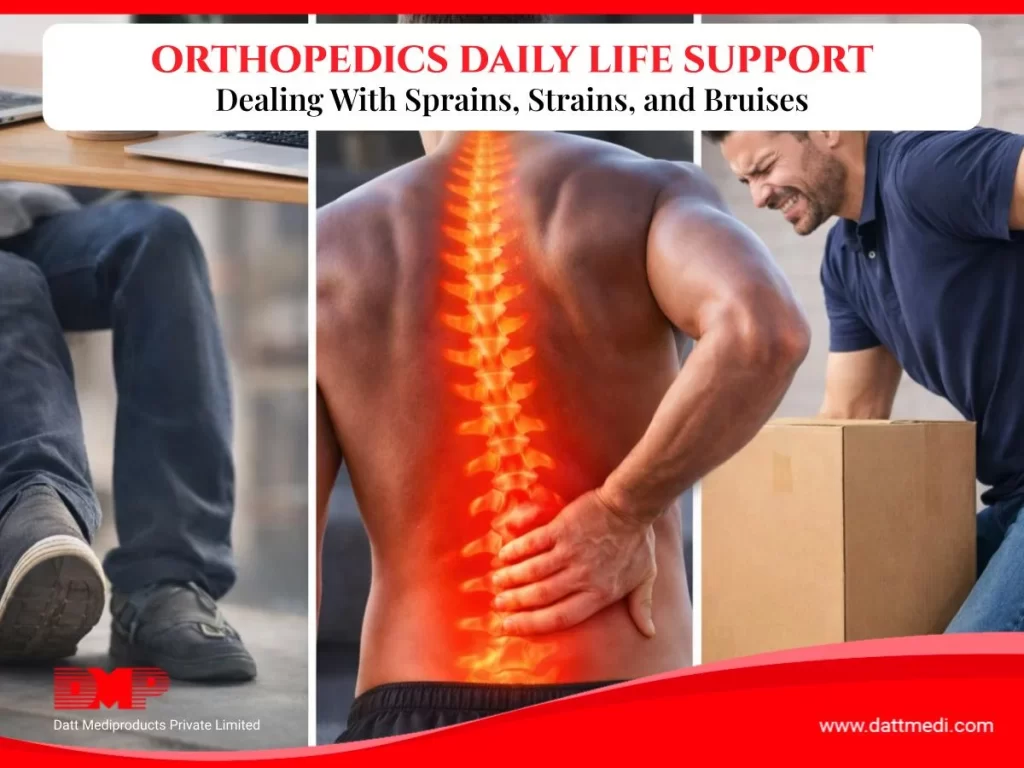
Poor posture while sitting causing back pain

Back pain rarely comes from one dramatic moment. More often, it builds slowly — from how you sit, how you lift, and how much you move (or don’t) during an ordinary day.

The good news: because these habits are small and repeated, small corrections add up fast. Here are the five biggest everyday culprits, and what to actually do about each one.

1. Poor Posture During Screen Time

Slouching while looking at a screen pulls your head forward and loads your spine with extra weight it wasn’t built to carry in that position — over hours, this causes fatigue, stiffness, and pain.

Fix it:

  • Sit with your spine neutral and shoulders relaxed, not hunched forward
  • Raise screens to eye level so you’re not bending your neck down
  • Use an ergonomic chair or a lumbar support cushion
  • Stand or stretch every 30–45 minutes
If you're managing an existing strain or a support during long desk hours, a soft posture corrector can help retrain alignment. For a deeper look at why this matters beyond just back pain, see the health benefits of good posture.

2. Incorrect Lifting Techniques

Bending at the waist to lift — instead of bending your knees — puts sudden, concentrated pressure on your lower back. Do this repeatedly and you risk a genuine muscle strain, not just soreness.

Fix it:

  • Bend your knees, not your back
  • Keep the object close to your body
  • Keep your back straight through the lift
  • Never twist your torso while carrying weight
If a strain has already happened, our guide on muscle strain causes and recovery covers what actually supports healing — and what can slow it down. Muscle strains are also common in athletes, particularly in sports involving sprinting, jumping, kicking, and other explosive movements. For a broader look at sports-related orthopedic injuries, see our guide on orthopedic injuries in athletes.

3. Sitting for Long Periods Without Movement

Long, unbroken sitting stiffens the back and hips and slows circulation — and reduced blood flow means more muscle fatigue and discomfort, even without any single “wrong” movement.

Fix it:

  • Stand or walk for a few minutes every hour
  • Add simple back and leg stretches through the day
  • Use a standing desk if it’s available to you

Circulation-focused support can also help here. Compression bandages are sometimes used to support circulation during long periods of inactivity, particularly for the legs.

4. Weak Core Muscles

Your abdominal and lower-back muscles share the job of stabilizing your spine. When they’re weak, your spine has to work harder on its own — and that imbalance shows up as fatigue and pain over time.

Fix it — simple strengthening moves:

  • Bridges
  • Planks
  • Pelvic tilts
These don't need to be intense. Consistency matters more than difficulty here.

5. Lifestyle Factors That Strain the Spine

Extra body weight, an unsupportive mattress, and chronic stress all add ongoing load to your spine — none of these show up as a single injury, but together they compound.

Fix it:

  • Maintain a healthy body weight
  • Choose a mattress that supports spinal alignment
  • Build in relaxation techniques to ease muscle tension
If back pain has become a longer-term, ongoing issue rather than an occasional twinge, our guide on the role of exercise in chronic pain management covers how movement, not prolonged rest, can be part of a better long-term strategy. 

A physiotherapist can also assess what’s contributing to your pain and help you build an exercise and recovery plan suited to your needs. For lower back-specific support, a lumbo-sacral support may provide additional support during certain activities or periods of recovery.

When Back Pain Needs Medical Attention

Occasional discomfort that improves with posture changes and movement is common and usually not serious. See a doctor if:

  • Pain becomes severe or persistent
  • Movement becomes noticeably difficult
  • Pain spreads down into your legs or elsewhere
A healthcare professional can properly evaluate the cause and recommend the right treatment or rehab plan — self-managing is fine for mild, short-term discomfort, but not for these signs.

Supporting a Healthier Back

Most back pain isn’t caused by one bad moment — it’s built from small daily habits. Fixing your posture, lifting correctly, moving more, and strengthening your core will do more for your spine than almost anything else. For extra support during recovery or long days, browse the full orthopaedic products range.

Related reading:

Visit www.dattmedi.com for more infomation.
Share:

Frequnently Asked Questions

Yes. Poor posture places ongoing strain on the muscles and joints supporting the spine, leading to discomfort and fatigue over time.

Standing or moving every 30–60 minutes helps maintain circulation and reduce stiffness.

Bridges, planks, and pelvic tilts are simple, effective moves that build the muscles supporting your spine.

Yes. Lifting with a bent back instead of bent knees increases spinal pressure and raises injury risk.

If pain is severe, persistent, or comes with limited movement or other unusual symptoms, get it checked rather than waiting it out.

Recent Blogs
Various orthopedic supports including knee, wrist and back braces

Braces, sleeves, and compression wraps help protect joints, support healing after an injury, and make daily movement more comfortable. But most people have the same handful of questions before they start using one: Is it safe? How long should I wear it? Will it actually help, or am I just wasting money?

Below are the 10 questions patients ask most, answered simply — plus what to watch for if something isn’t working.

1. Are orthopedic supports safe to use?

Yes, when you pick the right type and size. The main risk isn’t the brace itself — it’s wearing the wrong fit or size.

Supports are built to stabilize joints and reduce strain during recovery. Sizing is what actually determines whether you get the benefit or just end up uncomfortable. Datt byproducts’ orthopedic support range is sized for exactly this reason — one-size-fits-all rarely works well for joint support.

2. How long should I wear an orthopedic support?

It depends on why you’re wearing it — short-term for an injury, or only during specific activities for stability. Most doctors recommend against wearing one all day, every day, long-term.

Continuous, prolonged use can let supporting muscles get lazy, which works against you once you take the brace off. For acute injuries, follow your doctor’s timeline. For preventive or activity-specific support (like a knee brace during a run), wear it only when needed.

3. Are orthopedic supports comfortable enough for daily use?

Yes, modern ones are — if sized correctly. Poor fit is almost always the reason someone finds a brace irritating.

Look for breathable, flexible material and adjustable straps. A knee cap support designed for daily wear should stay in place without you having to constantly readjust it.

4. Do I need a doctor’s recommendation to use one?

Not always. For mild, everyday discomfort, many people choose support on their own. For an injury, chronic pain, or post-surgery recovery, get a professional’s input first.

A doctor or physiotherapist can tell you the right type of support — not just size, but whether you need light compression, rigid stabilization, or something else entirely. Guessing here can slow your recovery down.

5. How do I clean an orthopedic support?

Hand wash in mild soap and lukewarm water, air dry fully, and skip harsh chemicals or heat.

Simple steps:

  1. Wash with mild soap and lukewarm water
  2. Gently scrub areas that touch skin
  3. Rinse out all soap residue
  4. Air dry completely before wearing it again

Heat and strong detergents can break down elastic fibers faster, so avoid the dryer. If you’re using adhesive tapes or dressings alongside a support, follow the care instructions for those products separately rather than washing them with the support.

6. Can I wear a support during exercise or physical activity?

Yes, for extra stability — but don’t let it replace strengthening work. Relying on a brace instead of building muscle can leave the joint weaker over time.

If you’re managing swelling or circulation issues during activity, our guide on compression therapy and wellness routines covers how to combine movement with the right support safely.

7. How do I choose the right orthopedic support?

Match it to three things — the joint involved, how severe the issue is, and how much mobility you need day to day.

Getting the size right matters as much as getting the type right. Our step-by-step guide on measuring and fitting compression garments correctly walks through exact measurement points so you’re not guessing.

8. Can support replace physical therapy or exercise?

No. A support stabilizes and protects — it doesn’t rebuild strength or mobility. That’s what rehab exercises are for.

Think of a brace as scaffolding, not a fix. If you’re recovering from a strain or sprain, see our piece on why muscle strains happen and how to recover faster for what actually rebuilds the joint or muscle long-term.

9. What lifestyle changes help while wearing a support?

Good posture, avoiding heavy lifting during recovery, and taking breaks from repetitive movement all reduce strain on the joint you’re protecting.

Small habits add up — especially posture. If back or spine alignment is part of what you’re managing, a posture corrector alongside your main support can help, and our article on the health benefits of good posture explains why this matters more than most people realize.

10. How do I know if my support isn’t fitting right?

Watch for excessive tightness, numbness or tingling, skin redness, or the brace slipping during movement. Any of these means it’s time to adjust or resize.

Don’t push through these signs — a support that’s fighting you isn’t helping you. If irritation continues even after resizing, it’s worth checking in with a doctor, especially post-injury or post-surgery.

Using Orthopedic Supports Effectively

The right support — correctly sized, cleaned properly, and used alongside rehab rather than instead of it — genuinely helps with joint protection and recovery. For specific joints, browse our limbo-sacral support for lower back issues, soft cervical collar for neck support, or the full orthopedic products range to compare options.

Related reading:

Knee brace and compression sleeve comparison

Knee compression supports are one of the most commonly used orthopedic aids — for good reason. They reduce swelling, provide joint stability, and allow people to stay active during recovery. But picking the wrong one delivers less benefit than it should.

The Datt Mediproducts range includes two knee compression supports: the Knee Cap® and the Knee Cap Classic®. Both share the same anatomically tapered form and four-way elasticized construction, but differ in material composition — and that difference matters for fit, stretch, and the conditions each handles best.

This guide breaks down both products clearly so you can match the right support to the right situation.

Understanding Knee Compression Supports

Before comparing the two products, it helps to understand what knee compression supports actually do — and what they don’t.

A compression sleeve works by applying graduated pressure around the knee joint. This pressure does three things: it reduces fluid accumulation in the surrounding tissue (reducing swelling), it improves preconception — the joint’s sense of its own position in space — which improves stability and coordination, and it provides mild structural support to the muscles and ligaments surrounding the joint.

Compression sleeves are not rigid braces. They do not prevent movement or immobilize the joint. Their role is to support the knee while allowing full, natural range of motion — making them suitable for both active use during daily activity and recovery phases where movement is encouraged.

Knee Cap® vs Knee Cap Classic®: What Is Actually Different?

Both products share the same core design: anatomically tapered, four-way elasticized fabric, breathable moisture-transporting weave, beige color, and easy pull-on application. Available in S to XXL (37–67 cm thigh circumference). The key difference is material composition.

FeatureKnee Cap®Knee Cap Classic®
MaterialPolyamide, Polyester, Cotton, Nylon, Spandex, RubberPolyamide, Polyester, Cotton, Rubber
Key differentiatorContains Spandex + Nylon — higher elasticity and stretch recoveryNo Spandex — firmer, more structured fabric
Compression feelSofter, more flexible compression — moves freely with the jointFirmer, more structured compression — greater sense of support
Best forActive use, exercise, long-duration wear, mild-to-moderate conditionsRecovery, post-operative support, instability, conditions needing firmer hold
IndicationsArthritis, swelling, sprains, ligament/muscle injury, post-op, weak kneesArthritis, swelling, sprains, ligament/muscle injury, post-op, weak knees
SizesS, M, L, XL, XXLS, M, L, XL, XXL
ColourBeigeBeige

Knee Cap® — When to Choose It

The inclusion of Spandex and Nylon gives the Knee Cap® a higher degree of stretch and elastic recovery. The fabric moves with the joint rather than resisting it, making it more comfortable for extended wear and higher-activity use.

Best suited to:

  • Daily activity support — long hours of standing, walking, or commuting
  • Exercise and sports — where full range of motion is needed alongside compression
  • Mild-to-moderate swelling from arthritis or overuse
  • Sprains and strains in active recovery, where movement is encouraged
  • Individuals who have worn a rigid brace and are transitioning to lighter support
  • Long-duration wear where breath-ability and comfort are priorities

The four-way stretch and moisture-transporting weave make it particularly well-suited to warmer climates or extended wear through a full workday.

Knee Cap Classic® — When to Choose It

Without Spandex, the Knee Cap Classic® fabric is slightly firmer and provides a more structured feel against the joint. For some users — particularly those managing instability or recovering from injury — this firmer hold provides greater confidence during movement.

Best suited to:

  • Post-operative knee support — where firmer compression is preferred in the early recovery phase
  • Ligament injuries — where the joint needs a stronger sense of containment
  • Knee instability — where proprioceptive feedback from firmer compression helps prevent giving way
  • Arthritic pain management — particularly where the joint feels loose or unpredictable
  • Individuals who find softer sleeves feel insufficient for their level of discomfort
The Classic’s firmer structure makes it the better starting point when someone is first introducing compression support and needs the reassurance of a more defined hold.

Clinical Indications: Both Products

Both the Knee Cap® and Knee Cap Classic® are indicated for the same range of conditions. The choice between them is about compression feel and activity level, not about which conditions they cover.

  • Arthritic knee pain — reduces swelling and improves joint comfort during movement
  • Swelling from injury or post-operative recovery — graduated compression reduces fluid accumulation
  • Ligament and muscle injuries — supports the surrounding soft tissue during healing
  • Sprains and strains — protects the joint during active recovery
  • stabilization of weak knees — improves preconception and confidence during weight-bearing
  • Post-operative knee support — provides compression during the rehabilitation phase

How to Size Correctly

Both products are sized by thigh circumference, measured approximately 15 cm above the center of the kneecap. An incorrect size is one of the most common reasons compression sleeves under perform — too loose provides minimal compression; too tight restricts circulation.

SizeInchesCentimetres
S14.8 – 17.2″37 – 43 cm
M17.2 – 19.6″43 – 49 cm
L19.6 – 22″49 – 55 cm
XL22 – 24.4″55 – 61 cm
XXL24.4 – 26.8″61 – 67 cm

Safe Use Guidelines

When to Wear It

Compression sleeves are designed for use during periods of activity and weight-bearing — standing, walking, exercising. Most people do not need to wear them at night or during extended rest periods. If your clinician has advised otherwise, follow their specific guidance.

Combining with Rehabilitation

Compression support works alongside rehabilitation — not instead of it. Quadriceps strengthening, hamstring flexibility, and hip stability exercises address the underlying muscle weakness that contributes to knee instability and pain. A compression sleeve manages symptoms during activity; exercise addresses the cause.

Signs the Fit Needs Adjusting

  • Sleeve rolls down or bunches behind the knee — size may be too large
  • Visible skin bulging above or below the sleeve — size may be too small
  • Numbness, tingling, or increased swelling below the knee — too tight, remove immediately
  • No perceptible compression when standing — fabric has lost elasticity, replace the sleeve
Managing Orthopedic Injuries

Related reading: From the Field to Recovery: Orthopedic Injury Essentials for Athletes

When Compression Is Not Enough

Compression sleeves are appropriate for a wide range of common knee conditions. However, some situations require more rigid structural support than a sleeve can provide:

  • Significant ligament instability (ACL, PCL, MCL, LCL tears) — typically requires a hinged brace
  • Meniscal injuries with mechanical symptoms (locking, giving way) — requires clinical assessment
  • Post-operative immobilisation immediately after surgery — rigid brace or cast typically prescribed
  • Fractures or bone stress injuries — require immobilisation, not compression
If you are unsure which level of support your condition requires, consult a physiotherapist or orthopedic specialist before selecting a product.

Choosing the Right Support from the Start

The difference between the Knee Cap® and Knee Cap Classic® comes down to how the compression feels against the joint and what activity level the sleeve needs to accommodate. For flexible, active, long-duration use — the Knee Cap®. For a firmer, more structured hold during recovery or instability — the Knee Cap Classic®.

Both are sized S to XXL, both are breathable and pull-on, and both cover the full range of common knee conditions. The right one is the one that matches how your knee feels and what you need it to do.

Browse: Knee Cap®  |  Knee Cap Classic®

Understanding Arthritis

Related reading: The Role of Orthopedic Support Products in Arthritis Pain Management

Logo

Datt Mediproducts Private Limited

Loading