

Search by Blog
Read by Category

Your healing journey continues beyond this blog

Find the right products for better recovery at online store
Cart Image
Leg Swelling after prolonged standing due to fluid retention

If your legs feel heavy, tight, or visibly swollen by the end of a long shift, you are not imagining it. Prolonged standing is one of the most common drivers of leg swelling in working adults — and it affects people in healthcare, retail, hospitality, manufacturing, teaching, and any other profession that keeps them on their feet for hours at a time.

This guide explains the underlying mechanism, the factors that make some people more susceptible than others, and what actually works to manage and prevent the problem — including when medical-grade compression stockings are the right tool.

What Actually Causes Leg Swelling When You Stand

The heart pumps blood downward through arteries with little effort. Getting it back up through the veins — against gravity — is a much harder job. 

The body relies on three mechanisms to do this: 

  • Venous valves that prevent flowing backward
  • The rhythmic contraction of calf and leg muscles that squeeze blood upward
  • The elastic recoil of the vein walls themselves.

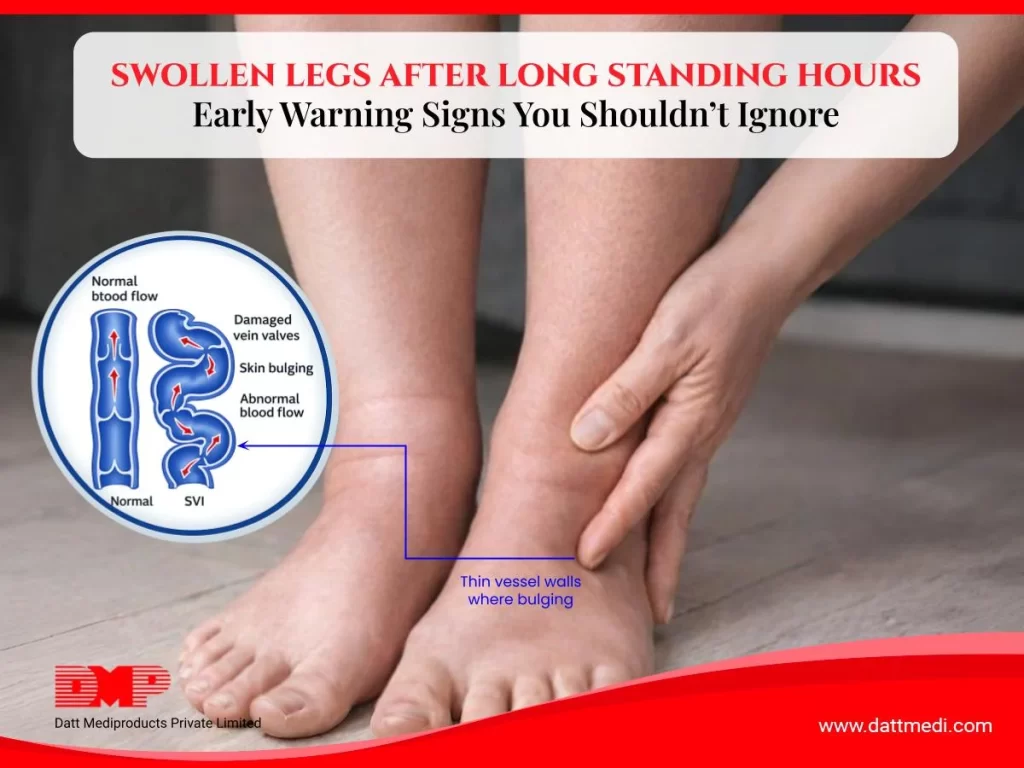
When you stand still for extended periods, the second mechanism — the muscle pump — largely switches off. Blood moves sluggishly in the lower leg veins, pressure builds, and fluid begins leaking through the vein walls into the surrounding tissue. This is venous pooling, and the visible result is swelling around the ankles and lower legs.

The swelling is typically worse at the end of the day and improves after lying down or elevating the legs, because horizontal positioning removes gravity from the equation. This pattern — worsening through the day, improving with rest — is the clearest indicator that prolonged standing is the primary cause.

Why Some People Swell More Than Others

1. Venous Valve Insufficiency

Healthy veins contain one-way valves that prevent blood from flowing back toward the feet between heartbeats. In some people, these valves weaken or become leaky — a condition called chronic venous insufficiency. When this happens, blood pools more easily, swelling occurs faster, and visible varicose veins may develop over time. People with venous insufficiency are significantly more affected by prolonged standing than those with healthy valve function.

2. Varicose Veins

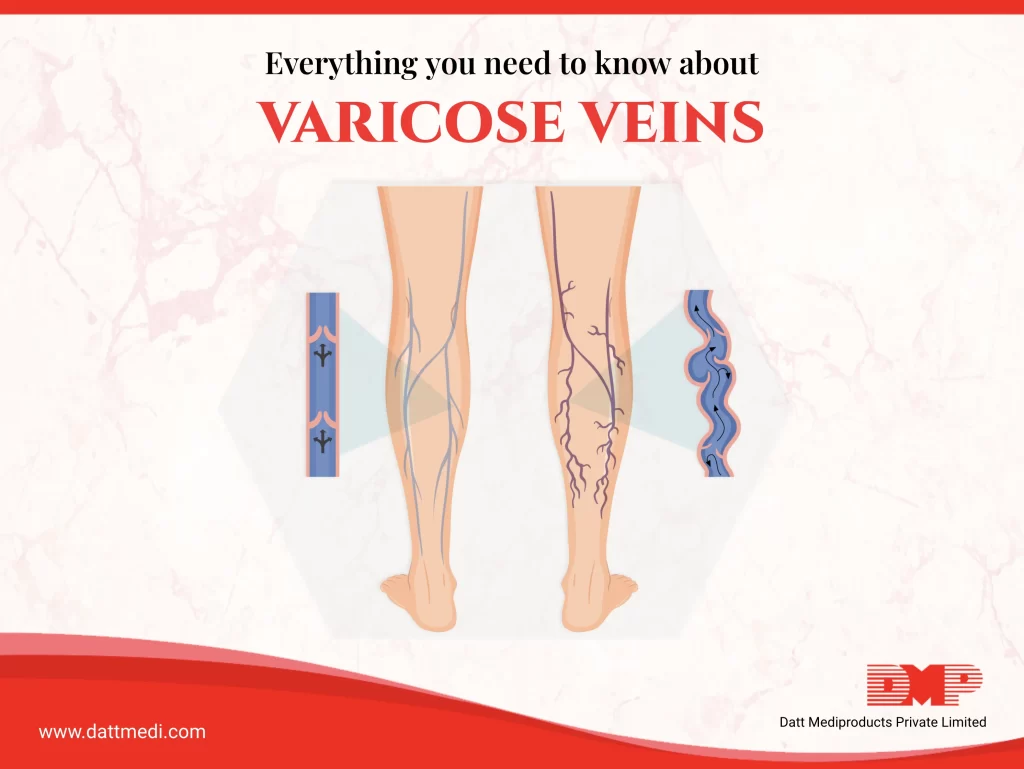
Varicose veins are enlarged, twisted veins that have lost their structural integrity. They are a direct consequence of venous valve failure and represent a more advanced stage of venous disease. Standing for long periods accelerates the pooling in these vessels and worsens both swelling and the aching, heaviness, and fatigue that accompany it.
Related reading: The Ultimate Guide to Understanding Varicose Veins

3. Body Weight and Physical Conditioning

Higher body weight places increased pressure on the venous system in the legs. Reduced physical fitness means the leg muscles — which are the primary pump for venous return — are less effective. Both factors increase susceptibility to standing-related swelling.

4. Occupation and Daily Pattern

The duration of unbroken standing matters more than total standing time. Someone who stands for eight hours but walks between tasks frequently will experience less pooling than someone who stands relatively still at a counter or workstation. The absence of walking breaks is a key risk factor.

When Swelling Needs Medical Attention

Swelling that follows the pattern described above — building through the day, resolving overnight — is generally benign and related to venous pooling. However, some patterns warrant prompt medical evaluation:

  • Swelling that is sudden, severe, or in one leg only — may indicate deep vein thrombosis (DVT)
  • Swelling accompanied by redness, warmth, or skin changes — may suggest infection or phlebitis
  • Swelling that does not improve after a full night’s rest
  • Swelling with associated chest pain, breathlessness, or palpitations — seek emergency care
  • Swelling in the context of heart, kidney, or liver conditions
If any of these apply, see a healthcare professional before starting any compression therapy.

Practical Measures That Reduce Standing-Related Swelling

Movement Breaks

Walking — even for two to three minutes per hour — reactivates the calf muscle pump and significantly reduces venous pooling. If walking is not possible, calf raises, foot circles, and toe pumps performed in place have a similar effect. The goal is to avoid completely static standing for long unbroken periods.

Leg Elevation After Work

Elevating the legs above heart level for 15–20 minutes after a long shift allows gravity to assist venous and lymphatic drainage. This is one of the most effective ways to accelerate overnight recovery and reduce residual swelling the next morning.

Footwear

Shoes with cushioned soles and low heels support natural foot movement and reduce fatigue. Tight footwear compresses the foot and can restrict venous return. Flat shoes without arch support reduce calf engagement during walking, which reduces the efficiency of the muscle pump.

Medical-Grade Compression Stockings

Compression stockings are the most evidence-supported intervention for managing venous pooling during prolonged standing. Unlike general support hosiery, medical-grade stockings apply graduated compression — highest at the ankle, reducing toward the knee or thigh — which mechanically assists venous return and prevents fluid from leaking into surrounding tissues.

Velcare® Varicose Vein Medical Compression Stockings

The Velcare® range from Datt Mediproducts is a medical-grade compression stocking designed specifically for venous conditions, including swelling from prolonged standing, phlebitis, varicose veins, venous insufficiency, oedema, deep vein thrombosis management, and post-surgical recovery.

Key specifications:

  • Class 2 compression: 23–32 mmHg — the clinical standard for moderate-to-severe venous conditions
  • Graduated compression: pressure is highest at the ankle and reduces toward the top of the stocking, actively assisting upward blood flow
  • 70% Nylon, 30% Spandex: breathable, latex-free, and suitable for daily extended wear
  • Four-way stretchability: conforms to the leg without restricting movement
  • Soft construction: designed for comfort during long work hours
  • Available in S, M, L, XL

The Velcare® range is available in three styles to suit different clinical needs and preferences:

StyleCoverageBest For
Open Toe, A-D (no silicone band)Ankle to kneeEveryday leg swelling from standing; those who prefer open toe for breathability or foot conditions
Open Toe, A-D with Silicone BandAnkle to kneeUsers who need the stocking to stay in place securely without rolling down during a long shift
Open Toe, A-G with Silicone BandAnkle to groinMore extensive venous conditions, post-surgical recovery, or where thigh-high coverage is clinically indicated

How to Use Compression Stockings Effectively

Put Them On Before Getting Up

Compression stockings work best when applied before venous pooling begins. Put them on in the morning before standing up, while the legs are still at their least swollen. Applying them after standing for an hour is significantly less effective.

Wear Through the Working Day

Keep the stockings on throughout the shift. Removing them mid-day and then reapplying is less effective than continuous wear during standing hours.

Remove in the Evening

Once you are off your feet and resting, the stockings can be removed. Compression is needed during the periods of venous stress — standing and walking — not during rest.

Sizing Matters

An incorrectly sized stocking — too loose or too tight — will not deliver the intended compression level. Measure ankle and calf circumference, and refer to the Velcare® sizing guide before ordering. When in doubt, consult a healthcare professional or pharmacist for fitting guidance.

Care and Longevity

Medical compression stockings should be washed regularly — typically after each wear — in cool water with gentle detergent. Air dry rather than tumble dry to preserve the elastic fibres. Most compression stockings require replacement every 4–6 months with regular daily use, as the elasticity gradually reduces.

Managing Leg Health Is a Daily Habit

Standing-related leg swelling is a physical consequence of how blood moves — or stops moving — during long hours on your feet. It is not inevitable. Movement breaks, appropriate footwear, evening elevation, and the right compression support together make a significant and measurable difference.

For people with varicose veins, venous insufficiency, or a job that keeps them standing for the majority of their working day, medical-grade graduated compression stockings are the most clinically supported intervention available. The Velcare® Varicose Vein Compression Stocking range is designed for exactly this context — durable, breathable, and calibrated to the compression level that delivers real results.
Visit www.dattmedi.com for more infomation.
Share:

Frequnently Asked Questions

Yes, for most people managing venous conditions or standing-related swelling. Medical-grade compression stockings like Velcare® are designed for daily use. If you have arterial circulation problems, peripheral neuropathy, or certain skin conditions, consult a healthcare professional before use.

Class 1 stockings provide 18–21 mmHg of compression and are suited to mild venous conditions or preventive use. Class 2 (23–32 mmHg), like the Velcare® range, is the clinical standard for moderate-to-severe varicose veins, oedema, DVT management, and post-surgical recovery. The higher compression provides meaningful mechanical support for the venous return.

Yes. Compression stockings are often recommended as a preventive measure for people with varicose veins who stand for long periods, even before significant swelling develops. They slow the progression of venous insufficiency and reduce daily discomfort.

For most people managing everyday leg swelling from work, the A-D (ankle to knee) open toe style without silicone band is sufficient. If the stocking tends to roll or slip during a long shift, the silicone band version provides a more secure fit. A-G coverage (ankle to groin) is typically recommended when there is venous involvement above the knee, or when a clinician has specifically advised thigh-high stockings.

For mild, everyday swelling from standing, most adults can use Class 2 compression stockings without a prescription. However, if you have diabetes, arterial disease, heart conditions, or if the swelling is unexplained or asymmetric, consult a healthcare professional before starting compression therapy.

Recent Blogs
Diabetic foot ulcer being examined for chronic wound care treatment

Managing Chronic Wounds in Diabetic Patients: Tips and Best Practices

Chronic wounds, such as diabetic foot ulcers and pressure sores, pose a significant challenge to healthcare providers due to their resistance to healing. Factors such as poor circulation, diabetes, and malnutrition contribute to the delayed tissue regeneration seen in these wounds. This guide explores strategies to improve outcomes for diabetic patients dealing with chronic wounds.

Understanding Chronic Wounds

Chronic wounds develop and persist due to underlying systemic issues that impede natural healing. These include:

  • Diabetic Foot Ulcers: Resulting from reduced blood flow and nerve damage, often on the feet.
  • Pressure Sores (Bedsores): Caused by prolonged pressure on the skin, commonly in bedridden patients.
  • Venous Leg Ulcers: Linked to chronic venous insufficiency, where blood flow back to the heart is impaired.
Example:
A diabetic foot ulcer might remain unhealed due to compromised blood circulation and nerve damage, requiring a tailored approach compared to pressure sores caused by external forces.

Selecting the Right Dressing

The choice of wound dressing plays a pivotal role in effective management:

  • Hydrocolloid Dressings: Ideal for moderately exuding wounds; they absorb moisture, maintain a moist healing environment, and prevent infections. This makes them particularly effective for diabetic foot ulcers.
  • Hydrogels: Suitable for dry wounds as they provide moisture to the wound bed, encouraging healing. However, they may not prevent infection and should be used in conjunction with appropriate infection control measures.


Infection Control: The Role of Antimicrobial Dressings

Chronic wounds are prone to infections that can hinder the healing process. Antimicrobial dressings play a crucial role in managing these infections and promoting recovery.

Introducing Velvert®, a natural-based patented antimicrobial formulation designed to address infection control in chronic wounds. Velvert® is broad-spectrum in nature, effectively combating all major superbugs and accelerating the wound healing process. Its advanced formulation is highly biocompatible, ensuring no side effects or contraindications, making it a safe and reliable choice for patients.

Example: 
A pressure ulcer with a high risk of bacterial colonization benefits greatly from using Velvert®. Its broad-spectrum action not only reduces bacterial load but also creates an optimal healing environment, leading to faster recovery and improved patient outcomes.

Managing Exudate Levels

Excess moisture or dryness can impede wound healing. Dressing selection must align with the wound’s exudate level:

  • Foam Dressings: Effective for heavily exuding wounds due to their superior absorption capabilities.
  • Hydrocolloid Dressings: Suitable for wounds with moderate exudate, maintaining moisture balance without risking maceration.

Foam vs. Hydrocolloid for Heavy Exudate

Foam dressings are the preferred choice for high-exudate wounds as they prevent saturation and maceration. Hydrocolloid dressings may become overwhelmed, compromising the wound’s healing environment.

Nutritional and Lifestyle Interventions

Healing chronic wounds requires addressing systemic factors, including nutrition and blood glucose management:

  • Nutrition: Adequate intake of vitamins A, C, zinc, and protein supports tissue regeneration and immune function.
  • Glucose Control: Poor glucose control in diabetic patients delays healing. Maintaining optimal levels is essential for recovery.

For instance, a diabetic patient consuming a nutrient-rich diet while effectively managing their glucose levels is more likely to experience faster wound healing.

Continuous Monitoring and Expert Care

Regular assessment by healthcare professionals is essential for chronic wound management. Adjustments to treatment plans based on wound progress ensure the best outcomes. Starting with antimicrobial dressings often sets the foundation for successful healing without the need to switch to standard dressings.

Chronic wounds in diabetic patients demand a multifaceted approach that includes selecting the right dressings, managing infections and exudate, and addressing systemic factors such as nutrition and glucose control. By following these best practices, healthcare providers can significantly improve healing outcomes, reduce complications, and enhance the quality of life for patients.

At Datt Mediproducts, we are committed to delivering next-generation wound care solutions that prioritize patient comfort and clinical efficacy. Our range of advanced dressings, including gauze-based, film, post-operative, and antimicrobial options, is designed to cater to diverse wound management needs. Explore our comprehensive portfolio and discover how we can support your wound care journey.

Choosing the Right Compression Stocking for Varicose Veins

Varicose Veins are enlarged, twisted veins that bulge under your skin. They normally develop when blood flow is obstructed and are more than just a cosmetic concern; they can cause discomfort and, if untreated, lead to more serious health issues. Medical compression stockings and wraps, such as the Velcare® range from us, provide an effective solution for managing varicose veins. Understanding their benefits and features can help you make an informed choice.

Velcare® -Varicose Veins Stocking: Support Where You Need It

Designed to offer Class 2 Compression (23-32mmHg), Velcare® -Varicose Veins Stocking are ideal for promoting circulation and reducing varicose vein symptoms. The graduated compression applies gentle pressure from the ankle upwards, aiding blood flow back to the heart.

Key Features of Velcare® -Varicose Veins Stocking:

  • Effective Compression: Reduces swelling and discomfort associated with varicose veins.
  • Comfortable Wear: Soft, breathable, latex-free materials ensure all-day comfort.
  • Durable Construction: Four-way stretchability enhances flexibility and durability for long-term use.
  • Medical Grade Quality: Designed to meet medical standards for effective varicose vein management.


Velcare® -Inelastic Wrap: Customizable Compression

For those preferring an alternative to traditional stockings, Velcare® -Inelastic Wrap provides targeted calf compression without constant adjustment. Adjustable straps offer a customized fit for optimal compression therapy tailored to individual needs.

Key Features of Velcare® -Inelastic Wrap:

  • Targeted Compression: Focuses on calf muscles for effective circulation support.
  • Adjustable Fit: Velcro straps ensure a secure fit and ease of adjustment.
  • Ease of Use: Simple application and removal for convenient daily wear.
  • Breathable Material: Allows the skin to breathe, suitable for extended use.

Choosing the Right Option for You

When deciding between Velcare® -Varicose Veins Stocking and Velcare® -Inelastic Wrap, consider your lifestyle, comfort preferences, and specific medical needs. Both options offer effective relief for varicose veins, with the stockings providing graduated compression and the wrap offering targeted support and ease of use.

Whether you choose the graduated compression of Velcare® -Varicose Veins Stocking or the targeted support of Velcare® -Inelastic Wrap, we as Datt Mediproducts, ensures you receive high-quality products designed to improve circulation and alleviate varicose vein symptoms. Explore more about Velcare® products and find the right solution for managing your varicose veins with us.

Logo

Datt Mediproducts Private Limited

Loading