
Search by Blog
Read by Category

Your healing journey continues beyond this blog

Find the right products for better recovery at online store
Cart Image
Leg Swelling after prolonged standing due to fluid retention

If your legs feel heavy, tight, or visibly swollen by the end of a long shift, you are not imagining it. Prolonged standing is one of the most common drivers of leg swelling in working adults — and it affects people in healthcare, retail, hospitality, manufacturing, teaching, and any other profession that keeps them on their feet for hours at a time.

This guide explains the underlying mechanism, the factors that make some people more susceptible than others, and what actually works to manage and prevent the problem — including when medical-grade compression stockings are the right tool.

What Actually Causes Leg Swelling When You Stand

The heart pumps blood downward through arteries with little effort. Getting it back up through the veins — against gravity — is a much harder job. 

The body relies on three mechanisms to do this: 

  • Venous valves that prevent flowing backward
  • The rhythmic contraction of calf and leg muscles that squeeze blood upward
  • The elastic recoil of the vein walls themselves.

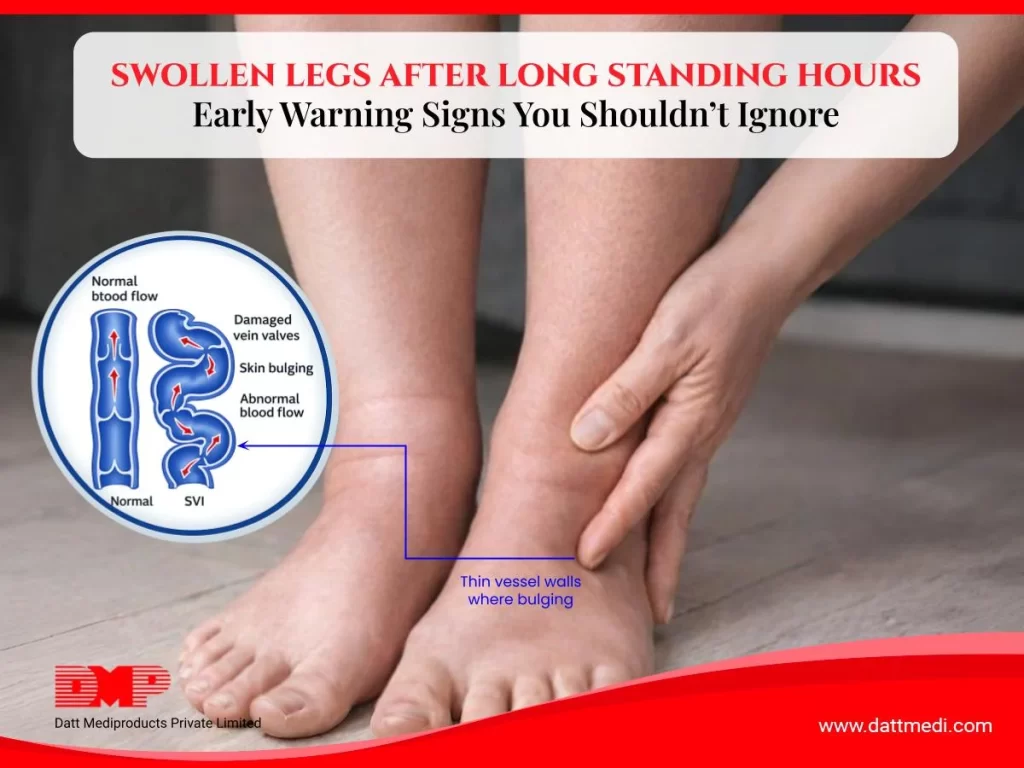
When you stand still for extended periods, the second mechanism — the muscle pump — largely switches off. Blood moves sluggishly in the lower leg veins, pressure builds, and fluid begins leaking through the vein walls into the surrounding tissue. This is venous pooling, and the visible result is swelling around the ankles and lower legs.

The swelling is typically worse at the end of the day and improves after lying down or elevating the legs, because horizontal positioning removes gravity from the equation. This pattern — worsening through the day, improving with rest — is the clearest indicator that prolonged standing is the primary cause.

Why Some People Swell More Than Others

1. Venous Valve Insufficiency

Healthy veins contain one-way valves that prevent blood from flowing back toward the feet between heartbeats. In some people, these valves weaken or become leaky — a condition called chronic venous insufficiency. When this happens, blood pools more easily, swelling occurs faster, and visible varicose veins may develop over time. People with venous insufficiency are significantly more affected by prolonged standing than those with healthy valve function.

2. Varicose Veins

Varicose veins are enlarged, twisted veins that have lost their structural integrity. They are a direct consequence of venous valve failure and represent a more advanced stage of venous disease. Standing for long periods accelerates the pooling in these vessels and worsens both swelling and the aching, heaviness, and fatigue that accompany it.
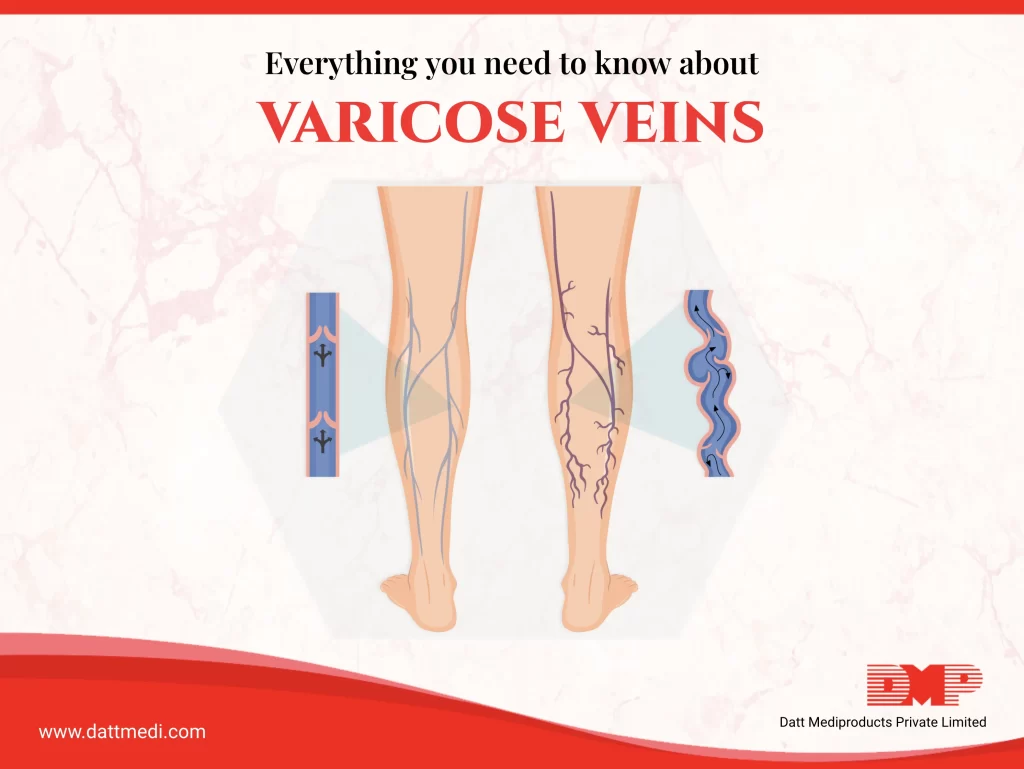
Related reading: The Ultimate Guide to Understanding Varicose Veins

3. Body Weight and Physical Conditioning

Higher body weight places increased pressure on the venous system in the legs. Reduced physical fitness means the leg muscles — which are the primary pump for venous return — are less effective. Both factors increase susceptibility to standing-related swelling.

4. Occupation and Daily Pattern

The duration of unbroken standing matters more than total standing time. Someone who stands for eight hours but walks between tasks frequently will experience less pooling than someone who stands relatively still at a counter or workstation. The absence of walking breaks is a key risk factor.

When Swelling Needs Medical Attention

Swelling that follows the pattern described above — building through the day, resolving overnight — is generally benign and related to venous pooling. However, some patterns warrant prompt medical evaluation:

  • Swelling that is sudden, severe, or in one leg only — may indicate deep vein thrombosis (DVT)
  • Swelling accompanied by redness, warmth, or skin changes — may suggest infection or phlebitis
  • Swelling that does not improve after a full night’s rest
  • Swelling with associated chest pain, breathlessness, or palpitations — seek emergency care
  • Swelling in the context of heart, kidney, or liver conditions
If any of these apply, see a healthcare professional before starting any compression therapy.

Practical Measures That Reduce Standing-Related Swelling

Movement Breaks

Walking — even for two to three minutes per hour — reactivates the calf muscle pump and significantly reduces venous pooling. If walking is not possible, calf raises, foot circles, and toe pumps performed in place have a similar effect. The goal is to avoid completely static standing for long unbroken periods.

Leg Elevation After Work

Elevating the legs above heart level for 15–20 minutes after a long shift allows gravity to assist venous and lymphatic drainage. This is one of the most effective ways to accelerate overnight recovery and reduce residual swelling the next morning.

Footwear

Shoes with cushioned soles and low heels support natural foot movement and reduce fatigue. Tight footwear compresses the foot and can restrict venous return. Flat shoes without arch support reduce calf engagement during walking, which reduces the efficiency of the muscle pump.

Medical-Grade Compression Stockings

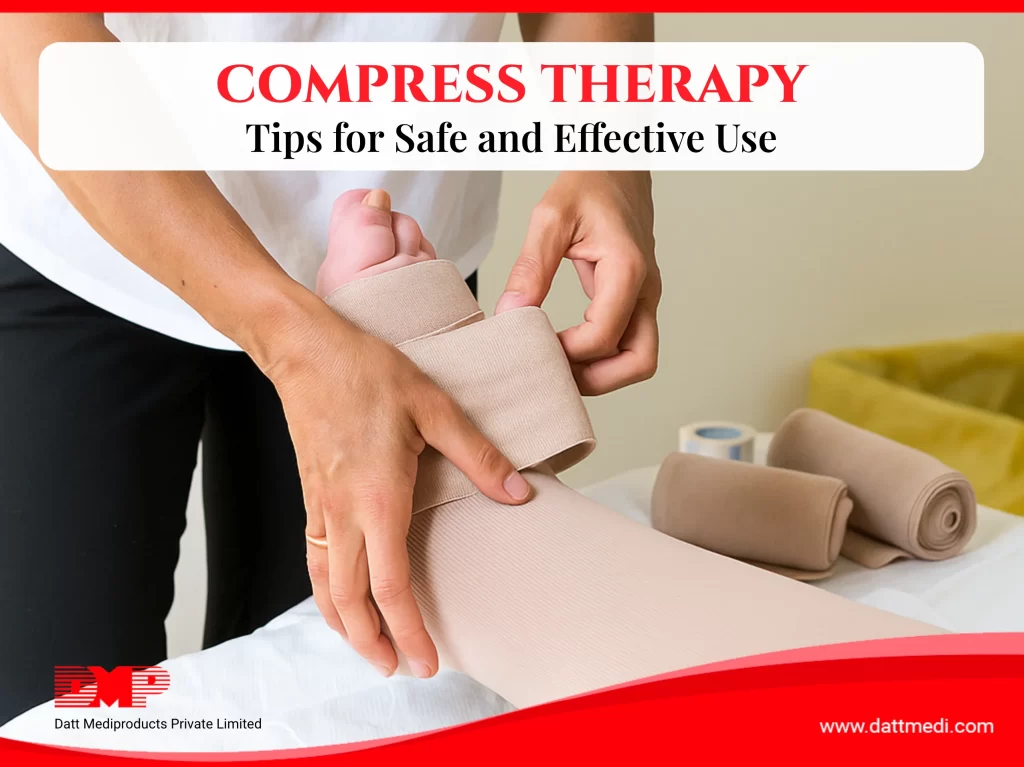
Compression stockings are the most evidence-supported intervention for managing venous pooling during prolonged standing. Unlike general support hosiery, medical-grade stockings apply graduated compression — highest at the ankle, reducing toward the knee or thigh — which mechanically assists venous return and prevents fluid from leaking into surrounding tissues.

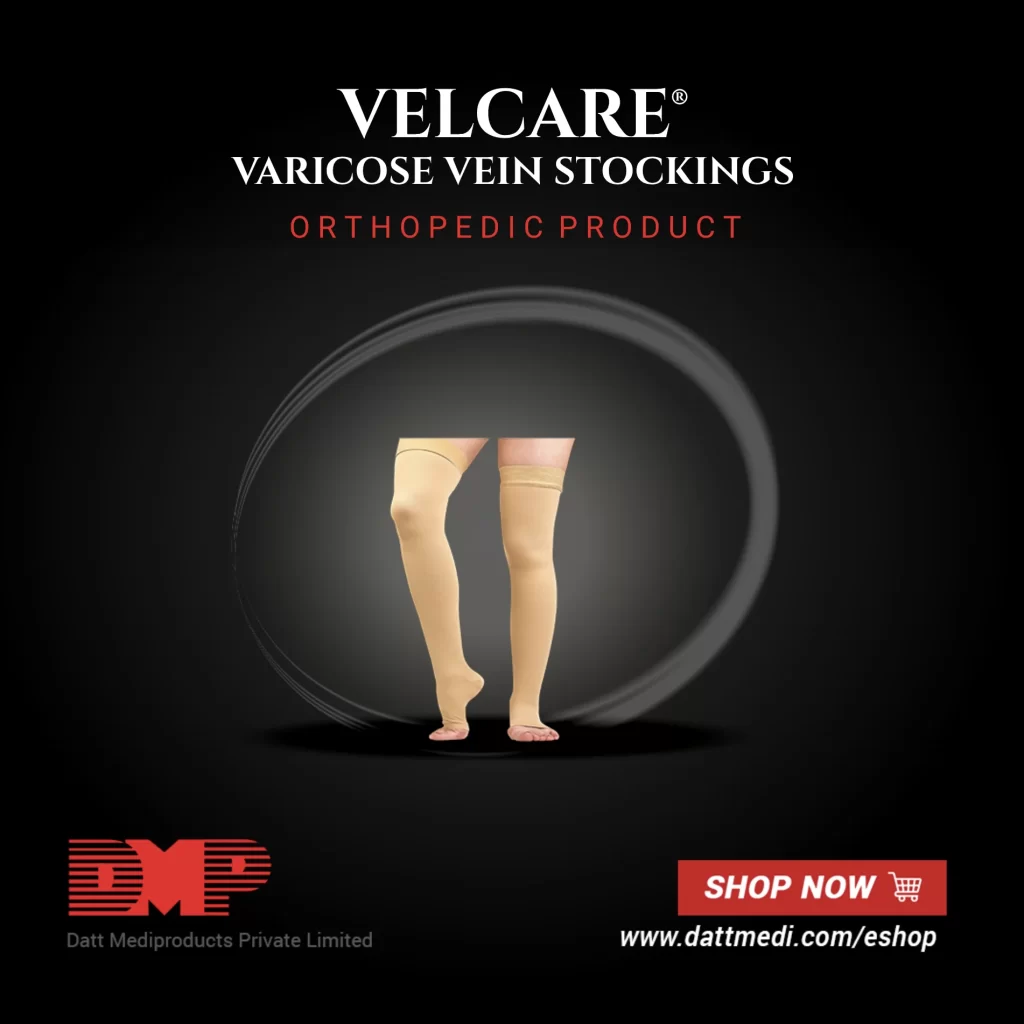
Velcare® Varicose Vein Medical Compression Stockings

The Velcare® range from Datt Mediproducts is a medical-grade compression stocking designed specifically for venous conditions, including swelling from prolonged standing, phlebitis, varicose veins, venous insufficiency, oedema, deep vein thrombosis management, and post-surgical recovery.

Key specifications:

  • Class 2 compression: 23–32 mmHg — the clinical standard for moderate-to-severe venous conditions
  • Graduated compression: pressure is highest at the ankle and reduces toward the top of the stocking, actively assisting upward blood flow
  • 70% Nylon, 30% Spandex: breathable, latex-free, and suitable for daily extended wear
  • Four-way stretchability: conforms to the leg without restricting movement
  • Soft construction: designed for comfort during long work hours
  • Available in S, M, L, XL

The Velcare® range is available in three styles to suit different clinical needs and preferences:

StyleCoverageBest For
Open Toe, A-D (no silicone band)Ankle to kneeEveryday leg swelling from standing; those who prefer open toe for breathability or foot conditions
Open Toe, A-D with Silicone BandAnkle to kneeUsers who need the stocking to stay in place securely without rolling down during a long shift
Open Toe, A-G with Silicone BandAnkle to groinMore extensive venous conditions, post-surgical recovery, or where thigh-high coverage is clinically indicated

How to Use Compression Stockings Effectively

Put Them On Before Getting Up

Compression stockings work best when applied before venous pooling begins. Put them on in the morning before standing up, while the legs are still at their least swollen. Applying them after standing for an hour is significantly less effective.

Wear Through the Working Day

Keep the stockings on throughout the shift. Removing them mid-day and then reapplying is less effective than continuous wear during standing hours.

Remove in the Evening

Once you are off your feet and resting, the stockings can be removed. Compression is needed during the periods of venous stress — standing and walking — not during rest.

Sizing Matters

An incorrectly sized stocking — too loose or too tight — will not deliver the intended compression level. Measure ankle and calf circumference, and refer to the Velcare® sizing guide before ordering. When in doubt, consult a healthcare professional or pharmacist for fitting guidance.

Care and Longevity

Medical compression stockings should be washed regularly — typically after each wear — in cool water with gentle detergent. Air dry rather than tumble dry to preserve the elastic fibres. Most compression stockings require replacement every 4–6 months with regular daily use, as the elasticity gradually reduces.

Managing Leg Health Is a Daily Habit

Standing-related leg swelling is a physical consequence of how blood moves — or stops moving — during long hours on your feet. It is not inevitable. Movement breaks, appropriate footwear, evening elevation, and the right compression support together make a significant and measurable difference.

For people with varicose veins, venous insufficiency, or a job that keeps them standing for the majority of their working day, medical-grade graduated compression stockings are the most clinically supported intervention available. The Velcare® Varicose Vein Compression Stocking range is designed for exactly this context — durable, breathable, and calibrated to the compression level that delivers real results.
Visit www.dattmedi.com for more infomation.
Share:

Frequnently Asked Questions

Yes, for most people managing venous conditions or standing-related swelling. Medical-grade compression stockings like Velcare® are designed for daily use. If you have arterial circulation problems, peripheral neuropathy, or certain skin conditions, consult a healthcare professional before use.

Class 1 stockings provide 18–21 mmHg of compression and are suited to mild venous conditions or preventive use. Class 2 (23–32 mmHg), like the Velcare® range, is the clinical standard for moderate-to-severe varicose veins, oedema, DVT management, and post-surgical recovery. The higher compression provides meaningful mechanical support for the venous return.

Yes. Compression stockings are often recommended as a preventive measure for people with varicose veins who stand for long periods, even before significant swelling develops. They slow the progression of venous insufficiency and reduce daily discomfort.

For most people managing everyday leg swelling from work, the A-D (ankle to knee) open toe style without silicone band is sufficient. If the stocking tends to roll or slip during a long shift, the silicone band version provides a more secure fit. A-G coverage (ankle to groin) is typically recommended when there is venous involvement above the knee, or when a clinician has specifically advised thigh-high stockings.

For mild, everyday swelling from standing, most adults can use Class 2 compression stockings without a prescription. However, if you have diabetes, arterial disease, heart conditions, or if the swelling is unexplained or asymmetric, consult a healthcare professional before starting compression therapy.

Recent Blogs
Why Muscle Strains Happen

Understanding Muscle Strains: Causes and Effective Recovery Strategies

A muscle strain, or muscle pull, occurs when a muscle is overstretched or torn. This common injury can disrupt daily activities, causing pain and limiting mobility. Understanding the causes and effective recovery strategies can help you heal faster and prevent future injuries. Muscle strains typically happen when the muscle is pushed beyond its limit.

Key factors include:

  1. Overexertion: Intense activity without proper preparation.
  2. Sudden Movements: Abrupt actions, like twisting or jerking.
  3. Lack of Warm-up: Skipping stretching or warm-up exercises.
  4. Poor Posture or Repetitive Motion: These can strain muscles over time.

Recognizing the signs early helps with effective treatment:

  • Sharp or throbbing pain, especially during movement.
  • Inflammation in the affected area.
  • Difficulty moving the muscle fully.
  • Visible bruising from damaged blood vessels.

Start your recovery with these steps:

Rest: Avoid using the muscle until pain subsides.

Ice: Apply ice for 20 minutes every 2 hours to reduce swelling and numb the pain.

Compression: Use a compression bandage to stabilize the muscle and reduce swelling.

Elevation: Elevate the injured area to help reduce swelling.

Velcool®: Instant Cooling Relief

Cooling is one of the best ways to reduce inflammation post-activity. Cold therapy constricts blood vessels, decreases swelling, and slows inflammation. Velcool® offers a convenient and effective solution for reducing swelling and alleviating pain. Its long-lasting cooling effect ensures optimal comfort during the initial recovery phase.
Compression improves circulation and accelerates healing by reducing swelling. Our compression bandages provide targeted support to help the muscle heal more efficiently.

Cokomp™ : Reliable Compression Support

Once inflammation is controlled, compression is crucial for ongoing healing. Cokomp™ provides targeted support, ensuring consistent pressure that enhances circulation and accelerates the healing process. Its lightweight and durable material makes it a perfect choice for both acute care and ongoing recovery.

Once pain subsides:
Begin gentle stretches to restore flexibility.
Slowly incorporate exercises to rebuild muscle strength and prevent future injuries.
Don’t rush back into your normal routine.

Additional recovery tips:

  1. As healing progresses, physical therapy can restore range of motion.
  2. After 48 hours, apply heat to relax muscles and improve circulation.
  3. Stay hydrated and eat a balanced diet rich in protein and vitamins to support muscle repair.

When to consult a healthcare provider:

  1. Persistent pain despite rest.
  2. Inability to move the muscle.
  3. Severe swelling that doesn’t improve.

To reduce the risk of future strains:

  1. Always stretch before physical activity.
  2. Regular strength training can prevent strains.
  3. Ensure good form during exercise to avoid unnecessary strain.

By understanding muscle strains and following effective recovery strategies, you can heal faster and prevent re-injury. Our compression bandages are a key tool in your recovery, offering support and reducing swelling for quicker healing. Explore innovative solutions to support a healthier, more active season ahead.

Managing Orthopedic Injury

From the Field to Recovery: Orthopedic Injury Essentials for Athletes

Sports seasons bring excitement and competition, but they also increase the risk of orthopedic injuries. Athletes must adopt preventive measures and utilize effective orthopedic injury management strategies to ensure peak performance and long-term health.

This guide explores common injuries, prevention strategies, and the role of orthopedic products in recovery.

Common Orthopedic Injuries in Athletes

Athletes often face various orthopedic injury, including:

1. Sprains, Strains, and Fractures

Sprains: A sprain occurs when ligaments (the tissue connecting bones) are stretched or torn, often caused by sudden twisting or rolling of a joint.
Example: A soccer player might twist their ankle while changing direction quickly on the field, resulting in an ankle sprain.

Strains: A strain is an injury to muscles or tendons caused by overuse, overstretching, or excessive force.
Example: A weightlifter lifting a heavy load with improper form might experience a strain in their lower back muscles.

Fractures: A fracture refers to a break in a bone, which can occur due to high-impact collisions or falls.
Example: A cyclist who crashes and lands on their arm might suffer a wrist fracture.

2. Tendon Injuries

Tendons are the fibrous tissues connecting muscles to bones, and they can become inflamed or torn due to overuse or repetitive movements.

Example: 
A tennis player might develop tennis elbow, a condition caused by repetitive strain on the tendons of the forearm. Similarly, a runner could experience Achilles tendonitis from frequent uphill running or poor footwear.

3. Overuse Injuries

Overuse injuries result from repetitive stress on bones, muscles, or joints without adequate rest or recovery time.
Example: A marathon runner who increases mileage too quickly might develop a stress fracture in their foot.

Stress Fractures: Tiny cracks in bones caused by repetitive impact activities like running or jumping.

Shin Splints: Pain along the shin bone caused by overuse of lower leg muscles.
Example: A basketball player who practices on hard courts for extended periods might develop shin splints due to the repetitive impact.

Prevention Strategies for Athletes

Preventing injuries requires a proactive approach that combines preparation, proper equipment, and targeted training:

1. Warm-Up and Cool-Down Routines:

Dynamic stretching and gradually increasing activity levels prepare muscles for exertion, improving flexibility and blood flow. Post-activity stretching helps reduce muscle stiffness and aids in recovery.

2. Proper Gear:

Using well-fitted shoes and sport-specific protective equipment minimizes the risk of injuries caused by poor support or inadequate protection.

3. Strength and Flexibility Training:

Incorporating targeted exercises strengthens muscles, enhances joint stability, and improves range of motion, reducing the likelihood of injury.

Example: 
A sprinter who performs a comprehensive warm-up involving dynamic stretches (such as leg swings and high knees) and wears track-specific, cushioned running shoes is less likely to experience a hamstring strain compared to an athlete who skips these steps and runs in ill-fitted or non-specialized shoes.

Innovative Orthopedic Solutions

Orthopedic products such as Cokomp™ Compression Bandage, Velsoft® Adhesive Bandage, and Velfour®-Plus are designed to provide tailored support and recovery solutions. From managing swelling with targeted compression to providing flexible and lightweight joint support, these products address a variety of athletic needs effectively.

When to Seek Professional Help
Certain signs indicate the need for medical attention to prevent further complications:

  • Severe swelling or bruising that doesn’t subside.
  • Inability to bear weight on the affected limb.
  • Persistent pain or visible deformities.

Physical therapy often plays a key role in recovery, helping athletes regain strength and mobility post-injury.

Building a Safe Sports Culture
Fostering a safe sports environment involves education and awareness:

  • Educating Athletes: Emphasize the importance of injury prevention, recognizing symptoms, and administering first aid.
  • Role of Coaches and Trainers: Encourage proper technique, regular rest, and adherence to safety protocols to minimize injury risks.

Fostering a safe sports environment requires a holistic strategy that emphasizes education, preparation, and recovery. By integrating preventive measures, timely intervention, and the right orthopedic solutions, athletes can minimize the impact of injuries while optimizing performance.

Our advanced orthopedic solutions provide tailored support and comfort, helping athletes recover faster and maintain mobility. Whether it’s targeted compression or flexible support, our products are designed with athletes’ unique needs in mind.

Equip yourself for a safer, healthier sports season with Datt Mediproducts. Our innovative range of orthopedic injury solutions, including high-quality compression bandages and supportive products, is designed to meet the unique needs of athletes. Discover how our products can enhance recovery and performance at Datt Mediproducts.

Logo

Datt Mediproducts Private Limited

Loading