

Search by Blog
Read by Category

Your healing journey continues beyond this blog

Find the right products for better recovery at online store
Cart Image
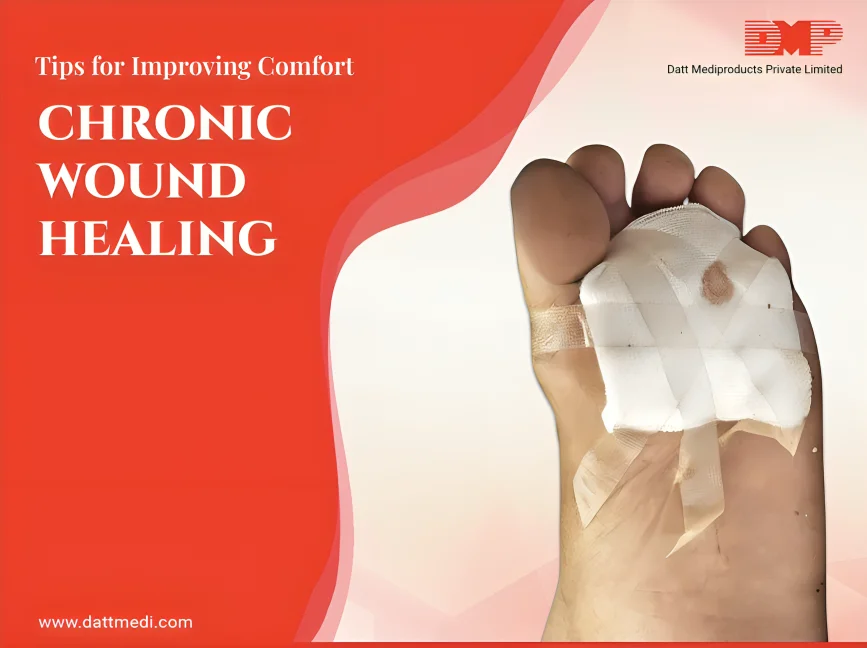
Diabetic foot ulcer being examined for chronic wound care treatment

Managing Chronic Wounds in Diabetic Patients: Tips and Best Practices

Chronic wounds, such as diabetic foot ulcers and pressure sores, pose a significant challenge to healthcare providers due to their resistance to healing. Factors such as poor circulation, diabetes, and malnutrition contribute to the delayed tissue regeneration seen in these wounds. This guide explores strategies to improve outcomes for diabetic patients dealing with chronic wounds.

Understanding Chronic Wounds

Chronic wounds develop and persist due to underlying systemic issues that impede natural healing. These include:

  • Diabetic Foot Ulcers: Resulting from reduced blood flow and nerve damage, often on the feet.
  • Pressure Sores (Bedsores): Caused by prolonged pressure on the skin, commonly in bedridden patients.
  • Venous Leg Ulcers: Linked to chronic venous insufficiency, where blood flow back to the heart is impaired.
Example:
A diabetic foot ulcer might remain unhealed due to compromised blood circulation and nerve damage, requiring a tailored approach compared to pressure sores caused by external forces.

Selecting the Right Dressing

The choice of wound dressing plays a pivotal role in effective management:

  • Hydrocolloid Dressings: Ideal for moderately exuding wounds; they absorb moisture, maintain a moist healing environment, and prevent infections. This makes them particularly effective for diabetic foot ulcers.
  • Hydrogels: Suitable for dry wounds as they provide moisture to the wound bed, encouraging healing. However, they may not prevent infection and should be used in conjunction with appropriate infection control measures.


Infection Control: The Role of Antimicrobial Dressings

Chronic wounds are prone to infections that can hinder the healing process. Antimicrobial dressings play a crucial role in managing these infections and promoting recovery.

Introducing Velvert®, a natural-based patented antimicrobial formulation designed to address infection control in chronic wounds. Velvert® is broad-spectrum in nature, effectively combating all major superbugs and accelerating the wound healing process. Its advanced formulation is highly biocompatible, ensuring no side effects or contraindications, making it a safe and reliable choice for patients.

Example: 
A pressure ulcer with a high risk of bacterial colonization benefits greatly from using Velvert®. Its broad-spectrum action not only reduces bacterial load but also creates an optimal healing environment, leading to faster recovery and improved patient outcomes.

Managing Exudate Levels

Excess moisture or dryness can impede wound healing. Dressing selection must align with the wound’s exudate level:

  • Foam Dressings: Effective for heavily exuding wounds due to their superior absorption capabilities.
  • Hydrocolloid Dressings: Suitable for wounds with moderate exudate, maintaining moisture balance without risking maceration.

Foam vs. Hydrocolloid for Heavy Exudate

Foam dressings are the preferred choice for high-exudate wounds as they prevent saturation and maceration. Hydrocolloid dressings may become overwhelmed, compromising the wound’s healing environment.

Nutritional and Lifestyle Interventions

Healing chronic wounds requires addressing systemic factors, including nutrition and blood glucose management:

  • Nutrition: Adequate intake of vitamins A, C, zinc, and protein supports tissue regeneration and immune function.
  • Glucose Control: Poor glucose control in diabetic patients delays healing. Maintaining optimal levels is essential for recovery.

For instance, a diabetic patient consuming a nutrient-rich diet while effectively managing their glucose levels is more likely to experience faster wound healing.

Continuous Monitoring and Expert Care

Regular assessment by healthcare professionals is essential for chronic wound management. Adjustments to treatment plans based on wound progress ensure the best outcomes. Starting with antimicrobial dressings often sets the foundation for successful healing without the need to switch to standard dressings.

Chronic wounds in diabetic patients demand a multifaceted approach that includes selecting the right dressings, managing infections and exudate, and addressing systemic factors such as nutrition and glucose control. By following these best practices, healthcare providers can significantly improve healing outcomes, reduce complications, and enhance the quality of life for patients.

At Datt Mediproducts, we are committed to delivering next-generation wound care solutions that prioritize patient comfort and clinical efficacy. Our range of advanced dressings, including gauze-based, film, post-operative, and antimicrobial options, is designed to cater to diverse wound management needs. Explore our comprehensive portfolio and discover how we can support your wound care journey.
Visit www.dattmedi.com for more infomation.
Share:
Recent Blogs

Velfour® is a revolutionary 4-layer compression bandaging system designed to manage venous leg ulcers and associated conditions. With a sub-bandage pressure of 35-40 mm Hg at the ankle, this high-compression system incorporates elastic layers to achieve sustained compression and promote healing.

Velfour® consists of four essential components that work together synergistically to deliver effective compression and support:

1. Velfour®#1 (Orthopaedic wool):

This layer serves as the primary absorbent material, effectively managing exudate while redistributing pressure evenly around the limb.

2. Velfour® #2 (Cotton crepe bandage):

Designed to enhance absorbency, the cotton crepe bandage smooths out the Orthopaedic Wool layer, ensuring optimal comfort and performance.

3. Velfour®#3 (Elastic Compression Bandage):

The first layer of elastic compression sub-bandage, exerting a pressure of approximately 17 mm Hg at the ankle. This layer provides the initial compression necessary for effective treatment.

4. Velfour® #4 (Cohesive Bandage):

The second layer of compression, adding the remaining 23 mm Hg of pressure while ensuring the bandage remains securely in place. The cohesive properties of this bandage contribute to its stability and adherence.

Velfour® offers a range of features and benefits that make it an exceptional choice for venous leg ulcer management:

1. Effective compression:

With a pressure of approximately 40 mm Hg at the ankle, it delivers the necessary compression to promote healing, gradually reducing to 17 mm Hg at the knee. This graduated compression approach ensures optimal therapeutic results.

2. Graduated compression:

The bandage provides high compression at the ankle and gradually decreases the pressure at the calf.

3. Sustained compression:

It maintains a consistent level of compression for up to a full week, allowing for uninterrupted therapy and reducing the frequency of bandage changes. The treatment process is made simpler by this feature, which also increases patient compliance.

The leading option for treating venous leg ulcers, Velfour® also has additional advantages for a number of other ailments, such as:

1. Treatment of Venous Ulcers:

It improves results by hastening the healing process and facilitating the closure of venous leg ulcers.

2. Prevention of Ulcer Recurrence:

In cases where traditional compression stockings are not tolerated, It provides an effective alternative for preventing the recurrence of venous ulcers.

3. Symptomatic Relief of Superficial Thrombophlebitis:

The compression offered by Velfour®alleviates pain and inflammation associated with superficial thrombophlebitis, providing much-needed comfort to patients.

4. Traumatic Wounds with Local Edema:

It aids in reducing edema and promoting the healing of traumatic wounds, helping to restore the affected area to its optimal state.

5. Venous/Lymphatic Disorders:

It is suitable for managing various venous and lymphatic disorders by providing effective compression and support.

To ensure the optimal application and use of Velfour®, it is essential to follow these guidelines:

1. Limb Assessment:

Accurate measurement of the ankle circumference is crucial to determine the appropriate combination of bandages needed. Any changes in limb contour should also be noted for reference.

2. Wound Assessment:

Mapping the ulcer provides a baseline to track progress throughout the treatment. Regular wound assessment enables healthcare professionals to evaluate the effectiveness of Velfour® and make necessary adjustments.

3. Pain Assessment:

This plays a crucial role in managing venous leg ulcers. Compression therapy with it can alleviate pain, although a slight increase may occur initially.

Velfour® stands as a game-changing solution for managing venous leg ulcers. Its innovative 4-layer compression bandage system, combined with its effective pressure distribution and sustained compression, offers unparalleled benefits for patients and healthcare professionals alike.

We are committed to providing valuable information and insights to support your journey towards improved wound healing and patient well-being.

Velfiz Edge CHG

Intravenous catheterization is a common practice for administering fluids directly into the blood stream. It is often associated with a lethal and a very frequent complication of Catheter-related bloodstream infection (CRBSI).

Catheter-related bloodstream infections (CRBSI) are defined as the presence of bacteraemia originating from an intravenous catheter. CRBSIs are a leading cause of nosocomial infections associated with morbidity, mortality, and cost. 

(more…)
Logo

Datt Mediproducts Private Limited

Loading
