

Search by Blog
Read by Category

Your healing journey continues beyond this blog

Find the right products for better recovery at online store
Cart Image
Pneumonia and its Innovative Treatment Solutions

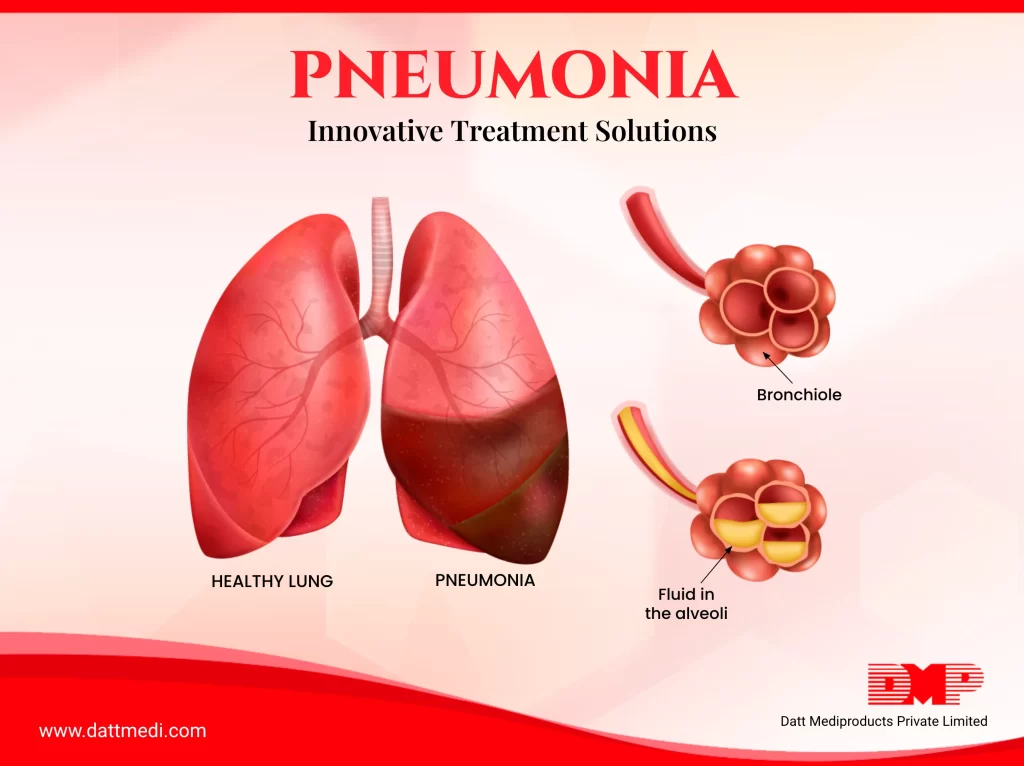
Do you know that Pneumonia is the foremost infectious disease causing death in children below 5 years of age? Let us understand what it is.

Pneumonia is an infection that affects human lungs and causes inflammation of the air sacs. The alveoli (air sacs) might get filled with pus or fluid resulting in cough.

Pneumonia may be caused by bacteria, viruses or fungi, hence its various types.
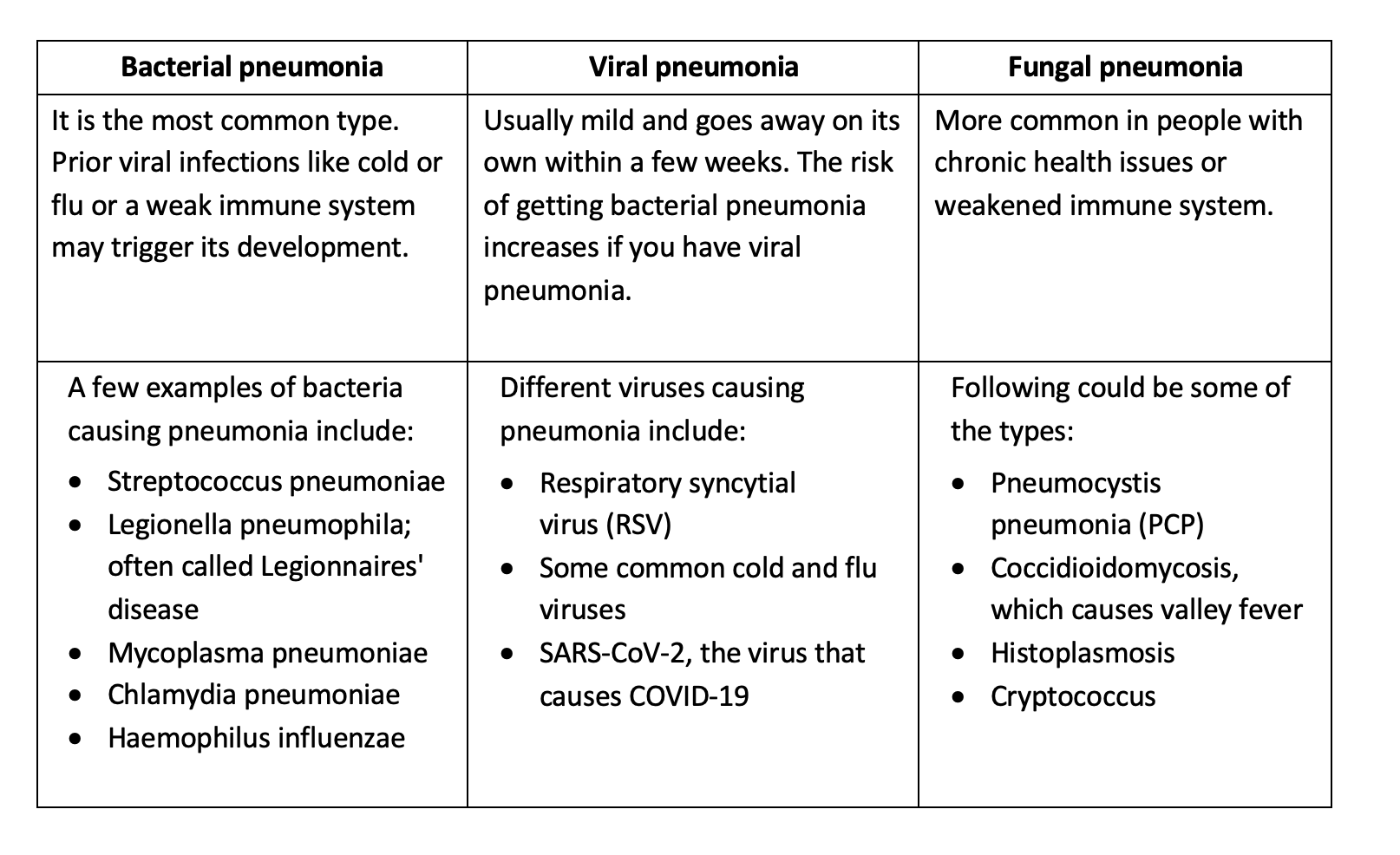
Apart from these, pneumonia may be classified as Hospital Acquired Pneumonia, Healthcare Acquired Pneumonia or Aspiration Pneumonia.

SYMPTOMS     

The seriousness of this indication may range from mild to life threatening, depending upon some factors like infection causing agent, age and overall health of the patient. The pus or the purulent material which accumulates in the air sacs causes cough with phlegm or pus, fever, sweating or shaking chills, and difficulty in breathing. Some other signs and symptoms may include the following:

-Chest pain while breathing or coughing
-Confusion or changes in mental awareness (in adults age 65 and older)
-Fatigue
-Lower than normal body temperature especially in adults age 65 or more and people with weak immune systems
-Nausea, vomiting or diarrhea
-Shortness of breath

CERTAIN KEY FACTS

-Pneumonia can occur in one or both the lungs
-As per WHO, Pneumonia accounted for 14% of all deaths of children under 5 years old, killing 740 180 children in 2019
-Only one third of children with pneumonia receive the antibiotics they need
-In spite of various appropriate antibiotic treatments, 14–35% of all hospitalised community-acquired pneumonia (CAP) patients die, which may be due to their age and comorbidities

INNOVATIVE TREATMENT SOLUTIONS

A few innovations to treat childhood pneumonia are under development. These include amoxicillin dispersible tablets, Low-cost, electricity-free oxygen concentrators, oxygen-in-a-box, which relies on chemical oxygen generation.

In 2019, USFDA approved a new antibiotic Xenleta (lefamulin) to treat community-acquired bacterial pneumonia in adults. The safety and efficacy of this drug was evaluated in 2 clinical trials with a total enrollment of 1,289 patients. The clinical success rates were found to be similar when compared to another antibiotic, moxifloxacin with or without linezolid.

ADJUVANT THERAPIES FOR IMPROVING PULMONARY BARRIER FUNCTION

Adrenomedullin: It is an endogenous peptide expressed by different vascular system cells. It improves pulmonary barrier dysfunction caused by different stimuli such as hydrogen peroxide, or Staphylococcus aureusα-toxin. Various studies show Adrenomedullin as a promising candidate for an adjuvant pharmacological approach to prevent lung injury in pneumonia.

Angiopoietin/Tie2 system: Angiopoietin (Ang)-1 and Ang-2 are ligands for the receptor tyrosine kinase Tie2. A short synthetic peptide VASCULOTIDE inhibits binding of these ligands and has proven to have therapeutic potential by counteracting lung vascular barrier dysfunction and reducing mortality.

Apart from these, stem based therapies are also available for pneumonia associated acute respiratory distress syndrome (ARDS).

We understand that it might take time to recover from pneumonia but trying to treat the indication on your own without consulting a doctor might not be a good option to consider.

Avoid taking cough medicines also, as cough is one of the body’s responses to get rid of infection. We @dattmediproducts recommend consulting a doctor at every step. The only precaution one can take is to stay away from smoke to help your lungs heal and take a lot of rest.
Visit www.dattmedi.com for more infomation.
Share:
Recent Blogs

In the field of healthcare, compression therapy plays a crucial role in the treatment of various conditions, particularly in wound care and managing lymphatic and vascular disorders. Compression therapy involves the application of pressure to affected areas to improve blood circulation, reduce swelling, and promote healing.

One important component of compression therapy is the compression bandages, specifically short-stretch bandages, which offer numerous benefits and are instrumental in achieving effective compression. In this blog, we will explore the purpose of Velkomp® Short Stretch Bandage and discuss the advantages and proper application techniques.

Understanding the Purpose of Short Stretch Bandages:

Short-stretch bandages are compression bandages that have the ability to stretch to a limited extent. Unlike long-stretch bandages, which can stretch significantly, short-stretch bandages provide firm and sustained compression. They are designed to exert pressure on the underlying tissues, offering support and reducing edema or swelling. The unique properties of short-stretch bandages make them ideal for providing moderate compression in a variety of healthcare applications.

Overview of Velkomp®

Short Stretch Bandage for Moderate Compression

Velkomp® Short Stretch Bandage is a high-quality, latex-free product widely used in compression therapy. It is specifically designed to deliver moderate compression, making it suitable for a range of conditions such as venous insufficiency, lymphedema, and chronic wounds. The bandage is made from a blend of cotton, ensuring a comfortable fit while maintaining the necessary compression levels. Its woven structure allows for air permeability, preventing excessive moisture build-up and promoting a healthy wound environment.

Key Advantages

Short Stretch Bandages for Compression Therapy

1. Controlled and Sustained Compression:

They provide controlled compression by exerting constant pressure on the affected area. This helps to reduce swelling, promote blood circulation, and alleviate discomfort.

2. Enhanced Patient Comfort:

They offer excellent conformability and elasticity, ensuring a snug fit without compromising patient comfort. The bandage adapts to body contours and movements, allowing for a full range of motion while providing the necessary compression.

3. Reduced Slippage and Shifting:

They have minimal recoil, which means they maintain their applied tension and stay securely in place. This prevents the bandage from slipping or shifting during movement, ensuring consistent compression therapy.

4. Proper Application Techniques:

When applying, it is essential to follow proper techniques to achieve optimal results.

Here are a few considerations to keep in mind:

  • Prepare the Skin:
    Ensure the skin is clean and dry before application to promote adherence and prevent skin irritation.
  • Apply with Appropriate Tension:
    Begin by applying the bandage with low tension and gradually increase the tension as you wrap. This helps achieve the desired compression while avoiding excessive pressure.
  • Overlap and Secure:
    Overlap each wrap by at least 50% to ensure even compression. Secure the end of the bandage with tape or clips to prevent unravelling.
Short stretch bandages, such as Velkomp®, play a vital role in compression therapy. They offer controlled compression, enhanced patient comfort, and reduced slippage, making them a valuable tool in managing various conditions.

By understanding the purpose of short-stretch bandages and employing proper application techniques, healthcare professionals can optimize the benefits of compression therapy and contribute to better patient outcomes. Embracing the significance of short-stretch bandages is essential for advancing wound care and promoting the overall well-being of patients in need of compression.  We are committed to providing valuable information and insights to support your journey toward improved wound healing and patient well-being.

Velfour® is a revolutionary 4-layer compression bandaging system designed to manage venous leg ulcers and associated conditions. With a sub-bandage pressure of 35-40 mm Hg at the ankle, this high-compression system incorporates elastic layers to achieve sustained compression and promote healing.

Velfour® consists of four essential components that work together synergistically to deliver effective compression and support:

1. Velfour®#1 (Orthopaedic wool):

This layer serves as the primary absorbent material, effectively managing exudate while redistributing pressure evenly around the limb.

2. Velfour® #2 (Cotton crepe bandage):

Designed to enhance absorbency, the cotton crepe bandage smooths out the Orthopaedic Wool layer, ensuring optimal comfort and performance.

3. Velfour®#3 (Elastic Compression Bandage):

The first layer of elastic compression sub-bandage, exerting a pressure of approximately 17 mm Hg at the ankle. This layer provides the initial compression necessary for effective treatment.

4. Velfour® #4 (Cohesive Bandage):

The second layer of compression, adding the remaining 23 mm Hg of pressure while ensuring the bandage remains securely in place. The cohesive properties of this bandage contribute to its stability and adherence.

Velfour® offers a range of features and benefits that make it an exceptional choice for venous leg ulcer management:

1. Effective compression:

With a pressure of approximately 40 mm Hg at the ankle, it delivers the necessary compression to promote healing, gradually reducing to 17 mm Hg at the knee. This graduated compression approach ensures optimal therapeutic results.

2. Graduated compression:

The bandage provides high compression at the ankle and gradually decreases the pressure at the calf.

3. Sustained compression:

It maintains a consistent level of compression for up to a full week, allowing for uninterrupted therapy and reducing the frequency of bandage changes. The treatment process is made simpler by this feature, which also increases patient compliance.

The leading option for treating venous leg ulcers, Velfour® also has additional advantages for a number of other ailments, such as:

1. Treatment of Venous Ulcers:

It improves results by hastening the healing process and facilitating the closure of venous leg ulcers.

2. Prevention of Ulcer Recurrence:

In cases where traditional compression stockings are not tolerated, It provides an effective alternative for preventing the recurrence of venous ulcers.

3. Symptomatic Relief of Superficial Thrombophlebitis:

The compression offered by Velfour®alleviates pain and inflammation associated with superficial thrombophlebitis, providing much-needed comfort to patients.

4. Traumatic Wounds with Local Edema:

It aids in reducing edema and promoting the healing of traumatic wounds, helping to restore the affected area to its optimal state.

5. Venous/Lymphatic Disorders:

It is suitable for managing various venous and lymphatic disorders by providing effective compression and support.

To ensure the optimal application and use of Velfour®, it is essential to follow these guidelines:

1. Limb Assessment:

Accurate measurement of the ankle circumference is crucial to determine the appropriate combination of bandages needed. Any changes in limb contour should also be noted for reference.

2. Wound Assessment:

Mapping the ulcer provides a baseline to track progress throughout the treatment. Regular wound assessment enables healthcare professionals to evaluate the effectiveness of Velfour® and make necessary adjustments.

3. Pain Assessment:

This plays a crucial role in managing venous leg ulcers. Compression therapy with it can alleviate pain, although a slight increase may occur initially.

Velfour® stands as a game-changing solution for managing venous leg ulcers. Its innovative 4-layer compression bandage system, combined with its effective pressure distribution and sustained compression, offers unparalleled benefits for patients and healthcare professionals alike.

We are committed to providing valuable information and insights to support your journey towards improved wound healing and patient well-being.

Logo

Datt Mediproducts Private Limited

Loading
