Search by Blog
Read by Category

Your healing journey continues beyond this blog

Find the right products for better recovery at online store
Cart Image
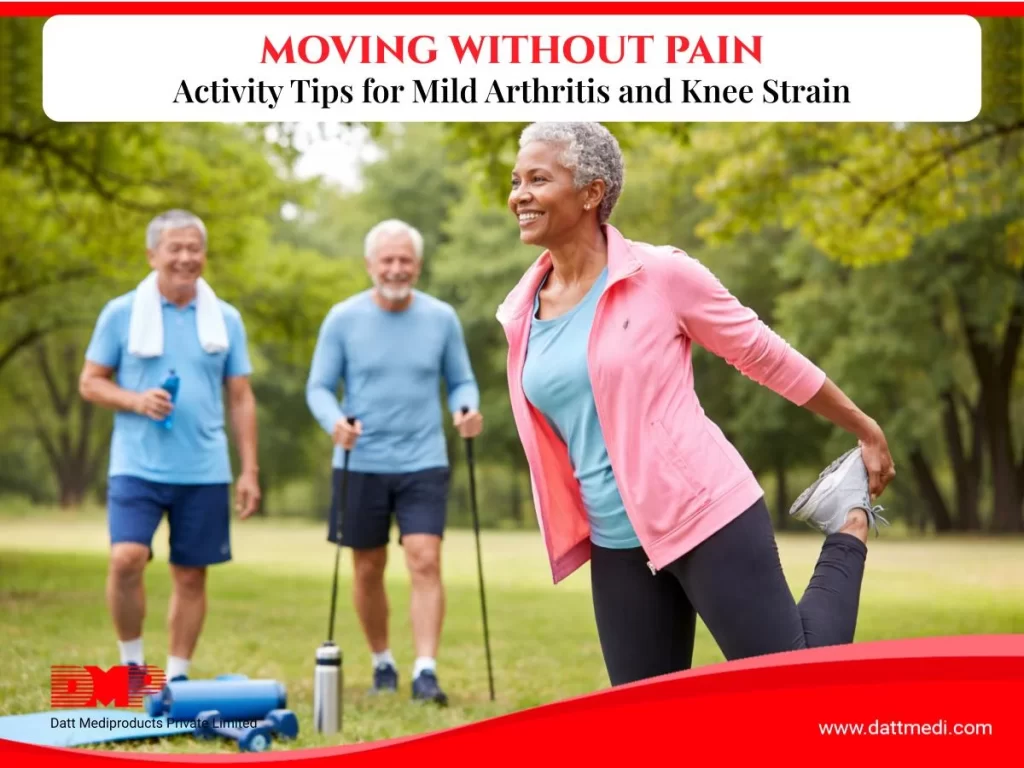
Gentle knee exercise for mild arthritis

Avoiding movement because of mild arthritis or knee strain usually backfires — it leads to more stiffness, not less. The safer path is choosing joint-friendly, low-impact activity and adding support where it genuinely helps.

Many people assume rest is always the right answer for joint pain. But joints depend on regular movement to stay flexible and well-lubricated. Inactivity tends to weaken the surrounding muscles, which puts more pressure on the joint itself — not less.

This blog breaks down what actually helps, what to avoid, and how to build a routine that keeps you moving safely.

Rest vs Movement: What Is Actually Different?

Both approaches feel intuitive when a joint hurts, but they lead to very different long-term outcomes. The key difference is what each one does to the muscles and tissue surrounding the knee over time.

FactorProlonged RestGentle, Regular Movement
Effect on stiffnessIncreases stiffness over timeReduces stiffness after periods of rest
Effect on muscle strengthWeakens supporting musclesStrengthens muscles that support the knee
Effect on joint lubricationReduces natural lubricationKeeps the joint lubricated
Effect on pressure through the jointIndirectly increases pressure (via weaker muscles)Reduces pressure by sharing load with stronger muscles
Prolonged rest may be appropriate during acute flare-ups or when recommended as part of clinician-directed recovery. For day-to-day management of mild arthritis or knee strain, gentle, regular movement is generally more suitable.

However, both approaches can have drawbacks when overdone. Too much rest can contribute to long-term mobility loss, and on the other hand  exercising at too high an intensity that the body is not ready for can aggravate pain.

Why Movement Matters for Joint Health

Gentle, regular movement keeps the joint lubricated, keeps the muscles around it strong, and actually reduces stiffness — the opposite of what many people expect.

Gentle, regular movement can help:

  • Improve joint flexibility
  •  Strengthen the muscles that support the knee 
  • Reduce stiffness after periods of rest 
  • Support overall mobility

Low-Impact Exercises That Are Easier on the Knees 

Which to Choose

Walking, swimming, and cycling are the three most commonly recommended options because they build strength and mobility without the sudden impact that aggravates joint pain.

ActivityImpact LevelBest ForKey Benefit
WalkingLowDaily movement, circulation, beginnersSimple, accessible, supports circulation without jarring the joint
Swimming / water aerobicsVery lowSignificant pain, higher body weight, flare-upsWater supports body weight, letting you move with far less strain
Cycling (stationary or smooth terrain)LowBuilding quadriceps and hamstring strengthControlled, repetitive motion strengthens muscles without impact

Walking
On flat, stable surfaces, walking is one of the simplest ways to stay active and supports circulation in the legs without jarring the joint. 

Swimming or water exercise
Water supports your body weight, so swimming and water aerobics let you move comfortably with far less strain on the knees than land-based exercise. 

Cycling
A stationary bike or smooth terrain lets you strengthen the muscles around the knee through controlled, repetitive motion, without impact.

Do Knee Supports Actually Help During Activity?

Yes, as an aid; not a replacement for strengthening. 
Knee sleeves and braces add mild compression and stability,
which can make movement feel safer and more comfortable, especially early on.

Supports may help by:

Providing mild compression around the joint Adding extra stability during movement Increasing confidence while walking or exercising. Options like Knee Cap® or Knee Cap Classic® offer light, breathable compression suited for daily activity.

However, knee supports should not become a long-term substitute for strengthening the muscles around the joint. Over-reliance on external supports may reduce how much the muscles have to work, which can contribute to weakness over time. As strength and stability improve, it may be appropriate to reduce or stop using the support, depending on individual needs and professional guidance.

Strengthening the Muscles Around the Knee

Stronger muscles around the knee take pressure off the joint itself. This is one of the most effective long-term ways to reduce strain, more so than rest alone.

After getting professional guidance, useful exercises often include:

  1. Gentle resistance exercises for the quadriceps Light hamstring strengthening Controlled stretching for flexibility
  2. If you’re recovering from an actual strain rather than general stiffness, the difference in approach matters.
  3. Related reading: Muscle Strains: Causes and Effective Recovery Strategies
  4. Arthritis specifically carries its own considerations for compression and activity level.

Lifestyle Habits That Support Joint Health

Body weight, footwear, and seating all affect how much daily pressure lands on your knees — small adjustments here reduce strain without any exercise involved.

Helpful adjustments:

  • Maintaining a healthy body weight
  • Wearing supportive footwear 
  • Choosing chairs with proper back and leg support
  • Pacing activity and taking breaks when needed
For added support during activity, compression bandages are sometimes used to manage strain, and tapes and adhesive supports can help with dressing security if there's any accompanying skin sensitivity or minor injury.

When to Scale Back and Check In With a Professional

  • Movement should feel manageable, not punishing. Some signals mean it’s time to pause and get guidance rather than push through.
  • Pain increases noticeably during or after activity 
  • Swelling develops or worsens 
  • Movement becomes noticeably more difficult than usual
  • The knee feels unstable or gives way

Physiotherapists can build a personalised activity plan that supports recovery without overloading the joint.

Staying Active Safely

Staying active with mild arthritis or knee strain isn’t about avoiding movement, it’s about choosing the right kind. Low-impact exercise, appropriate support, and a few lifestyle adjustments let most people keep moving comfortably while protecting long-term joint health.
Visit www.dattmedi.com for more infomation.
Share:

Frequnently Asked Questions

Yes. Gentle, low-impact exercise helps maintain joint mobility and strengthens the muscles that support the knee.

Walking, swimming, and cycling are commonly recommended, since they keep you moving while placing less stress on the joint.

Knee sleeves or braces can add mild stability and confidence during movement, especially for people with mild instability or discomfort — but they work best alongside strengthening exercise, not instead of it.

Yes. If pain or swelling increases noticeably during activity, rest and consult a healthcare professional before continuing.

Yes. Physiotherapists can design specific exercises and rehab plans to strengthen the muscles around the knee and improve joint function.

Recent Blogs
Muscle stiffness after prolonged immobilization with cast

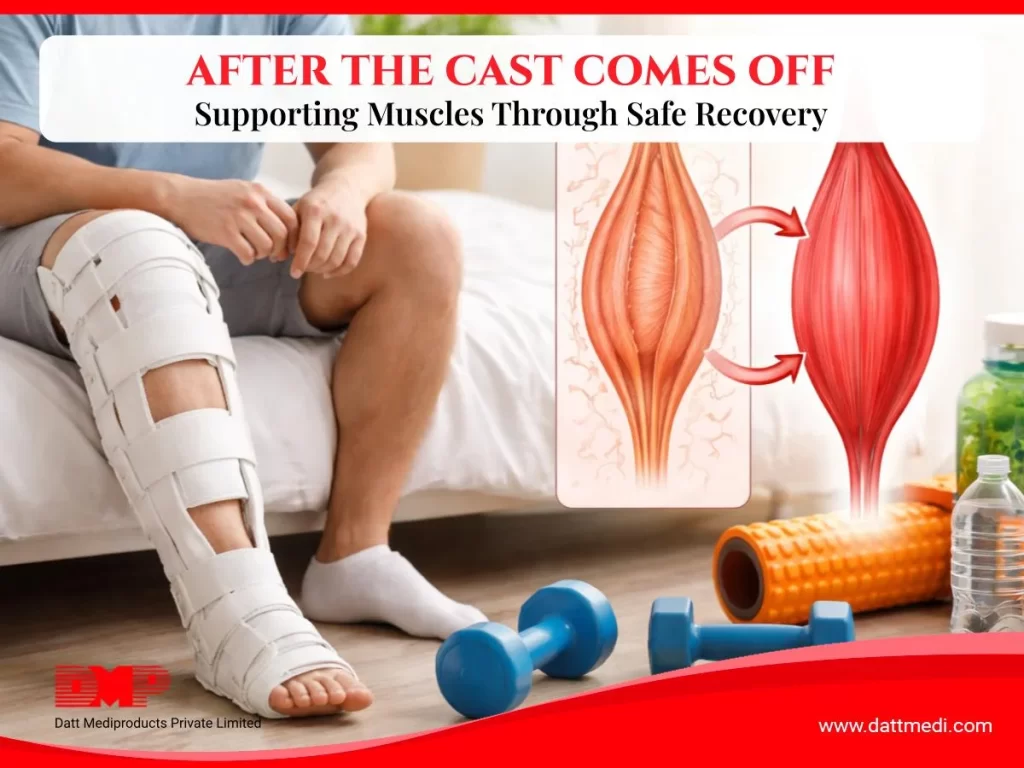
Coming out of a cast, brace, or splint is rarely as straightforward as it looks. The injury may have healed, but the surrounding muscles, joints, and soft tissue have spent weeks in a fixed position with limited activity. What follows is not a return to normal — it is the beginning of a second phase of recovery that requires just as much attention as the first.

This guide covers what actually happens to muscles and joints during immobilization, how to rebuild strength and mobility safely, and which specific orthopedic supports help — matched by body part and stage of recovery.

What immobilization Does to the Body

Muscle reconditioning

Muscles maintain their strength through regular contraction. When a limb is immobilized, the muscles around it stop receiving the mechanical signals they need to stay strong. The result is a measurable loss of muscle mass and endurance — a process called disuse atrophy. Studies show that muscle strength can decline by as much as 3–5% per day in the early stages of immobilization. Even a three-week cast can produce noticeable weakness in the surrounding musculature.

Joint Stiffness and Reduced Range of Motion

Joints rely on movement to stay healthy. Synovial fluid — the lubricant inside joints — circulates through movement. When a joint is held still for weeks, the surrounding capsule and ligaments begin to shorten and stiffen, and the range of motion decreases. Regaining that range requires deliberate, progressive movement — not just returning to normal activity.

Circulation and Swelling

immobilized limbs often develop swelling because the muscle pump that normally drives venous return is inactive. Fluid accumulates in the soft tissue, particularly around the ankle and foot in lower limb immobilization. This swelling can itself delay rehabilitation by limiting movement and causing discomfort.

The Four Phases of Returning to Movement

Phase 1: Protected Range of Motion

Immediately after immobilization ends, the goal is gentle, pain-free movement — not strength. Ankle circles, wrist rotations, finger flexion, and similar small movements reintroduce the joint to its range without stressing the recovering tissue. Movement should stay within a comfortable range and never push into pain.

Phase 2: Circulation and Swelling Control

Before strength can return, swelling needs to reduce. Elevation, gentle movement, and compression where appropriate help manage fluid accumulation. This phase often runs parallel to Phase 1.

Phase 3: Strength Rebuilding

Once range of motion is partly restored and swelling is controlled, progressive resistance exercises can begin. Resistance bands are useful here because they allow graded loading — starting light and increasing gradually without placing sudden stress on healing tissue. Physiotherapy guidance is strongly recommended for this phase.

Phase 4: Functional Reintegration

The final phase returns the person to normal activity — walking, lifting, working, exercising — progressively. Supportive bracing may continue during this phase to provide stability while the muscles are still rebuilding.

Why Muscle Strains Happen

Related reading: Understanding Muscle Strains: Causes and Effective Recovery Strategies

Nutrition That Supports Muscle and Bone Recovery

The body rebuilds muscle tissue and bone using raw materials from diet. The following nutrients are most directly relevant during post-immobilization recovery:

  • Protein — essential for muscle repair and rebuilding. Sources include eggs, legumes, dairy, fish, and lean meat. Aim for consistent intake across meals rather than one large serving.
  • Calcium — supports bone density and structural recovery, particularly relevant after fractures. Dairy products, fortified plant milks, and leafy greens are good sources.
  • Vitamin D — required for calcium absorption. Many people in India are deficient, particularly those with limited sun exposure. Supplementation is often advisable — check with a doctor.
  • Collagen precursors (Vitamin C, zinc) — support soft tissue and tendon repair. Found in citrus fruits, berries, nuts, and seeds.
  • Hydration — adequate water intake supports muscle function, joint lubrication, and circulation during rehabilitation.

Which orthopedic Support to Use — by Body Part and Stage

Supportive braces and sleeves serve two distinct roles during post-immobilization recovery: they protect the recovering joint from excessive or sudden movement, and they provide proprioceptive feedback — helping the nervous system re-learn where the joint is in space. The right product depends on which body part was immobilized and what stage of recovery the person is in.

Body PartRecovery StageRecommended ProductWhy It Helps
KneeEarly — swelling, weakness, instabilityKnee Cap®Firm compression reduces swelling; supports ligaments and muscles during initial movement
KneeLater — returning to activity, mild ongoing instabilityKnee Cap Classic®Lighter everyday support for stable knees still rebuilding strength during functional activity
Lower back / lumbarAny stage post-immobilisation or injuryLumbo Sacral Support®Stabilises the lumbar spine and reduces load on recovering muscles during standing and movement
Shoulder / arm / elbowEarly — immediately after cast or surgeryPouch Arm Sling®Positions the arm comfortably during early recovery; reduces load on shoulder and elbow joints
Neck / cervicalEarly — post-collar or post-surgeryCervical Collar SoftGentle support as neck muscles begin reactivating; acts as a movement reminder without full restriction
Neck / cervicalModerate — where more stability is neededCervical Collar Soft-Support®Firmer foam with reinforced support — suited to cases where more restriction is clinically indicated
Calf / lower legAny stage — venous or lymphatic involvementVelcare® Inelastic WrapInelastic compression supports venous return and reduces swelling when calf muscle pump is inactive or rebuilding
Foot / ankleAny stage — foot swelling or post-castVelcare® Medical StockingGraduated compression for the foot and ankle; particularly useful where swelling persists after lower limb immobilisation
Upper back / postureRehabilitation phase — relearning upright posturePosture Corrector®Supports spinal alignment and shoulder positioning as back and core muscles regain strength

Safe Guidelines for Early Movement

Always Get Clearance First

No exercise or movement programmed should begin without confirmation from the treating clinician or physiotherapist that it is safe to do so. The timeline varies significantly depending on the type of injury, the location, and how healing has progressed.

Start Smaller Than You Think You Need To

The instinct after weeks of immobilization is to move more to make up for lost time. This usually backfires. Muscles and tendons that have been inactive are more vulnerable to strain, and joint tissue is still adapting. Small, controlled movements performed consistently will restore strength faster than pushing into discomfort.

Pain Is a Signal, Not an Obstacle

Discomfort from stiffness is expected and normal. Sharp or worsening pain during exercise is not. If a movement causes significant pain, stop, and raise it with a healthcare professional before continuing.

Use Supports Correctly

A brace or support is most effective when sized and positioned correctly. An ill-fitting support — too loose or too tight — can create pressure points, restrict circulation, or provide false confidence that leads to overexertion. Follow sizing guidance for each product, and if in doubt, seek fitting advice.

When to See a Physiotherapist

Physiotherapy is not just for serious injuries. A physiotherapist can assess the specific degree of muscle weakness and joint restriction after immobilization, design a graduated programmed matched to the person’s actual capacity, and identify any complications — such as tendon tightness, abnormal movement patterns, or persistent swelling — that need addressing before progressing.

The Role of Compression Therapy

Related reading: Compression Therapy: A Key Trend in Modern Wellness Routines

Recovery Is a Process, Not an Event

The end of immobilization marks the beginning of rebuilding — not the end of recovery. Muscle reconditioning, joint stiffness, and residual swelling are normal consequences of keeping a limb still, and all of them respond well to progressive, consistent rehabilitation.

The right orthopedic support — matched to the body part, the stage of recovery, and the level of activity — makes that process safer and more manageable. Browse the full Datt Mediproducts orthopedic range to find the support that fits your recovery.

Person using a soft cervical collar for neck support

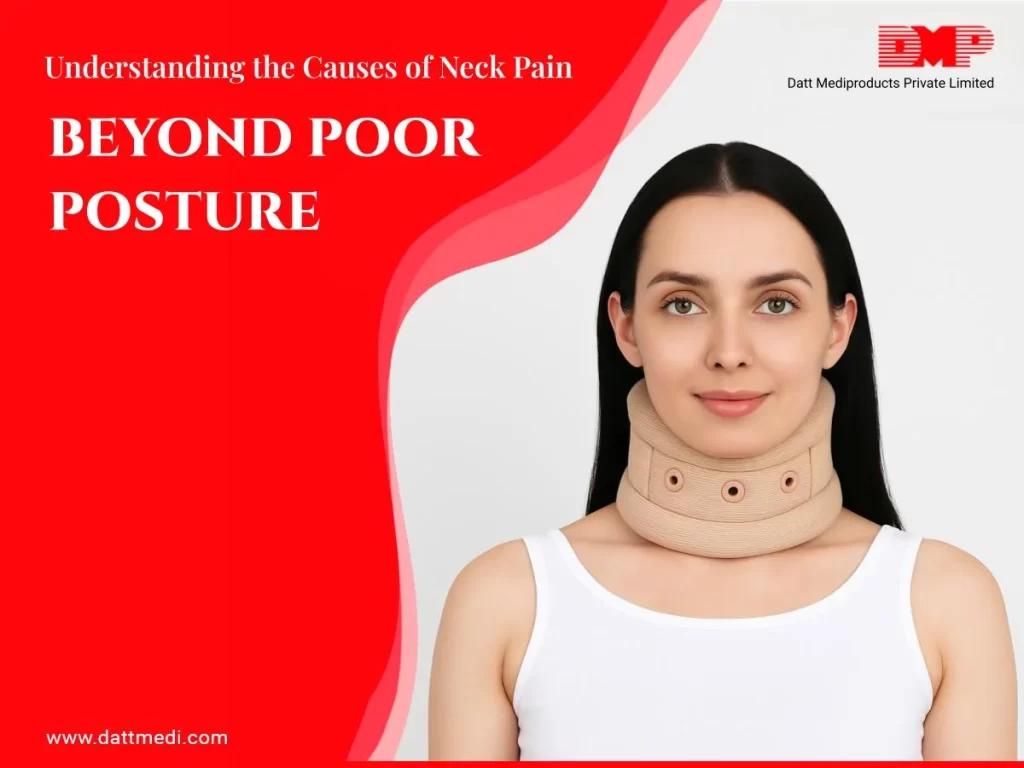
A stiff or painful neck can make even the simplest movements uncomfortable — turning to check traffic, looking up at a screen, or sleeping without waking. In some cases, a soft cervical collar provides the temporary support the neck needs to recover. However, in other cases, it offers little benefit and may even delay healing if used incorrectly.

This blog covers the clinical situations where a soft cervical collar is genuinely useful, how the Cervical Collar Soft® from Datt Mediproducts is designed, and how to use it safely.

What Is a Soft Cervical Collar?

A cervical collar is a supportive brace worn around the neck to limit excessive movement and allow muscles, ligaments, and joints to rest during recovery. Soft cervical collars provide light, cushioned support — enough to reduce strain and act as a reminder to avoid sudden movement, without fully immobilizing the neck.

The Cervical Collar Soft® is made from soft-density PU foam covered in a smooth cotton stockinette, with a hook-and-loop closure for a secure, adjustable fit. It is available in four sizes (S, M, L, XL) and is designed for both short-term recovery and longer-term comfort use.

When Is a Soft Cervical Collar Recommended?

A soft cervical collar may be advised across a range of conditions. The following are the primary clinical indications.

1. Neck Pain and Muscle Strain

Sudden neck pain from poor posture, sleeping awkwardly, or overexertion can strain the surrounding muscles. A collar provides gentle support and reduces the load on strained tissue during the early recovery phase.

2. Whiplash Recovery

Whiplash — most commonly caused by rear-end car accidents — forces the head to move suddenly forward and backward, stretching and sometimes tearing neck muscles and ligaments. Doctors often recommend a soft cervical collar in the early days after whiplash to reduce discomfort and limit aggravating movement while initial healing begins.

3. Cervical Trauma

Minor cervical trauma from falls, sports injuries, or sudden impacts may involve bruised or strained neck structures. A collar helps limit movement that could worsen the injury while the neck recovers.

4. Excessive Neck Mobility

Some individuals have hypermobility in the cervical spine — where the joints move beyond their normal range. A soft collar can provide a gentle boundary that reduces the risk of strain from over-movement during daily activity.

5. Rheumatoid Arthritis

Rheumatoid arthritis can affect the cervical spine, causing instability and pain. A soft collar may be used during flares to provide support and reduce the load on inflamed joints, typically alongside medical management.

6. Degenerative Disc Disease

Wear and tear on the cervical discs can lead to chronic neck pain, stiffness, and nerve irritation. A soft collar offers intermittent support — particularly during activities that aggravate symptoms — as part of a broader management plan.

7. Post-Surgical Support

Following certain neck or upper spine procedures, surgeons may recommend a cervical collar to protect the surgical site and limit motion during the initial healing period. The surgeon determines the collar type and duration based on the procedure. based on the procedure.

Rigid vs. Soft Cervical Collar: Which Is Needed?

Not all cervical collars are the same. The choice depends on how much movement restriction is required.

FeatureSoft Cervical CollarRigid Cervical Collar
MaterialPU foam with cotton stockinetteFirm plastic with padding
Support LevelLight, cushioned supportStrong, firm support
Movement ControlAllows some movementSignificantly limits movement
Typical UseMild strain, whiplash early stage, arthritis, disc diseaseSerious injury, unstable fractures, post-surgery
For most everyday neck conditions — strain, stiffness, mild whiplash, and chronic disc or joint discomfort — a soft cervical collar is the appropriate choice. Rigid collars are typically reserved for more severe injuries where strict immobilisation is medically necessary.

Soft Cervical Collar by Datt Mediproducts: Design & Features

The Cervical Collar Soft® is built for comfort during wear, with materials selected to minimise skin irritation even with extended use.

  • Soft-density PU foam core — provides cushioned support without rigid restriction
  • Smooth cotton stockinette cover — reduces skin friction and absorbs moisture
  • Hook-and-loop closure — allows a personalized, secure fit without tools
  • Four available sizes (S, M, L, XL) — sized by neck circumference in inches and centimetres
  • Durable construction — designed for longer-term use without losing shape or support

Sizing is based on neck circumference: S (7.5–8.75 cm), M (8.75–10 cm), L (10–11.25 cm), XL (11.25–12.5 cm). Measuring before ordering ensures the collar sits correctly and delivers effective support.

How to Use a Soft Cervical Collar Safely

A cervical collar is most effective when used correctly and for the right duration.

Getting the Fit Right

The collar should sit snugly around the neck — supportive without pressing on the throat or creating difficulty breathing. Hook-and-loop closure makes adjustment straightforward. A collar that is too loose provides little support; one that is too tight can cause pressure and discomfort.

Duration of Use

This depends entirely on the condition. Minor muscle strain may only require a collar for a few days. Whiplash or post-surgical recovery may require longer use under medical guidance. Extended, unsupervised use should be avoided. This is because prolonged reliance on a collar can reduce the neck muscles’ ability to support the head. independently.

Skin Care Under the Collar

The cotton stockinette lining helps manage moisture, but the skin beneath should still be checked regularly for any redness or irritation. Keep the area clean and dry, particularly in warm conditions.

When to Remove It

If the collar causes increased pain, numbness, or pins and needles pricking sensation, remove it and consult a healthcare professional. These may indicate an incorrect fit or that the collar is not appropriate for the specific condition.

What a Soft Cervical Collar Cannot Do

A collar supports recovery — it does not treat the underlying cause of neck pain. It does not replace physiotherapy, medical diagnosis, or specific treatment for conditions like arthritis or disc disease. Used alone without addressing the root cause, it provides temporary comfort relief only.

For best outcomes, a cervical collar is typically one part of a broader recovery plan that includes appropriate exercise, manual therapy, or medical management depending on the diagnosis.

The Right Support, Used the Right Way

A soft cervical collar works best when it matches the condition, fits correctly, and is used for an appropriate duration. For mild to moderate neck conditions — strain, whiplash, arthritis flares, disc discomfort, or post-surgical support — it provides a practical, comfortable solution that allows the neck to rest while daily life continues.The Cervical Collar Soft® is designed with both comfort and durability in mind. If you are managing a neck condition and considering whether a cervical collar is right for you, consult your healthcare provider for guidance tailored to your situation.

Logo

Datt Mediproducts Private Limited

Loading
Buy Now Contact Us