

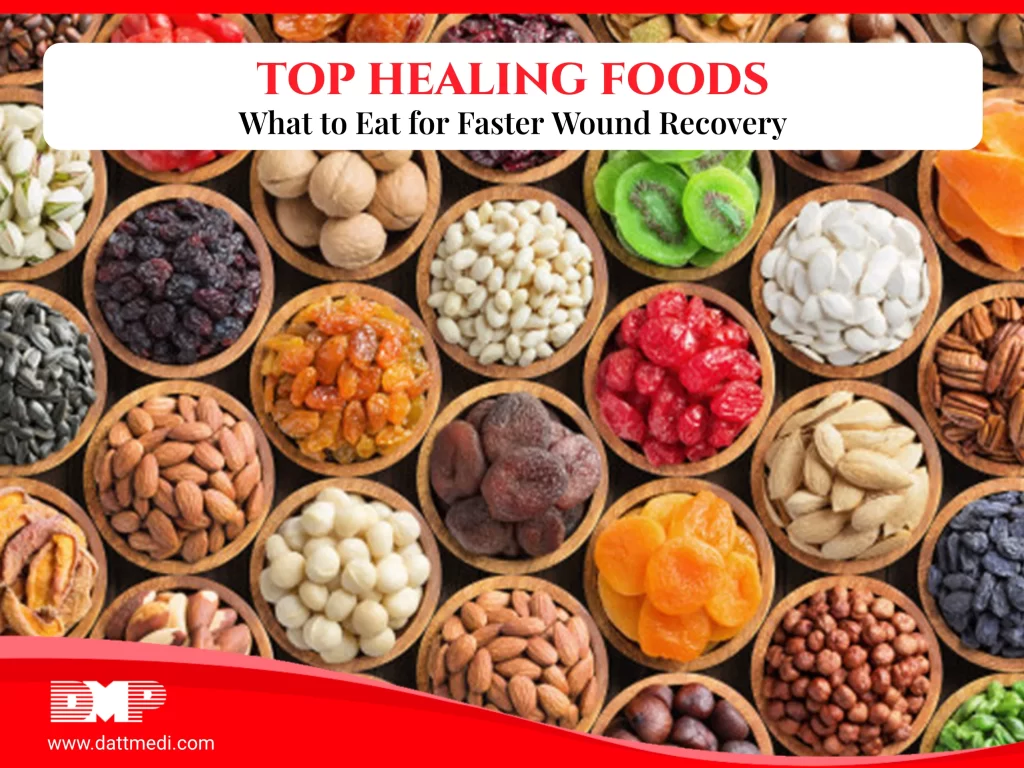
Nutrition plays a central role in wound healing, often as important as medical care itself. When the body sustains an injury, foods for wound healing become essential as its demand for specific nutrients increases.
The right foods can help accelerate tissue repair, reduce inflammation, strengthen the immune system, and enhance overall recovery. This blog explores scientifically backed foods for wound healing that actively support faster and more effective recovery.
Phytonutrient Power for Tissue Repair
What they are:
Phytonutrients are bio-active compounds in plants, such as flavonoids and carotenoids.
Why they matter:
Wound sites often experience oxidative stress due to free radicals, which can delay healing. Phytonutrients neutralize these free radicals, creating a favorable environment for tissue regeneration.
Food sources:
- Berries (flavonoids): Blueberries, strawberries, and blackberries reduce oxidative stress.
- Sweet potatoes & carrots (carotenoids): Support cell growth and boost skin barrier function.
Quick Tip: Including a cup of mixed berries in breakfast or roasted sweet potato as a side dish provides antioxidant protection during recovery.
Collagen-Activating Foods
What they are:
Nutrients that directly stimulate collagen synthesis.
Why they matter:
Collagen forms the structural framework of new tissue and strong scar formation.
Key nutrients & foods:
- Vitamin C (bell peppers, citrus, kiwi): A co-factor in collagen production.
- Copper (sunflower seeds, cashews, lentils): Supports the cross-linking of collagen fibers for durability.
Quick Tip: A salad of bell peppers, spinach, and sunflower seeds supplies both vitamin C and copper—maximizing collagen activation.
Gut Health and Healing Connection
What it is:
The gut microbiome plays a central role in nutrient absorption and immune regulation.
Why it matters:
Without a healthy gut, even the best diet cannot deliver full healing benefits. Probiotics strengthen the microbiome, enhance nutrient uptake, and improve immune defenses against infection.
Food sources:
Yogurt, kefir, kimchi, sauerkraut, miso.
Quick Tip: Consuming a serving of probiotic yogurt daily can improve nutrient bio-availability, indirectly accelerating wound recovery.
Anti-Inflammatory Spice Cabinet
What they are:
Natural spices with anti-inflammatory and antimicrobial properties.
Why they matter:
Chronic inflammation around a wound can slow tissue regeneration. Certain spices actively reduce inflammatory responses while fighting harmful microbes.
Food sources:
- Turmeric (cur-cumin): Reduces pro-inflammatory cytokines.
- Ginger: Enhances circulation and reduces swelling.
- Garlic: Provides antimicrobial support against infections.
Quick Tip: Adding turmeric to curries, ginger to tea, and garlic to meals integrates these benefits naturally into daily cooking.
Zinc Synergy Foods
What it is:
Zinc is essential for cell division and repair, but its efficiency increases when paired with vitamin C.
Why it matters:
Zinc deficiency can delay wound closure. Pairing zinc with vitamin C optimizes collagen production and tissue healing.
Food sources & pairings:
- Pumpkin seeds + oranges
- Chickpeas + bell peppers
This nutrient synergy ensures better absorption and function.
Iron-Rich for Oxygen Delivery
What it is:
Iron is critical for hemoglobin formation.
Why it matters:
Adequate hemoglobin ensures oxygen supply to regenerating tissues, which is vital for energy production during healing.
Food sources:
- Heme iron (easily absorbed): Red meat, chicken, fish.
- Non-heme iron: Lentils, spinach, fortified cereals.
Quick Tip: Pairing spinach (iron) with tomatoes (vitamin C) improves absorption, ensuring more oxygen reaches healing tissues.
Hydration Beyond Water
What it is:
Cellular hydration requires more than water—electrolytes are equally vital.
Why it matters:
Dehydrated cells cannot repair efficiently. Electrolytes maintain fluid balance, nerve signaling, and nutrient transport.
Food sources:
- Coconut water: Natural electrolytes.
- Watermelon & cucumbers: High water content plus minerals.
- Broths & soups: Provide both fluids and electrolytes.
Quick Tip: Including hydrating foods alongside water intake supports optimal tissue repair.
Building a Healing Plate
Recovery requires more than a single “superfood.” It’s about creating a balanced plate with antioxidant-rich phytonutrients, collagen -activating nutrients, probiotics, anti-inflammatory spices, zinc and iron synergy, and hydration strategies.
Together, these foods give your body the fuel it needs to rebuild stronger tissue, reduce complications, and support a faster recovery.
Take good care—and Happy Holidays! ❄️✨🎄