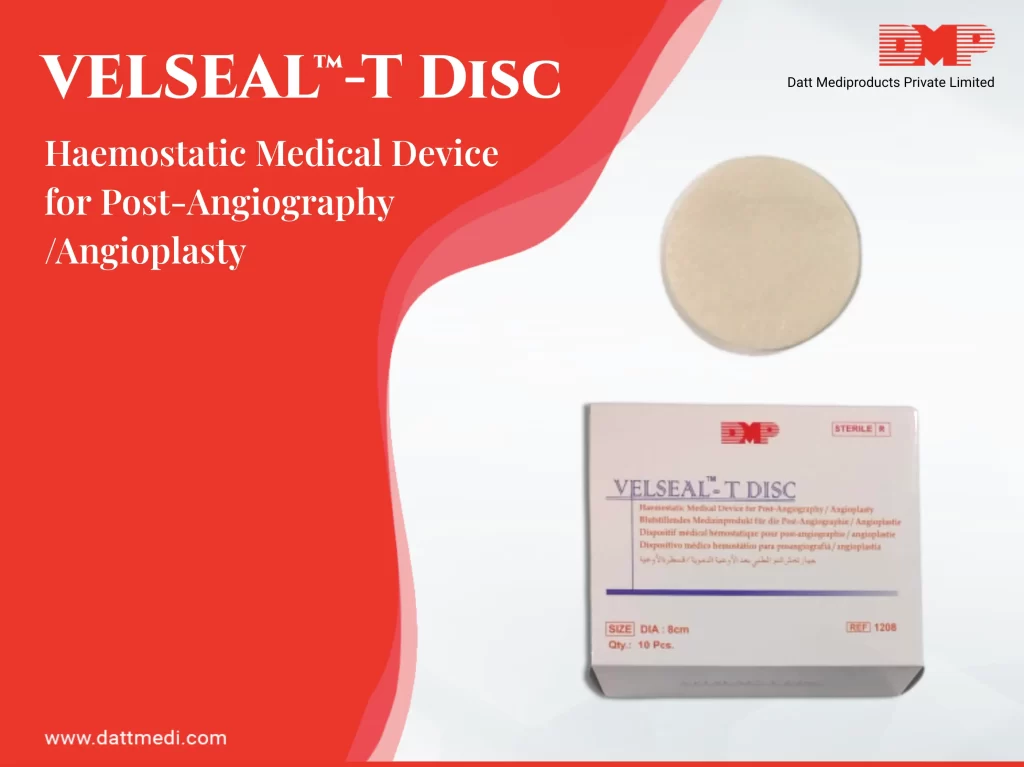
In the realm of wound care, continuous advancements are constantly improving the way we treat and manage various types of wounds. Among the latest innovations, Velseal® -T Disc has emerged as a game-changer. This revolutionary product offers an effective and convenient solution for promoting wound healing and enhancing patient comfort.
It is a cutting-edge wound care product designed to optimize the healing process while minimizing discomfort for patients. Velseal® -T Disc promotes haemostasis by absorbing the blood and accumulates clotting factor within the voids and initiate the clotting by interaction with Thrombin, Calcium chloride and Tranexamic acid.
Key Features and Benefits:
1. Advanced Composition:
It is composed of high-quality materials that offer excellent absorption and retention capacities, reducing the risk of maceration and infection. However, it does not provide moisture balance or directly contribute to wound healing.
2. Easy Application:
Thee disc-shaped design of Velseal® -T Disc allows for simple and hassle-free application. Its non-adherent nature eliminates the need for additional fixation methods, providing a secure and comfortable fit. The dressing is available in various sizes to accommodate different wound types and locations.
3. Enhanced Patient Comfort:
It prioritizes patient comfort by minimizing pain and trauma during dressing changes. The non-adherent surface prevents the dressing from sticking to the wound bed, reducing discomfort and potential damage to healing tissue.
4. Cost-Effective Solution:
It offers a cost-effective wound care solution, as it requires no dressing changes. A single application helps in achieving complete hemostasis, contributing to overall healthcare cost savings. Its durability and prolonged wear time further enhance its cost-effectiveness.
Clinical Efficacy and Evidence
The product has undergone rigorous testing and evaluation to validate its clinical efficacy. Clinical studies have demonstrated its effectiveness in promoting faster wound healing, reducing pain, and minimizing complications such as infection. These studies highlight the dressing’s superior moisture management capabilities and its ability to facilitate granulation tissue formation, resulting in improved patient outcomes.
In the rapidly evolving field of wound care, the Velseal® -T Disc stands out as a remarkable innovation. Its unique composition, easy application, and patient-centric design make it a valuable addition to any healthcare setting. With its demonstrated clinical efficacy and cost-effectiveness, this advanced dressing offers a promising solution for healthcare professionals and patients alike. By leveraging the benefits of Velseal® -T Disc, healthcare providers can enhance wound healing outcomes and improve the overall quality of care for patients with acute or chronic wounds.
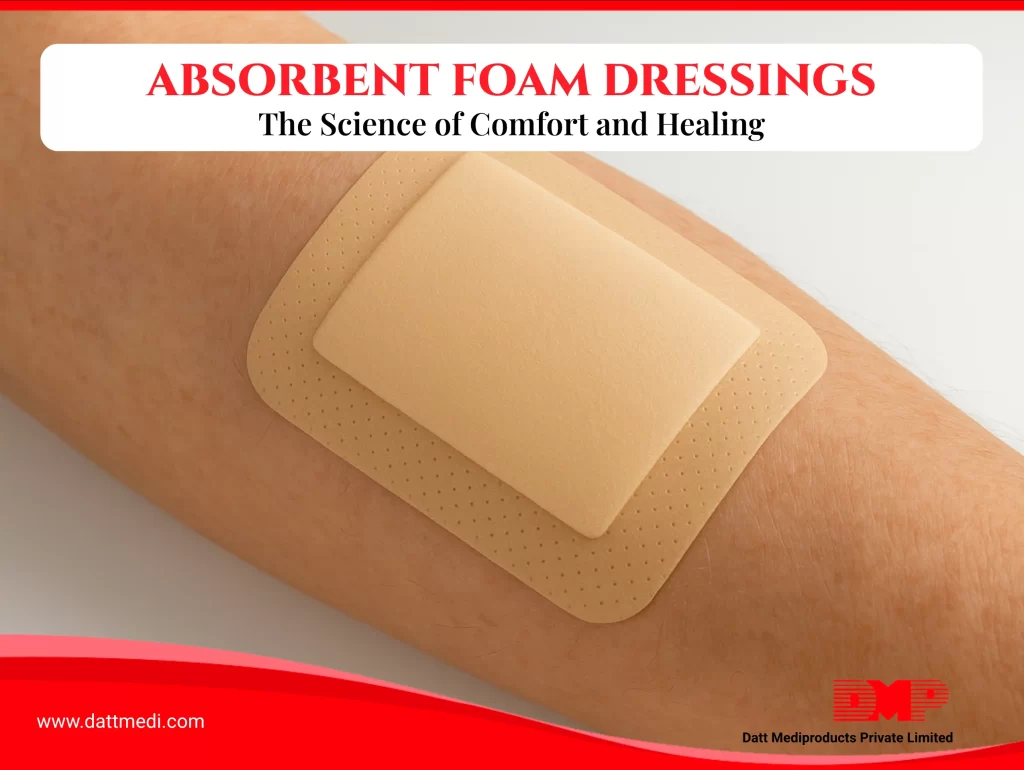
Absorbent foam dressings are advanced wound care solutions specifically designed to manage moderate to heavy wound exudate while maintaining a moist healing environment.
Maintaining the right moisture balance is critical for wound healing. Excess fluid can cause maceration and delay recovery, while insufficient moisture may slow tissue regeneration. Foam dressings are engineered to maintain this balance—supporting safer, more efficient healing across acute and chronic wound types.
Widely used in hospitals, long-term care facilities, and home-care settings, absorbent foam dressings are a core component of modern wound management protocols.
Clinical Overview: Absorbent Foam Dressings
Designed for moderate to heavy exudate
Maintain a controlled moist wound environment
Reduce risk of periwound maceration
Provide cushioning and mechanical protection
Support atraumatic dressing removal
Suitable for pressure ulcers, diabetic foot ulcers, venous leg ulcers, and surgical wounds
What Are Absorbent Foam Dressings?
Absorbent foam dressings are multi-layer wound dressings typically made from polyurethane foam. They are engineered to:
Absorb and retain moderate to heavy wound fluid
Protect surrounding skin from excess moisture
Provide thermal insulation and cushioning
Maintain optimal moisture levels for tissue repair
They are widely used in advanced wound care settings where effective exudate control and periwound protection are essential.
Why foam dressings are used
Wounds that produce fluid need balance—not dryness, not pooling moisture. Foam dressings maintain this balance, which supports natural tissue repair.
How they are built
A highly absorbent foam layer that draws in and holds wound fluid
A protective outer layer that allows airflow but blocks bacteria and external moisture
Optional adhesive borders for secure placement without extra fixation
Foam dressings are widely used in acute care, long-term wound management, and post-surgical recovery across global healthcare systems, especially in wound care settings.
How Absorbent Foam Dressings Work
1. Managing Moderate to Heavy Wound Exudate
Foam dressings absorb excess fluid and lock it inside the dressing.
Why this matters:
Uncontrolled fluid can soften surrounding skin, increase leakage, and slow healing.
How it helps healing:
By keeping the wound surface balanced—not wet, not dry—foam dressings create conditions where new tissue forms more efficiently. Products such as Velnext® Foam Dressing are designed for this purpose.
2. Maintaining a Stable Healing Environment
While absorbing excess fluid, foam dressings preserve gentle moisture at the wound surface.
Clinical benefit:
Stable moisture supports faster cell growth and reduces repeated tissue disruption caused by frequent dressing changes, which is especially important in chronic wounds managed with advanced foam dressings
3. Cushioning and Physical Protection
The soft foam structure absorbs pressure and reduces friction.
Especially useful for:
Heels
Sacral area
Elbows
Other pressure-prone or mobile body parts
This protection helps prevent further tissue damage during daily movement and is a key benefit of foam-based wound dressings.
By preventing fluid leakage and excessive moisture accumulation, foam dressings reduce the risk of maceration and surrounding skin breakdown.
Enhances Patient Comfort
The flexible, conformable structure minimizes pain during wear and dressing removal, especially in chronic wound management.
Reduces Dressing Change Frequency
Due to their high absorbency, foam dressings can often remain in place for several days (subject to clinical assessment), improving patient compliance and care efficiency.
Supports Infection Management
In wounds with elevated infection risk, antimicrobial silver foam dressings may help manage bacterial load. These are typically used when clinical signs of infection are present or when risk factors exist.
Types of Absorbent Foam Dressings
Adhesive Foam Dressings
Integrated fixation border
Easy application
Suitable for ambulatory patients and post-operative care
Non-Adhesive Foam Dressings
Gentle on fragile or sensitive skin
Require secondary fixation
Ideal for elderly patients or delicate wound sites
Antimicrobial Foam Dressings
Contain antimicrobial agents
Support bacterial load management
Used in infected or high-risk wounds
Foam Dressings vs Other Dressing Types
Dressing Type
Best For
Not Suitable For
Foam Dressings
Moderate–heavy exudate
Dry wounds
Hydrocolloids
Light–moderate exudate
Heavily exuding wounds
Alginates
Heavy exudate or bleeding
Dry wounds
Transparent Films
Superficial wounds
Moderate–heavy exudate
Selecting the appropriate dressing depends on wound characteristics, fluid level, and clinical assessment.
Ideal Wound Types for Foam Dressings
Absorbent foam dressings are commonly recommended for:
Their ability to absorb fluid while protecting tissue makes them a reliable option for both acute and chronic wound care, including hospital-grade wound management.
When Foam Dressings May Not Be Appropriate
Foam dressings may not be suitable for:
Dry or minimally exuding wounds
Hard necrotic tissue or dry scabs
Wounds requiring active debridement
In such cases, alternative dressing categories that donate moisture or facilitate debridement may be more appropriate based on professional evaluation.
Quality Standards and Clinical Reliability
High-performance absorbent foam dressings are manufactured in accordance with internationally recognized quality and safety standards, including ISO 13485 and CE certification.
As a manufacturer of certified advanced wound care solutions, DMP designs foam dressings aligned with global clinical standards, ensuring product reliability, patient safety, and consistent performance across healthcare environments.
Absorbent foam dressings combine smart material design with practical wound care needs. By controlling wound fluid, protecting fragile skin, and improving comfort, they play a vital role in modern wound management.
Selecting the right foam dressing—based on wound type, fluid level, and patient needs—can significantly improve healing outcomes and overall care quality.
The Role of Antimicrobial Dressings in Infection Prevention and Wound Healing
In wound care, infection prevention involves proactive measures to avoid contamination, while infection control refers to the steps taken after an infection has occurred—to contain its spread and reduce complications.
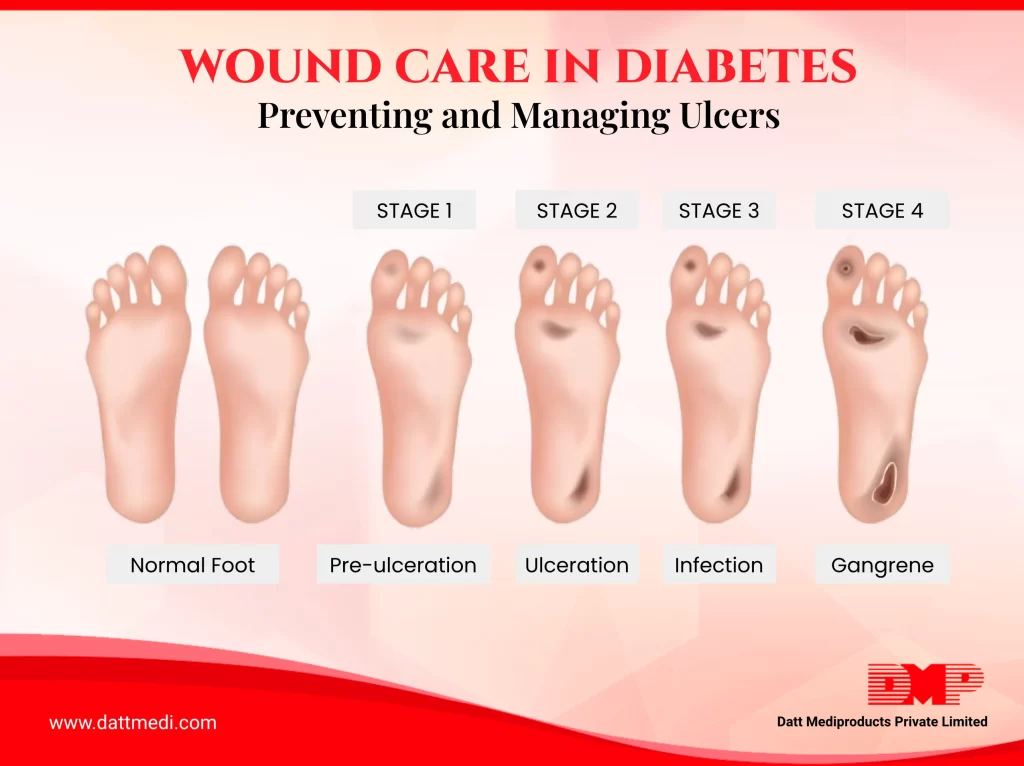
Understanding this distinction is vital, particularly when dealing with diabetic foot ulcers, surgical wounds, or chronic ulcers like those from varicose veins. These wounds, once infected, require more than just hygiene and topical care—they demand targeted intervention.
Why Infection Prevention is Critical in Wound Care
In high-risk patients (e.g., diabetics, post-operative individuals, or those with vascular issues), a wound infection can:
Impair tissue regeneration can significantly slow down the body’s natural healing process.
Trigger inflammation beyond the wound site
Lead to sepsis or systemic failure
Delay healing indefinitely without the right approach
Once bacteria attach to the wound surface and multiply, they secrete an Extracurricular Polymeric Substance (EPS) over the wound bed in the form of a patchy layer called BIOFILM. This biofilm is not only resistant to the host’s immune system but also to various basic antimicrobials. This is why even proper hygiene may not suffice creating a need for advanced infection control measures.
Common Signs of Infection Include:
Increased redness or warmth
Foul odor or purulent discharge
Delayed granulation
Pain out of proportion to wound size
Systemic symptoms like fever or fatigue
The Role of Antimicrobial Dressing
Not all antimicrobial dressings work the same way. Selection should depend on the type of wound, degree of infection, and underlying comorbidities.
Management of partial & full thickness wounds such as DFU, VLU, Necrotising Fasciitis, Burns or even other traumatic or surgical infected wounds
Using the wrong dressing can delay healing or exacerbate infection. Selection must be guided by wound assessment, not just product availability.
Best Practices for Infection Prevention:
Sterile Cleansing: Use prescribed solutions like saline, not harsh agents.
Hygiene Compliance: Strict hand hygiene and PPE protocols for caregivers.
Moisture Balance: Avoid dry wound beds or maceration.
Infection Control (Post-Infection Onset):
Debridement if needed to remove necrotic tissue or biofilm
Antimicrobial Dressings selected as per exudate level and infection type
Systemic antibiotics for deep or spreading infections
Regular monitoring to track changes in wound condition
Different Wounds Demand Different Protocols
A clean surgical wound may require simple antimicrobial protection.
A diabetic foot ulcer with infection may require systemic antibiotics, debridement, and layered dressing strategy.
A venous ulcer may need antimicrobial compression therapy.
Avoid a one-size-fits-all approach—treatment must align with wound pathology.
Don’t overlook:
Nutritional Support: Protein, Vitamin C, and Zinc for immune function and tissue repair
Glycemic Control: Especially crucial in diabetic patients
Patient Education: Empower caregivers with infection warning signs and dressing techniques
Wound care is both a science and a strategy. While infection prevention is essential, being prepared for infection control—with the right knowledge, products, and protocols—can make the difference between recovery and chronicity.
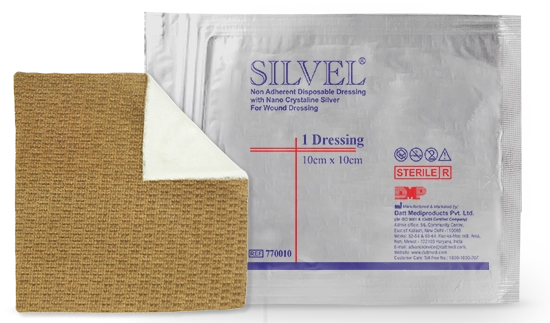
From nano-crystalline silver dressings to advanced wound care materials, our range is engineered for outcomes that matter. To Explore our full range of antimicrobial dressings: Click Here