Search by Blog
Read by Category

Your healing journey continues beyond this blog

Find the right products for better recovery at online store
Cart Image
Knee brace and compression sleeve comparison

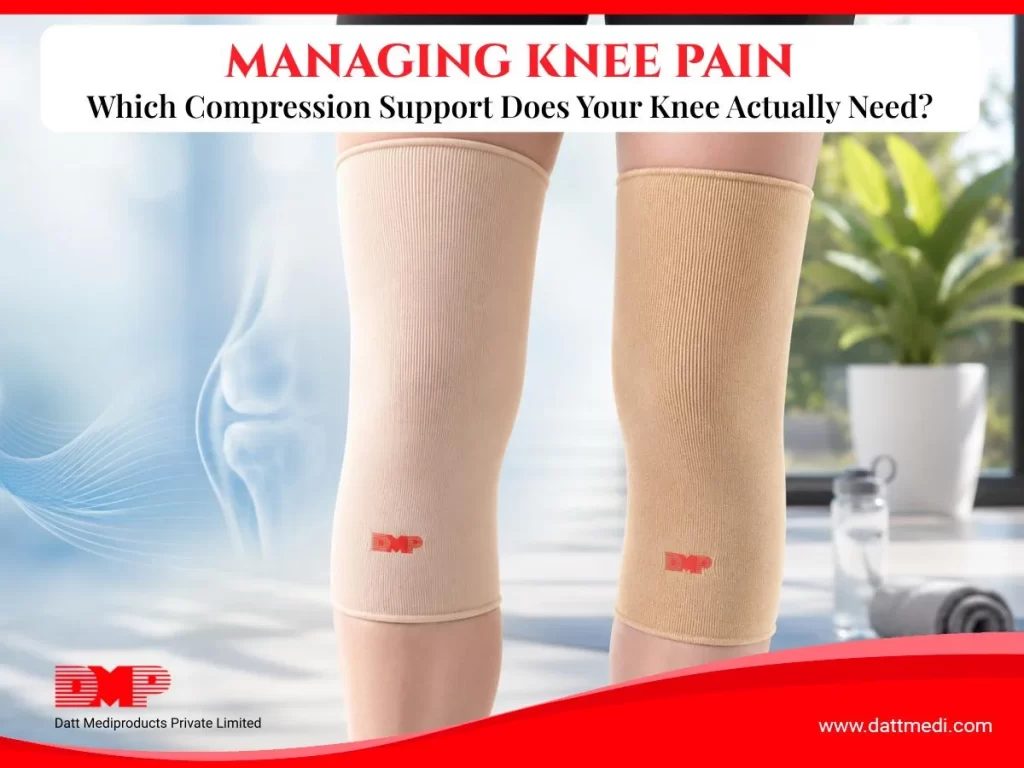
Knee compression supports are one of the most commonly used orthopaedic aids — for good reason. They reduce swelling, provide joint stability, and allow people to stay active during recovery. But picking the wrong one delivers less benefit than it should.

The Datt Mediproducts range includes two knee compression supports: the Knee Cap® and the Knee Cap Classic®. Both share the same anatomically tapered form and four-way elasticised construction, but differ in material composition — and that difference matters for fit, stretch, and the conditions each handles best.

This guide breaks down both products clearly so you can match the right support to the right situation.

Understanding Knee Compression Supports

Before comparing the two products, it helps to understand what knee compression supports actually do — and what they don’t.

A compression sleeve works by applying graduated pressure around the knee joint. This pressure does three things: it reduces fluid accumulation in the surrounding tissue (reducing swelling), it improves proprioception — the joint’s sense of its own position in space — which improves stability and coordination, and it provides mild structural support to the muscles and ligaments surrounding the joint.

Compression sleeves are not rigid braces. They do not prevent movement or immobilise the joint. Their role is to support the knee while allowing full, natural range of motion — making them suitable for both active use during daily activity and recovery phases where movement is encouraged.

Knee Cap® vs Knee Cap Classic®: What Is Actually Different?

Both products share the same core design: anatomically tapered, four-way elasticised fabric, breathable moisture-transporting weave, beige colour, and easy pull-on application. Available in S to XXL (37–67 cm thigh circumference). The key difference is material composition.

FeatureKnee Cap®Knee Cap Classic®
MaterialPolyamide, Polyester, Cotton, Nylon, Spandex, RubberPolyamide, Polyester, Cotton, Rubber
Key differentiatorContains Spandex + Nylon — higher elasticity and stretch recoveryNo Spandex — firmer, more structured fabric
Compression feelSofter, more flexible compression — moves freely with the jointFirmer, more structured compression — greater sense of support
Best forActive use, exercise, long-duration wear, mild-to-moderate conditionsRecovery, post-operative support, instability, conditions needing firmer hold
IndicationsArthritis, swelling, sprains, ligament/muscle injury, post-op, weak kneesArthritis, swelling, sprains, ligament/muscle injury, post-op, weak knees
SizesS, M, L, XL, XXLS, M, L, XL, XXL
ColourBeigeBeige

Knee Cap® — When to Choose It

The inclusion of Spandex and Nylon gives the Knee Cap® a higher degree of stretch and elastic recovery. The fabric moves with the joint rather than resisting it, making it more comfortable for extended wear and higher-activity use.

Best suited to:

  • Daily activity support — long hours of standing, walking, or commuting
  • Exercise and sports — where full range of motion is needed alongside compression
  • Mild-to-moderate swelling from arthritis or overuse
  • Sprains and strains in active recovery, where movement is encouraged
  • Individuals who have worn a rigid brace and are transitioning to lighter support
  • Long-duration wear where breathability and comfort are priorities

The four-way stretch and moisture-transporting weave make it particularly well-suited to warmer climates or extended wear through a full workday.

Knee Cap Classic® — When to Choose It

Without Spandex, the Knee Cap Classic® fabric is slightly firmer and provides a more structured feel against the joint. For some users — particularly those managing instability or recovering from injury — this firmer hold provides greater confidence during movement.

Best suited to:

  • Post-operative knee support — where firmer compression is preferred in the early recovery phase
  • Ligament injuries — where the joint needs a stronger sense of containment
  • Knee instability — where proprioceptive feedback from firmer compression helps prevent giving way
  • Arthritic pain management — particularly where the joint feels loose or unpredictable
  • Individuals who find softer sleeves feel insufficient for their level of discomfort
The Classic’s firmer structure makes it the better starting point when someone is first introducing compression support and needs the reassurance of a more defined hold.

Clinical Indications: Both Products

Both the Knee Cap® and Knee Cap Classic® are indicated for the same range of conditions. The choice between them is about compression feel and activity level, not about which conditions they cover.

  • Arthritic knee pain — reduces swelling and improves joint comfort during movement
  • Swelling from injury or post-operative recovery — graduated compression reduces fluid accumulation
  • Ligament and muscle injuries — supports the surrounding soft tissue during healing
  • Sprains and strains — protects the joint during active recovery
  • Stabilisation of weak knees — improves proprioception and confidence during weight-bearing
  • Post-operative knee support — provides compression during the rehabilitation phase

How to Size Correctly

Both products are sized by thigh circumference, measured approximately 15 cm above the centre of the kneecap. An incorrect size is one of the most common reasons compression sleeves underperform — too loose provides minimal compression; too tight restricts circulation.

SizeInchesCentimetres
S14.8 – 17.2″37 – 43 cm
M17.2 – 19.6″43 – 49 cm
L19.6 – 22″49 – 55 cm
XL22 – 24.4″55 – 61 cm
XXL24.4 – 26.8″61 – 67 cm

Safe Use Guidelines

When to Wear It

Compression sleeves are designed for use during periods of activity and weight-bearing — standing, walking, exercising. Most people do not need to wear them at night or during extended rest periods. If your clinician has advised otherwise, follow their specific guidance.

Combining with Rehabilitation

Compression support works alongside rehabilitation — not instead of it. Quadriceps strengthening, hamstring flexibility, and hip stability exercises address the underlying muscle weakness that contributes to knee instability and pain. A compression sleeve manages symptoms during activity; exercise addresses the cause.

Signs the Fit Needs Adjusting

  • Sleeve rolls down or bunches behind the knee — size may be too large
  • Visible skin bulging above or below the sleeve — size may be too small
  • Numbness, tingling, or increased swelling below the knee — too tight, remove immediately
  • No perceptible compression when standing — fabric has lost elasticity, replace the sleeve

Managing Orthopedic Injuries

Related reading: From the Field to Recovery: Orthopedic Injury Essentials for Athletes

When Compression Is Not Enough

Compression sleeves are appropriate for a wide range of common knee conditions. However, some situations require more rigid structural support than a sleeve can provide:

  • Significant ligament instability (ACL, PCL, MCL, LCL tears) — typically requires a hinged brace
  • Meniscal injuries with mechanical symptoms (locking, giving way) — requires clinical assessment
  • Post-operative immobilisation immediately after surgery — rigid brace or cast typically prescribed
  • Fractures or bone stress injuries — require immobilisation, not compression
If you are unsure which level of support your condition requires, consult a physiotherapist or orthopaedic specialist before selecting a product.

Choosing the Right Support from the Start

The difference between the Knee Cap® and Knee Cap Classic® comes down to how the compression feels against the joint and what activity level the sleeve needs to accommodate. For flexible, active, long-duration use — the Knee Cap®. For a firmer, more structured hold during recovery or instability — the Knee Cap Classic®.

Both are sized S to XXL, both are breathable and pull-on, and both cover the full range of common knee conditions. The right one is the one that matches how your knee feels and what you need it to do.

Browse: Knee Cap®  |  Knee Cap Classic®

Understanding Arthritis

Related reading: The Role of Orthopedic Support Products in Arthritis Pain Management
Visit www.dattmedi.com for more infomation.
Share:

Frequnently Asked Questions

Yes, for most people. Both the Knee Cap® and Knee Cap Classic® are designed for extended daily wear. The breathable, moisture-transporting fabric manages heat and sweat during long use. Remove if you experience any numbness, tingling, or increased swelling below the knee.

Both are indicated for arthritic knee pain. The Knee Cap® suits those who want flexibility and comfort during active daily use. The Knee Cap Classic® is the better choice if the joint feels unstable or if a firmer hold is preferred during flares. If arthritis is more advanced or the joint is significantly swollen, consult a healthcare professional before selecting a compression level.

With daily use, most compression sleeves should be replaced every 3–6 months. The elastic fibres degrade with washing and wear, and a sleeve that has lost its elasticity is no longer delivering effective compression. If the sleeve feels loose or no longer provides the same hold as when new, it is time to replace it.

Yes. The Knee Cap® is particularly suited to active use given its Spandex-enhanced stretch and moisture-transporting weave. It moves with the joint and manages sweat during exercise. For contact sports or high-impact activity where the joint needs stronger protection, consult a sports medicine professional about whether additional support is appropriate.

No. Knee compression sleeves like the Knee Cap® and Knee Cap Classic® are available without a prescription. However, if your knee pain is persistent, unexplained, or worsening, a clinical assessment is advisable before relying on compression support alone.

Recent Blogs
Ensuring Safe Wound Care Practices

Wound care is a critical aspect of healthcare that demands meticulous attention to patient safety. Proper wound management not only accelerates healing but also significantly reduces the risk of complications. In this blog, we will explore the importance of patient safety in wound care, emphasizing best practices, infection control, and risk minimization.

Importance of Patient Safety in Wound Care

Patient safety in wound care involves implementing measures to prevent harm and ensure safety during the treatment process. This includes avoiding infections, minimizing pain, and ensuring that wounds heal properly. A safe wound care environment is essential for patient well-being and can prevent further medical complications.

Best Practices in Wound Care

Assessment and Planning:

  • Thorough Assessment: Begin with a comprehensive assessment of the wound, considering factors like wound type, exudate characteristics, comorbid conditions, pain level, periwound condition, size, depth, and location. Understand the patient’s overall health, including any underlying conditions that may affect healing.
  • Individualized Care Plan: Develop a tailored care plan that addresses the specific needs of the patient and the wound. Regularly update the plan based on the wound’s progress.

Hygiene and Infection Control:

  • Clean Environment: Ensure the wound care area is clean and sanitized. All reusable wound care equipment and supplies should be sterilized before use. Fresh dressings and bandages should be cut with clean apparatus.
  • Hand Hygiene: Proper hand hygiene is crucial. Perform hand hygiene using alcohol-based rub or soap and water immediately before and after the wound care procedure. The use of gloves and other personal protective equipment (PPE) is mandatory to prevent contamination.

Wound Cleaning and Dressing:

  • Gentle Cleaning: Clean the wound gently with saline solution or appropriate antiseptic solutions. Avoid harsh scrubbing which can damage tissue and impede healing.
  • Appropriate Dressings: Use the right type of dressing for the wound such as hydrocolloid dressings for pressure ulcers or alginate dressings for heavily exuding wounds. Change dressings as per the doctor’s care plan to maintain a clean environment.

Patient Education and Involvement:

  • Educate Patients: Instruct patients and caregivers on proper wound care techniques, signs of infection, and when to seek medical advice. Patient education enhances compliance and promotes faster healing.

Infection Control:

Preventing infections is a cornerstone of safe wound care. Infections can complicate wound healing and lead to serious health issues. Implementing stringent infection control measures is essential.

  • Sterile Techniques: Always use sterile wound care equipment and supplies when handling wounds. This includes using sterile dressings, tools, and gloves.
  • Regular Monitoring: Monitor the wound for signs of infection, such as increased redness, swelling, warmth, or discharge. Early detection and intervention can prevent severe complications.
  • Antibiotic Use: Use antibiotics judiciously. Overuse or not finishing the full course of the antibiotic can lead to antibiotic resistance, making infections harder to treat.

Minimizing Risks:

Risk minimization in wound care involves anticipating potential problems and taking steps to avoid them.

  • Nutrition and Hydration: Ensure patients have adequate nutrition and hydration. A proper diet supports tissue repair and overall health.
  • Pressure Ulcer Prevention: For bedridden patients, repositioning is crucial to prevent pressure ulcers. Use pressure-relieving devices like specialized mattresses or cushions.
  • Moisture Control: Keep the wound environment moist but not wet. Moisture balance prevents the wound from drying out or becoming too wet, both of which can impede healing.

Ensuring safe wound care practices is vital for promoting patient recovery and preventing complications. By adhering to best practices, maintaining strict infection control, and actively involving patients in their care, healthcare professionals can create a safe and effective wound care environment. As we strive for excellence in wound care, let us remember that patient safety is at the heart of healing.

Adhering to international standards like ISO 9001:2015 and ISO 13485:2016 while manufacturing wound care products can further enhance the quality of wound care practices, ensuring that products meet rigorous safety and quality benchmarks. Let us commit to delivering next-gen healing solutions with a steadfast focus on safety and patient well-being.

Wound Care for Cancer Patients

Cancer treatments, including chemotherapy, radiation, and surgery, are essential for combating the disease but often pose significant challenges to wound healing. Understanding these impacts and managing wounds effectively is crucial for patients, caregivers, and healthcare professionals. This blog provides insights and recommendations for effective wound care in cancer patients.

Impact of Cancer Treatments on Wound Healing:

Chemotherapy and radiation therapy, while targeting cancer cells, also damage healthy tissues especially rapidly dividing Keratinocytes along with Fibroblasts, Melanocytes, Endothelial cells & Immune cells, delaying wound healing. Surgery can result in complex wounds needing specialized care.

Common Wounds in Cancer Patients:

Cancer patients may have surgical wounds, radiation-induced skin reactions, and wounds from intravenous catheter sites. Advanced cancer patients may develop pressure ulcers due to immobility.

Managing Radiation-Induced Skin Reactions:

Radiation therapy can cause skin reactions from mild redness to severe ulceration. Management includes gentle skin care, prescribed topical treatments, avoiding sun exposure, and wearing loose clothing.

Chemotherapy and Wound Healing:

Chemotherapy reduces the immune response and interferes with cellular repair, impairing wound healing. Patients should be monitored for infection and delayed healing, with an emphasis on optimal nutrition and hydration.

Post-Surgical Wound Care:

Proper care involves keeping wounds clean and dry, changing dressings regularly, using sterile dressings and monitoring for any signs of infection. Adhering to healthcare provider instructions is essential.

Infection Prevention:

Strict hygiene practices, sterile wound care products, and prompt treatment of infection signs are crucial, as cancer patients often have compromised immune systems.

Tailoring Wound Care Products:

Sensitive skin due to cancer treatments requires hypoallergenic dressings, silicone-based products, and gentle adhesives to minimize irritation.

Nutritional Support:

A diet rich in protein, water, minerals, vitamins A and C, and zinc supports tissue repair and immune function. Collaboration with a dietitian ensures adequate nutrient intake as nutrition goals differ as per the cancer type, its stage and other medical conditions.

Pain Management:

Effective pain management in cancer patients includes a combination of medications such as analgesics, topical anesthetics, and non-pharmacological methods like relaxation techniques, gentle massage, acupuncture, cognitive therapy etc.

Psychological Support:

Emotional support, counselling, and mental health services help patients cope with cancer and its treatments, contributing to better wound healing.

Multidisciplinary Care Teams:

Collaboration among oncologists, wound care specialists, nurses, dietitians, and mental health professionals ensures comprehensive care tailored to patient’s needs.

Caregiver Recommendations:

Caregivers should maintain a clean environment, follow wound care protocols, ensure proper nutrition, provide emotional support, and recognize infection signs.

Effective wound care for cancer patients requires a holistic approach, addressing the unique challenges posed by cancer treatments. By understanding the impacts of these treatments on wound healing and implementing comprehensive care strategies, we can significantly improve patients’ quality of life and recovery outcomes. Through multidisciplinary collaboration, meticulous care, and robust support systems, we can navigate the complexities of wound care in cancer treatment and ensure optimal healing.

Logo

Datt Mediproducts Private Limited

Loading