

Search by Blog
Read by Category

Your healing journey continues beyond this blog

Find the right products for better recovery at online store
Cart Image
Knee brace and compression sleeve comparison

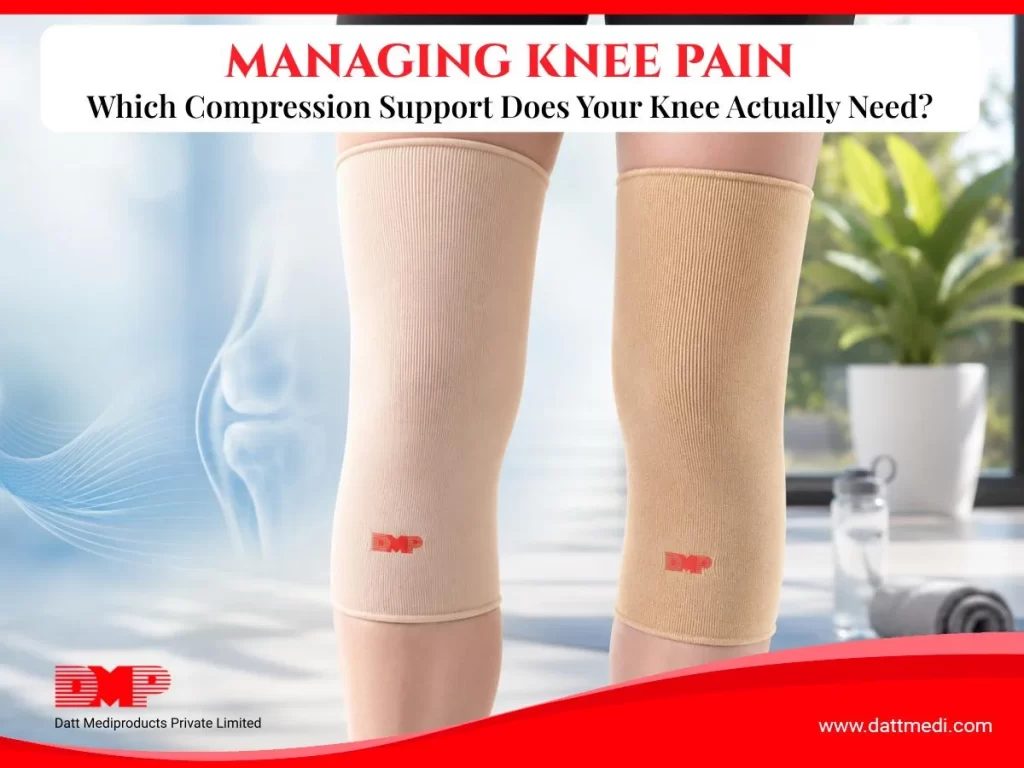
Knee compression supports are one of the most commonly used orthopaedic aids — for good reason. They reduce swelling, provide joint stability, and allow people to stay active during recovery. But picking the wrong one delivers less benefit than it should.

The Datt Mediproducts range includes two knee compression supports: the Knee Cap® and the Knee Cap Classic®. Both share the same anatomically tapered form and four-way elasticised construction, but differ in material composition — and that difference matters for fit, stretch, and the conditions each handles best.

This guide breaks down both products clearly so you can match the right support to the right situation.

Understanding Knee Compression Supports

Before comparing the two products, it helps to understand what knee compression supports actually do — and what they don’t.

A compression sleeve works by applying graduated pressure around the knee joint. This pressure does three things: it reduces fluid accumulation in the surrounding tissue (reducing swelling), it improves proprioception — the joint’s sense of its own position in space — which improves stability and coordination, and it provides mild structural support to the muscles and ligaments surrounding the joint.

Compression sleeves are not rigid braces. They do not prevent movement or immobilise the joint. Their role is to support the knee while allowing full, natural range of motion — making them suitable for both active use during daily activity and recovery phases where movement is encouraged.

Knee Cap® vs Knee Cap Classic®: What Is Actually Different?

Both products share the same core design: anatomically tapered, four-way elasticised fabric, breathable moisture-transporting weave, beige colour, and easy pull-on application. Available in S to XXL (37–67 cm thigh circumference). The key difference is material composition.

FeatureKnee Cap®Knee Cap Classic®
MaterialPolyamide, Polyester, Cotton, Nylon, Spandex, RubberPolyamide, Polyester, Cotton, Rubber
Key differentiatorContains Spandex + Nylon — higher elasticity and stretch recoveryNo Spandex — firmer, more structured fabric
Compression feelSofter, more flexible compression — moves freely with the jointFirmer, more structured compression — greater sense of support
Best forActive use, exercise, long-duration wear, mild-to-moderate conditionsRecovery, post-operative support, instability, conditions needing firmer hold
IndicationsArthritis, swelling, sprains, ligament/muscle injury, post-op, weak kneesArthritis, swelling, sprains, ligament/muscle injury, post-op, weak knees
SizesS, M, L, XL, XXLS, M, L, XL, XXL
ColourBeigeBeige

Knee Cap® — When to Choose It

The inclusion of Spandex and Nylon gives the Knee Cap® a higher degree of stretch and elastic recovery. The fabric moves with the joint rather than resisting it, making it more comfortable for extended wear and higher-activity use.

Best suited to:

  • Daily activity support — long hours of standing, walking, or commuting
  • Exercise and sports — where full range of motion is needed alongside compression
  • Mild-to-moderate swelling from arthritis or overuse
  • Sprains and strains in active recovery, where movement is encouraged
  • Individuals who have worn a rigid brace and are transitioning to lighter support
  • Long-duration wear where breathability and comfort are priorities

The four-way stretch and moisture-transporting weave make it particularly well-suited to warmer climates or extended wear through a full workday.

Knee Cap Classic® — When to Choose It

Without Spandex, the Knee Cap Classic® fabric is slightly firmer and provides a more structured feel against the joint. For some users — particularly those managing instability or recovering from injury — this firmer hold provides greater confidence during movement.

Best suited to:

  • Post-operative knee support — where firmer compression is preferred in the early recovery phase
  • Ligament injuries — where the joint needs a stronger sense of containment
  • Knee instability — where proprioceptive feedback from firmer compression helps prevent giving way
  • Arthritic pain management — particularly where the joint feels loose or unpredictable
  • Individuals who find softer sleeves feel insufficient for their level of discomfort
The Classic’s firmer structure makes it the better starting point when someone is first introducing compression support and needs the reassurance of a more defined hold.

Clinical Indications: Both Products

Both the Knee Cap® and Knee Cap Classic® are indicated for the same range of conditions. The choice between them is about compression feel and activity level, not about which conditions they cover.

  • Arthritic knee pain — reduces swelling and improves joint comfort during movement
  • Swelling from injury or post-operative recovery — graduated compression reduces fluid accumulation
  • Ligament and muscle injuries — supports the surrounding soft tissue during healing
  • Sprains and strains — protects the joint during active recovery
  • Stabilisation of weak knees — improves proprioception and confidence during weight-bearing
  • Post-operative knee support — provides compression during the rehabilitation phase

How to Size Correctly

Both products are sized by thigh circumference, measured approximately 15 cm above the centre of the kneecap. An incorrect size is one of the most common reasons compression sleeves underperform — too loose provides minimal compression; too tight restricts circulation.

SizeInchesCentimetres
S14.8 – 17.2″37 – 43 cm
M17.2 – 19.6″43 – 49 cm
L19.6 – 22″49 – 55 cm
XL22 – 24.4″55 – 61 cm
XXL24.4 – 26.8″61 – 67 cm

Safe Use Guidelines

When to Wear It

Compression sleeves are designed for use during periods of activity and weight-bearing — standing, walking, exercising. Most people do not need to wear them at night or during extended rest periods. If your clinician has advised otherwise, follow their specific guidance.

Combining with Rehabilitation

Compression support works alongside rehabilitation — not instead of it. Quadriceps strengthening, hamstring flexibility, and hip stability exercises address the underlying muscle weakness that contributes to knee instability and pain. A compression sleeve manages symptoms during activity; exercise addresses the cause.

Signs the Fit Needs Adjusting

  • Sleeve rolls down or bunches behind the knee — size may be too large
  • Visible skin bulging above or below the sleeve — size may be too small
  • Numbness, tingling, or increased swelling below the knee — too tight, remove immediately
  • No perceptible compression when standing — fabric has lost elasticity, replace the sleeve

Managing Orthopedic Injuries

Related reading: From the Field to Recovery: Orthopedic Injury Essentials for Athletes

When Compression Is Not Enough

Compression sleeves are appropriate for a wide range of common knee conditions. However, some situations require more rigid structural support than a sleeve can provide:

  • Significant ligament instability (ACL, PCL, MCL, LCL tears) — typically requires a hinged brace
  • Meniscal injuries with mechanical symptoms (locking, giving way) — requires clinical assessment
  • Post-operative immobilisation immediately after surgery — rigid brace or cast typically prescribed
  • Fractures or bone stress injuries — require immobilisation, not compression
If you are unsure which level of support your condition requires, consult a physiotherapist or orthopaedic specialist before selecting a product.

Choosing the Right Support from the Start

The difference between the Knee Cap® and Knee Cap Classic® comes down to how the compression feels against the joint and what activity level the sleeve needs to accommodate. For flexible, active, long-duration use — the Knee Cap®. For a firmer, more structured hold during recovery or instability — the Knee Cap Classic®.

Both are sized S to XXL, both are breathable and pull-on, and both cover the full range of common knee conditions. The right one is the one that matches how your knee feels and what you need it to do.

Browse: Knee Cap®  |  Knee Cap Classic®

Understanding Arthritis

Related reading: The Role of Orthopedic Support Products in Arthritis Pain Management
Visit www.dattmedi.com for more infomation.
Share:

Frequnently Asked Questions

Yes, for most people. Both the Knee Cap® and Knee Cap Classic® are designed for extended daily wear. The breathable, moisture-transporting fabric manages heat and sweat during long use. Remove if you experience any numbness, tingling, or increased swelling below the knee.

Both are indicated for arthritic knee pain. The Knee Cap® suits those who want flexibility and comfort during active daily use. The Knee Cap Classic® is the better choice if the joint feels unstable or if a firmer hold is preferred during flares. If arthritis is more advanced or the joint is significantly swollen, consult a healthcare professional before selecting a compression level.

With daily use, most compression sleeves should be replaced every 3–6 months. The elastic fibres degrade with washing and wear, and a sleeve that has lost its elasticity is no longer delivering effective compression. If the sleeve feels loose or no longer provides the same hold as when new, it is time to replace it.

Yes. The Knee Cap® is particularly suited to active use given its Spandex-enhanced stretch and moisture-transporting weave. It moves with the joint and manages sweat during exercise. For contact sports or high-impact activity where the joint needs stronger protection, consult a sports medicine professional about whether additional support is appropriate.

No. Knee compression sleeves like the Knee Cap® and Knee Cap Classic® are available without a prescription. However, if your knee pain is persistent, unexplained, or worsening, a clinical assessment is advisable before relying on compression support alone.

Recent Blogs
Addressing Wound Care Challenges

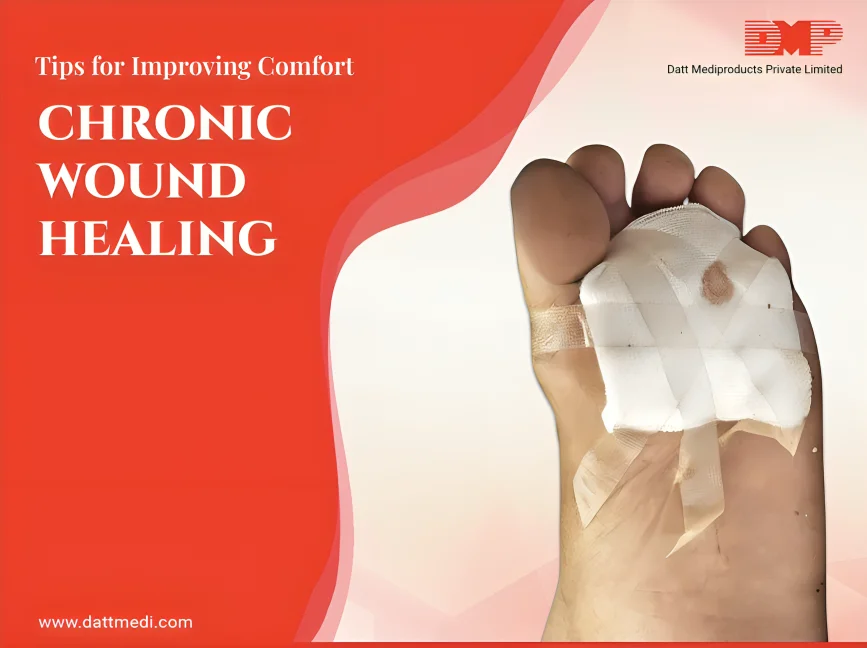
Peripheral artery disease (PAD) presents significant challenges to wound healing, affecting millions globally. This condition, characterized by narrowed arteries that reduce blood flow to the limbs, particularly the legs, not only causes discomfort and mobility issues but also complicates the natural healing process for wounds.

The Impact of PAD on Wound Healing

PAD restricts blood flow to tissues, depriving them of essential oxygen and nutrients necessary for healing. When individuals with PAD sustain wounds, reduced circulation delays the body’s healing mechanisms. Even minor cuts or abrasions can become chronic wounds, prone to infection and slow to heal. The diminished circulation also hinders the body’s ability to deliver immune cells and growth factors to the wound site, further complicating recovery.

Challenges Faced by Patients with PAD often experience:

  • Delayed Healing: Wounds take longer to heal, increasing the risk of infection and complications.
  • Chronic Wounds: Persistent wounds that do not heal properly, requiring prolonged treatment and care.
  • Risk of Amputation: Severe cases may lead to tissue death (gangrene), necessitating amputation.

Specialized Wound Care Approaches:

Managing wounds in PAD patients requires a specialized approach that addresses both the wound and underlying circulatory issues:

  • Improving Blood Flow: Medical interventions like angioplasty or bypass surgery may restore blood flow to the affected area, enhancing wound healing.
  • Advanced Dressings: Specialized dressings that promote moisture balance and provide infection barriers are crucial. For instance, alginate dressings for exuding wounds or hydrocolloid dressings for maintaining a moist environment can aid healing.
  • Compression Therapy: Controlled compression helps improve leg circulation, reduce swelling, and promote better blood flow, facilitating wound healing.
  • Patient Education: Empowering PAD patients to understand the importance of regular foot care, proper hygiene, and recognizing signs of infection can prevent complications and support healing efforts.

Peripheral artery disease significantly affects wound healing, necessitating a multidisciplinary approach involving vascular specialists, wound care nurses, and patient education. Addressing both vascular issues and wound management strategies can enhance outcomes for PAD patients, improving their quality of life and reducing complications. Understanding these challenges and implementing specialized wound care approaches tailored to PAD patients is crucial for effective treatment and support.

Comparing Orthopedic Casts

When it comes to managing fractures, the choice of cast material can make a significant difference in a patient’s recovery experience. Orthopaedic casts are essential in ensuring that broken bones heal correctly by providing the necessary immobilization. Two popular options in the medical field are Fiberglass and Plaster of Paris (POP) bandages. But how do they compare? Let’s dive into the details.

A. Material Composition: The Building Blocks

The fundamental difference between these two types of bandages begins with what they are made of:

  • Fiberglass is a synthetic material, made from plastic fibers coated with a resin. It’s known for being lightweight and is often available in various colors, which can add a bit of personality to an otherwise clinical experience.
  • Plaster of Paris is made from a fine white powder called gypsum. When mixed with water, it forms a thick paste that hardens as it dries.

B. Application Process: Ease vs. Skill

Applying these bandages requires different techniques:
  • Fiberglass bandages are dipped in water, applied to the injury, and begin hardening almost immediately, which allows for quick and efficient application. This makes it easier for healthcare providers to mold it perfectly to the patient’s body.
  • Plaster of Paris bandages need to be soaked in water and take longer to set. While they require more skill to apply, they offer a smooth finish that many patients find comfortable.

C. Durability and Strength: Which Lasts Longer?

When considering durability:
  • Fiberglass is the champion of strength. Its resistance to wear and tear makes it ideal for active individuals or cases requiring long-term immobilization.
  • Plaster of Paris is less durable, with a tendency to chip over time, making it better suited for short-term casts or initial treatments.

D. Comfort and Breathability: Feeling at Ease

Comfort is a top priority for patients who need to wear a cast for an extended period:
  • Fiberglass is lighter and less bulky, which adds to the patient’s comfort. However, it can sometimes be less breathable, leading to potential discomfort in hot or humid climates.
  • Plaster of Paris is bulkier and heavier, but it’s smooth finish can be more comfortable for some, allowing the skin to breathe better.

E. Setting Time and Ease of Use: Quick vs. Steady

The time it takes for a cast to set is crucial:
  • Fiberglass sets in just a few minutes, enabling patients to resume limited activities sooner.
  • Plaster of Paris takes much longer, often up to 15 minutes, which can be a disadvantage when immediate mobility is needed.

F. Water Resistance and Hygiene: Keeping It Clean

Hygiene is another critical factor:
  • Fiberglass is water-resistant, making it easier to maintain and less likely to harbour bacteria.
  • Plaster of Paris does not resist water and can easily disintegrate if exposed to moisture, requiring patients to take extra precautions to keep it dry.

G. Cost and Accessibility: Budget Matters

Cost and availability can influence the choice:
  • Fiberglass is typically more expensive and may not be available in all healthcare settings.
  • Plaster of Paris is more affordable and widely accessible, making it the go-to option in many clinics and hospitals, especially in resource-limited settings.

H. Environmental Impact: Think Green

With growing awareness about environmental impact:
  • Fiberglass, being a synthetic material, is less eco-friendly and can pose disposal challenges.
  • Plaster of Paris is derived from natural materials and is more environmentally friendly, though proper disposal is still necessary.

I. Clinical Applications: The Right Cast for the Right Case

  • Fiberglass is often recommended for long-term use and in cases where the patient is likely to remain active.
  • Plaster of Paris is ideal for short-term immobilization or initial treatments, particularly when budget constraints are a concern.

Making the Right Choice : Choosing between Fiberglass and Plaster of Paris bandages depends on several factors, including the patient’s lifestyle, the duration of immobilization, and budget.

Fiberglass is generally favoured for its durability and water resistance, while Plaster of Paris remains a trusted option for initial and short-term care due to its affordability and ease of use.

For more insights and to explore our range of orthopaedic casting products, visit our website: Velcast™ – Orthopaedic Fiberglass Casting Tape, Osteopop™ – Plaster of Paris Bandage and Velpop® – Plaster of Paris Bandage. Discover the best solutions for your orthopaedic needs today!

Logo

Datt Mediproducts Private Limited

Loading