Search by Blog
Read by Category

Your healing journey continues beyond this blog

Find the right products for better recovery at online store
Cart Image
Knee brace and compression sleeve comparison

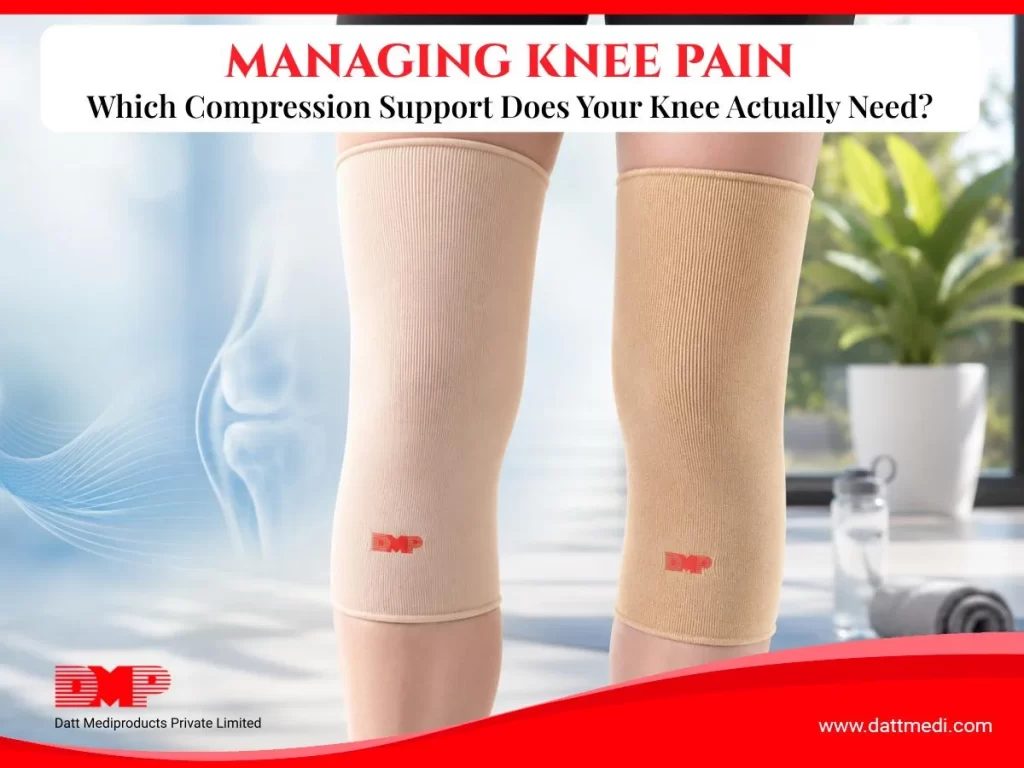
Knee compression supports are one of the most commonly used orthopaedic aids — for good reason. They reduce swelling, provide joint stability, and allow people to stay active during recovery. But picking the wrong one delivers less benefit than it should.

The Datt Mediproducts range includes two knee compression supports: the Knee Cap® and the Knee Cap Classic®. Both share the same anatomically tapered form and four-way elasticised construction, but differ in material composition — and that difference matters for fit, stretch, and the conditions each handles best.

This guide breaks down both products clearly so you can match the right support to the right situation.

Understanding Knee Compression Supports

Before comparing the two products, it helps to understand what knee compression supports actually do — and what they don’t.

A compression sleeve works by applying graduated pressure around the knee joint. This pressure does three things: it reduces fluid accumulation in the surrounding tissue (reducing swelling), it improves proprioception — the joint’s sense of its own position in space — which improves stability and coordination, and it provides mild structural support to the muscles and ligaments surrounding the joint.

Compression sleeves are not rigid braces. They do not prevent movement or immobilise the joint. Their role is to support the knee while allowing full, natural range of motion — making them suitable for both active use during daily activity and recovery phases where movement is encouraged.

Knee Cap® vs Knee Cap Classic®: What Is Actually Different?

Both products share the same core design: anatomically tapered, four-way elasticised fabric, breathable moisture-transporting weave, beige colour, and easy pull-on application. Available in S to XXL (37–67 cm thigh circumference). The key difference is material composition.

FeatureKnee Cap®Knee Cap Classic®
MaterialPolyamide, Polyester, Cotton, Nylon, Spandex, RubberPolyamide, Polyester, Cotton, Rubber
Key differentiatorContains Spandex + Nylon — higher elasticity and stretch recoveryNo Spandex — firmer, more structured fabric
Compression feelSofter, more flexible compression — moves freely with the jointFirmer, more structured compression — greater sense of support
Best forActive use, exercise, long-duration wear, mild-to-moderate conditionsRecovery, post-operative support, instability, conditions needing firmer hold
IndicationsArthritis, swelling, sprains, ligament/muscle injury, post-op, weak kneesArthritis, swelling, sprains, ligament/muscle injury, post-op, weak knees
SizesS, M, L, XL, XXLS, M, L, XL, XXL
ColourBeigeBeige

Knee Cap® — When to Choose It

The inclusion of Spandex and Nylon gives the Knee Cap® a higher degree of stretch and elastic recovery. The fabric moves with the joint rather than resisting it, making it more comfortable for extended wear and higher-activity use.

Best suited to:

  • Daily activity support — long hours of standing, walking, or commuting
  • Exercise and sports — where full range of motion is needed alongside compression
  • Mild-to-moderate swelling from arthritis or overuse
  • Sprains and strains in active recovery, where movement is encouraged
  • Individuals who have worn a rigid brace and are transitioning to lighter support
  • Long-duration wear where breathability and comfort are priorities

The four-way stretch and moisture-transporting weave make it particularly well-suited to warmer climates or extended wear through a full workday.

Knee Cap Classic® — When to Choose It

Without Spandex, the Knee Cap Classic® fabric is slightly firmer and provides a more structured feel against the joint. For some users — particularly those managing instability or recovering from injury — this firmer hold provides greater confidence during movement.

Best suited to:

  • Post-operative knee support — where firmer compression is preferred in the early recovery phase
  • Ligament injuries — where the joint needs a stronger sense of containment
  • Knee instability — where proprioceptive feedback from firmer compression helps prevent giving way
  • Arthritic pain management — particularly where the joint feels loose or unpredictable
  • Individuals who find softer sleeves feel insufficient for their level of discomfort
The Classic’s firmer structure makes it the better starting point when someone is first introducing compression support and needs the reassurance of a more defined hold.

Clinical Indications: Both Products

Both the Knee Cap® and Knee Cap Classic® are indicated for the same range of conditions. The choice between them is about compression feel and activity level, not about which conditions they cover.

  • Arthritic knee pain — reduces swelling and improves joint comfort during movement
  • Swelling from injury or post-operative recovery — graduated compression reduces fluid accumulation
  • Ligament and muscle injuries — supports the surrounding soft tissue during healing
  • Sprains and strains — protects the joint during active recovery
  • Stabilisation of weak knees — improves proprioception and confidence during weight-bearing
  • Post-operative knee support — provides compression during the rehabilitation phase

How to Size Correctly

Both products are sized by thigh circumference, measured approximately 15 cm above the centre of the kneecap. An incorrect size is one of the most common reasons compression sleeves underperform — too loose provides minimal compression; too tight restricts circulation.

SizeInchesCentimetres
S14.8 – 17.2″37 – 43 cm
M17.2 – 19.6″43 – 49 cm
L19.6 – 22″49 – 55 cm
XL22 – 24.4″55 – 61 cm
XXL24.4 – 26.8″61 – 67 cm

Safe Use Guidelines

When to Wear It

Compression sleeves are designed for use during periods of activity and weight-bearing — standing, walking, exercising. Most people do not need to wear them at night or during extended rest periods. If your clinician has advised otherwise, follow their specific guidance.

Combining with Rehabilitation

Compression support works alongside rehabilitation — not instead of it. Quadriceps strengthening, hamstring flexibility, and hip stability exercises address the underlying muscle weakness that contributes to knee instability and pain. A compression sleeve manages symptoms during activity; exercise addresses the cause.

Signs the Fit Needs Adjusting

  • Sleeve rolls down or bunches behind the knee — size may be too large
  • Visible skin bulging above or below the sleeve — size may be too small
  • Numbness, tingling, or increased swelling below the knee — too tight, remove immediately
  • No perceptible compression when standing — fabric has lost elasticity, replace the sleeve

Managing Orthopedic Injuries

Related reading: From the Field to Recovery: Orthopedic Injury Essentials for Athletes

When Compression Is Not Enough

Compression sleeves are appropriate for a wide range of common knee conditions. However, some situations require more rigid structural support than a sleeve can provide:

  • Significant ligament instability (ACL, PCL, MCL, LCL tears) — typically requires a hinged brace
  • Meniscal injuries with mechanical symptoms (locking, giving way) — requires clinical assessment
  • Post-operative immobilisation immediately after surgery — rigid brace or cast typically prescribed
  • Fractures or bone stress injuries — require immobilisation, not compression
If you are unsure which level of support your condition requires, consult a physiotherapist or orthopaedic specialist before selecting a product.

Choosing the Right Support from the Start

The difference between the Knee Cap® and Knee Cap Classic® comes down to how the compression feels against the joint and what activity level the sleeve needs to accommodate. For flexible, active, long-duration use — the Knee Cap®. For a firmer, more structured hold during recovery or instability — the Knee Cap Classic®.

Both are sized S to XXL, both are breathable and pull-on, and both cover the full range of common knee conditions. The right one is the one that matches how your knee feels and what you need it to do.

Browse: Knee Cap®  |  Knee Cap Classic®
Understanding Arthritis

Related reading: The Role of Orthopedic Support Products in Arthritis Pain Management

Visit www.dattmedi.com for more infomation.
Share:

Frequnently Asked Questions

Yes, for most people. Both the Knee Cap® and Knee Cap Classic® are designed for extended daily wear. The breathable, moisture-transporting fabric manages heat and sweat during long use. Remove if you experience any numbness, tingling, or increased swelling below the knee.

Both are indicated for arthritic knee pain. The Knee Cap® suits those who want flexibility and comfort during active daily use. The Knee Cap Classic® is the better choice if the joint feels unstable or if a firmer hold is preferred during flares. If arthritis is more advanced or the joint is significantly swollen, consult a healthcare professional before selecting a compression level.

With daily use, most compression sleeves should be replaced every 3–6 months. The elastic fibres degrade with washing and wear, and a sleeve that has lost its elasticity is no longer delivering effective compression. If the sleeve feels loose or no longer provides the same hold as when new, it is time to replace it.

Yes. The Knee Cap® is particularly suited to active use given its Spandex-enhanced stretch and moisture-transporting weave. It moves with the joint and manages sweat during exercise. For contact sports or high-impact activity where the joint needs stronger protection, consult a sports medicine professional about whether additional support is appropriate.

No. Knee compression sleeves like the Knee Cap® and Knee Cap Classic® are available without a prescription. However, if your knee pain is persistent, unexplained, or worsening, a clinical assessment is advisable before relying on compression support alone.

Recent Blogs
Wound Care for Traveler's: Tips for On-the-Go Healing

Wound Care for Travelers: Tips for On-the-Go Healing

As travelers, we often find ourselves exploring new landscapes, engaging in adventurous activities, or simply navigating bustling city streets. With such dynamic experiences comes the risk of minor injuries or wounds. Whether it’s a scraped knee from hiking, a blister from walking, or a cut from exploring unfamiliar terrain, proper wound care is essential to ensure a smooth and safe journey.

In this blog, we’ll explore key considerations for travelers when it comes to wound care, focusing on portability, convenience, and effectiveness in various environments.

Portability and Convenience:

When traveling, space in our bags is precious, and carrying bulky medical supplies is often impractical. Opt for compact wound care products that are lightweight and easily portable. Look for individually wrapped items or travel-sized kits that include essentials like adhesive bandages, antiseptic wipes, and gauze pads. These items should be readily accessible in your travel bag or first aid kit, ensuring quick access in case of emergencies. Consider adding our woven cohesive moderate compression bandage- Velsoft®-Plus to your kit for added support and compression.

Adhesive Strength for Active Movement:

Travelers are often on the move, whether hiking through rugged terrain, exploring urban environments, or engaging in water activities. Therefore, it’s crucial to choose wound dressings with strong adhesive properties that can withstand active movement. Look for adhesive bandages specifically designed for sports or active lifestyles, as they offer enhanced durability and stay in place even during rigorous physical activities. 

DO YOU KNOW –
Our product Velsoft®-Plus provides self-adhesive, non-sticky support, ideal for active movement for the travelers on the go.

Moisture Control for Varied Environments:

Traveling exposes us to diverse climates and environments, from humid tropical regions to arid deserts. Proper moisture control is essential for promoting optimal wound healing and preventing infection. Consider using advanced wound dressings with moisture-absorbing capabilities, such as hydrocolloid or foam dressings. These dressings create a moist wound environment conducive to healing while also providing a barrier against external contaminants.

Protection Against Environmental Contaminants:

Traveling exposes us to various environmental hazards, including dirt, dust, bacteria, and other contaminants. Ensure your wound care products offer adequate protection against these elements. Waterproof and breathable dressings are ideal for maintaining a clean and sterile environment around the wound, preventing contamination from external sources. Additionally, antiseptic wipes or sprays can be used to cleanse the wound and surrounding skin, reducing the risk of infection. Velsoft®-Plus bandage provides significant levels of pressure up to 20-30 mmHg, aiding in the management of mild sprains and strains while offering protection against contaminants.

Ease of Application and Removal:

In the midst of travel adventures, simplicity is key. Choose wound care products that are easy to apply and remove, even in challenging conditions. Adhesive bandages with built-in applicators or tabs make it effortless to secure them in place, while non-stick dressings facilitate pain-free removal without disrupting the healing process. Consider the practicality of the products you choose, ensuring they can be applied and removed with minimal fuss. Our Velsoft®-Plus  bandages are self-adhesive and non-sticky to hair or skin, ensuring hassle-free application and removal.

Versatility for Different Wound Types:

Travelers encounter a variety of wounds, from minor cuts and scrapes to blisters and burns. Therefore, it’s essential to have versatile wound care products that can address different types of injuries effectively. Multi-purpose dressings, such as sterile gauze pads or adhesive hydrogel sheets, are valuable additions to your travel first aid kit. These products can be used for wound cleansing, protection, and absorption, providing comprehensive care for various injuries. 

Traveling presents countless opportunities for adventure and exploration, but it also comes with the risk of minor injuries and wounds. By prioritizing portability, convenience, and effectiveness in wound care products, travelers can ensure they’re prepared to handle unexpected mishaps while on the go. Whether trekking through rugged landscapes or strolling through bustling city streets, proper wound care is essential for a safe and enjoyable travel experience. With the right products and preparation, travelers can embark on their journeys with confidence, knowing they have the tools to address any bumps along the way.

Post-Surgery Wound Care Supporting Recovery

Post-Surgery Wound Care Supporting Recovery 

Post-surgery wound care is a critical component in the journey towards a smooth recovery, minimizing complications, and promoting effective healing. This blog post seeks to offer comprehensive insights for both patients and healthcare providers, emphasizing key aspects of post-surgery wound care.

Understanding the Healing Process:

To navigate the recovery journey successfully, it’s essential to grasp the intricacies of the body’s natural healing process. From the initial inflammatory response to tissue remodeling, patients should be aware of these stages to set realistic expectations for the recovery timeline. 

Preparation Before Surgery: 

A proactive approach to wound care begins before the surgical procedure. Adequate preparation involves thorough consultation with healthcare professionals, understanding the surgery specifics, and adhering to pre-surgery instructions. This groundwork sets the stage for a more seamless recovery. 

Maintaining a Sterile Environment: 

Fundamental to effective wound care is the maintenance of a clean and sterile environment. This includes keeping the surgical site and surrounding areas free from contaminants. Proper wound hygiene significantly reduces the risk of infections, a common concern post-surgery. 

Nutrition and Hydration for Optimal Healing: 

Supporting the body’s healing mechanisms requires a well-balanced diet rich in essential nutrients. Proper nutrition promotes tissue repair and helps prevent complications. Adequate hydration is equally crucial, supporting overall bodily functions and facilitating nutrient transportation to the wound site. 

Monitoring and Recognizing Warning Signs: 

Vigilance is key during the recovery phase. Patients should be educated on monitoring wounds for warning signs like increased redness, swelling, or discharge.

Recognizing these signs early enables prompt intervention, minimizing the risk of serious complications. 

Introducing Our Innovative Solution: 

Elevating the standards of patient recovery involves introducing innovative products like Velfix® -Edge. This exceptional dressing goes beyond traditional solutions with its non-woven bordered design, frame delivery system, and deep notched barrier against infections. The latex-free adhesive ensures compatibility with diverse patients, while the window-framed delivery system simplifies application. Incorporating Velfix® -Edge into post-surgery wound care routines prioritizes precision, patient comfort, and infection prevention, contributing to an enhanced and smoother recovery journey for every patient.

Therefore, post-surgery wound care is a collaborative effort between healthcare providers and patients. Empowering individuals with knowledge about the healing process, preparing adequately before surgery, maintaining a sterile environment, prioritizing nutrition and hydration, and being vigilant for warning signs actively contribute to a successful recovery journey. 

Choosing Velfix® -Edge for optimal post-surgery care is a conscious decision towards improved recovery outcomes, ensuring a holistic and effective approach to the healing process.

Logo

Datt Mediproducts Private Limited

Loading