
Search by Blog
Read by Category

Your healing journey continues beyond this blog

Find the right products for better recovery at online store
Cart Image
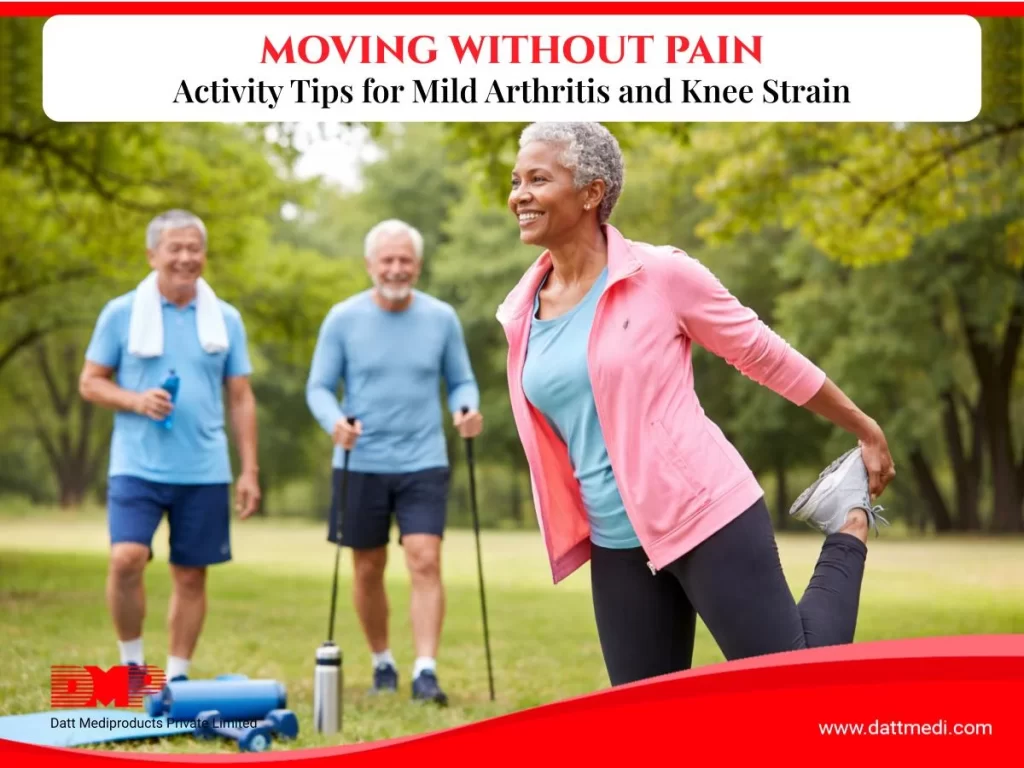
Gentle knee exercise for mild arthritis

Avoiding movement because of mild arthritis or knee strain usually backfires — it leads to more stiffness, not less. The safer path is choosing joint-friendly, low-impact activity and adding support where it genuinely helps.

Many people assume rest is always the right answer for joint pain. But joints depend on regular movement to stay flexible and well-lubricated. Inactivity tends to weaken the surrounding muscles, which puts more pressure on the joint itself — not less.

This blog breaks down what actually helps, what to avoid, and how to build a routine that keeps you moving safely.

Rest vs Movement: What Is Actually Different?

Both approaches feel intuitive when a joint hurts, but they lead to very different long-term outcomes. The key difference is what each one does to the muscles and tissue surrounding the knee over time.

FactorProlonged RestGentle, Regular Movement
Effect on stiffnessIncreases stiffness over timeReduces stiffness after periods of rest
Effect on muscle strengthWeakens supporting musclesStrengthens muscles that support the knee
Effect on joint lubricationReduces natural lubricationKeeps the joint lubricated
Effect on pressure through the jointIndirectly increases pressure (via weaker muscles)Reduces pressure by sharing load with stronger muscles
Prolonged rest may be appropriate during acute flare-ups or when recommended as part of clinician-directed recovery. For day-to-day management of mild arthritis or knee strain, gentle, regular movement is generally more suitable.

However, both approaches can have drawbacks when overdone. Too much rest can contribute to long-term mobility loss, and on the other hand  exercising at too high an intensity that the body is not ready for can aggravate pain.

Why Movement Matters for Joint Health

Gentle, regular movement keeps the joint lubricated, keeps the muscles around it strong, and actually reduces stiffness — the opposite of what many people expect.

Gentle, regular movement can help:

  • Improve joint flexibility
  •  Strengthen the muscles that support the knee 
  • Reduce stiffness after periods of rest 
  • Support overall mobility

Low-Impact Exercises That Are Easier on the Knees 

Which to Choose

Walking, swimming, and cycling are the three most commonly recommended options because they build strength and mobility without the sudden impact that aggravates joint pain.

ActivityImpact LevelBest ForKey Benefit
WalkingLowDaily movement, circulation, beginnersSimple, accessible, supports circulation without jarring the joint
Swimming / water aerobicsVery lowSignificant pain, higher body weight, flare-upsWater supports body weight, letting you move with far less strain
Cycling (stationary or smooth terrain)LowBuilding quadriceps and hamstring strengthControlled, repetitive motion strengthens muscles without impact

Walking
On flat, stable surfaces, walking is one of the simplest ways to stay active and supports circulation in the legs without jarring the joint. 

Swimming or water exercise
Water supports your body weight, so swimming and water aerobics let you move comfortably with far less strain on the knees than land-based exercise. 

Cycling
A stationary bike or smooth terrain lets you strengthen the muscles around the knee through controlled, repetitive motion, without impact.

Do Knee Supports Actually Help During Activity?

Yes, as an aid; not a replacement for strengthening. 
Knee sleeves and braces add mild compression and stability,
which can make movement feel safer and more comfortable, especially early on.

Supports may help by:

Providing mild compression around the joint Adding extra stability during movement Increasing confidence while walking or exercising. Options like Knee Cap® or Knee Cap Classic® offer light, breathable compression suited for daily activity.

However, knee supports should not become a long-term substitute for strengthening the muscles around the joint. Over-reliance on external supports may reduce how much the muscles have to work, which can contribute to weakness over time. As strength and stability improve, it may be appropriate to reduce or stop using the support, depending on individual needs and professional guidance.

Strengthening the Muscles Around the Knee

Stronger muscles around the knee take pressure off the joint itself. This is one of the most effective long-term ways to reduce strain, more so than rest alone.

After getting professional guidance, useful exercises often include:

  1. Gentle resistance exercises for the quadriceps Light hamstring strengthening Controlled stretching for flexibility
  2. If you’re recovering from an actual strain rather than general stiffness, the difference in approach matters.
  3. Related reading: Muscle Strains: Causes and Effective Recovery Strategies
  4. Arthritis specifically carries its own considerations for compression and activity level.

Lifestyle Habits That Support Joint Health

Body weight, footwear, and seating all affect how much daily pressure lands on your knees — small adjustments here reduce strain without any exercise involved.

Helpful adjustments:

  • Maintaining a healthy body weight
  • Wearing supportive footwear 
  • Choosing chairs with proper back and leg support
  • Pacing activity and taking breaks when needed
For added support during activity, compression bandages are sometimes used to manage strain, and tapes and adhesive supports can help with dressing security if there's any accompanying skin sensitivity or minor injury.

When to Scale Back and Check In With a Professional

  • Movement should feel manageable, not punishing. Some signals mean it’s time to pause and get guidance rather than push through.
  • Pain increases noticeably during or after activity 
  • Swelling develops or worsens 
  • Movement becomes noticeably more difficult than usual
  • The knee feels unstable or gives way

Physiotherapists can build a personalised activity plan that supports recovery without overloading the joint.

Staying Active Safely

Staying active with mild arthritis or knee strain isn’t about avoiding movement, it’s about choosing the right kind. Low-impact exercise, appropriate support, and a few lifestyle adjustments let most people keep moving comfortably while protecting long-term joint health.
Visit www.dattmedi.com for more infomation.
Share:

Frequnently Asked Questions

Yes. Gentle, low-impact exercise helps maintain joint mobility and strengthens the muscles that support the knee.

Walking, swimming, and cycling are commonly recommended, since they keep you moving while placing less stress on the joint.

Knee sleeves or braces can add mild stability and confidence during movement, especially for people with mild instability or discomfort — but they work best alongside strengthening exercise, not instead of it.

Yes. If pain or swelling increases noticeably during activity, rest and consult a healthcare professional before continuing.

Yes. Physiotherapists can design specific exercises and rehab plans to strengthen the muscles around the knee and improve joint function.

Recent Blogs
Managing Orthopedic Injury

From the Field to Recovery: Orthopedic Injury Essentials for Athletes

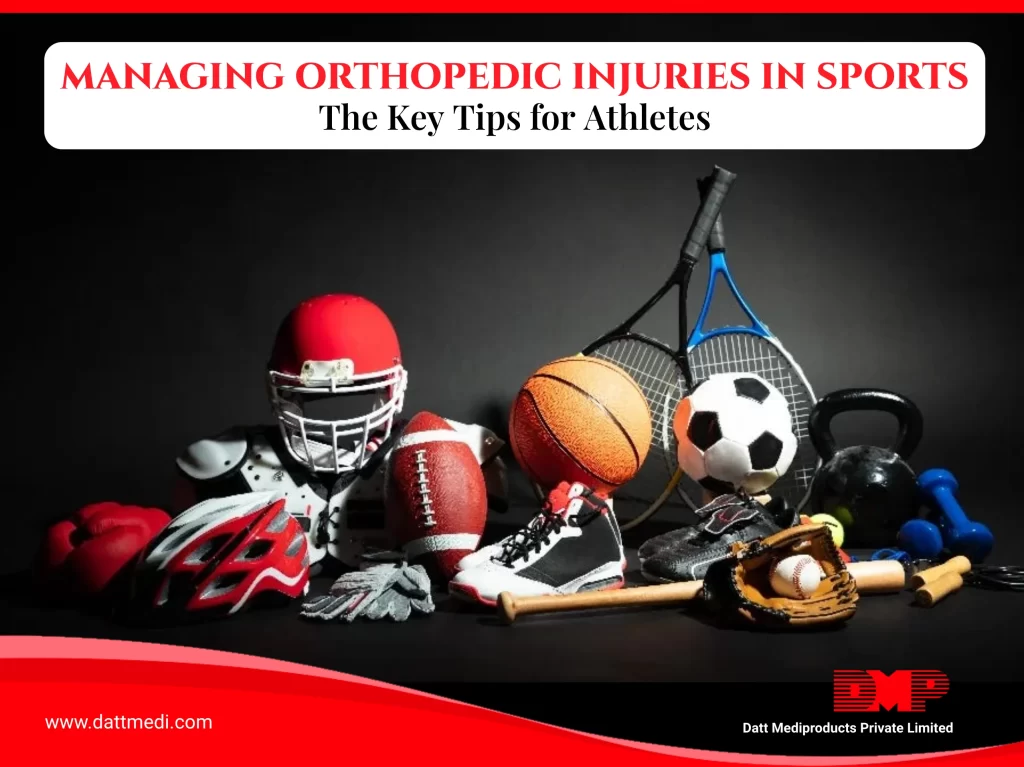
Sports seasons bring excitement and competition, but they also increase the risk of orthopedic injuries. Athletes must adopt preventive measures and utilize effective orthopedic injury management strategies to ensure peak performance and long-term health.

This guide explores common injuries, prevention strategies, and the role of orthopedic products in recovery.

Common Orthopedic Injuries in Athletes

Athletes often face various orthopedic injury, including:

1. Sprains, Strains, and Fractures

Sprains: A sprain occurs when ligaments (the tissue connecting bones) are stretched or torn, often caused by sudden twisting or rolling of a joint.
Example: A soccer player might twist their ankle while changing direction quickly on the field, resulting in an ankle sprain.

Strains: A strain is an injury to muscles or tendons caused by overuse, overstretching, or excessive force.
Example: A weightlifter lifting a heavy load with improper form might experience a strain in their lower back muscles.

Fractures: A fracture refers to a break in a bone, which can occur due to high-impact collisions or falls.
Example: A cyclist who crashes and lands on their arm might suffer a wrist fracture.

2. Tendon Injuries

Tendons are the fibrous tissues connecting muscles to bones, and they can become inflamed or torn due to overuse or repetitive movements.

Example: 
A tennis player might develop tennis elbow, a condition caused by repetitive strain on the tendons of the forearm. Similarly, a runner could experience Achilles tendonitis from frequent uphill running or poor footwear.

3. Overuse Injuries

Overuse injuries result from repetitive stress on bones, muscles, or joints without adequate rest or recovery time.
Example: A marathon runner who increases mileage too quickly might develop a stress fracture in their foot.

Stress Fractures: Tiny cracks in bones caused by repetitive impact activities like running or jumping.

Shin Splints: Pain along the shin bone caused by overuse of lower leg muscles.
Example: A basketball player who practices on hard courts for extended periods might develop shin splints due to the repetitive impact.

Prevention Strategies for Athletes

Preventing injuries requires a proactive approach that combines preparation, proper equipment, and targeted training:

1. Warm-Up and Cool-Down Routines:

Dynamic stretching and gradually increasing activity levels prepare muscles for exertion, improving flexibility and blood flow. Post-activity stretching helps reduce muscle stiffness and aids in recovery.

2. Proper Gear:

Using well-fitted shoes and sport-specific protective equipment minimizes the risk of injuries caused by poor support or inadequate protection.

3. Strength and Flexibility Training:

Incorporating targeted exercises strengthens muscles, enhances joint stability, and improves range of motion, reducing the likelihood of injury.

Example: 
A sprinter who performs a comprehensive warm-up involving dynamic stretches (such as leg swings and high knees) and wears track-specific, cushioned running shoes is less likely to experience a hamstring strain compared to an athlete who skips these steps and runs in ill-fitted or non-specialized shoes.

Innovative Orthopedic Solutions

Orthopedic products such as Cokomp™ Compression Bandage, Velsoft® Adhesive Bandage, and Velfour®-Plus are designed to provide tailored support and recovery solutions. From managing swelling with targeted compression to providing flexible and lightweight joint support, these products address a variety of athletic needs effectively.

When to Seek Professional Help
Certain signs indicate the need for medical attention to prevent further complications:

  • Severe swelling or bruising that doesn’t subside.
  • Inability to bear weight on the affected limb.
  • Persistent pain or visible deformities.

Physical therapy often plays a key role in recovery, helping athletes regain strength and mobility post-injury.

Building a Safe Sports Culture
Fostering a safe sports environment involves education and awareness:

  • Educating Athletes: Emphasize the importance of injury prevention, recognizing symptoms, and administering first aid.
  • Role of Coaches and Trainers: Encourage proper technique, regular rest, and adherence to safety protocols to minimize injury risks.

Fostering a safe sports environment requires a holistic strategy that emphasizes education, preparation, and recovery. By integrating preventive measures, timely intervention, and the right orthopedic solutions, athletes can minimize the impact of injuries while optimizing performance.

Our advanced orthopedic solutions provide tailored support and comfort, helping athletes recover faster and maintain mobility. Whether it’s targeted compression or flexible support, our products are designed with athletes’ unique needs in mind.

Equip yourself for a safer, healthier sports season with Datt Mediproducts. Our innovative range of orthopedic injury solutions, including high-quality compression bandages and supportive products, is designed to meet the unique needs of athletes. Discover how our products can enhance recovery and performance at Datt Mediproducts.

Comparing Orthopedic Casts

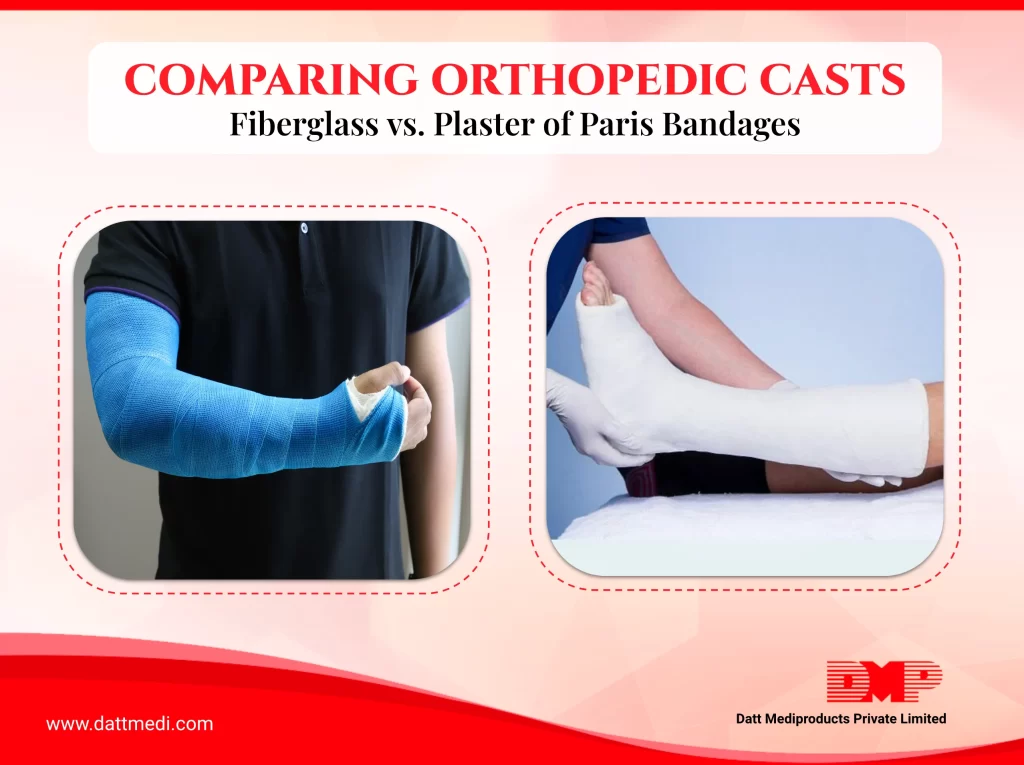
When it comes to managing fractures, the choice of cast material can make a significant difference in a patient’s recovery experience. Orthopaedic casts are essential in ensuring that broken bones heal correctly by providing the necessary immobilization. Two popular options in the medical field are Fiberglass and Plaster of Paris (POP) bandages. But how do they compare? Let’s dive into the details.

A. Material Composition: The Building Blocks

The fundamental difference between these two types of bandages begins with what they are made of:

  • Fiberglass is a synthetic material, made from plastic fibers coated with a resin. It’s known for being lightweight and is often available in various colors, which can add a bit of personality to an otherwise clinical experience.
  • Plaster of Paris is made from a fine white powder called gypsum. When mixed with water, it forms a thick paste that hardens as it dries.

B. Application Process: Ease vs. Skill

Applying these bandages requires different techniques:
  • Fiberglass bandages are dipped in water, applied to the injury, and begin hardening almost immediately, which allows for quick and efficient application. This makes it easier for healthcare providers to mold it perfectly to the patient’s body.
  • Plaster of Paris bandages need to be soaked in water and take longer to set. While they require more skill to apply, they offer a smooth finish that many patients find comfortable.

C. Durability and Strength: Which Lasts Longer?

When considering durability:
  • Fiberglass is the champion of strength. Its resistance to wear and tear makes it ideal for active individuals or cases requiring long-term immobilization.
  • Plaster of Paris is less durable, with a tendency to chip over time, making it better suited for short-term casts or initial treatments.

D. Comfort and Breathability: Feeling at Ease

Comfort is a top priority for patients who need to wear a cast for an extended period:
  • Fiberglass is lighter and less bulky, which adds to the patient’s comfort. However, it can sometimes be less breathable, leading to potential discomfort in hot or humid climates.
  • Plaster of Paris is bulkier and heavier, but it’s smooth finish can be more comfortable for some, allowing the skin to breathe better.

E. Setting Time and Ease of Use: Quick vs. Steady

The time it takes for a cast to set is crucial:
  • Fiberglass sets in just a few minutes, enabling patients to resume limited activities sooner.
  • Plaster of Paris takes much longer, often up to 15 minutes, which can be a disadvantage when immediate mobility is needed.

F. Water Resistance and Hygiene: Keeping It Clean

Hygiene is another critical factor:
  • Fiberglass is water-resistant, making it easier to maintain and less likely to harbour bacteria.
  • Plaster of Paris does not resist water and can easily disintegrate if exposed to moisture, requiring patients to take extra precautions to keep it dry.

G. Cost and Accessibility: Budget Matters

Cost and availability can influence the choice:
  • Fiberglass is typically more expensive and may not be available in all healthcare settings.
  • Plaster of Paris is more affordable and widely accessible, making it the go-to option in many clinics and hospitals, especially in resource-limited settings.

H. Environmental Impact: Think Green

With growing awareness about environmental impact:
  • Fiberglass, being a synthetic material, is less eco-friendly and can pose disposal challenges.
  • Plaster of Paris is derived from natural materials and is more environmentally friendly, though proper disposal is still necessary.

I. Clinical Applications: The Right Cast for the Right Case

  • Fiberglass is often recommended for long-term use and in cases where the patient is likely to remain active.
  • Plaster of Paris is ideal for short-term immobilization or initial treatments, particularly when budget constraints are a concern.

Making the Right Choice : Choosing between Fiberglass and Plaster of Paris bandages depends on several factors, including the patient’s lifestyle, the duration of immobilization, and budget.

Fiberglass is generally favoured for its durability and water resistance, while Plaster of Paris remains a trusted option for initial and short-term care due to its affordability and ease of use.

For more insights and to explore our range of orthopaedic casting products, visit our website: Velcast™ – Orthopaedic Fiberglass Casting Tape, Osteopop™ – Plaster of Paris Bandage and Velpop® – Plaster of Paris Bandage. Discover the best solutions for your orthopaedic needs today!

Logo

Datt Mediproducts Private Limited

Loading
Buy Now Contact Us