Search by Blog
Read by Category

Your healing journey continues beyond this blog

Find the right products for better recovery at online store
Cart Image
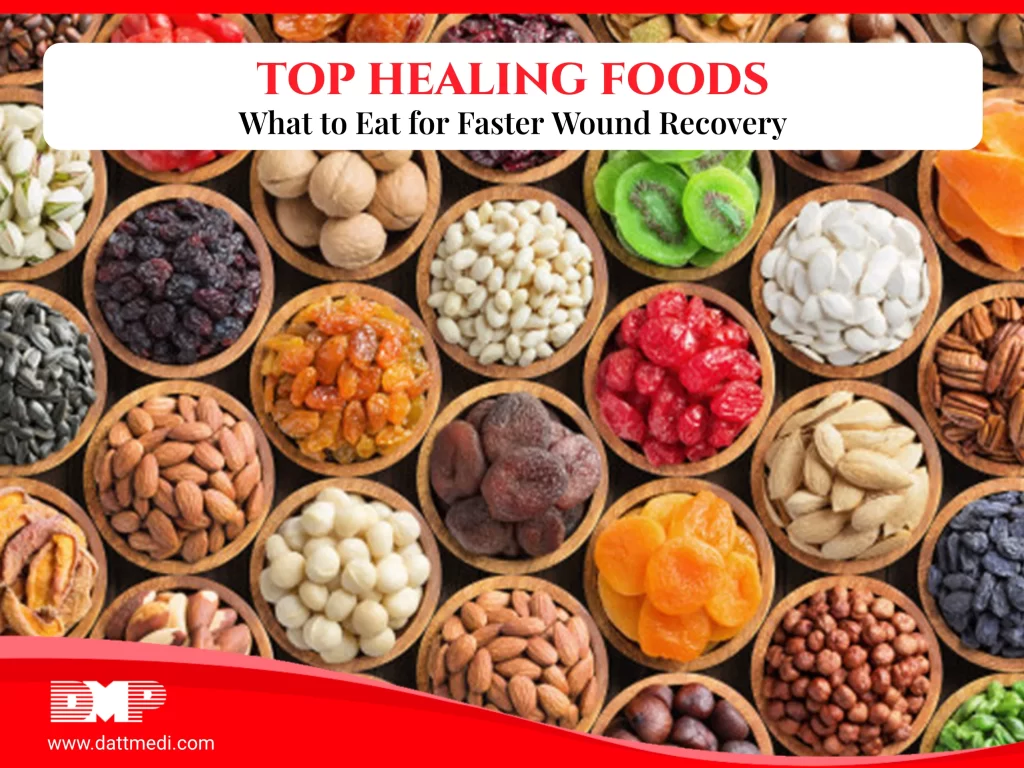
Top Foods for Wound Healing: Boost Your Recovery & Strength

Nutrition plays a central role in wound healing, often as important as medical care itself. When the body sustains an injury, foods for wound healing become essential as its demand for specific nutrients increases.

The right foods can help accelerate tissue repair, reduce inflammation, strengthen the immune system, and enhance overall recovery. This blog explores scientifically backed foods for wound healing that actively support faster and more effective recovery.

Phytonutrient Power for Tissue Repair

What they are:

Phytonutrients are bioactive compounds in plants, such as flavonoids and carotenoids.

Why they matter:

Wound sites often experience oxidative stress due to free radicals, which can delay healing. Phytonutrients neutralize these free radicals, creating a favorable environment for tissue regeneration.

 Food sources:

  • Berries (flavonoids): Blueberries, strawberries, and blackberries reduce oxidative stress.
  • Sweet potatoes & carrots (carotenoids): Support cell growth and boost skin barrier function.

Quick Tip: Including a cup of mixed berries in breakfast or roasted sweet potato as a side dish provides antioxidant protection during recovery.

Collagen-Activating Foods

What they are:

Nutrients that directly stimulate collagen synthesis.

Why they matter:

Collagen forms the structural framework of new tissue and strong scar formation.

Key nutrients & foods:

  • Vitamin C (bell peppers, citrus, kiwi): A co-factor in collagen production.
  • Copper (sunflower seeds, cashews, lentils): Supports the cross-linking of collagen fibers for durability.

Quick Tip: A salad of bell peppers, spinach, and sunflower seeds supplies both vitamin C and copper—maximizing collagen activation.

Gut Health and Healing Connection

What it is:

The gut microbiome plays a central role in nutrient absorption and immune regulation.

Why it matters:

Without a healthy gut, even the best diet cannot deliver full healing benefits. Probiotics strengthen the microbiome, enhance nutrient uptake, and improve immune defenses against infection.

Food sources:

Yogurt, kefir, kimchi, sauerkraut, miso.

Quick Tip: Consuming a serving of probiotic yogurt daily can improve nutrient bioavailability, indirectly accelerating wound recovery.

Anti-Inflammatory Spice Cabinet

What they are:

Natural spices with anti-inflammatory and antimicrobial properties.

Why they matter:

Chronic inflammation around a wound can slow tissue regeneration. Certain spices actively reduce inflammatory responses while fighting harmful microbes.

Food sources:

  • Turmeric (curcumin): Reduces pro-inflammatory cytokines.
  • Ginger: Enhances circulation and reduces swelling.
  • Garlic: Provides antimicrobial support against infections.

Quick Tip: Adding turmeric to curries, ginger to tea, and garlic to meals integrates these benefits naturally into daily cooking.

Zinc Synergy Foods

What it is:

Zinc is essential for cell division and repair, but its efficiency increases when paired with vitamin C.

Why it matters:

Zinc deficiency can delay wound closure. Pairing zinc with vitamin C optimizes collagen production and tissue healing.

Food sources & pairings:

  • Pumpkin seeds + oranges
  • Chickpeas + bell peppers
This nutrient synergy ensures better absorption and function.

Iron-Rich for Oxygen Delivery

What it is:

Iron is critical for hemoglobin formation.

Why it matters:

Adequate hemoglobin ensures oxygen supply to regenerating tissues, which is vital for energy production during healing.

Food sources:

  • Heme iron (easily absorbed): Red meat, chicken, fish.
  • Non-heme iron: Lentils, spinach, fortified cereals.

Quick Tip: Pairing spinach (iron) with tomatoes (vitamin C) improves absorption, ensuring more oxygen reaches healing tissues.

Hydration Beyond Water

What it is:

Cellular hydration requires more than water—electrolytes are equally vital.

Why it matters:

Dehydrated cells cannot repair efficiently. Electrolytes maintain fluid balance, nerve signaling, and nutrient transport.

Food sources:

  • Coconut water: Natural electrolytes.
  • Watermelon & cucumbers: High water content plus minerals.
  • Broths & soups: Provide both fluids and electrolytes.

Quick Tip: Including hydrating foods alongside water intake supports optimal tissue repair.

Building a Healing Plate

Recovery requires more than a single “superfood.” It’s about creating a balanced plate with antioxidant-rich phytonutrients, collagen -activating nutrients, probiotics, anti-inflammatory spices, zinc and iron synergy, and hydration strategies.

Together, these foods give your body the fuel it needs to rebuild stronger tissue, reduce complications, and support a faster recovery.

Take good care—and Happy Holidays! ❄️✨🎄
Visit www.dattmedi.com for more infomation.
Share:

Frequnently Asked Questions

Nutrients like vitamin C, zinc, protein, and iron are essential for tissue repair and collagen formation. Combining a nutrient-rich diet with moisture-balancing dressings such as Velvert® Advanced Dressings supports optimal wound recovery.

Protein provides the building blocks for new tissue formation. Including lean meats, lentils, and eggs in your diet, along with proper wound protection using Velfix® Antimicrobial Dressings, helps accelerate healing and strengthen recovery.

Yes. Anti-inflammatory foods like turmeric, ginger, and berries help reduce swelling and oxidative stress. Pairing these foods with antimicrobial dressings from our Advanced Wound Care Range can further protect the wound from infection and promote faster repair.

Zinc aids in collagen production, immune defense, and skin regeneration. Foods like pumpkin seeds, lentils, and chickpeas boost zinc levels, while products such as Velsoft® Silicone Foam Dressings provide external protection to complement internal healing.

Proper hydration ensures that nutrients and oxygen reach the wound site effectively. Along with fluids and electrolyte-rich foods, maintaining the right wound moisture balance through Hydrogel Dressings helps create an ideal environment for tissue repair.

Recent Blogs
Understanding Parkinson's Disease : Symptoms, Causes, and Treatment Options

Understanding Parkinson’s Disease: Symptoms, Causes, and Treatment Options

Parkinson’s disease is a complex and often misunderstood neurodegenerative disorder that affects millions of people worldwide. It is characterized by a progressive loss of dopamine-producing cells in the brain, leading to a range of motor and non-motor symptoms that can significantly impact daily life. In this blog, we will explore the symptoms, causes, and treatment options for Parkinson’s disease, as well as the importance of support and advocacy for those living with the condition.

Symptoms of Parkinson’s Disease :

Parkinson’s disease primarily affects movement, causing a variety of motor symptoms that can vary in severity from person to person. The most common symptoms include tremors, stiffness, and bradykinesia (slowness of movement). Individuals with Parkinson’s may also experience freezing gait, a sudden inability to initiate or continue walking, as well as a stooped posture and changes in speech and handwriting.

In addition to motor symptoms, Parkinson’s disease can also cause a range of non-motor symptoms that may be less visible but equally challenging. These can include depression, anxiety, cognitive impairment, sleep disturbances, and autonomic dysfunction. It is important for individuals with Parkinson’s and their caregivers to be aware of these non-motor symptoms and seek appropriate support and management strategies.

Causes and Risk Factors:

The exact cause of Parkinson’s disease is not yet fully understood, but it is believed to involve a combination of genetic and environmental factors. Advancing age is the most significant risk factor, with the majority of cases diagnosed in people over the age of 60. However, younger individuals can also develop Parkinson’s, particularly if they have a family history of the disease or are exposed to certain environmental toxins such as pesticides and solvents.

Recent research has also identified specific genetic mutations associated with an increased risk of Parkinson’s disease, although these account for only a small percentage of cases. Overall, Parkinson’s is thought to result from a complex interplay of genetic susceptibility and environmental triggers, and further research is needed to fully understand these mechanisms.

Treatment Options and Management Strategies:

While there is currently no cure for Parkinson’s disease, there are a variety of treatments available to help manage symptoms and improve quality of life. Medications such as levodopa, dopamine agonists, and MAO-B inhibitors can help alleviate motor symptoms by increasing dopamine levels in the brain. Physical therapy, occupational therapy, and speech therapy can also be beneficial in addressing specific motor and non-motor symptoms.

In addition to medical interventions, lifestyle modifications such as regular exercise, healthy diet, and stress management techniques can also play a key role in managing Parkinson’s disease. Social support and community resources are also invaluable for individuals living with Parkinson’s and their caregivers, providing emotional support, practical assistance, and opportunities for socialization.

Support and Advocacy:

In India, there are several organizations dedicated to supporting individuals with Parkinson’s disease and raising awareness about the condition. One such organization is the Parkinson’s Disease and Movement Disorder Society (PDMDS), which offers rehabilitation programs, support groups, and educational resources for people living with Parkinson’s and their families. The Indian Parkinson’s Disease Association (IPDA) is another valuable resource, providing information, advocacy, and support services to improve the lives of those affected by Parkinson’s disease.

Parkinson’s disease is a challenging and complex condition that requires a comprehensive approach to management and care. By understanding the symptoms, causes, and treatment options for Parkinson’s, as well as the importance of support and advocacy, we can work together to improve the lives of individuals living with this condition. Through education, awareness, and community involvement, we can make a difference in the lives of those affected by Parkinson’s disease.

Safe Alternatives: Choosing Organic and Authentic Foods

In a world in which food selections are abundant, the importance of selecting safe and real options can’t be overstated. The growing concerns about meal adulteration have sparked international communication about the capability risks to our fitness.

In today’s blog post, we’ll explore the significance of opting for wholesome, authentic meals. We’ll shed light on both the nutritional benefits and potential risks associated with conventional food choices.

(more…)

Logo

Datt Mediproducts Private Limited

Loading