

Search by Blog
Read by Category

Your healing journey continues beyond this blog

Find the right products for better recovery at online store
Cart Image
What is HIV and how it progresses to AIDS?

HIV is a virus that causes damage to the immune system by destroying the white blood cells in the body. First identified in the year 1981, Human Immunodeficiency Virus (HIV) interferes with the body’s ability to fight against disease-causing microorganisms. It destroys CD4 cells (a type of T-helper cells that move around the body & detect anomalies & infections), makes copies of itself and weakens an individual’s immune system.

When CD4 counts drop below 200 it is an indication of serious immune damage and a person is diagnosed with AIDS. The normal range for CD4 cells is about 500-1500.

How HIV becomes AIDS?

AIDS stands for Acquired Immune Deficiency Syndrome and is the most advanced stage of HIV infection. AIDS is the set of symptoms caused by infection from a virus, known as HIV.

HIV contraction leads to AIDS but it doesn’t mean that all individuals with HIV infection will develop AIDS. HIV progression varies from individual to individual. Although there is no cure for HIV, medications may help to slow its progression.

STAGE 1: ACUTE PHASE: Primary Infection
This phase generally lasts for a few weeks and people infected may develop flu-like symptoms such as fever, headaches, joint pain, muscle pain, rashes, swollen lymph glands, sore throat, etc. Symptoms are so mild that they are unnoticeable. But the viral load increases in the acute phase itself and very easily spread to the next phase.

STAGE 2: CHRONIC HIV: Clinical Latency (HIV inactivity or dormancy)
During this stage, HIV continues to multiply in the body but at very low levels. People in this stage may not even get any of the HIV-related symptoms. This stage may last for 10 years if the patient is not on antiretroviral therapy. In some people, the infection may advance much sooner. However, people who take HIV (ART) medicine as prescribed may be in this stage for several decades.

STAGE 3: Symptomatic HIV Infection: AIDS
Thanks to the available ART treatments, the chances of developing AIDS have decreased drastically. AIDS is the most severe stage of the infection and occurs when the immune system is severely damaged. The risk of developing opportunistic infections or cancers also increases as a result.

 Do You Know?
World AIDS Day was observed on 1st December 1988 for the first time with the theme “Join the Worldwide Effort”. This date was designated by WHO and supported by the United Nations.  

How HIV do and doesn’t Transmit?
HIV is a sexually transmitted infection (STI). It transmits through body fluids including infected blood, semen, vaginal & rectal fluids and from mother to child during pregnancy, birth or even breastfeeding.
Do you know that “UNDETECTABLE=UNTRANSMITTABLE”? If HIV can’t be detected, it means it can’t be transmitted to others, even after the transfer of body fluids because of the very low count of HIV virus. If you are treated for HIV early in your pregnancy, the risk of transmitting HIV to your baby can be 1% or less.

HIV doesn’t transmit through air or water, or through casual contact. It can’t spread through sweat, saliva or urine.

PREVENTING HIV:
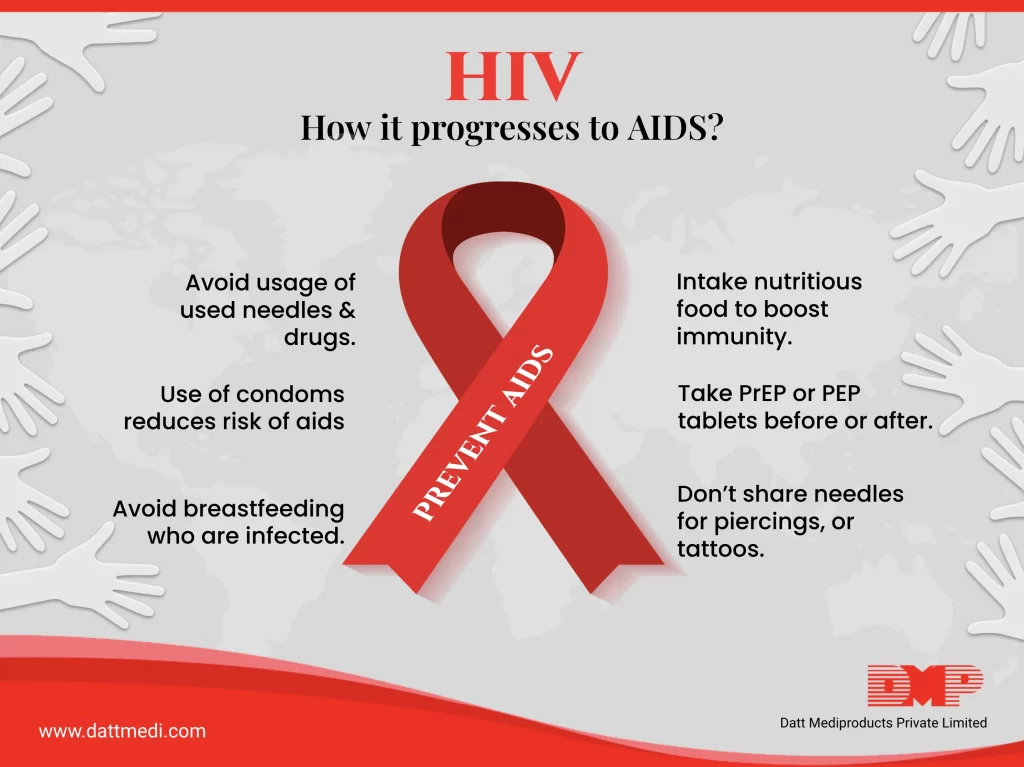
There is no vaccine to prevent HIV transmission but the risk of contracting the infection can be lowered by taking certain steps:
– Avoid sharing needles and syringes as they may be contaminated with HIV or even the Hepatitis virus.
– Have safer sex by using protection, getting tested for HIV & other sexually transmitted infections on a regular basis.
– Mothers should not breastfeed their children if they are HIV positive, breast milk can carry the HIV virus.
– Contact a medical healthcare provider to talk about taking PrEP (pre-exposure prophylaxis) and PEP (post-exposure prophylaxis) before and after being exposed to the HIV virus. This reduces the risk of contracting the virus.
– Take the ART medications as directed by the physician.

We @ Datt Mediproducts understand that there is no cure of HIV, but with treatment it can be controlled and the progression can slow down. We recommend getting tested for HIV regularly so that you can get the antiretroviral treatment when you need it. If people with HIV take ART as prescribed, their viral load can become undetectable. By following the preventive measures, one can live a healthy and long life.
Visit www.dattmedi.com for more infomation.
Share:
Recent Blogs
Wound Care in Diabetes

Diabetes significantly increases the risk of developing chronic wounds, particularly foot ulcers. Effective wound care is crucial for preventing complications and promoting healing in diabetic patients. In this blog, you will explore the nature of diabetic wounds, prevention techniques, and management strategies to help healthcare professionals and patients navigate these challenges.

Understanding Diabetic Wounds

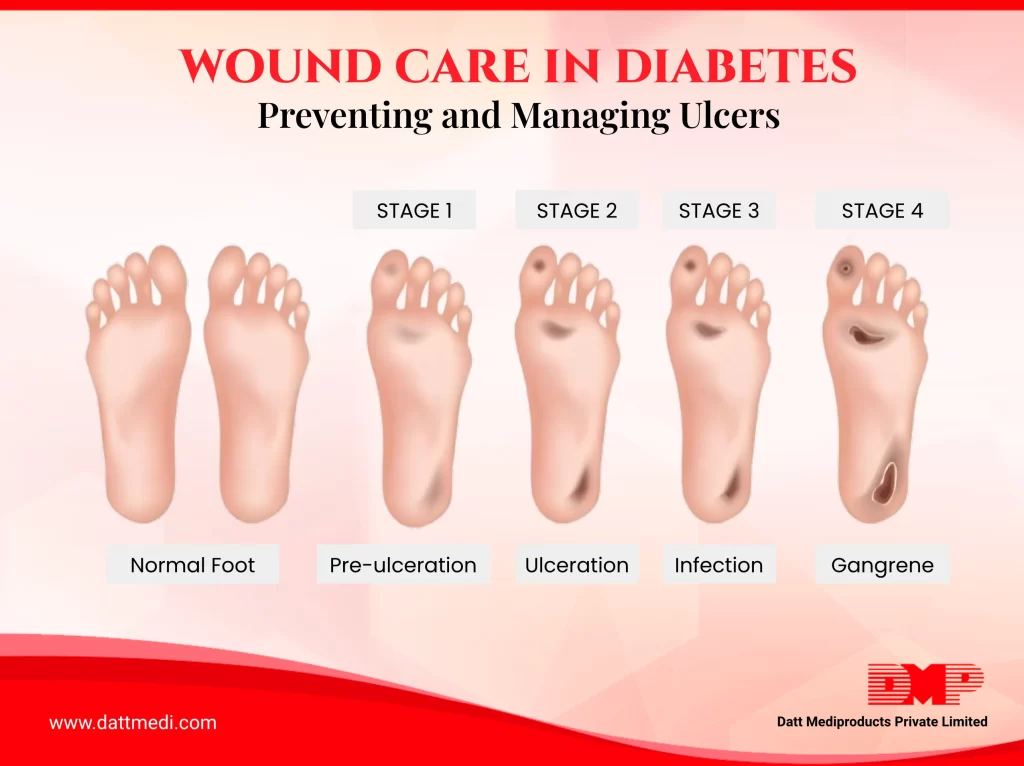
Diabetic wounds, especially foot ulcers, are common complications resulting from prolonged high blood sugar levels. These wounds often develop due to neuropathy (nerve damage) and peripheral arterial disease, which impair sensation and blood flow. Consequently, minor injuries can go unnoticed and progress into serious ulcers. Left untreated, these ulcers can lead to severe infections and, in extreme cases, amputations.

1. Prevention Techniques for Diabetic Ulcers:

Preventing diabetic ulcers is essential to reduce the risk of severe complications. Here are some effective prevention strategies.

2. Regular Foot Inspections: 

Diabetic patients should inspect their feet (or have someone inspect it) on a daily basis for cuts, blisters, redness, or swelling. Early detection of potential issues can prevent minor problems from becoming serious ulcers.

3. Proper Footwear: 

  • Wearing well-fitting shoes and socks designed for diabetics can prevent pressure points and reduce the risk of injuries. 
  • Avoid wearing tight stockings or socks with elastic tops as they can reduce blood flow.
  • Avoid extreme hot or cold temperatures.
  • Do not treat corn or calluses on your own. 
  • Avoiding barefoot walking, even at home, is crucial.

4. Good Hygiene: 

Keeping feet clean and dry is essential. Patients should wash their feet daily with mild soap and water, then dry them thoroughly, especially between the toes.

5. Blood Sugar Control: 

Maintaining optimal blood sugar levels through diet, exercise, and medication can significantly reduce the risk of neuropathy and poor circulation, which contribute to ulcer formation.

6. Regular Medical Foot Check-Ups: 

Routine visits to a healthcare provider or a podiatrist for foot exams can help identify and address problems early.

7. Management Strategies for Diabetic Patients:

When ulcers do occur, effective management is vital to promote healing and prevent complications.

Here are some key strategies:

  • Wound Cleaning and Dressing: Keeping the ulcer clean and protected is essential. Cleaning the wound with a saline solution and using appropriate dressings, such as those provided by DMP Velvert®, can create an optimal healing environment. It provides a barrier to external contaminants, aids absorption of exudates and accelerates wound healing.
  • Debridement: Removing dead tissue from the wound (debridement) can accelerate the healing process. This procedure should be performed by a healthcare professional.
  • Pressure Offloading: Reducing pressure on the affected area is crucial. Patients may need special footwear, casts, or braces to alleviate pressure on the ulcer. Foot or mobility exercises also help in decreasing peak pressure, increasing foot and ankle range of motion and it improves neuropathy symptoms.
  • Infection Control: Monitoring for signs of infection and using antibiotics when necessary is critical. Proper wound care products, like Velvert®, which offer antimicrobial properties, can help prevent infections.
  • Blood Flow Improvement: Enhancing blood circulation through medical treatments or lifestyle changes can aid in the healing process. This might include medications, physical therapy, or surgical interventions. Revascularization results in increased tissue perfusion, which can further reduce amputation rates.
Diabetic ulcers are a serious complication of diabetes, but with proper prevention and management strategies, their impact can be significantly reduced. Regular foot inspections, good hygiene, appropriate footwear, and effective blood sugar control are key preventive measures. When ulcers do develop, it is best to catch them in the early stages when they are small, products combined with professional medical care, can promote healing and prevent complications.

At Datt Mediproducts, we offer Velvert®, an advanced wound care solution designed to aid in the management of diabetic ulcers. Velvert® dressings are crafted to provide superior moisture retention and protection, creating an optimal environment for wound healing. They also incorporate antimicrobial properties to reduce the risk of infection, which is crucial for diabetic patients. Velvert® is easy to apply and remove, ensuring minimal discomfort for patients.

Understanding Parkinson's Disease : Symptoms, Causes, and Treatment Options

Understanding Parkinson’s Disease: Symptoms, Causes, and Treatment Options

Parkinson’s disease is a complex and often misunderstood neurodegenerative disorder that affects millions of people worldwide. It is characterized by a progressive loss of dopamine-producing cells in the brain, leading to a range of motor and non-motor symptoms that can significantly impact daily life. In this blog, we will explore the symptoms, causes, and treatment options for Parkinson’s disease, as well as the importance of support and advocacy for those living with the condition.

Symptoms of Parkinson’s Disease :

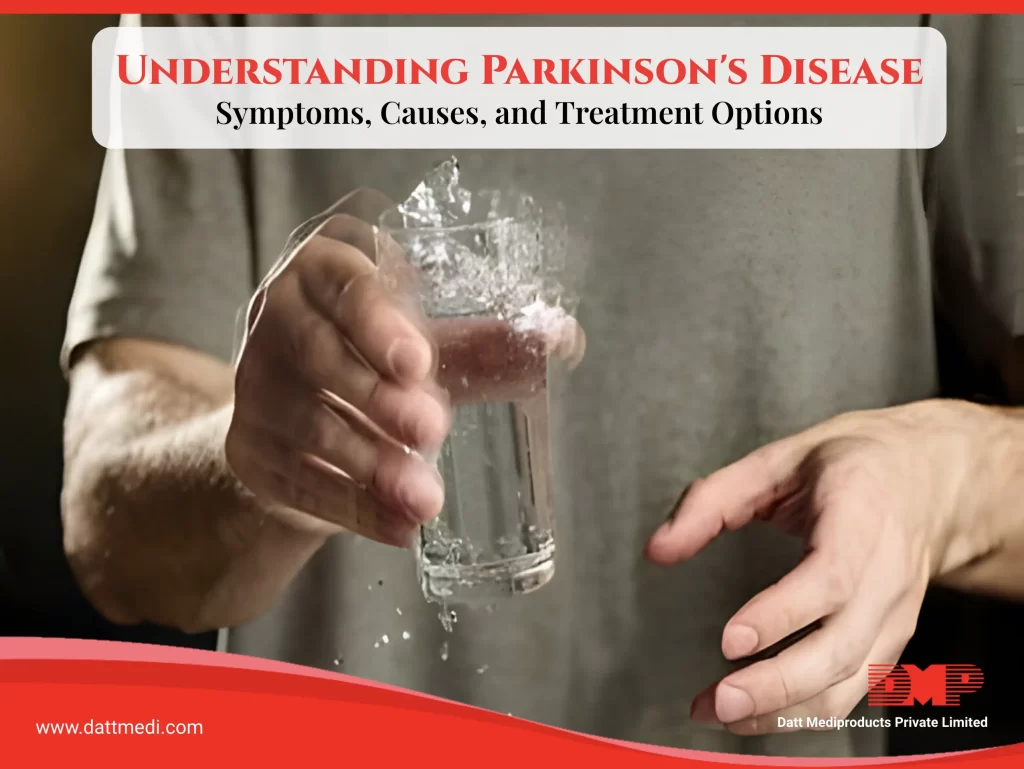
Parkinson’s disease primarily affects movement, causing a variety of motor symptoms that can vary in severity from person to person. The most common symptoms include tremors, stiffness, and bradykinesia (slowness of movement). Individuals with Parkinson’s may also experience freezing gait, a sudden inability to initiate or continue walking, as well as a stooped posture and changes in speech and handwriting.

In addition to motor symptoms, Parkinson’s disease can also cause a range of non-motor symptoms that may be less visible but equally challenging. These can include depression, anxiety, cognitive impairment, sleep disturbances, and autonomic dysfunction. It is important for individuals with Parkinson’s and their caregivers to be aware of these non-motor symptoms and seek appropriate support and management strategies.

Causes and Risk Factors:

The exact cause of Parkinson’s disease is not yet fully understood, but it is believed to involve a combination of genetic and environmental factors. Advancing age is the most significant risk factor, with the majority of cases diagnosed in people over the age of 60. However, younger individuals can also develop Parkinson’s, particularly if they have a family history of the disease or are exposed to certain environmental toxins such as pesticides and solvents.

Recent research has also identified specific genetic mutations associated with an increased risk of Parkinson’s disease, although these account for only a small percentage of cases. Overall, Parkinson’s is thought to result from a complex interplay of genetic susceptibility and environmental triggers, and further research is needed to fully understand these mechanisms.

Treatment Options and Management Strategies:

While there is currently no cure for Parkinson’s disease, there are a variety of treatments available to help manage symptoms and improve quality of life. Medications such as levodopa, dopamine agonists, and MAO-B inhibitors can help alleviate motor symptoms by increasing dopamine levels in the brain. Physical therapy, occupational therapy, and speech therapy can also be beneficial in addressing specific motor and non-motor symptoms.

In addition to medical interventions, lifestyle modifications such as regular exercise, healthy diet, and stress management techniques can also play a key role in managing Parkinson’s disease. Social support and community resources are also invaluable for individuals living with Parkinson’s and their caregivers, providing emotional support, practical assistance, and opportunities for socialization.

Support and Advocacy:

In India, there are several organizations dedicated to supporting individuals with Parkinson’s disease and raising awareness about the condition. One such organization is the Parkinson’s Disease and Movement Disorder Society (PDMDS), which offers rehabilitation programs, support groups, and educational resources for people living with Parkinson’s and their families. The Indian Parkinson’s Disease Association (IPDA) is another valuable resource, providing information, advocacy, and support services to improve the lives of those affected by Parkinson’s disease.

Parkinson’s disease is a challenging and complex condition that requires a comprehensive approach to management and care. By understanding the symptoms, causes, and treatment options for Parkinson’s, as well as the importance of support and advocacy, we can work together to improve the lives of individuals living with this condition. Through education, awareness, and community involvement, we can make a difference in the lives of those affected by Parkinson’s disease.

Logo

Datt Mediproducts Private Limited

Loading